feels-like-home: Feels Like Home: The Airbnb Clone That Turns Listings Into Maps, Sessions, and State
A clean full-stack walkthrough of the geocoding, authorization, upload, and Redux patterns that make a travel marketplace feel real.

- This repo’s strongest idea is that a listing only becomes believable when geocoding, uploads, sessions, and permissions all line up behind it.
- The backend does not just store Airbnb-style data, it converts a human place name into a map-ready record with ownership attached.
- Redux is used as a coherence layer, so review changes and listing state stay in sync without a page reload.
- The project feels production-shaped because the seams between features are designed, not improvised.
The quickest way to understand this repo is to stop thinking about cards and forms. A listing starts as a location string, but the app treats it like a system object: geocoded, authenticated, uploaded, validated, and rendered back as something a user can trust. That is the difference between a demo and a marketplace.
A Listing Is Not a Card. It Is a Coordinate.
Most clones stop at CRUD. This one goes further by making geography operational: the backend takes a place name, calls geocoding, stores coordinates, and lets the frontend turn that into a live map. Once the pin exists, the whole app feels less like a list of posts and more like a travel product.
How the Backend Turns a Form Into a Trustworthy Record
The backend reads like a careful gatekeeper. Express routes fan out into listings, reviews, and users, while sessions persist through MongoDB so a login survives restarts. Passport handles identity, Joi rejects bad input before it reaches storage, and Cloudinary keeps the upload pipeline out of the app server’s critical path.
That combination matters because the app is not only saving text. It is saving ownership, images, and geometry in a way the frontend can safely depend on. The record is trustworthy because validation, session state, and asset handling are all handled on the server side.
Why Ownership Matters More Than CRUD
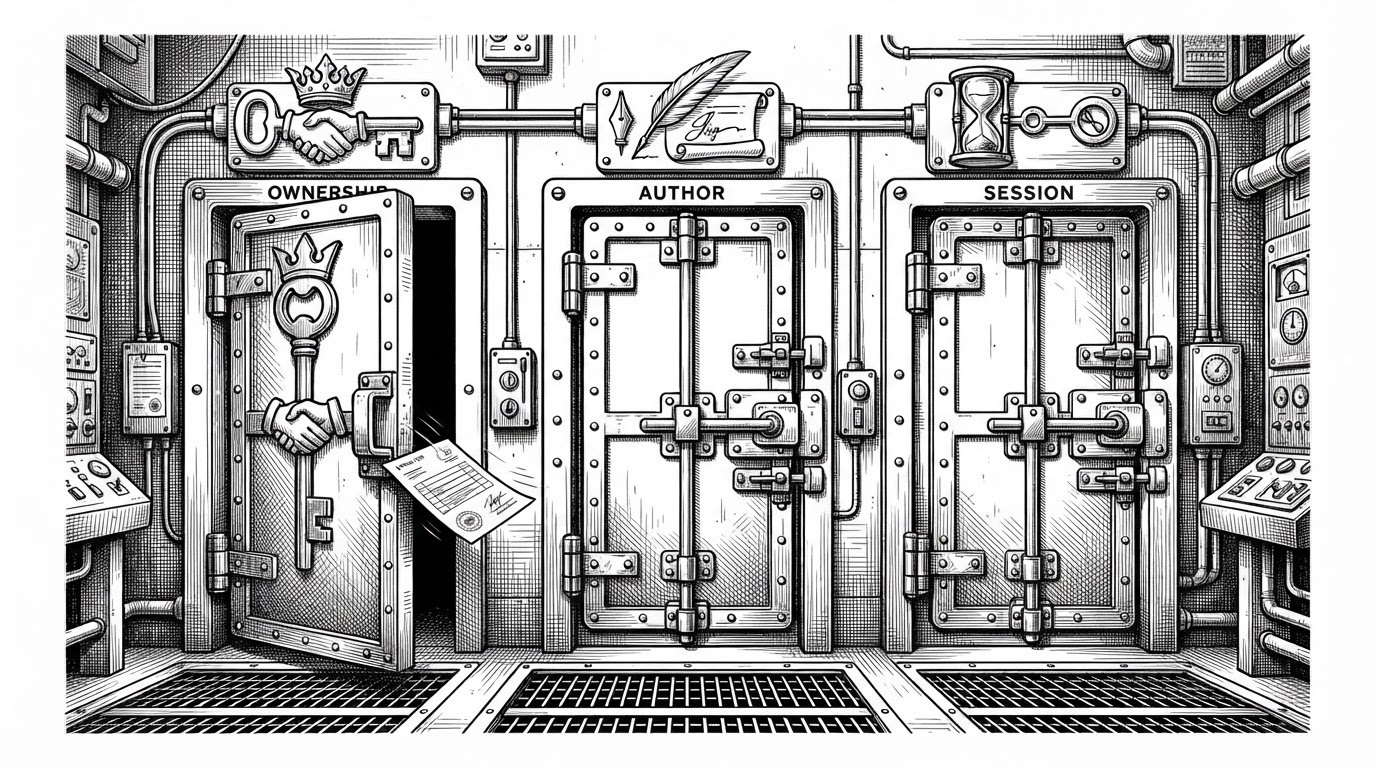
The middleware layer is where the clone stops being naive. Checks like isLoggedIn, isOwner, and isAuthor keep edits, deletes, and review moderation out of the wrong hands. That is not decoration. It is the minimum shape of a marketplace that expects strangers to interact safely.
Redux Is Doing More Than Fetching Data
The frontend state layer is more interesting than a simple data cache. Redux Toolkit fetches listings, but it also keeps relational state coherent when something changes. The sharpest example is review creation: the slice updates currListing immediately, so the page reflects the new review without a full reload.
// Conceptual pattern from the listing slice
builder.addCase(addReview.fulfilled, (state, action) => {
  state.currListing.reviews.push(action.payload.review);
});
That small move changes the feel of the app. The user adds a review, and the page responds like a living object, not a stale fetch result. State management is doing product work here, not just plumbing.
The Real Product Is the Feedback Loop
This is where the repo earns its weight. A user submits a listing, the backend validates and geocodes it, Cloudinary stores the photos, the session and ownership checks decide who can touch it, and Redux keeps the frontend current. The map, the card, the images, and the review thread all agree with each other.
That loop is why the project feels more complete than a typical clone. It is not just a travel catalog. It is a system that preserves context every time data crosses a boundary.
| Dimension | Basic CRUD clone | This repo |
|---|---|---|
| Location handling | Text only | Geocoded into coordinates and rendered on a map |
| Trust model | Client-heavy | Server validation, sessions, and ownership checks |
| Uploads | Often local or skipped | Cloudinary-backed image pipeline |
| State updates | Reload after mutation | Redux keeps current listing in sync |
| Architecture | Monolithic habits | Decoupled React frontend with API-driven backend |
| Marketplace realism | Thin | Listings behave like objects with identity and rules |
A Clone That Feels More Like a Blueprint
A lot of Airbnb clones imitate the surface. This one cares about the seams. The location pipeline, the permission model, the upload path, and the state updates all reinforce one another, which is what makes the app feel production-shaped instead of tutorial-shaped.
That is the real lesson. Good marketplace software is not defined by how many screens it has. It is defined by how little the user has to think about the machinery underneath.