DataChat: The Text-to-SQL Assistant That Refuses to Trust the Model
A supply-chain analytics tool that turns questions into PostgreSQL queries, then checks every column against the live schema before it answers.
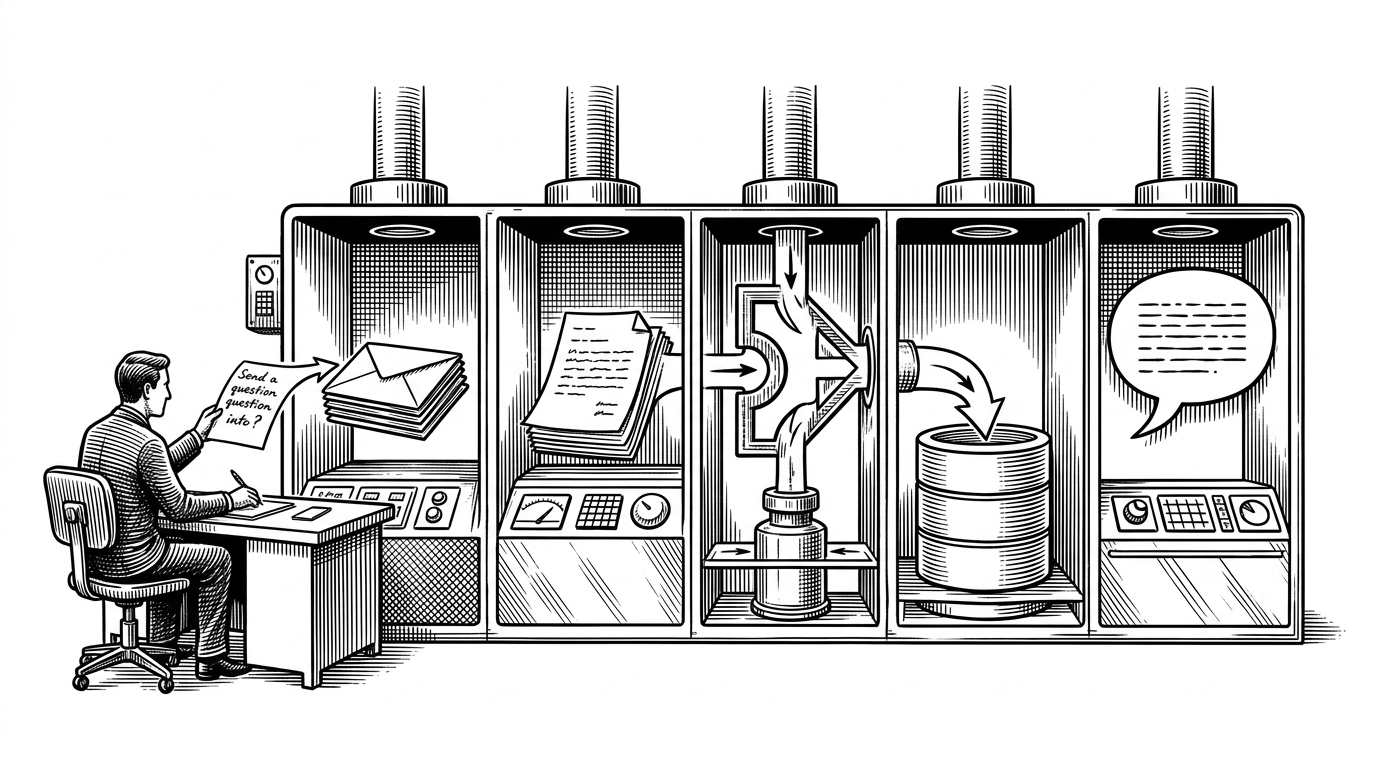
- DataChat’s real innovation is a guarded text-to-SQL pipeline that treats model output as untrusted until schema validation clears it.
- The ThoughtLog turns intermediate reasoning into a product feature, giving users and developers a shared audit trail instead of a black box.
- Its supply-chain focus matters because domain-specific entity mapping reduces the gap between business language and database reality.
- Compared with framework-first or dashboard-first approaches, DataChat sits in a narrower but more inspectable middle ground.
Most text-to-SQL tools sell the same promise: ask in English, get data back. DataChat is interesting because it does not let the model drive straight into PostgreSQL. It inserts a defensive middle layer that plans, writes, validates, executes, and only then explains. That changes the product from a chatbot into a constrained compiler for business questions.
Why DataChat feels more like a compiler than a chatbot
The strongest signal in the repo is not the UI. It is the refusal to trust a single model pass. The backend breaks the task into stages so each one has a narrow job, and each one can fail safely. That is a much more serious answer to text-to-SQL than a prompt template with a database connection.
The goal of DataChat is to make data accessible to everyone, regardless of their technical background.
How the pipeline works
The pipeline is simple to describe and powerful in practice. First, planner logic extracts intent and entities from the user’s question. Then the SQL writer turns that into PostgreSQL-specific query text. Next, the validator checks whether the query actually matches the live schema. Only after that does execution happen, followed by a synthesis step that turns rows into a short business answer.
| Stage | Job | Failure it prevents |
|---|---|---|
| Planner | Detect intent and entities before SQL generation | Ambiguous prompts becoming vague queries |
| SQL writer | Draft PostgreSQL-specific SQL | A model skipping relational structure |
| Validator | Check tables and columns against live schema | Hallucinated column names or fake joins |
| Executor | Run only approved SQL | Unsafe or broken queries reaching the database |
| Synthesiser | Convert rows into a business summary | Raw data dumps that users cannot read |
The part that matters most: schema-aware validation
If DataChat has a technical thesis, it lives in the validator. The repo does not stop at generic prompt hygiene. It inspects the database schema and checks that tables and columns actually exist before a query can move forward. That is the difference between a demo and a tool a team could plausibly rely on.
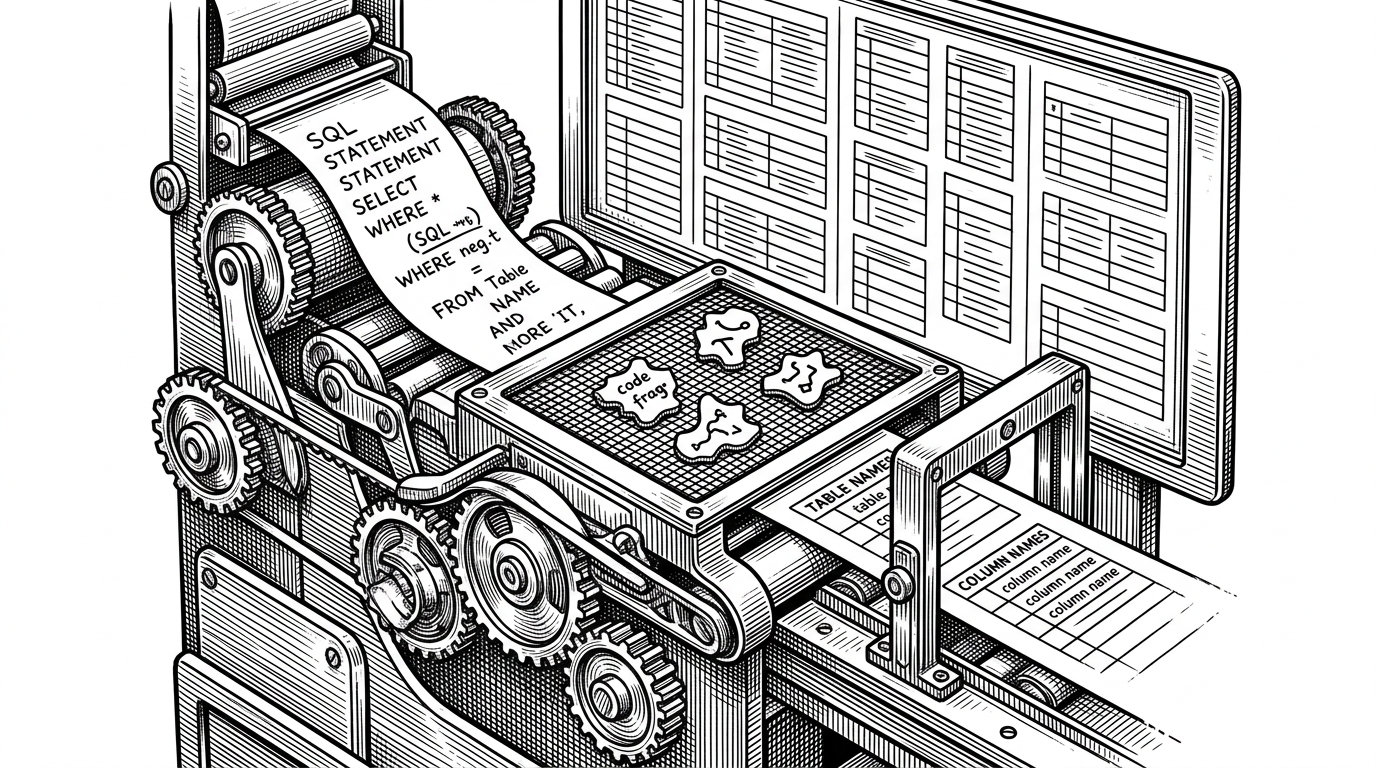
# Conceptual shape of the validator
# Strip literals, inspect identifiers, compare against live schema

clean_sql = strip_string_literals(sql)
tokens = extract_identifiers(clean_sql)
valid_tables = inspect(engine).get_table_names()
valid_columns = get_live_columns(engine)

for token in tokens:
    if token in RESERVED_WORDS:
        continue
    if token not in valid_tables and token not in valid_columns:
        raise ValidationError(f"Unknown identifier: {token}")
This is why the ThoughtLog matters. It is not theater. It is a visible audit trail for the staging process, which helps users understand why the system arrived at a query and helps developers find where it failed. In an LLM product, that is not a nice-to-have. It is the core of trust.
This is a game-changer for our team. We spend too much time writing ad-hoc queries.
Why this is tuned for supply chain, not just SQL
DataChat is not trying to be a generic wrapper around a database. The repository shows domain-specific mapping between business language and schema terms, which is what makes the tool feel aimed at supply chain workflows. That matters because most of the pain in enterprise analytics is translation, not computation.
| Business language | Mapped schema idea | Why it helps |
|---|---|---|
| buyer | customer | Matches how managers ask questions |
| sku | product | Reduces vocabulary mismatch |
| shipment | order or delivery record | Connects ops terms to transactional data |
| region | location field | Makes filtering feel natural |
That specialization is the hidden advantage. Generic text-to-SQL systems often fail because they leave users to guess the schema in their own heads. DataChat narrows that gap by teaching the system the language of the domain, not just the syntax of SQL.
How DataChat compares to the field
| Approach | Strength | Weakness | Trust model | Best for |
|---|---|---|---|---|
| Generic LLM wrapper for SQL | Fast to prototype | Easy to hallucinate queries | Mostly implicit | Demos and experiments |
| Framework-based build with LangChain or LlamaIndex | Highly flexible | More assembly required | Depends on the builder | Teams with custom requirements |
| Dashboard-first BI | Familiar and stable | Static and slow to adapt | Human-curated | Recurring reporting |
| DataChat | Opinionated and inspectable | Narrower scope | Schema-aware pipeline | Business users asking live questions |
That middle position is the point. DataChat is more turnkey than a framework build, but more transparent than a black-box chatbot. It is not trying to replace BI, and it is not pretending the model is reliable on its own. It turns trust into a sequence of checks.
What DataChat gets right, and where it still feels like a prototype
The engineering reads as thoughtful. The separation of concerns is clean, the fallback logic is pragmatic, and the observability mindset is real. At the same time, the repository feels like a high-quality prototype or beta system more than a widely hardened product, which is exactly why the architecture deserves attention. It shows what serious text-to-SQL design looks like before scale forces compromise.
If you are building conversational analytics, the lesson is blunt: do not ask the model to be correct in one leap. Break the task into smaller jobs, validate the dangerous parts against reality, and expose enough intermediate state that humans can understand the result. DataChat is a neat example of that discipline.