Noble Response Is a ChatGPT Clone That Outsources Its Brain to n8n
A full-stack chat app with rotating refresh tokens, a real trash bin, and file extraction, all wired to a single webhook URL and a model called "n8n-genius."
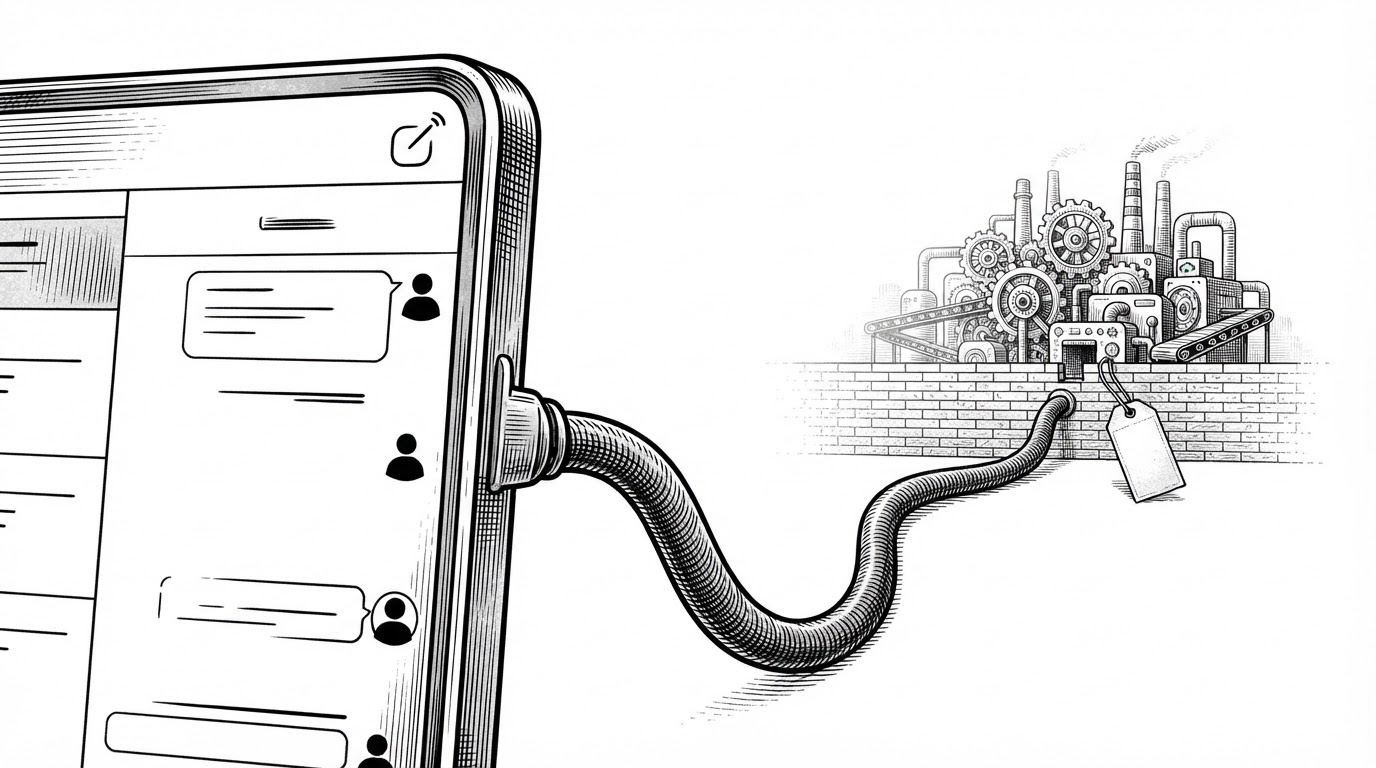
- Noble Response is a full-stack ChatGPT clone that forwards every request to a single n8n webhook and labels the remote workflow "n8n-genius."
- The front end is real software: soft deletes into a trash bin, cursor pagination, file text extraction, and rotating refresh tokens stored as hashes.
- The app is unusually careful about API errors and authentication, and unusually careless about CORS and a legacy route that skips both auth and the rate limiter.
- Choosing a workflow webhook as your model buys infinite orchestration flexibility and zero visibility from inside the app.
The Brain Isn't in the Building
Open the repository and you will find a settings modal, a theme provider, a trash bin with restore, and roughly fifty shadcn/ui primitives. You will not find a model client.
There is no OpenAI SDK, no Anthropic SDK, no local inference runtime, and no prompt template file. The backend reads VITE_N8N_WEBHOOK_URL, defaults it to an n8n instance on Render, and posts the conversation there. Reasoning happens somewhere the code cannot see.
// server/config.js (relevant lines)
export const config = {
  n8nWebhookUrl:
    process.env.VITE_N8N_WEBHOOK_URL ||
    "https://n8n-v3-tjln.onrender.com/webhook/mychatapp",

  defaultModel: "n8n-genius",

  jwtSecret:
    process.env.JWT_SECRET || "change_this_in_production_jwt_secret",
};
The string "n8n-genius" is hard-coded as the default model across routes. The app hands it to users the way a normal chat app hands over gpt-4o or claude-sonnet. It is not a model. It is a label for a workflow.
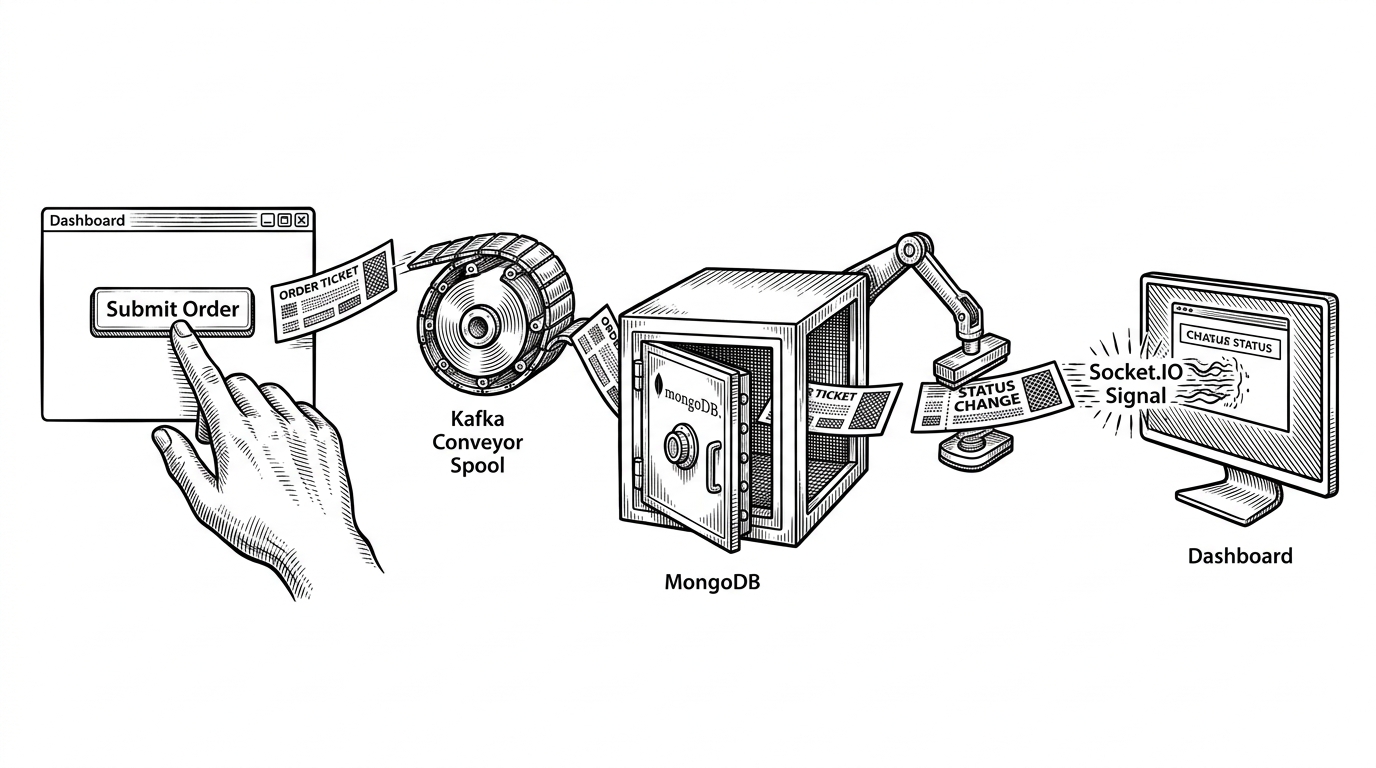
One Message, End to End
Once you know the AI is external, the interesting question is how a chat app forwards to a workflow. Here is the full round trip for a single message.
Two details in that flow are worth pausing on. The payload assembly step merges the user's customInstructions and userBio into every call, so personalization is real and it happens on this side of the wire. And stage six is drawn dark on purpose. The app cannot see inside the workflow, and neither can you.
What the Front End Actually Does
Knowing the AI is rented out makes the front end look more impressive, not less. This is a deliberate product, not a demo wrapped around an API key.
- Multi-conversation sidebar with search, rename, and a two-tier delete: soft delete into a trash bin, then permanent delete.
- Cursor-paginated message history rather than offset pagination, so the list stays stable as messages arrive.
- File attachments up to 10 MB with server-side text extraction injected into the AI context.
- Cancellable generations, so a user can stop a response mid-stream.
- Per-request personalization through customInstructions and userBio.
The two-tier deletion is the most distinctive choice. Most chat apps delete and move on. Noble Response treats a conversation as recoverable first, gone second, which is a small piece of product thinking that shows up in the data model, not just the UI.

The Parts That Are Genuinely Well Built
The codebase is split into an exported Express app and a separate process bootstrap. That one decision lets the same code run locally, under supertest, and inside a Vercel serverless entry point without forking the logic. It is a small thing that many projects get wrong.
Authentication is more careful than most solo projects. Refresh tokens are opaque and stored as hashes, sessions are tracked per device, and tokens rotate on use. A stolen refresh token has a limited window and a visible trail.
Error handling is the strongest signal. A single ApiError factory and one response envelope normalize third-party failures into distinct HTTP semantics, so the client knows what to do next:
- Mongoose ValidationError becomes 422 with per-field details.
- Duplicate key 11000 becomes 409.
- CastError becomes 400 INVALID_ID.
- JsonWebTokenError and TokenExpiredError become 401 with separate codes, so the client knows whether to refresh or to log out.
That last distinction is the whole reason to normalize errors. A client that can tell "expired, refresh" from "forged, sign out" writes better code. Noble Response gets this right.
The Controls That Don't Control
The same author who normalized JWT errors also shipped a CORS allowlist that does nothing. The origin callback computes the allowed origins, then calls callback(null, true) on both branches.
// server/app.js
if (
  !origin ||
  allowedOrigins.includes(origin) ||
  origin.endsWith(".vercel.app") ||
  origin.endsWith(".onrender.com")
) {
  callback(null, true);
} else {
  callback(null, true); // same outcome
}
With credentials: true set, that means any origin can make credentialed requests. The allowlist is present in the source and absent in effect.
A second gap is sharper. The legacy POST /api/chat route is mounted outside /api/v1, so it never touches the rate limiter, and it calls the AI backend without a user context, defaulting sessionId to the shared string "session". Any anonymous client can trigger n8n workflow runs with no throttle and no account.
And JWT_SECRET falls back to "change_this_in_production_jwt_secret" with no fail-fast when NODE_ENV is production. Anyone who reads the public repo can forge a token if the environment variable is missing. These are choices, not accidents, and they stand out precisely because the rest of the API layer is thoughtful.
Where It Fits
There are a handful of ways a chat app can get a model, and they differ mostly in where the reasoning lives and who owns the prompt.
| Approach | Where reasoning lives | Who owns the prompt | Streaming | App lock-in |
|---|---|---|---|---|
| Embedded provider SDK | In-process client | App | Native | High |
| Direct provider HTTP | Remote API | App | Manual | Medium |
| Self-hosted gateway (e.g. Julep open-responses) | Your infra | Config | Gateway | Low |
| Orchestration webhook (Noble Response) | n8n workflow | The workflow | SSE relay | Very low, very opaque |
The name points at Responses-API territory, but the code contains no Responses schema, no provider adapters, and no compatibility layer. Anyone expecting that should read the source first. What Noble Response actually demonstrates is the workflow-engine approach: you trade all visibility into the model for total freedom to rearrange the orchestration behind it.
That trade is the whole story. The front end is a careful, complete product. The intelligence is a URL. Whether that is a shortcut or a strategy depends entirely on who is on the other side of the webhook, and the code does not say.