TRNXSDR-carrier: The SDR Baseboard Built for Fiber, Slots, and Serious RF
A Zynq-powered carrier board that treats SDR like a modular computing problem, with high-speed module slots, SFP fiber output, DDR3, and USB-C power delivery.
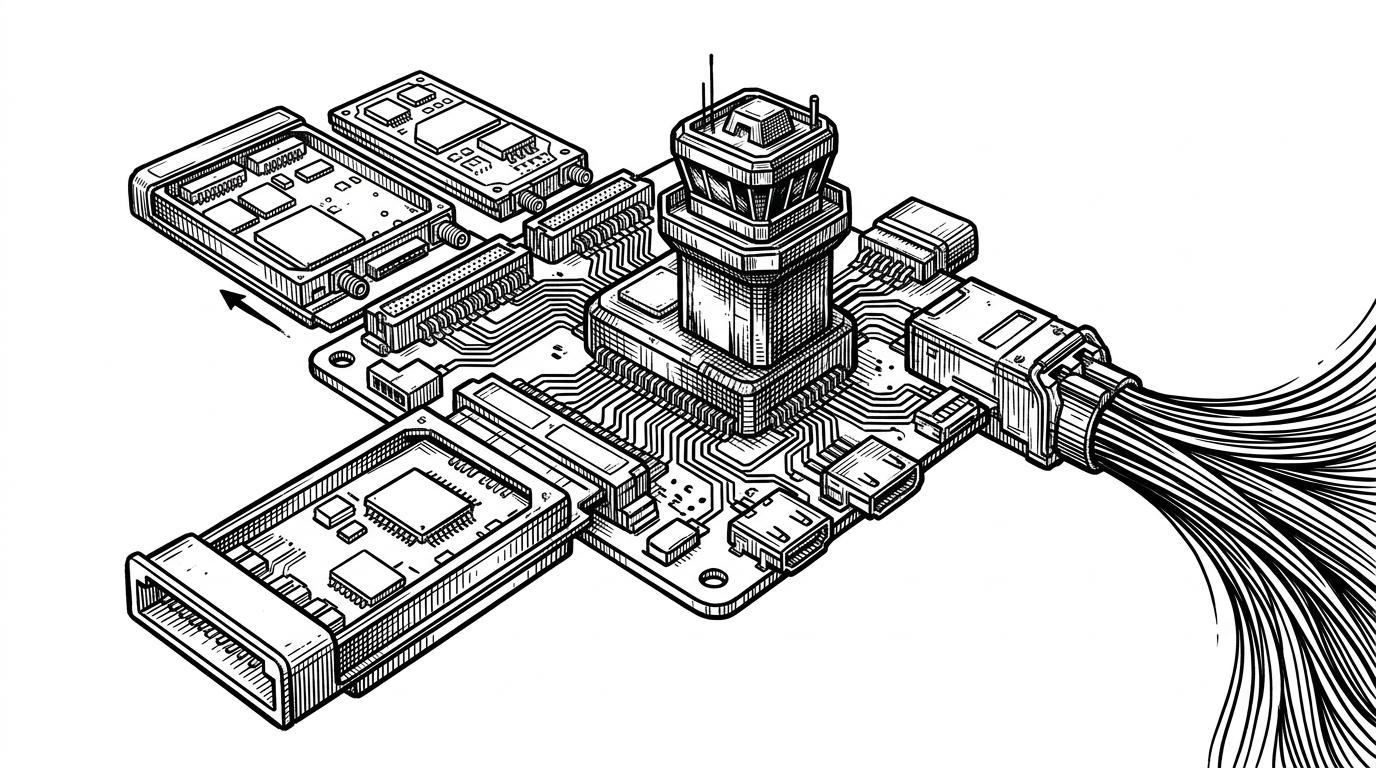
- TRNXSDR-carrier is built around a carrier-board idea, where processing and transport live on the baseboard and the actual radio personality lives in swappable modules.
- Its most distinctive move is treating fiber as a first-class SDR transport path, which shifts the project from hobbyist radio into RF infrastructure territory.
- The slot system is the product, not a side feature, because the board is designed to host different transceivers without changing the processing core.
- The project is still early, but its hardware discipline, from DDR3 to power sequencing, makes the modular thesis credible.
TRNXSDR-carrier is not trying to be one more all-in-one SDR. It is trying to be the thing those radios plug into: a reusable host that handles compute, memory, power, and transport while leaving the RF personality to external modules. That is a more ambitious category than a dongle, and a more open one than a closed appliance.
The **TRNXSDR** is a **Baseboard Platform**. While it provides the processing power and RF routing, it requires external SDR modules connected via the expansion slots for full radio functionality.
Why TRNXSDR-carrier feels different from a normal SDR
The board starts with a mental model shift. Instead of asking a single transceiver chip to do everything, it builds a baseboard around a Xilinx Zynq XC7Z015, 1 GB of DDR3, high-speed serial links, and a modular connector system. In other words, it is a radio host designed for reuse.
That matters because SDR projects usually break down at the transport layer. USB is convenient, but it is not where you go when raw IQ streams get serious. TRNXSDR-carrier makes fiber part of the design, which tells you exactly what kind of workload it is chasing.
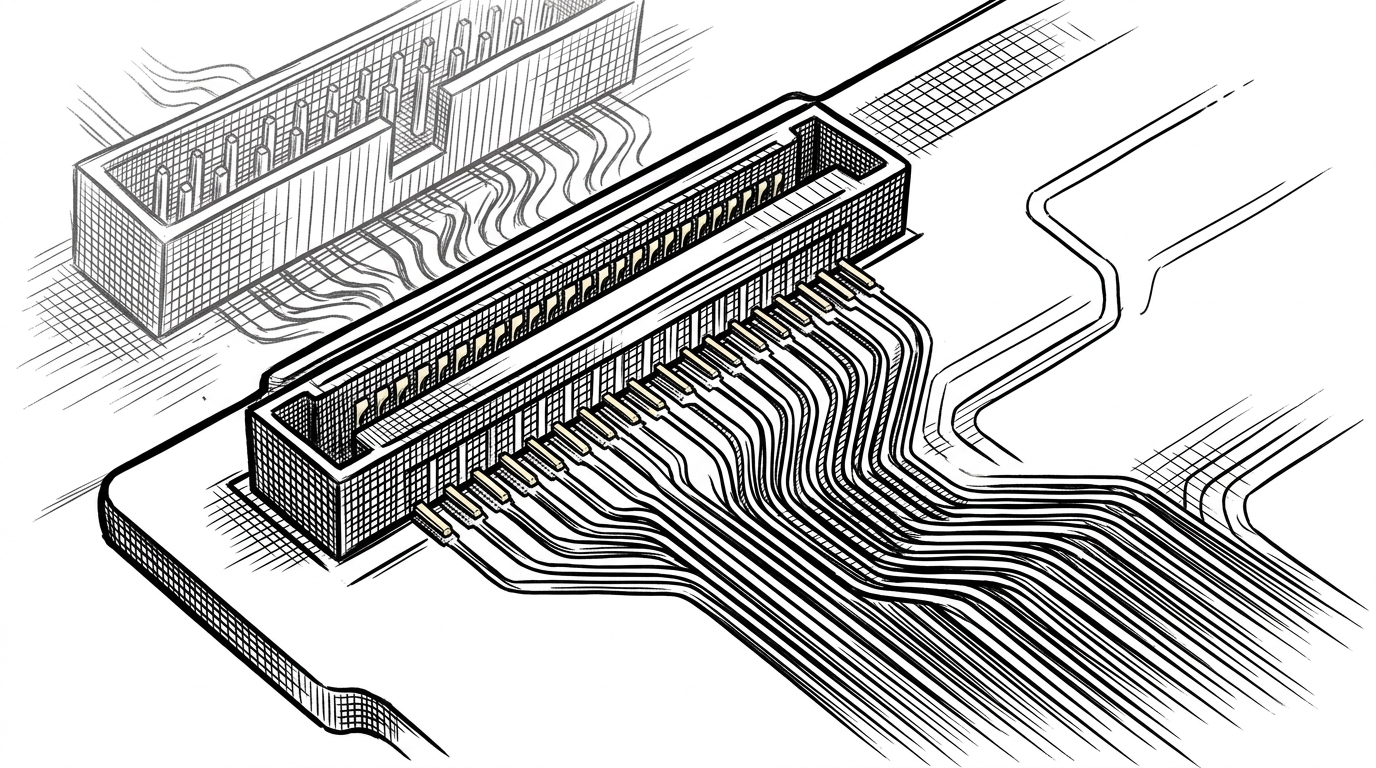
The board is built around a real bandwidth problem
The choice of the XC7Z015 is the clue. This is not the smallest Zynq on the shelf, and not the kind of chip you pick if you expect the radio front end to stay modest. The board pairs that SoC with 1 GB of DDR3 and routes the system toward high-throughput capture and streaming.
The SFP cage is the loudest signal in the design. It says the board expects to move data over fiber, not just out through a casual USB pipe. In SDR terms, that is a serious statement about latency, distance, and sample volume.
The hardware research points to a carefully engineered stack: DDR3 timing work, high-speed serial lanes, and a power system built around the LP87524B PMIC. None of that is glamorous, but all of it is what makes the fiber story real.
How the hardware stays stable under RF pressure
The board’s credibility comes from the unglamorous parts. Power sequencing matters because FPGAs do not forgive sloppy startup. Memory routing matters because buffered IQ data only helps if the DDR3 interface is stable. Layout discipline matters because a modular SDR platform is only useful if its signal integrity survives contact with the real world.
That is why the repository reads like hardware work, not just product concepting. It uses KiCad 9.0, a hierarchical schematic structure, and dedicated sheets for the Zynq core, DDR3, module interface, SFP, USB-C, and power blocks. The design is trying to behave like a system, not a collection of parts.
System layers
1. USB-C PD and PMIC bring up the board
2. Zynq configures logic and memory
3. DDR3 buffers captured samples
4. Module slots provide RF personalities
5. SFP or Ethernet streams data off-board
The slot system is the real product
TRNXSDR-carrier is not a single radio design. It is a slot ecosystem. The repository describes two high-speed primary slots, two lower-speed primary slots, and an expansion board that raises the total to ten module positions. That turns the carrier into a reusable base for different RF experiments.
| Layer | What TRNXSDR-carrier does | Why it matters |
|---|---|---|
| Processing | Zynq XC7Z015 plus DDR3 | Keeps the heavy lifting on the baseboard |
| Transport | SFP and Ethernet | Moves raw data over links that fit SDR-scale bandwidth |
| RF personality | Swappable module slots | Lets the same carrier host different transceivers |
| Scale | Expansion board to ten positions | Turns the platform into an ecosystem rather than a single board |
That architecture makes the board feel closer to a backplane than a gadget. A HackRF-style device gives you one radio in one box. TRNXSDR-carrier wants to be the shared infrastructure underneath multiple radio identities.
What it could connect to next
The roadmap is pointed in a practical direction. The repository mentions a functional GNU Radio OOT source block, planned SoapySDR support, and the possibility of hosting the OpenWiFi stack. Those are not random features. They are the software bridges that would let the board plug into existing RF workflows instead of asking users to start over.
The planned module ecosystem is just as important. Chips from Lime Microsystems and Analog Devices are already on the table, which suggests an agnostic carrier strategy. That is the whole bet: let the baseboard stay stable while the module layer evolves.
Over on GitHub, user acruxcz has released the TRNXSDR-carrier, an open hardware baseboard platform designed to host and interconnect multiple SDR modules.
How it compares to the usual SDR options
The easiest way to place TRNXSDR-carrier is by contrast. It is not trying to replace a standalone SDR, and it is not trying to out-mature a decades-old research platform. It is carving out a narrower, more interesting slot: open hardware for modular, high-speed RF infrastructure.
| Platform | Strength | Limitation | Best fit |
|---|---|---|---|
| HackRF One | Simple, self-contained, approachable | Fixed architecture, limited modularity | Quick experiments and broad accessibility |
| USRP-class systems | Mature software, proven modularity | Costly, less open in spirit | Research labs and production-adjacent workflows |
| TRNXSDR-carrier | Open carrier with slots, DDR3, and fiber | Early hardware, smaller ecosystem | Modular RF exploration and custom module hosting |
That positioning is what makes the board interesting. It is not trying to win every spec sheet. It is testing whether open hardware can support a real RF platform architecture without forcing everyone into one transceiver path.
What this project is really testing
Rev 1.0 is functional, but the repository is clear that bugs remain and Rev 2.0 work is underway. That honesty helps. It frames the project as a serious hardware experiment, not a finished product pretending to be inevitable.
The deeper question is bigger than one board. Can an open carrier become the common substrate for different SDR modules, software stacks, and network transports? TRNXSDR-carrier is trying to answer yes by making the carrier the stable part of the system and the RF front end the variable one.