soma-retargeter: SOMA Retargeter: The Soft-Limit Trick That Makes Human Motion Fit a Robot Body
Inside NVIDIA’s open-source retargeting pipeline, where a standardized human skeleton, GPU-accelerated IK, and foot stabilization turn BVH motion into robot-ready joint data.
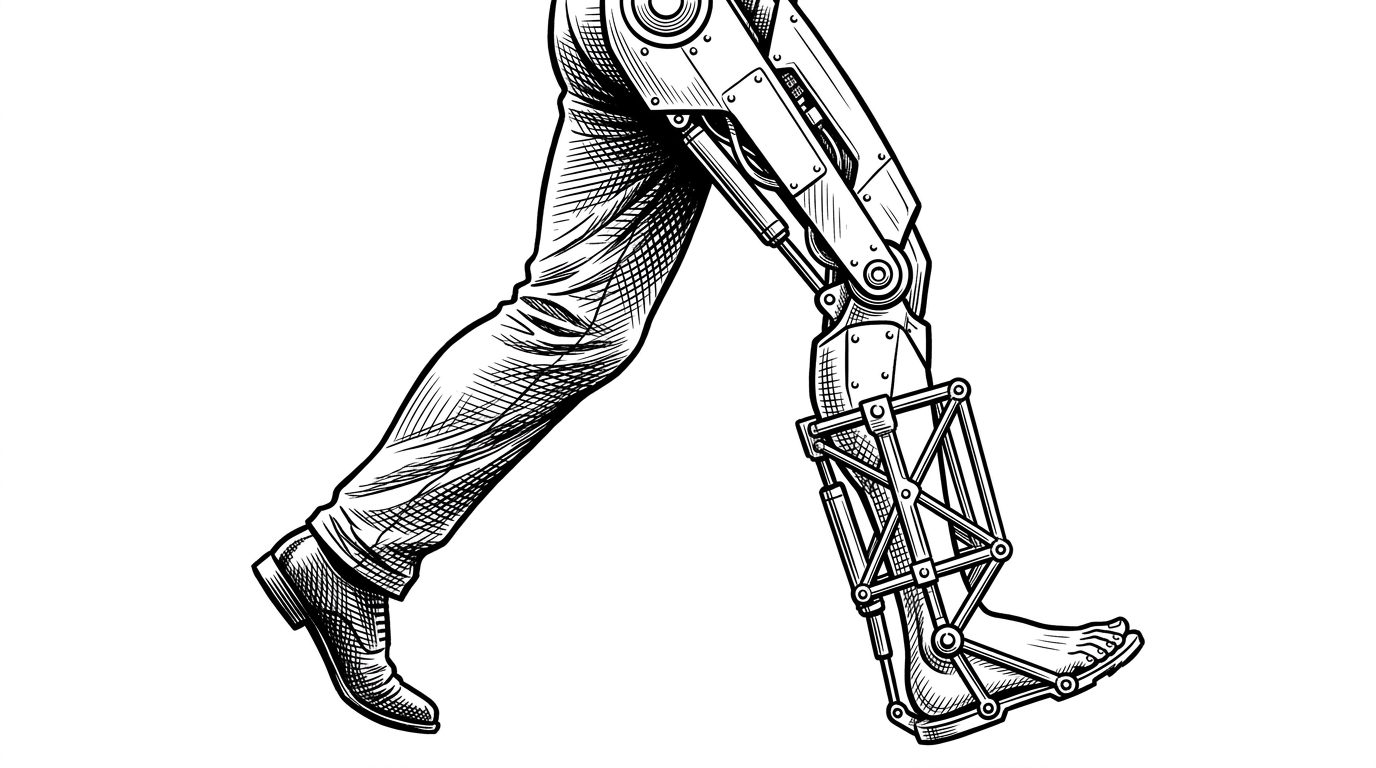
- SOMA Retargeter is less a file converter than a constraint engine that keeps humanoid motion believable under robot limits.
- Its soft joint filtering turns hard joint boundaries into rising costs, so the solver stays smooth instead of snapping.
- SOMA standardization matters because it collapses a messy adapter problem into one canonical human input path.
- Feet stabilization and joint clamping are what make the exported motion useful on a physical robot, not just pretty in a viewer.
Direct motion copying is the wrong mental model. A robot body is not a smaller human body, it is a different machine with different leverage, range, and balance rules. SOMA Retargeter exists to solve the harder version: keep human motion legible while the solver negotiates limits, proportions, and ground contact.
A robot cannot just copy a human walk
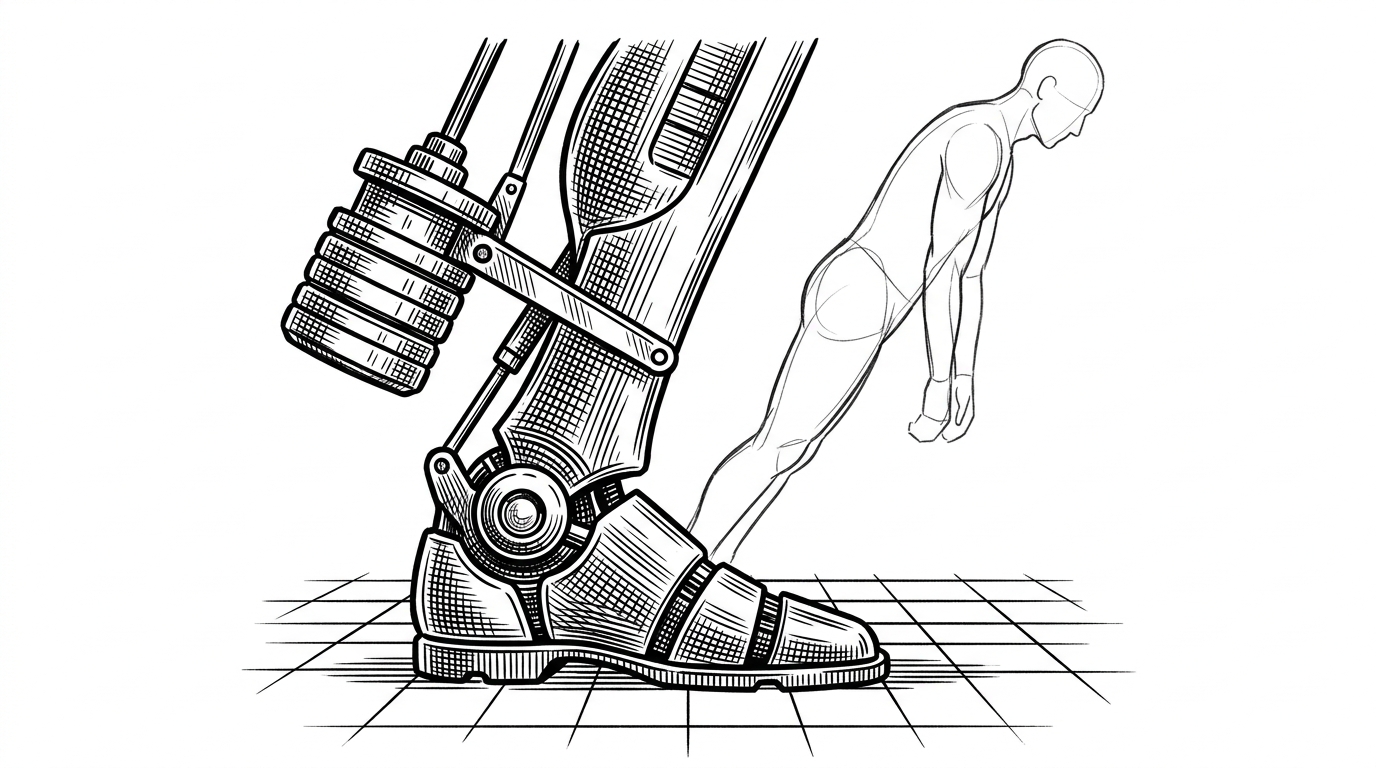
If you move a human gait onto a humanoid robot without translation, you get the classic failure modes fast. Knees clip, ankles drift, feet skate, and the pose looks alive for a frame or two before the physics says no.
The repo is built around that problem, not around format conversion for its own sake. The README says it plainly: the pipeline handles proportional human-to-robot scaling, multi-objective IK solving with joint limits, feet stabilization to maintain ground contact, and per-DOF joint limit clamping.
The retargeting pipeline handles proportional human-to-robot scaling, multi-objective IK solving with joint limits, feet stabilization to maintain ground contact, and per-DOF joint limit clamping. Currently supports SOMA as the input skeleton and Unitree G1 (29 DOF) as the output robot.
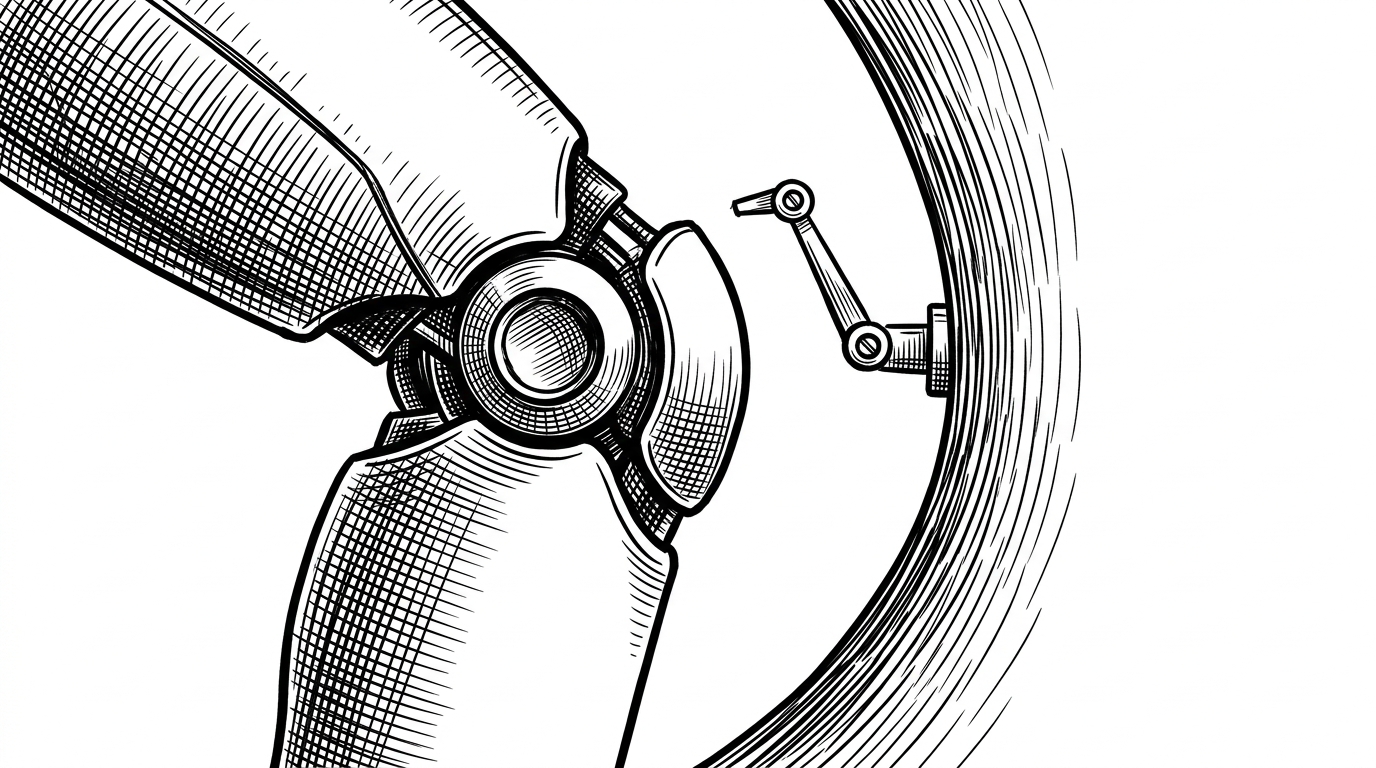
The soft wall inside the solver
This is the repo’s most interesting move. Joint limits are treated less like brick walls and more like a price curve, so the solver can still search for a feasible whole-body pose instead of slamming into a boundary and jittering there.
That matters because robotics does not reward abruptness. A hard clamp may be safe, but it can also create discontinuities that ripple through the rest of the pose, especially in the legs where small changes affect balance and foot contact.
The payoff is subtle but important. Instead of asking the robot to obey a binary stop, SOMA Retargeter lets the solver spend more effort as it nears the edge, which is exactly how you keep a pose from looking mechanically broken.
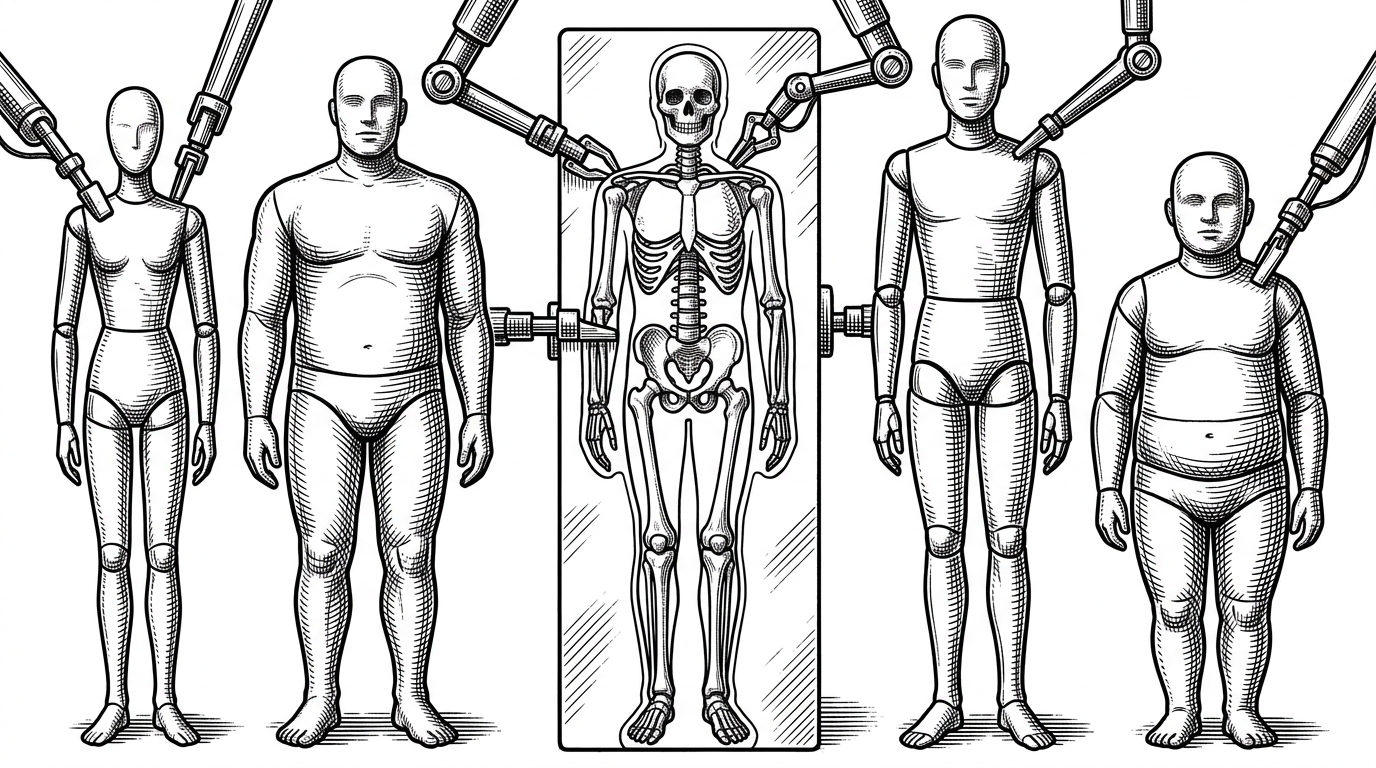
We present SOMA—a canonical body topology and rig that acts as a universal pivot for all supported parametric human body models. Instead of replacing existing models, SOMA unifies them by mapping their diverse rest shapes onto a single, shared representation.
SOMA gives the solver one body to target
Standardization is the quiet superpower here. Instead of building a bespoke adapter for every human body model and every motion source, the pipeline leans on SOMA as the canonical human representation and lets the solver focus on robot feasibility.
That is a big architectural choice. It cuts down the adapter explosion, makes the input path more predictable, and gives the optimization stack a stable geometry to reason about before the robot-specific constraints kick in.
From BVH to robot CSV
The pipeline is practical rather than romantic. BVH motion comes in, scaling reconciles the body proportions, Newton-based IK solves the pose under constraints, feet stabilization cleans up contact, and the final joint data is exported as robot-readable CSV.
That sequence matters. Each stage removes a different class of failure, so the output is not just a translated animation, it is a motion file shaped for a specific robot body.
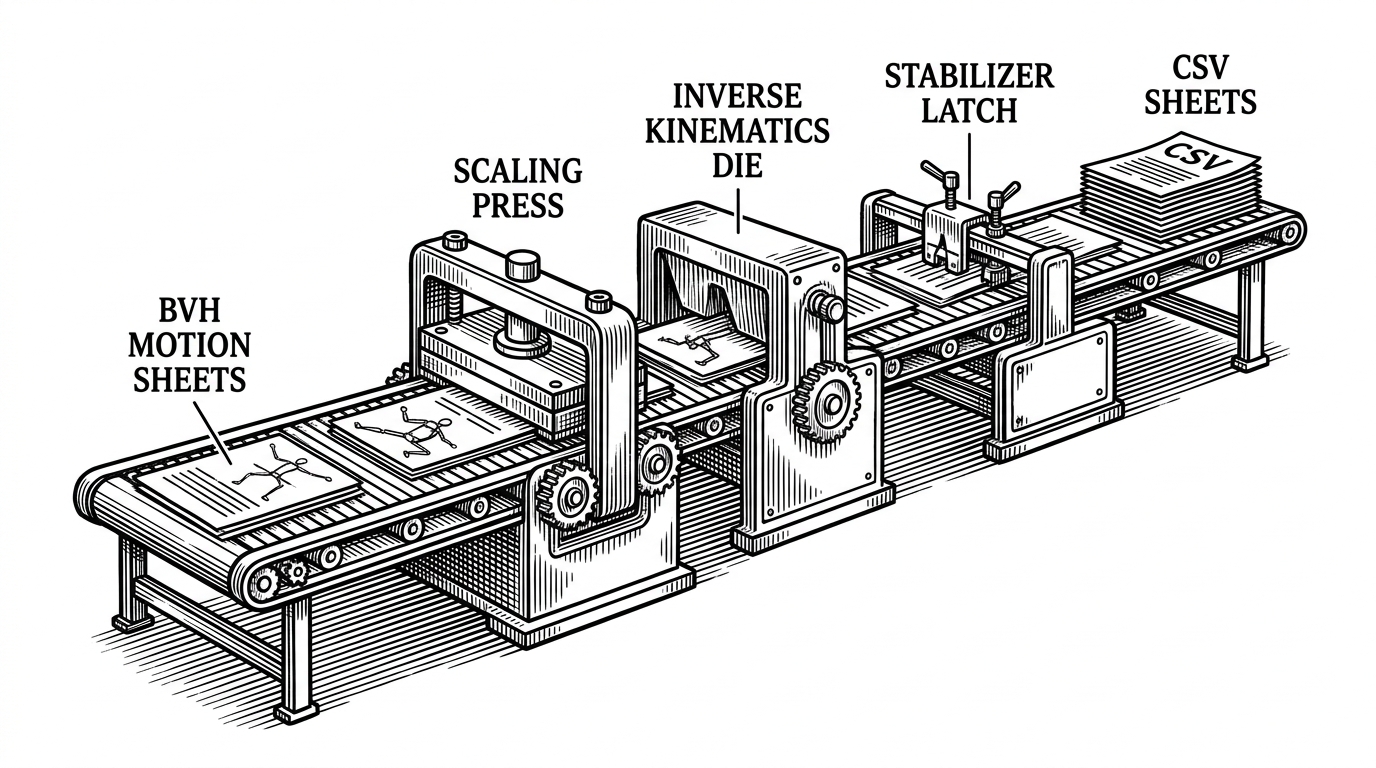
Under the hood, the repository leans on NVIDIA Warp and Newton to make that solving fast enough to be useful. The point is not just speed, it is keeping the whole-body optimization responsive enough that the geometry stays stable while the robot-specific limits keep pushing back.
That is why the repo feels different from a one-off retargeting script. It is a pipeline with feedback, not a file formatter with a chance of good luck.
Why the feet matter as much as the joints
The upper body can look acceptable while the lower body gives the game away. If the feet slide, float, or land out of phase with the gait, the retargeted motion stops being robot-ready even if the arm pose is technically correct.
That is why feet stabilization is not cosmetic. It is the layer that keeps motion grounded, which is the difference between a neat solve and a movement a robot can actually reuse.
What SOMA Retargeter beats, and what it does not
| Approach | Input model | Constraint handling | Output target | Physical plausibility | Performance profile | Best fit | Main weakness |
|---|---|---|---|---|---|---|---|
| Naive BVH-to-joint copying | Raw BVH, source skeleton | Hard clamps or none | Animation curves | Low | Fast but brittle | Quick demos | Breaks on robot proportions and balance |
| Generic CPU IK retargeting | Human pose and robot skeleton | Basic limits and heuristics | Robot pose stream | Medium | Often slower | Small pipelines | Can jitter near limits |
| MeshRet-style dense geometric retargeting | Dense mesh correspondences | Contact and interpenetration modeling | Animated meshes | High for characters | Heavy compute and setup | Research on contact-rich motion | Not tuned for robot CSV playback |
| SOMA Retargeter | SOMA human skeleton | Soft joint filter, feet stabilization, clamping | Robot-playable CSV | High for humanoid control | GPU-accelerated and solver-heavy | Robot training data and playback | Tied to SOMA input and supported robots |
The comparison is not really about who wins in the abstract. It is about fit. SOMA Retargeter sits in a narrow but valuable lane where the output has to be playable on a robot, not just visually plausible in a research clip.
The bigger bet: robot training data that arrives ready to use
The downstream value is bigger than one converter. If motion can be normalized through SOMA and retargeted reliably at scale, robot teams can reuse far more human motion without writing a fresh adapter for every source-target combination.
That is the real promise of the repo. It points toward a world where training data for humanoids can be produced with enough consistency that the bottleneck shifts from data wrangling to actual learning.