Redline: the Claude Code plugin that makes your agent review itself
A Stop hook, a background reviewer, and Markdown commands turn code review into a live control loop inside the terminal.

- Redline moves review into the middle of the agent loop, so quality control happens before the session feels finished.
- The Stop hook is the mechanism that turns uncommitted changes into a review trigger.
- Plain Markdown files act as policy, which makes the system editable without a framework.
- Redline's real innovation is coordination, not model quality.
The agent that stops itself
Most code review tools wait for a commit or a pull request. Redline does the opposite. It catches the moment a Claude Code session pauses, checks whether the agent just touched files, and can launch review before the work escapes the workspace.
That shift matters because it keeps the review in the same context that produced the change. Redline is not trying to be a smarter bot on a separate server. It is trying to become part of the agent's own control loop.
Why this only works inside Claude Code
Redline depends on Claude Code because the host can stop, explain why, and keep the reason inside the same conversation. That is the trick. A detached review service can comment on code, but it cannot hand that judgment back into the exact session that needs it.

Alexander Atallah built Redline as a plugin, which keeps the system small and legible. No framework, no heavy build layer, just hooks, Markdown commands, and a few scripts that wire the pieces together.
Markdown is the control plane
Redline's most interesting move is not the model call. It is that the behavior is encoded in plain text files: `review.md`, `adversarial.md`, `rescue.md`, and `check.md`. The repo reads less like an app and more like a small policy stack.
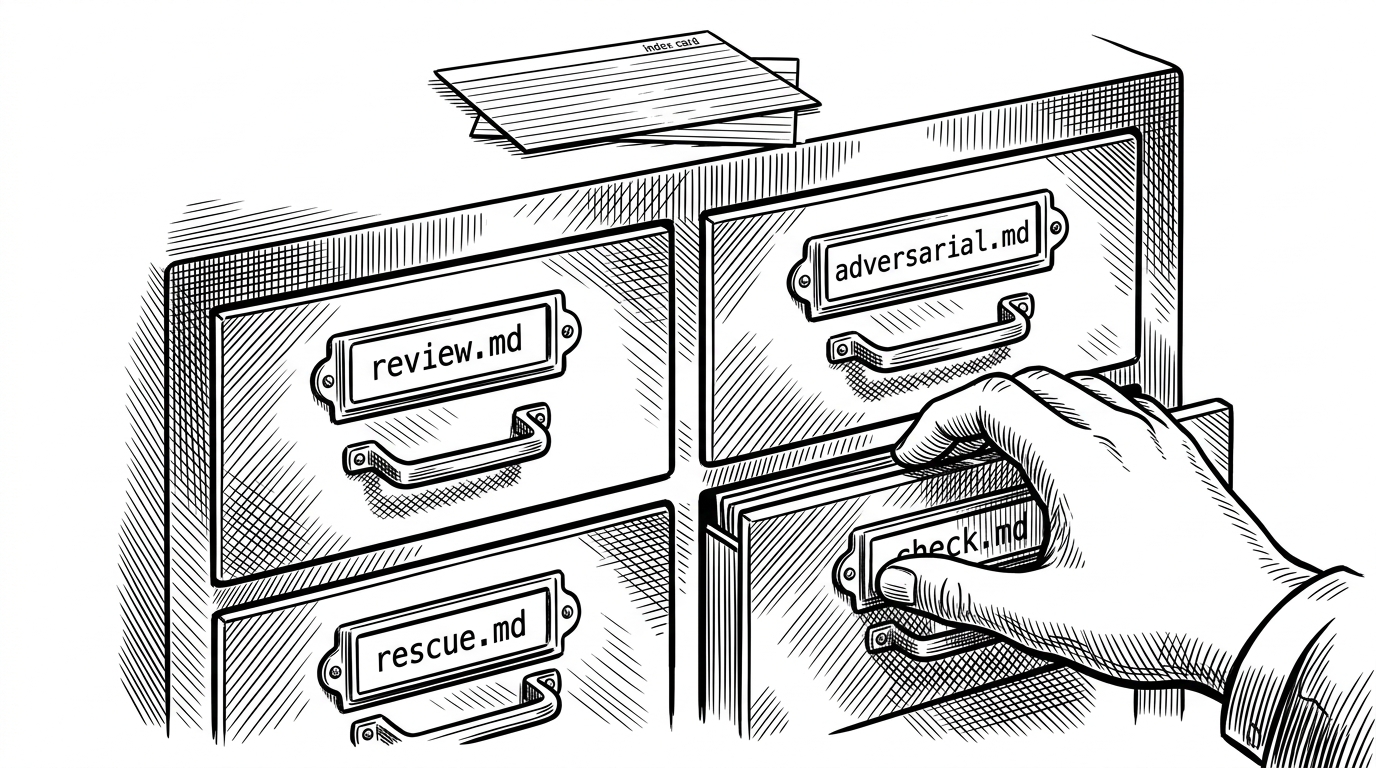
The payoff is editability. A developer can tune what counts as a normal review, when to escalate into adversarial mode, and when to hand the task to a rescue path without hunting through a framework or recompiling anything.
How Redline routes a task to Codex
At the center is the Stop hook. When Claude pauses, Redline checks for uncommitted changes, decides whether the session deserves a review, and if so, tells the agent to spawn the background path.
The review itself runs through Codex, with OpenRouter supplying model access and the result flowing back into Claude's context. That last step is the whole trick. The reviewer is not a detached service. It is feedback the same session can actually use.
If the change is trivial, the plugin can avoid wasting attention on a full review cycle. If the diff looks risky, Redline does not wait for a later PR to discover it. It interrupts early, while the agent still has the full working set in memory.
What the adversarial mode changes
Adversarial mode changes the mood of the review. Instead of asking only whether the code works, `adversarial.md` pushes the reviewer to look for hidden assumptions, rollback risk, and failure modes that usually hide behind a passing test.
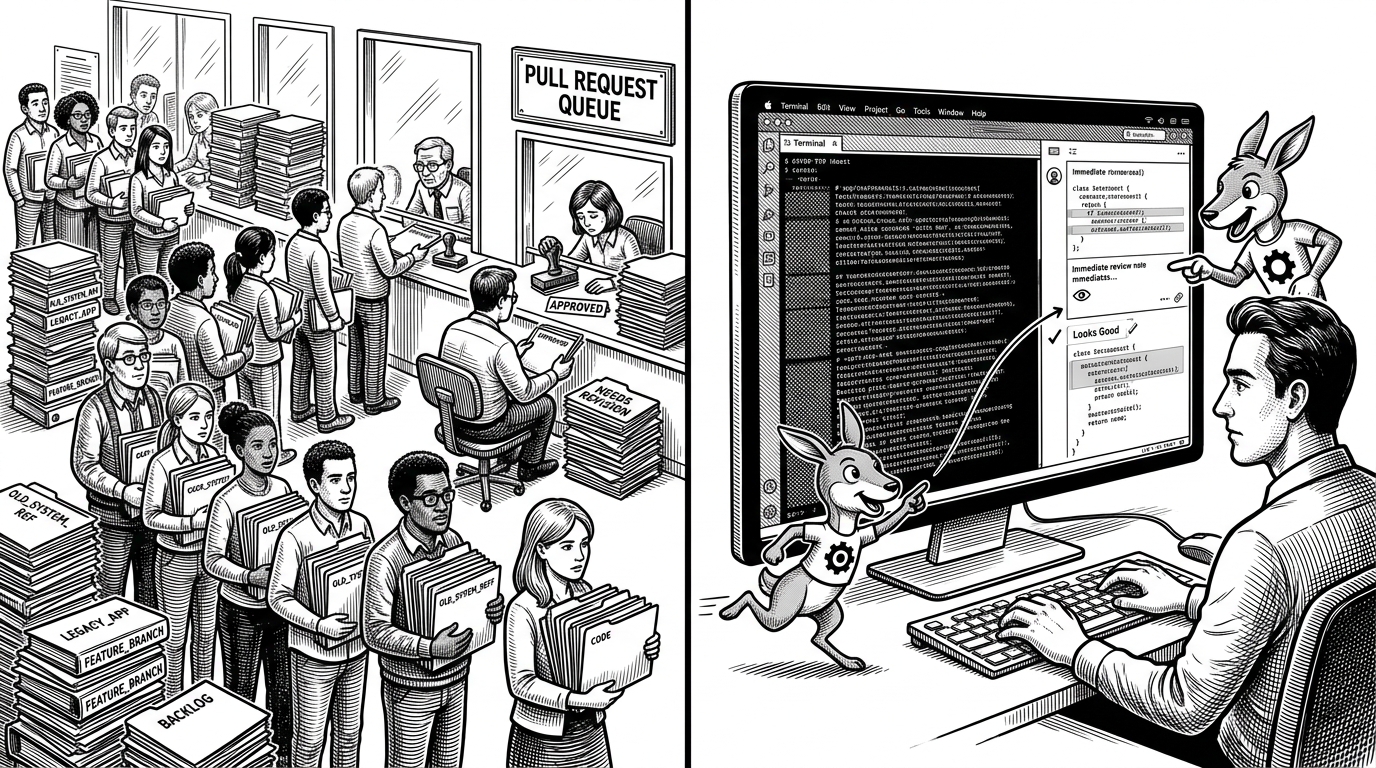
That is a useful distinction. Plenty of tools can spot syntax errors or obvious bugs. Fewer are opinionated enough to ask what breaks when the change is deployed, reversed, or stressed.
Redline vs the usual review tools
| Approach | When it runs | What it is good at |
|---|---|---|
| PR bots | After code is pushed or a pull request is opened | Catch issues once context has already moved into review |
| Generic AI agents | During local or remote coding | Write or refactor code, but often lack a tight review gate |
| Redline | The moment Claude Code stops with changes in flight | Interrupts the agent and sends the diff back into the same conversation |
| Manual review | Whenever a human has time | Deep judgment, but slow and expensive in attention |
The difference is not that Redline is universally better. It solves a different timing problem. It makes review happen while the agent still has the full working set in memory, which is exactly when feedback is cheapest to absorb.
What this says about agentic coding
Redline hints at where useful agent tooling may go next. The best systems may not be louder copilots. They may be small governance layers that know when to interrupt, when to escalate, and when to let the worker continue.
The limitation is real, though. Redline is tightly coupled to Claude Code because it depends on that specific Stop hook behavior. That coupling is a feature, not a bug. The tool is less portable, but far more exact about the workflow it is trying to improve.