claude-skills: `dbskill`: When Markdown Becomes a Runtime for Claude Code
A skill registry, a state-machine prompt system, and a multi-agent orchestration layer hiding inside plain text files.

推荐:Claude Code 插件市场(一键安装,自动更新) claude plugin marketplace add dontbesilent2025/dbskill claude plugin install dbs@dontbesilent-skills 其他方式: npx skills add dontbesilent2025/dbskill
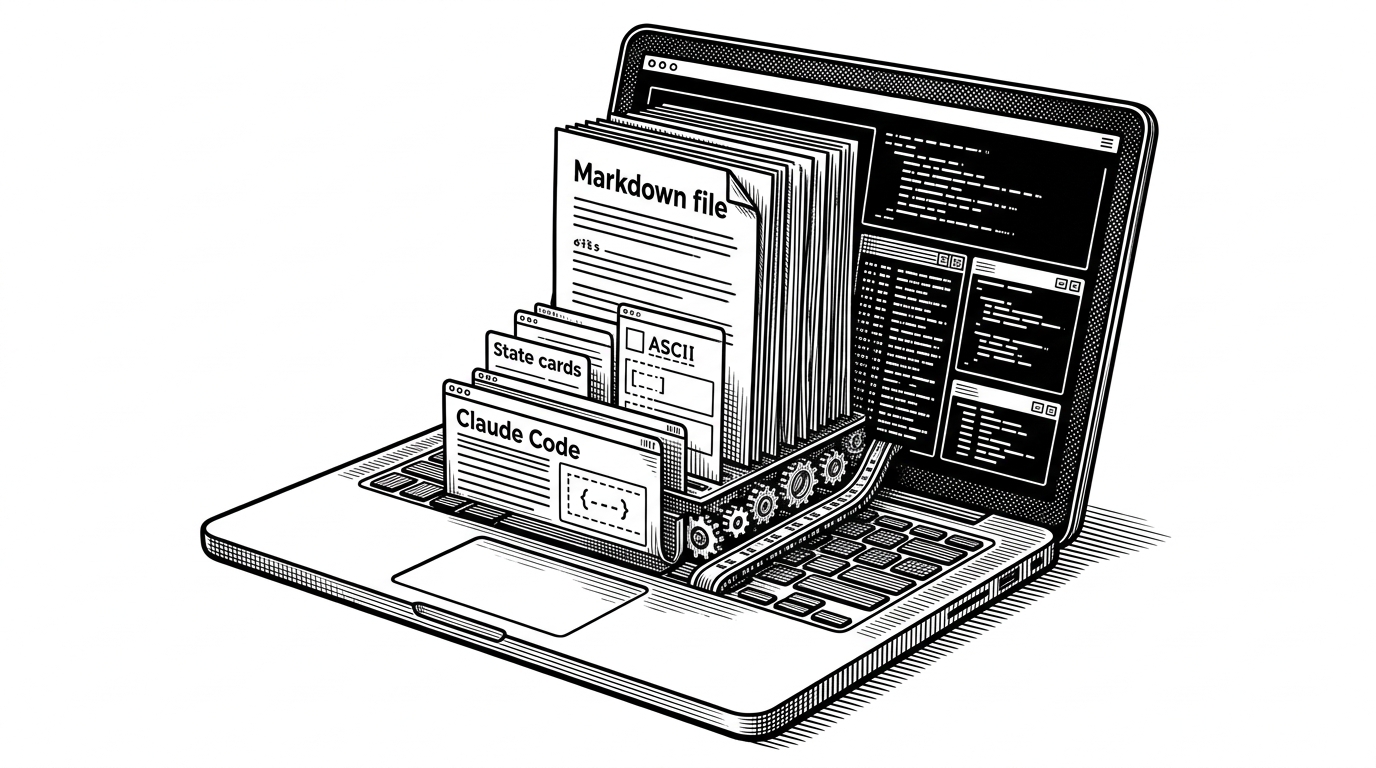
- This repo turns Markdown into a behavior runtime, where structure, phases, and constraints matter as much as the prose itself.
- The most striking skills make Claude Code feel stateful by forcing repeated UI re-renders and explicit variable updates.
- The repo's multi-agent patterns work less like a generic framework and more like a disciplined prompt orchestration layer.
- Its real novelty is not another prompt pack, but a way to ship software-like behavior through plain text conventions.
Most Claude Code skills are utilities. This repo is stranger: it treats plain Markdown as if it were an executable surface. The result is a collection of skills that can enforce phases, simulate state, and even make a chat model feel like it is running a tiny app.
That is why dontbesilent2025/dbskill matters. It is not just a toolkit for business diagnosis, content work, or persona-driven analysis. It is a proof that prompt structure can become runtime structure when the instructions are tight enough.
Why this repo matters
The immediate draw is novelty. A shell user installs a skill, but what they get is closer to a behavior module than a command. Some skills push Claude into a narrow expert voice. Others make it render a UI, maintain variables, or hand off work to sub-agents.
That matters because most LLM tooling still assumes conversation is the interface. This repo assumes the interface can be compiled from text. If you can define phases, hard rules, and output shape in Markdown, you can make the model behave less like a chatbox and more like an app.
The real product is not one skill. It is the runtime pattern
The repo is organized like a lightweight distribution layer. At the root, cli.js handles install and list operations. Under skills/, each directory acts like a self-contained unit with its own SKILL.md and metadata.
That matters because the installer is not just copying files. It is creating a local convention in ~/.claude/skills where a Markdown file can become a live behavioral artifact. The skill folder is the packaging format. The prompt is the runtime.
The installer also reveals the project's philosophy. It looks for structured fields in Markdown, extracts descriptions with regular expressions, and treats the files as machine-readable enough to deploy. The boundary between documentation and executable specification gets very thin here.
const match = content.match(/description:\s*\|?\s*\n?\s*(.+)/)
if (match) {
  description = match[1].trim()
}

fs.cpSync(src, dest, { recursive: true })
How Markdown starts acting like software
This is the technical heart of the repo. The skills do not just describe what to do. They constrain the order of operations, the style of response, and often the shape of the output itself. In practice, the Markdown becomes the control plane.
That is easiest to see in the stateful skills. They declare variables, enforce phase transitions, and require the model to re-render an interface after each exchange. The prompt is not a static instruction set. It behaves like a loop.
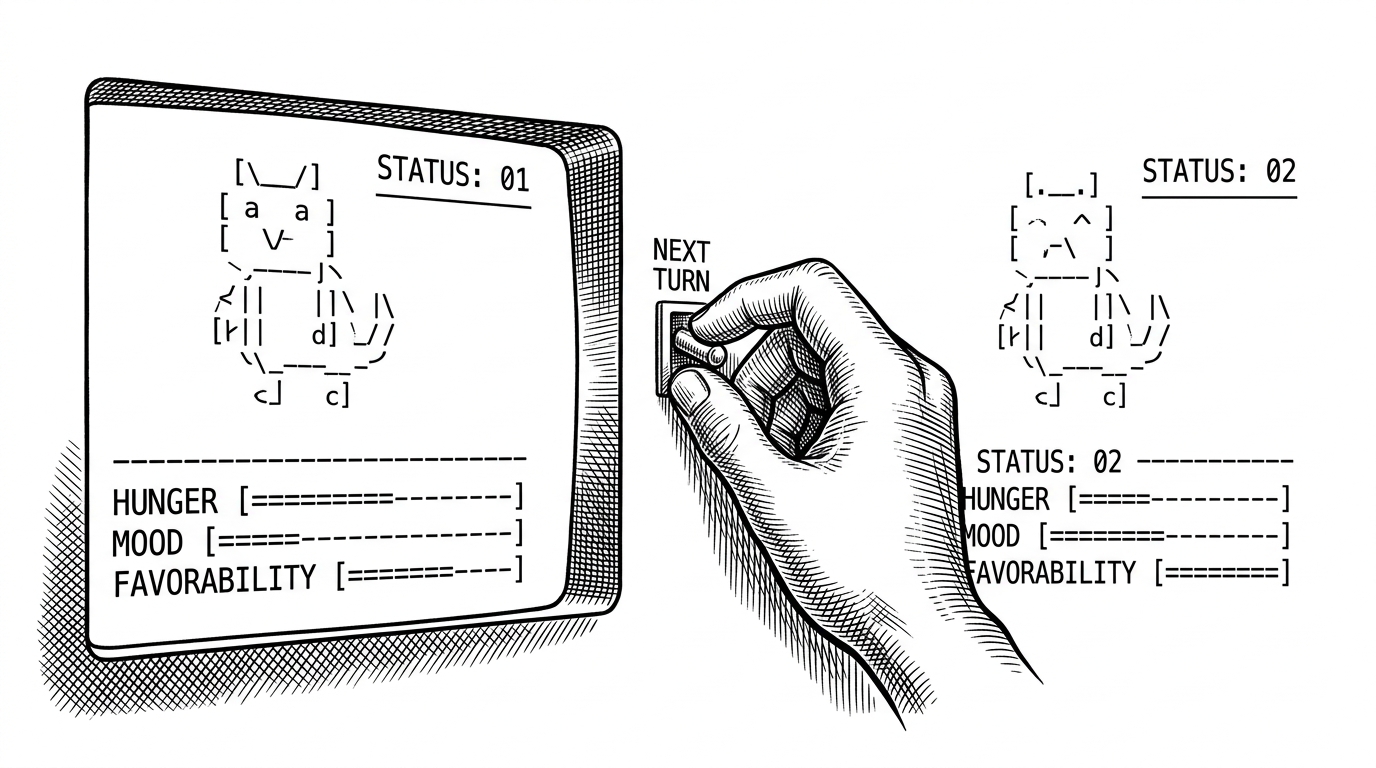
The yujie skill is the clearest example. Variables like hunger, mood, and favorability make the model behave as though it has persistent internal state, even though the underlying system is still stateless. The illusion is created by discipline: strict re-rendering rules, explicit variable updates, and a UI that must be kept current.
The yujie skill: stateful UI inside a stateless model
This is the part of the repo that feels most like software. The interface is not decorative. It is part of the contract. If the state changes, the UI must change with it, and the model is instructed to treat that update as part of the job, not an optional flourish.
That makes the experience feel closer to a pet sim or a game loop than to a chat assistant. The user is not merely asking questions. They are advancing a system through states, and the Markdown is what keeps the states legible.
The lacan skill shows the power of subtraction
The Lacan-inspired skill is interesting for the opposite reason. It works by narrowing the model, not expanding it. It subtracts the usual assistant reflexes, bans familiar helpfulness tropes, and pushes the response style into a much tighter linguistic lane.
That is an important design lesson. Many prompt systems try to get better results by adding more instructions. This one gets leverage by removing escape routes. The result is a behavioral engine, not just a tone filter.
Targeted chatroom shows the repo's other trick: orchestrating agents
The multi-agent skills make the platform idea even clearer. One prompt can split a topic into parallel expert calls, then run a judge pass that critiques the combined output. That is orchestration, not mere prompting.
It also changes the shape of the work. Instead of asking one model to do everything in one pass, the skill turns Claude into a coordinator. The final answer becomes a synthesis with internal review, which is a much more credible pattern for complex analysis.
| Dimension | dbskill | Standard Claude Code skills | Generic prompt pack |
|---|---|---|---|
| What is packaged? | Behavioral workflows in Markdown | Task-specific helper prompts | Reusable instructions or examples |
| Where is the logic? | In SKILL.md phases and constraints | Mostly in prose and examples | Mostly in the prompt text itself |
| How is state represented? | Explicit variables and re-rendered UI | Usually no persistent state | Usually none |
| How is behavior enforced? | Hard rules, phase gating, and output shape | Soft guidance | Soft guidance |
| What does it feel like? | A small runtime | A utility library | A template library |
The comparison makes the category shift obvious. dbskill is not trying to be a classic framework with plugins and APIs. It is closer to a runtime convention for turning structured text into repeatable machine behavior.
What this repo is really competing with
Its real competition is not just other Claude Code skills. It is any system that assumes software needs a traditional app shell to be useful. The repo says something different: if the behavior contract is precise enough, Markdown can stand in for a lot of the machinery.
That puts it between categories. It is more structured than a prompt pack, more opinionated than a plugin folder, and more lightweight than a full agent framework. The win is not scale. The win is controllable behavior with almost no surface area.
The bigger idea
The bigger implication is simple. LLM apps may not need to start as apps at all. They can start as text artifacts that encode state, phase logic, and output discipline. Once you see that, a skill repo stops looking like prompt engineering and starts looking like interface design.
That is the interesting wager behind dbskill. It treats Markdown as a deployable behavior layer, and Claude Code as the runtime that gives it life. If that model keeps working, the next generation of LLM tools may look less like dashboards and more like carefully structured text files with teeth.
| Approach | Strength | Weakness | Best use |
|---|---|---|---|
| dbskill-style skills | High behavioral specificity | Harder to author well | Narrow workflows and expert modes |
| Traditional plugins | Explicit code and APIs | More setup and integration work | Product features and deep tooling |
| Prompt packs | Fast to write | Weak enforcement | Exploration and one-off tasks |
| Agent frameworks | Flexible orchestration | Often complex and heavy | Multi-step automation |