dbskill: The Wittgensteinian Diagnostic Engine for Claude Code
How 12,307 "Knowledge Atoms" turned an AI agent into a ruthless business strategist.


从 12,307 条推文中提炼方法论,做成 Claude Code skill。
- The dbskill framework uses a Wittgensteinian filter to challenge and dissolve flawed business premises before generating solutions.
- The system derives its logic from a structured database of over 4,000 "knowledge atoms" distilled from thousands of social media posts.
- A multi-agent orchestration layer simulates debates between historical economic personas to provide diverse strategic perspectives.
- The tool identifies and halts "thinking masturbation" by confronting users with the psychological reasons they are avoiding execution.
The Art of Saying "No"
Most AI tools try to be helpful. They take your prompt and immediately start generating solutions, code, or copy. The dbskill repository takes the opposite approach. It assumes your initial premise is probably flawed. Built as a "Skill Provider" for Anthropic's Claude Code CLI, the project acts as a diagnostic gatekeeper rather than a generative assistant.
The core of this system is the dbs-diagnosis workflow. It employs a philosophy of "Dissolution over Solution." Before offering any business advice, the AI runs the user's query through a Wittgensteinian filter to identify language traps and assumption errors. If you ask for a marketing strategy for a "lifestyle brand," the AI will stop and force you to define what "lifestyle" actually means in your specific economic context.
4,176 Atoms of Experience
To give the AI this level of rigor, the developer had to build a specialized knowledge base. The project is a rare example of "Social Mining." The creator took over 12,000 unstructured social media posts and distilled them into a highly structured JSONL database.
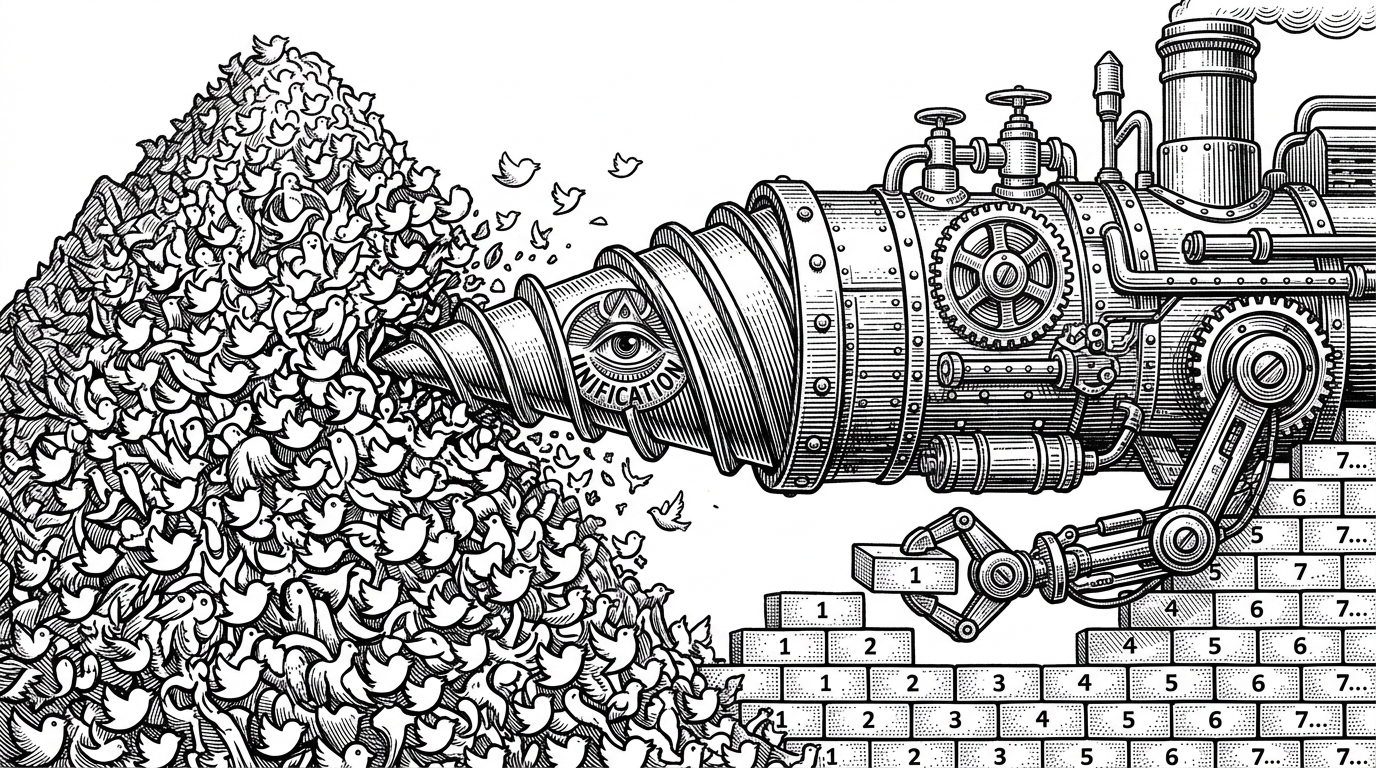
This "Atomic Library" contains 4,176 distinct entries. Each atom is tagged with a confidence score and a specific type, such as an anti-pattern or a fundamental principle. This metadata allows the AI to weigh conflicting advice and prioritize negative constraints over positive suggestions.
{"id": "2024Q4_020", "type": "anti-pattern", "confidence": 0.95, "knowledge": "Pricing is the Product. Do not separate the two.", "original": "...", "skills": ["dbs-diagnosis"]}Hayek vs. Mises in the Terminal
The repository pushes the boundaries of Claude Code by introducing multi-agent orchestration within a single skill. The /chatroom-austrian component simulates a debate between Austrian School economists Friedrich Hayek and Ludwig von Mises.
Instead of a single AI trying to balance opposing views, the system uses parallel tool calls to trigger distinct personas with different thinking styles. A third "Judge" persona monitors the output to prevent endless philosophical roleplay and forces the agents to deliver actionable business takeaways.
Solving the "Thinking Masturbation" Problem
While the diagnosis skills handle the business logic, the dbs-action skill targets the human bottleneck. It recognizes that users often procrastinate by asking the AI for more research or endless planning frameworks.

Grounded in Adlerian psychology, the system treats this hesitation as a teleological choice made to protect the user's ego. If the AI detects "Execution Simulator" behavior, it halts the business analysis and confronts the user about their psychological blocks.
| Feature | Standard AI Assistance | dbskill Diagnosis |
|---|---|---|
| Primary Goal | Generate solutions quickly | Dissolve flawed premises |
| Interaction Style | Agreeable and expansive | Reductive and confrontational |
| Knowledge Source | General LLM pre-training | Structured JSONL atoms |
| Handling Delays | Provides more planning templates | Diagnoses human psychological bottlenecks |
By treating philosophical strategy and psychological intervention as version-controlled code, dbskill points toward a future where AI agents are valued less for what they can write, and more for what they refuse to accept.