Generals-Mac-iOS-iPad: How a 2003 RTS Engine Learned to Speak Apple Silicon
A native port of Command & Conquer: Generals: Zero Hour that threads DirectX 8 through Vulkan and Metal, remaps RTS controls for touch, and preserves the original simulation on modern Apple devices.
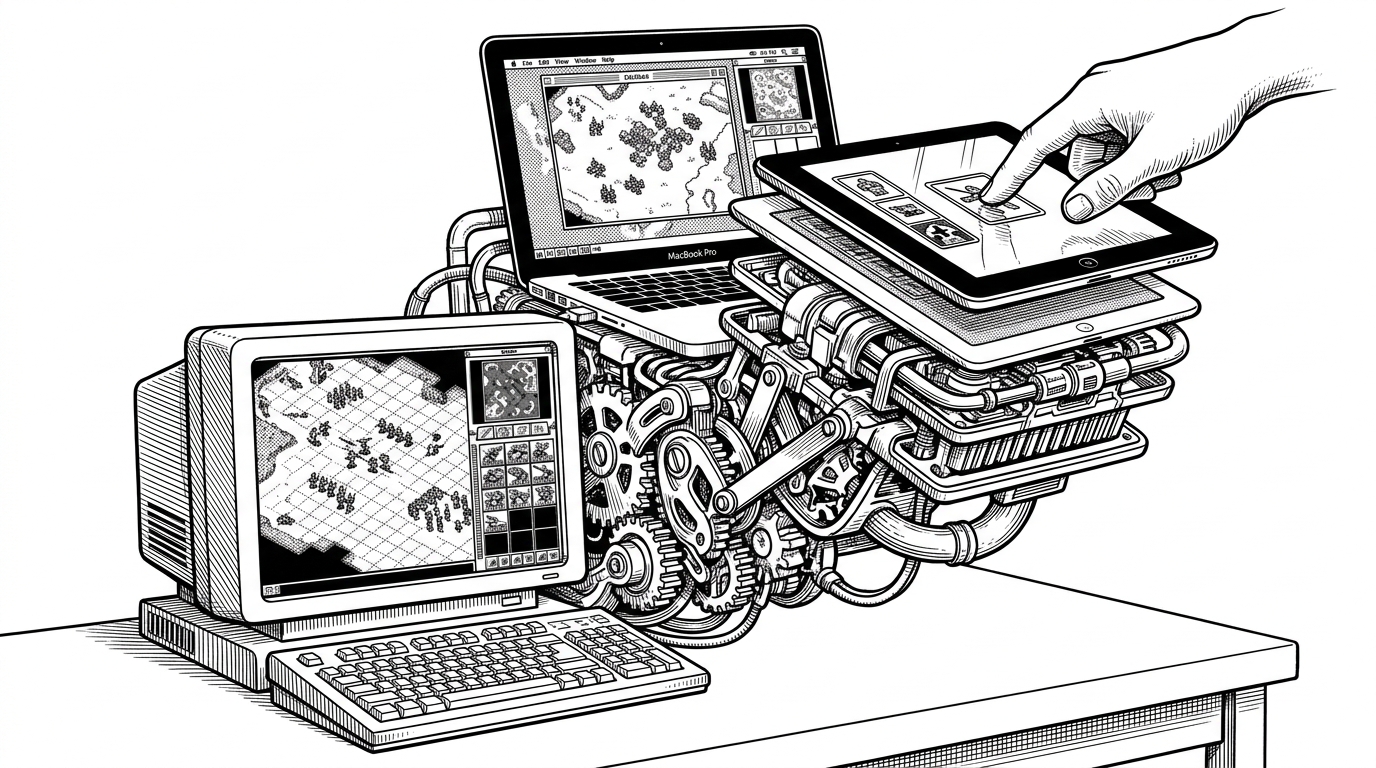
- The repo is interesting because it preserves the original Generals engine on Apple hardware instead of reinterpreting the game through emulation or a rewrite.
- Its real trick is a translation stack that turns DirectX 8 rendering into Vulkan and then Metal, while the game logic stays recognizable underneath.
- The port also solves the ugly platform details that usually kill legacy games, including filesystem writes, frame pacing, iOS lifecycle events, and RTS-style touch input.
- The project is as much a preservation story as a porting story, because it stands on a long chain of community source work and modern tooling.
The first surprise is not that Command & Conquer: Generals: Zero Hour runs on an iPhone. It is that the game is still the original engine, compiled for ARM64, with the simulation intact and the rendering path rebuilt around it. That is a very different claim from compatibility, streaming, or a clean-room remake.
The strange achievement: running Generals natively on Apple devices
This project matters because it preserves behavior, not just content. The campaign, skirmish, and Generals Challenge modes are all there, but the code now lives inside Apple’s rules instead of Windows’. In preservation terms, that is the hard version of the job.
Command & Conquer Generals: Zero Hour running natively on macOS, iPhone & iPad — real engine (EA GPL v3 source, via GeneralsX), DXVK/MoltenVK renderer, RTS touch controls. No game assets included.
What had to change for the engine to survive
The repo is a stack of accommodations. DirectX 8 rendering has to be translated. Legacy Windows filesystem assumptions have to be rerouted. A single-pointer mouse model has to become touch semantics. A 2003-era timing model has to stay stable on hardware that is orders of magnitude faster.
The practical result is a bridge between eras. The original SAGE code still behaves like SAGE code, but the platform surface beneath it has been replaced piece by piece.
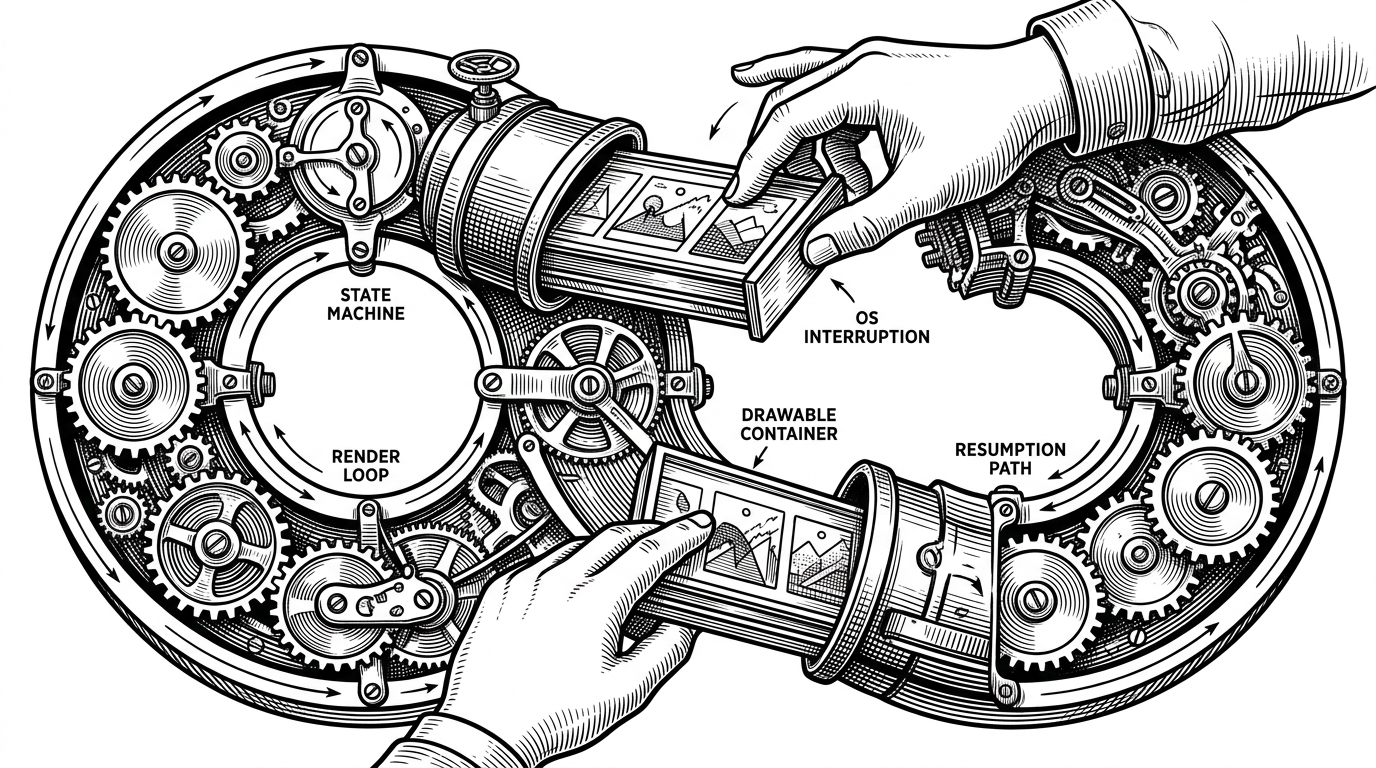
The bridge inside the bridge: DirectX 8 to Metal
This is the most unusual part of the stack. The game speaks DirectX 8. The port routes that work through DXVK, which translates them to Vulkan, and then MoltenVK takes Vulkan to Metal. On Apple devices, that means the renderer is not pretending to be Windows. It is translating one graphics contract into another, in layers.
That layered design matters because it keeps the engine closer to its original assumptions than a total rewrite would. It also lets the project inherit years of work from the broader Vulkan ecosystem instead of reimplementing a renderer from scratch.
SAGE / DirectX 8
  ↓
DXVK translation layer
  ↓
Vulkan abstraction
  ↓
MoltenVK
  ↓
Metal / Apple GPU
How the port keeps the simulation honest
RTS games do not forgive sloppy timing. If frame pacing drifts, lockstep multiplayer can desync, animation timing looks wrong, and old gameplay logic starts behaving like a different game. The repo’s frame limiting and deterministic math work are therefore not polish. They are core infrastructure.
The port also has to rewrite how the game touches the filesystem. Windows-era code likes to save near the executable. iOS does not. So the engine redirects writes into Apple-sanctioned storage while still loading assets from the app bundle.
| Problem | Why it matters | Port strategy |
|---|---|---|
| Frame pacing | RTS simulation depends on stable timing | Use a hybrid limiter with sleep plus high-precision spin waiting |
| Math drift | Different CPUs can diverge in lockstep play | Rely on deterministic math paths for consistent results |
| Filesystem writes | iOS app bundles are read-only | Reroute saves and config files into writable app storage |
| App switching | iOS can reclaim the drawable mid-frame | Pause cleanly instead of crashing or corrupting state |
In other words, the port does not just make the game run. It makes the game run without changing what the simulation thinks time means.
Touch controls without turning the game into something else
The touch layer is not a cosmetic mobile skin. It is a semantic mapping from RTS habits to touch gestures. Long-press becomes the stand-in for right click. Two-finger movement becomes camera motion. The goal is to preserve strategic intent, not to force desktop muscle memory through a phone glass unchanged.
That is the difference between a port and a compromise. If the interface stopped feeling like an RTS, the rest of the engineering would not matter much.
Why this project exists at all
The repo sits inside a lineage, not a vacuum. Its foundation is EA’s GPL v3 source release, then community work from projects like GeneralsX, then the current porting effort. That chain of custody is the real preservation story. Nobody is doing this alone.
Hey, I'm the developer behind GeneralsX — just wanted to jump in and say thanks for the awesome post and the detailed feedback! Really glad to hear you got it running on your M1 Pro and that overall experience has been smooth.
That upstream context explains why this feels less like a heroic rewrite and more like accumulation. A community solved the first hard problem. Another developer extended the path to Apple Silicon and iOS. The final result is continuity, not a fresh start.
The AI-assisted workflow is interesting, but not the main miracle
The Claude Code angle is real, and it is worth noticing, but it should not eclipse the engineering. The interesting part is the division of labor: a human directing, diagnosing, and playtesting, while an AI helps with cross-builds, code archaeology, and repetitive porting work. That is a modern workflow story, not a substitute for the port itself.
In legacy code, the bottleneck is often not writing new code. It is understanding what the old code assumed, then changing only the assumptions that must change. AI is useful there because the task is part translation, part excavation.
Native port, emulator, old Mac port, reimplementation
These approaches are not equivalent. Some preserve access. Some preserve code. This project tries to preserve both the original engine and the modern device target, which puts it in a narrow category on purpose.
| Approach | Runs original SAGE engine? | Native on Apple Silicon? | Supports iPhone/iPad? | Uses emulation? | Gameplay fidelity | Current practical status |
|---|---|---|---|---|---|---|
| Generals-Mac-iOS-iPad | Yes | Yes | Yes | No | High | Functional native port |
| Wine / CrossOver / Whisky / Porting Kit | Yes, via Windows build | Partly | No | Yes | Medium | Useful on Mac, not native |
| Aspyr Mac port | Yes | No on modern macOS | No | No | High when supported | Deprecated and broken on modern systems |
| OpenRA / OpenSAGE | No | Potentially yes | Not as this game | No | Varies | Alternative engine, not the original game |
That is why the repo fills a niche that nothing else quite matches. If you want the original Generals logic on modern Apple hardware, this is the path that gets closest without pretending the platform differences are trivial.