OrcaSlicer-bambulab: The Fork That Put a Linux Bridge Between a Slicer and a Cloud Lockout
A Windows build that depends on WSL 2, a CI pipeline that ships a Linux runtime, and a community fork that rebuilt BambuNetwork support instead of settling for LAN-only mode.
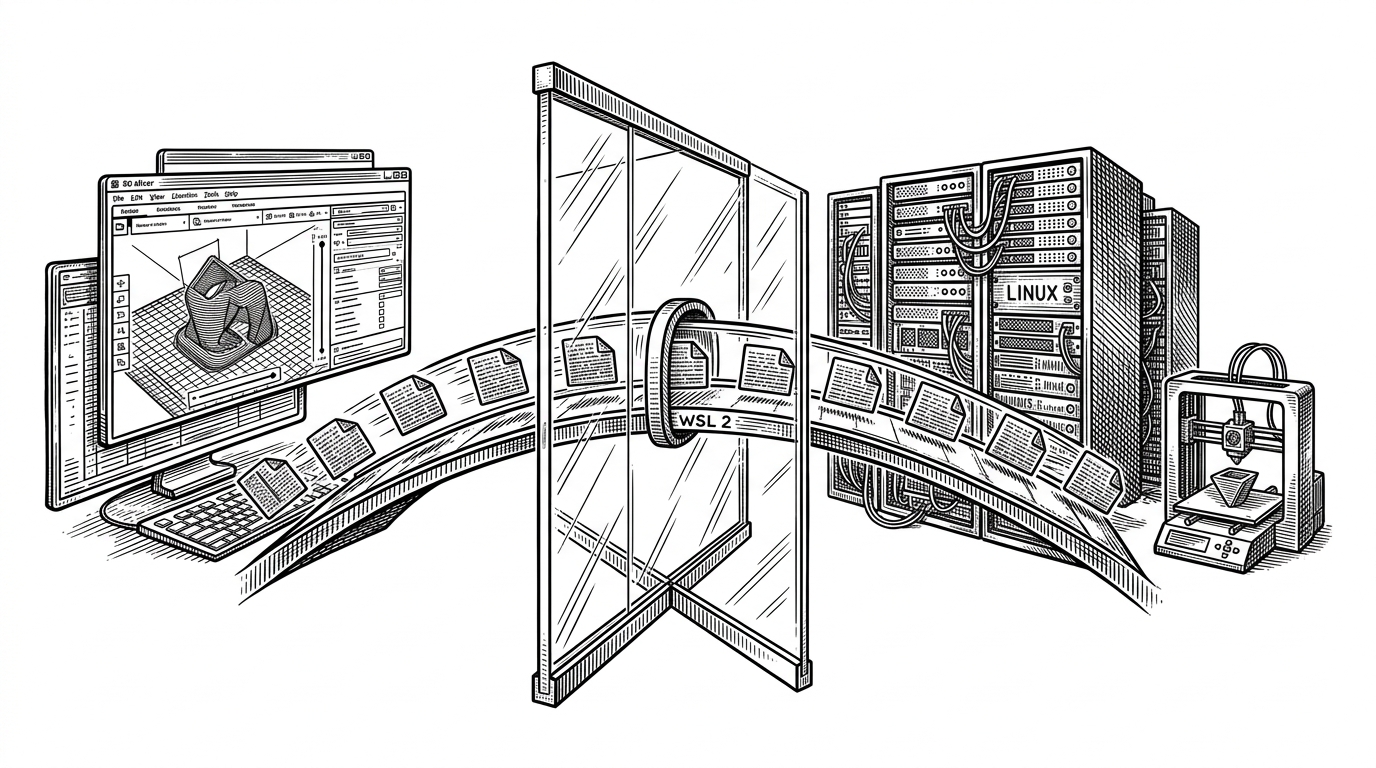
- OrcaSlicer-bambulab is less a slicer fork than a routing layer, because its defining feature is a Linux bridge that restores BambuNetwork support for Windows users through WSL 2.
- The repo’s controversy gives the engineering a purpose, since the project exists to preserve remote printing and cloud workflows that a simpler LAN-only path would drop.
- The build system is part of the product, because CI packages the bridge runtime and the repository’s tooling exists to keep a very large C++ codebase shippable.
- This fork shows how modern open-source maintenance can be a political act expressed through build systems, compatibility shims, and deployment choices.
The workaround is the product
The surprise in OrcaSlicer-bambulab is not the slicer UI. It is the fact that full BambuNetwork support is restored by inserting a Linux runtime bridge into the path and requiring WSL 2 on Windows before first launch.
That choice turns a desktop app into a relay system. The GUI still does slicer things. The cloud session, printer communication, and return path for status and camera events are delegated to a bridge that can speak the right network dialect.
Why this fork exists
The repository began as a fork made by Paweł Jarczak, then moved into the FULU Foundation’s hands after legal pressure. That matters because the engineering makes more sense when you see the project as a response to a platform lockout, not as a generic feature fork.

This version of OrcaSlicer restores full BambuNetwork support for Bambu Lab printers.
That sentence is the whole thesis. The repo is not chasing a nicer slicer skin. It is trying to preserve a particular way of using the printer, including remote access, cloud printing, and normal day-to-day workflows.
A bridge, not a rewrite
The technical tradeoff is blunt. Instead of reimplementing the entire BambuNetwork stack natively across desktop operating systems, the project pushes networking into a Linux runtime and lets the GUI talk to that bridge.
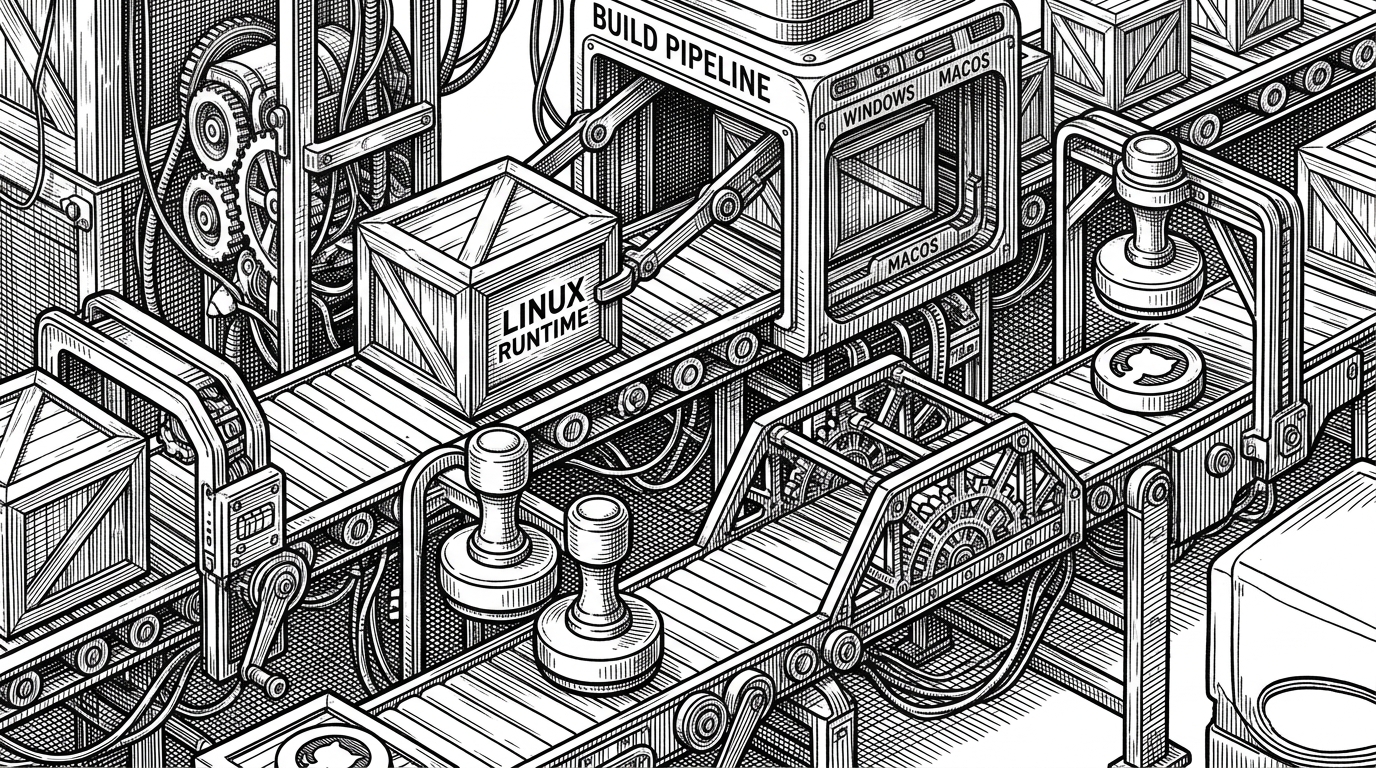
That explains why the repository’s CI matters so much. The bridge is built, packaged, and threaded into Windows and macOS workflows, which means the build system is doing architecture work, not just packaging code.
UI app -> bridge launcher -> WSL 2 Linux runtime -> BambuNetwork cloud -> printer
printer status, camera, and job events -> Linux runtime -> bridge launcher -> UI app| Aspect | LAN-only workflow | BambuNetwork + bridge workflow |
|---|---|---|
| Remote access | Dropped or reduced to local network use | Preserved through the Linux bridge |
| Install complexity | Simpler on the surface | Needs WSL 2 on Windows and bridge setup |
| User experience | Good for local printing, weaker for remote monitoring | Closer to the original cloud-centric workflow |
| Maintenance burden | Lower in the short term | Higher, because the bridge must stay shippable across platforms |
The point is not that the bridge is elegant in the abstract. The point is that it keeps a capability alive that users actually care about.
What a slicer really carries around
A slicer like this is not a thin desktop app. The repository is mostly C++, with CMake at the center, wxWidgets on the UI side, and heavy dependencies for geometry, volume processing, networking, and parallelism.
| Layer | What it usually means | Why it matters here |
|---|---|---|
| C++ core | Performance-sensitive slicing and printer logic | Most of the hard work lives in compiled code |
| CMake and deps/ | Platform-specific orchestration and patched third-party libraries | The build system is part compiler, part traffic controller |
| wxWidgets UI | Native desktop shell | Keeps the app cross-platform without pretending the OS differences disappear |
| CGAL, OpenVDB, TBB, CURL, OpenSSL | Geometry, volume, threads, networking, crypto | This is why slicers are large and brittle by necessity |
# Build logic in this repo has to manage more than compilation.
# It also decides which runtime path is assembled for each platform.

if(WIN32)
    add_compile_definitions(BBL_RELEASE_TO_PUBLIC=1)
endif()

# Dependency patches and bridge packaging live alongside the core build.
# That makes the build graph part of the product architecture.
This is why “just port it” is fantasy. You are not moving a small app. You are moving a geometry engine, a desktop UI, a printer workflow, and a network stack that now depends on a bridge runtime.
The maintenance machine behind the scenes
The repo’s survival depends on discipline. The `deps/` directory carries patches for upstream libraries, formatting is enforced tightly, and the project includes AI-assist files that suggest the maintainers are using every available tool to keep a large fork coherent.
It works over the internet just like before, through BambuNetwork, with full functionality for normal use and printing.
That is the maintenance challenge in one line. The project is promising continuity, not novelty. Continuity only works if the build remains repeatable, the bridge stays healthy, and platform-specific quirks do not leak through the seams.
What it replaces
Compared with a LAN-only fork, this project chooses control over simplicity. It keeps the remote workflow intact for users who want cloud printing, camera access, and printer status without giving up the slicer they already use.
| Question | Official or LAN-only path | OrcaSlicer-bambulab path |
|---|---|---|
| Can I print remotely? | Often no | Yes, through the bridge |
| Do I need another app or middleware? | Usually yes or a reduced workflow | The bridge is embedded into the runtime path |
| Is install cleaner? | Yes | No, but feature parity is better |
| What is the philosophy? | Minimize the stack | Preserve the workflow |
That philosophy is the real differentiator. The fork says some users would rather carry a more complicated runtime than accept a downgraded printer experience.
The bigger lesson
The lesson here is bigger than one slicer or one printer brand. Modern open-source maintenance is often about routing around constraints with build systems, CI pipelines, and runtime shims, not just writing more code.
OrcaSlicer-bambulab shows what that looks like when the constraint is an OS boundary and the answer is a bridge. The project treats packaging as policy and deployment as part of the argument.