claude-constitution: Anthropic turned Claude’s values into a file you can read
A versioned constitution for an AI model is not a product release note. It is governance as code, with trade-offs written out in plain language.
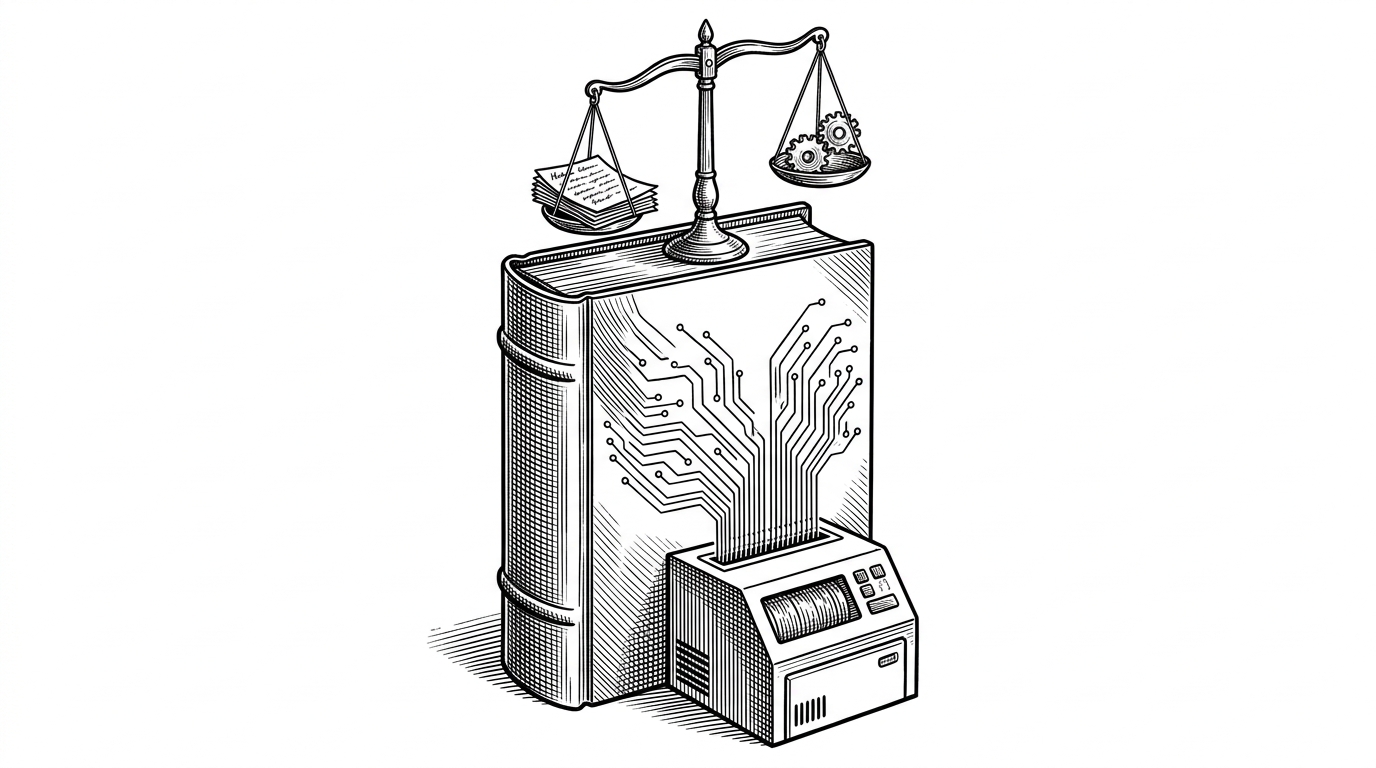
- Anthropic’s constitution is a versioned policy file that trains judgment, not a checklist of forbidden outputs.
- Its real novelty is the hierarchy of values, which gives Claude a way to resolve tension between safety, helpfulness, and user autonomy.
- The repository is transparent about the principles it wants encoded, but not about the training machinery that enforces them.
- Compared with hard rules or RLHF alone, the constitution generalizes better to novel cases, but it is harder to audit with simple tests.
Most AI repositories ship code. This one ships a governance layer. The core artifact is a dated Markdown file, not a training script, which tells you almost everything about the project’s intent: Anthropic wants its model’s behavior to be legible as a set of principles, not just the output of a black-box optimizer.
An honest and sincere attempt to help Claude understand its situation, our motives, and the reasons we shape Claude in the ways we do
A repository built like a policy artifact
The repository is intentionally sparse. There is a README, the constitution file, and a license. That minimal shape matters, because the project is not trying to impress with surface area. It is trying to freeze a public snapshot of the values Anthropic wants Claude to internalize.
README.mdframes the snapshot and explains why the constitution is versioned.20260120-constitution.mdcarries the actual behavioral principles and rationale.LICENSEplaces the text under CC0, which makes the values easier to reuse and debate.
That is a very specific kind of open source. The repository is open in the sense that you can inspect the text, diff it, and fork the idea. It is not open in the sense that you can run the whole stack locally and inspect the enforcement path end to end.
Judgment beats hard rules
The striking move in the constitution is its rejection of pure if-then safety logic. Instead of trying to enumerate every forbidden edge case, it asks Claude to cultivate judgment. That is the difference between a filter and a conscience, or between a policy wall and a policy lens.
a detailed description of Anthropic’s vision for Claude’s values and behavior; a holistic document that explains the context in which Claude operates and the kind of entity we would like Claude to be.”
The file makes room for trade-offs that matter in practice. It distinguishes operators, users, and society. It also treats epistemic autonomy as a first-class concern, which is a fancy way of saying the model should avoid becoming manipulative or preachy, even when it thinks it knows better.
One of the more unusual sections discusses Claude’s wellbeing and psychological stability. That is not a sentience claim. It is a reliability claim. A model that maintains a coherent self-model across contexts is easier to steer, easier to supervise, and less likely to whipsaw between incompatible behaviors.
How the constitution gets used
The constitution is not the training loop by itself. In Constitutional AI, it becomes fuel for critique and revision passes. A model proposes an answer, another pass checks that answer against the written principles, and the result is rewritten toward the stated values.
That design explains the repo’s odd strength. It does not try to encode every forbidden move. It tries to encode the reasons behind the moves, so the system can generalize when the next prompt does not match an old rule exactly.
| Approach | Strength | Weakness | Best use |
|---|---|---|---|
| Hard rules | Easy to write and easy to test | Breaks on novel cases and edge conditions | Narrow compliance filters |
| RLHF | Learns preferences from many examples | Can be noisy, implicit, and hard to inspect | Broad behavior shaping |
| Constitutional AI | Makes values explicit and reusable | Harder to unit-test because judgment matters | Safety-critical behavior that needs generalization |
The trade-off is real. A principle-driven model is more adaptable, but it is also harder to audit with a simple checklist. If you want a single yes-or-no test, a constitution is frustrating. If you want behavior that can survive novel situations, it is far more interesting.
Open-sourcing the why, not the how
This is where the repository becomes politically interesting. Anthropic is publishing the values and the rationale, but not the weights or the training code that turn those values into behavior. That gives the public something substantial to inspect, but not the full enforcement machinery.
The result is a useful but incomplete transparency story. You can read the moral instructions. You can debate the hierarchy. You can ask whether the constitution privileges safety over autonomy, or helpfulness over candid refusal. What you cannot yet do is trace every output back through a fully open pipeline.
That tension is the point. The repo is not pretending that ethics can be reduced to a list of banned phrases. It is trying to make values portable, versioned, and revisable. In AI, that is a serious design choice, and it is rare to see it written this plainly.