awesome-forge-agents: Programming the programmer
Forgecode turns agent behavior into YAML, Handlebars partials, and schema checks, so specialists stay narrow, testable, and terminal-native.
- Forgecode treats agent behavior as source code, so specialization becomes a versioned artifact instead of a loose instruction.
- Its biggest edge is not raw model access, but the discipline of separate jobs, shared prompt parts, and schema validation.
- The repo's benchmark work shows that autonomous agents fail on workflow friction long before they fail on raw intelligence.
- Compared with generalist copilots, its terminal-first design makes context, tools, and provider quirks part of the contract.
Most coding agents are sold as conversation. Forgecode reads more like infrastructure. It turns agent behavior into files, shared prompt fragments, and schema checks, then lets each persona do one job well.
AI enabled pair programmer for Claude, GPT, O Series, Grok, Deepseek, Gemini and 300+ models
That breadth is the first clue. The point is not to crown one model, but to make the operating layer stable enough that the model can change underneath it. The project data points to a small core team, with contributors such as Tushar Mathur and Amit Kumar Singh shaping a workflow that feels built by people who actually live in a terminal.
The prompt is the product
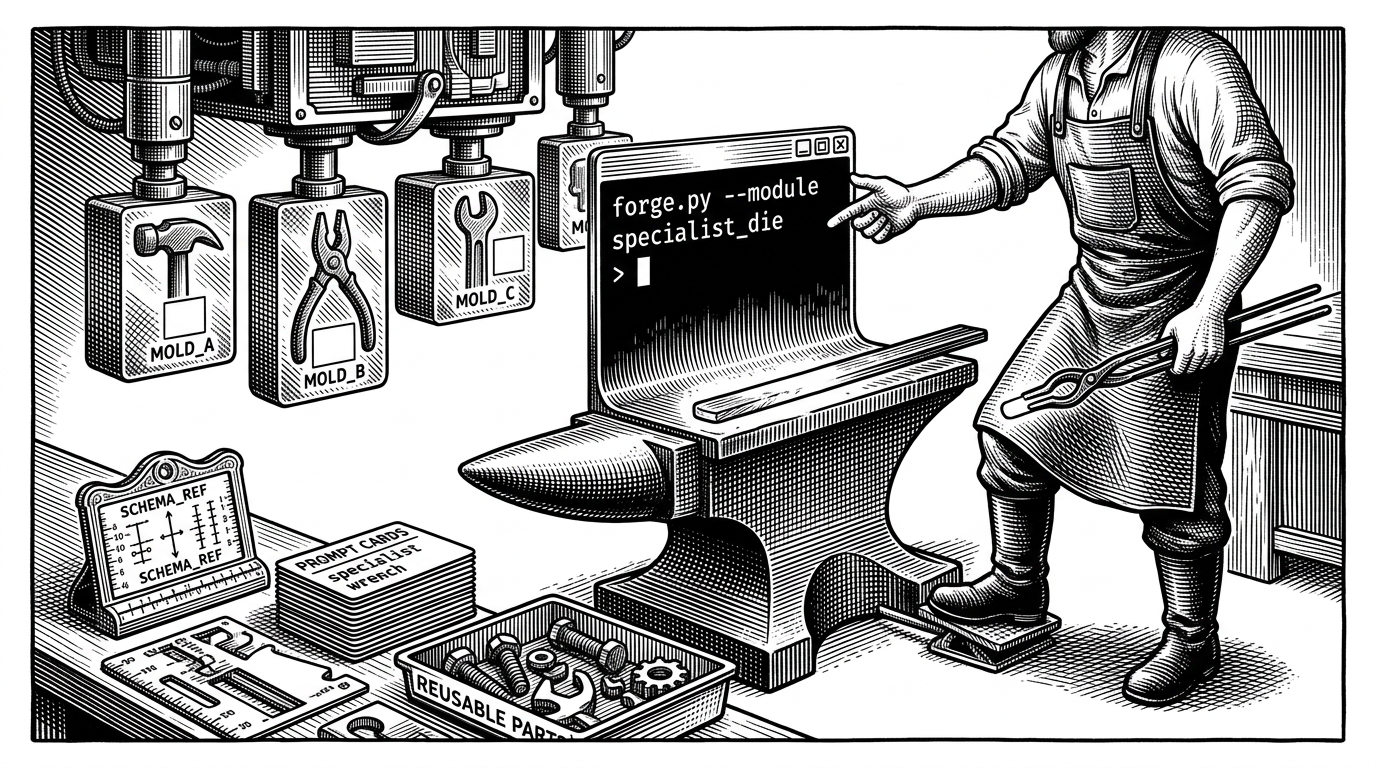
Open a persona file and the pattern is obvious. config.yaml declares the job, forge.schema.json keeps the file honest, and Handlebars partials pull in shared instructions without copy-paste drift. That makes a persona feel closer to source code than to a prompt paste.
# A simplified shape of one persona config
# yaml-language-server: $schema=../forge.schema.json
id: lovable
title: Lovable
system_prompt: |
  You are a frontend specialist working in a real-time preview loop.
  Use shadcn/ui and React Query.
  Keep components under 50 lines.
  Use toast notifications for errors.
{{#if custom_rules}}
{{custom_rules}}
{{/if}}
The lovable agent shows the approach at its most opinionated. It is told to work with a real-time preview loop, stay under fifty lines per component, use specific UI libraries, and surface errors with toasts. sage is the opposite: read-only, evidence first, and forced to show its reasoning before it answers.

How the system keeps itself honest
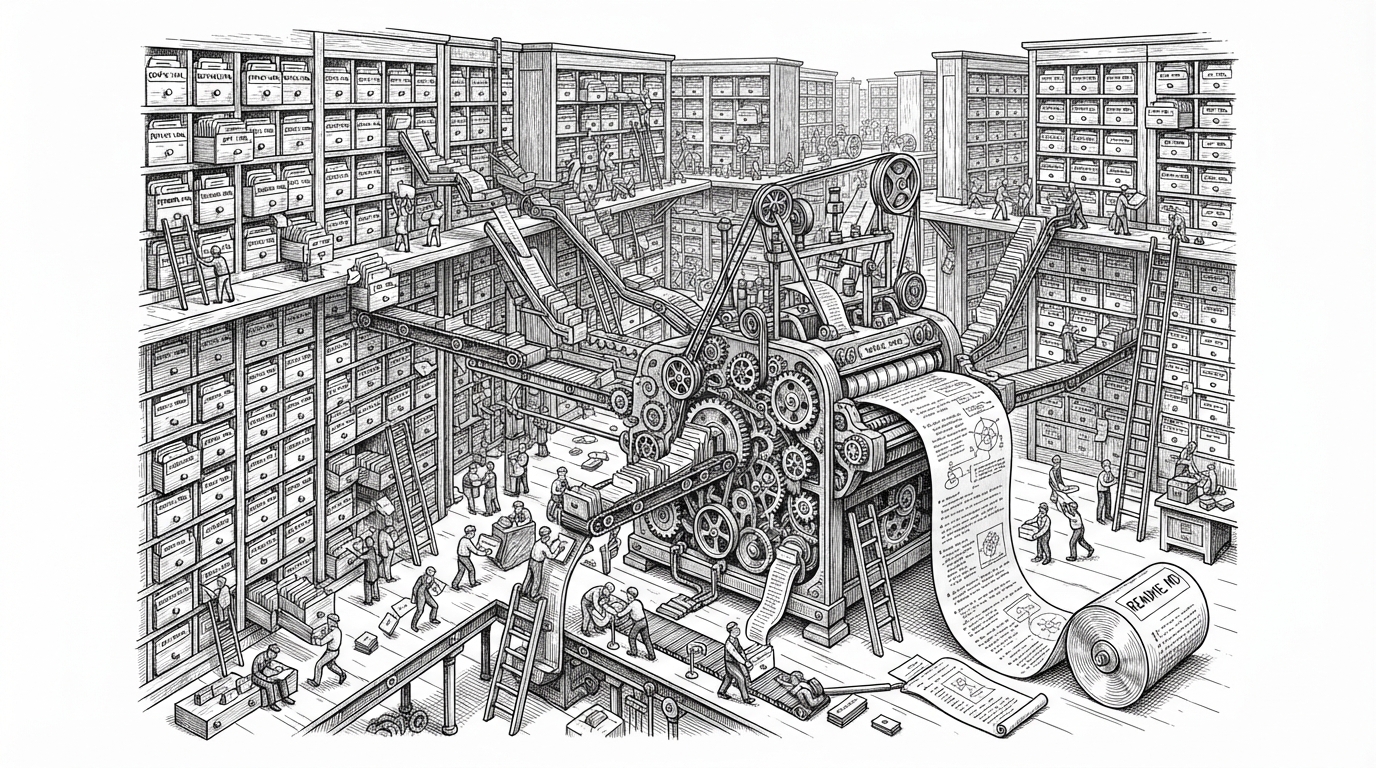
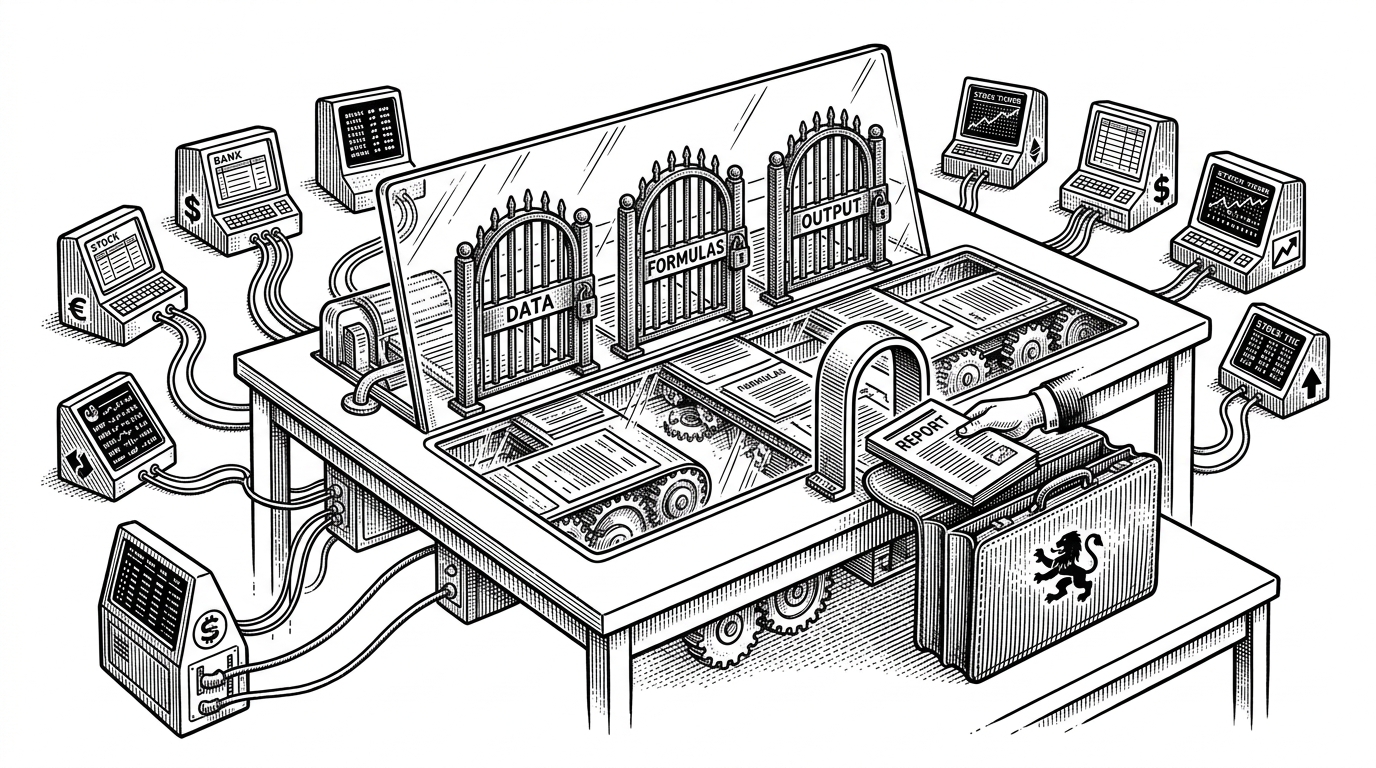
The full path is less magical than it sounds. Shared prompt fragments are assembled, the schema catches malformed config, and repomix-output.xml gives the model a flattened map of the repository so it can inspect code without hunting file by file. The result is a pipeline for context, not just a pile of tokens.
That design also explains the UX tweaks. If drag and drop inserts a raw path that Forge ignores, the workflow breaks. If a provider rejects a tool schema, the model support matrix becomes a liability. Small fixes are really guardrails around autonomy.
When a user drags and drops a file onto the terminal, the terminal pastes the raw file path as text. Forge requires @[path] syntax to recognise file references, so dropped files were silently ignored.
Model compatibility is not a footnote here. It is part of the product contract, because a terminal agent is only useful if it survives provider quirks, tool schema mismatches, and the weirdness of real input.
ForgeCode currently fails to connect to xAI's API (Grok models) with "Client specified an invalid argument" error on every request.
Specialization beats generic confidence
Against Claude Code, Copilot CLI, or Aider, Forgecode's advantage is not that it can talk. They all can. The difference is that Forgecode makes persona, context, and runtime behavior explicit, which is exactly what teams need when they want repeatable outcomes rather than clever one-offs.
| Generalist assistant | Forgecode persona |
|---|---|
| One model does everything | Separate configs encode separate jobs |
| Prompting is ad hoc | YAML, partials, and schema validation |
| Context is fetched on demand | Repo state is flattened with repomix XML |
| UI work happens in chat | UI work stays inside a preview loop |
| Success means a fluent reply | Success means the right behavior under constraint |
That is also why the spec-kit integration matters. A persona library that can be described as config can travel. It can be adapted, reused, and audited instead of getting trapped inside one interface.
Add 'forgecode' to AGENT_CONFIGS in agents.py with .forge/commands directory, markdown format, and {{parameters}} argument placeholder
Forgecode's best idea is not that agents should be smarter. It is that they should be narrower, more legible, and easier to compose. In a crowded field of assistants, that is the bet that feels most like software engineering.