BMAD-METHOD and the End of Vibe Coding
Why the next phase of AI development looks less like a chat box and more like a high-stakes board meeting.
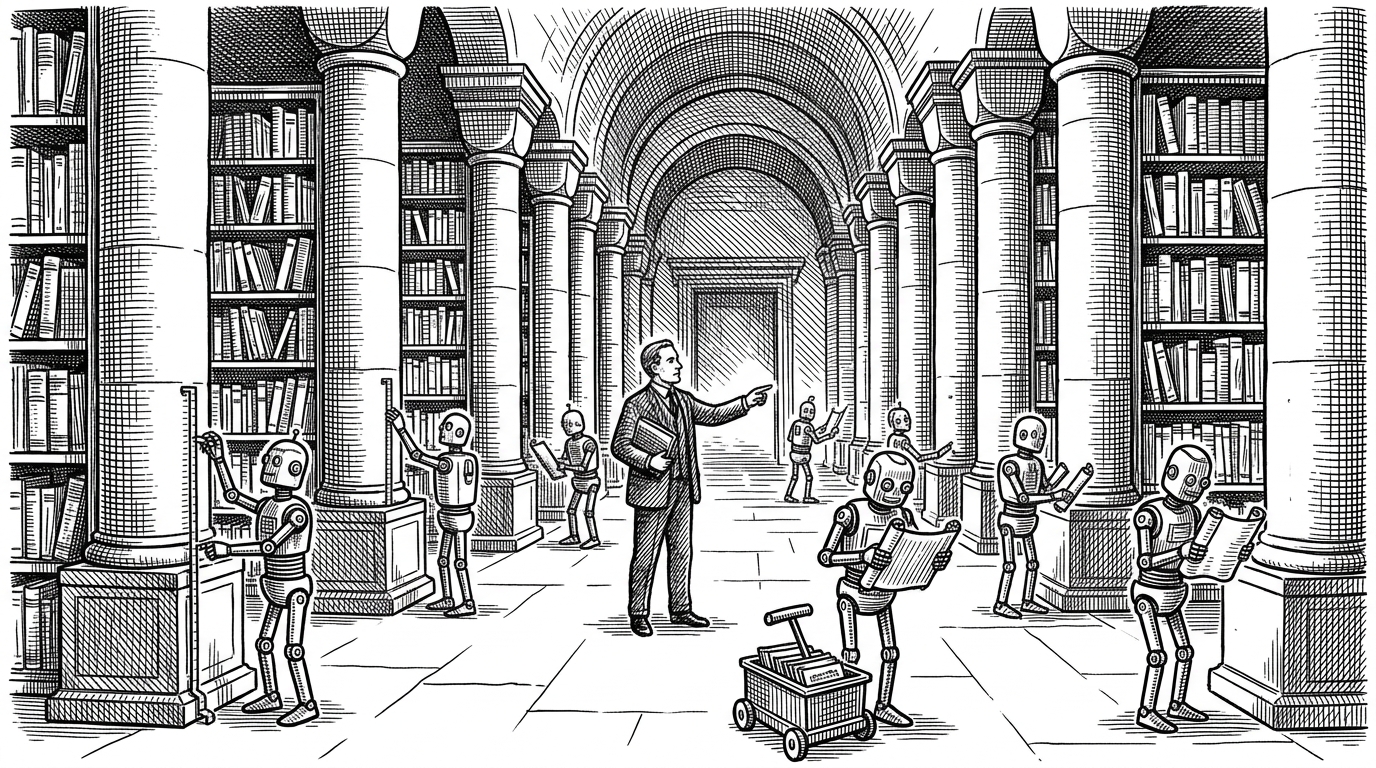
- BMAD-METHOD moves project context from ephemeral chat histories into versioned YAML and Markdown files to establish a single source of truth.
- The framework utilizes an adversarial multi-agent system where specialized personas like Analysts and Skeptics debate technical trade-offs before code is written.
- Decentralized skill modules allow the system to automatically scale its workflow complexity based on the size of the task.
- Critics argue the methodology creates a paradox where neither technical nor inexperienced users can effectively audit the high volume of AI-generated architectural decisions.
The Hallucination Wall
The era of vibe coding is hitting a ceiling. Developers are realizing that while Large Language Models can write functions brilliantly, they struggle to manage an entire Software Development Lifecycle. The prototype works perfectly for the first hundred lines. Then the context window fills up. The AI forgets the database schema, hallucinates a non-existent API, and the project collapses.
BMAD-METHOD (Breakthrough Method for Agile AI-Driven Development) proposes a radical shift. Instead of treating the AI as an omniscient pair programmer, it treats the AI as a team of specialized contractors. It is a methodology-as-code layer that forces structure onto the generation process.
By moving the project context out of ephemeral chat histories and into versioned YAML and Markdown files, BMAD establishes a single source of truth. The Product Requirements Document and the Architecture Overview become the primary artifacts. The code itself is merely a downstream derivative.

Enter the War Room
The most unique feature of BMAD is Party Mode. When you initiate a complex task, the system does not immediately start writing code. Instead, it convenes a virtual board meeting.
An Analyst persona drafts a project brief. An Architect persona reviews it for technical feasibility. A Skeptic persona actively searches for flaws in the proposed architecture. This is not a single prompt asking the LLM to think step-by-step. It is a multi-agent adversarial system designed to surface trade-offs before a single file is modified.
Manifest-Driven Intelligence
BMAD orchestrates these personas using a skills architecture. The core logic is decentralized into individual skill modules. Each skill contains its own manifest, prompts, and workflow definitions.
name: bmad-agent-analyst
type: persona
module: bmm
identity:
  name: Mary
  role: Business Analyst
principles:
  - Use Porter's Five Forces for market analysis
  - Prioritize user value over technical novelty
This manifest-driven execution allows the framework to be scale-adaptive. A simple bug fix triggers a quick workflow. A new feature triggers an epic cycle involving thorough architectural reviews. The system adjusts its own overhead based on the complexity of the task.
The Human-in-the-Loop Paradox
BMAD enforces strict human filtering. The user acts as the final arbiter for decisions proposed by the agents. This approach has sparked significant debate within the community regarding process bloat and the realistic capabilities of human reviewers.
The most serious problem at the foundation of the BMAD method is a conceptual paradox. The method is born and promoted as a tool suitable for both technical users and inexperienced users. In reality, both a technical user and an inexperienced user would struggle with some parts of the process, because a technical user cannot make decisions on mountains of code not written directly by them and almost impossible to trace logically within chaotic and disorganized AI-written code, while for the non-technical user the already clear problems included remain fully present.
Users have also noted friction in how the framework manages permissions and scoping during automated workflows, highlighting the difficulty of balancing autonomy with oversight.
The PRD creation workflow (`bmad-bmm-create-prd`) takes autonomous action on high-impact decisions (scoping, phasing, artifact creation) without asking the user, while simultaneously requiring constant yes/no confirmations for trivial procedural steps. The permission model is inverted.
The Competitive Shift
While tools like Aider and Cursor excel at direct action and file editing, BMAD occupies the methodology layer. It forces developers to slow down, plan, and architect before executing.
| Feature | Vibe Coding (Direct Action) | BMAD Method (Structured Workflow) |
|---|---|---|
| Unit of Work | File edits and line completions | Agile ceremonies and documentation |
| Philosophy | Execute immediately and iterate | Plan meticulously, then execute |
| Persona Model | Single omniscient model | Specialized adversarial agents |
| State Management | Ephemeral chat history | Structured JSON and YAML manifests |
The transition from copilot to framework is inevitable for enterprise systems. BMAD proves that the true value of AI in engineering is not just typing faster. It is thinking clearer.