agentflow: The Airflow for AI Agents
How AgentFlow turns brittle LLM scripts into programmable, self-correcting graphs that spawn their own cloud infrastructure.
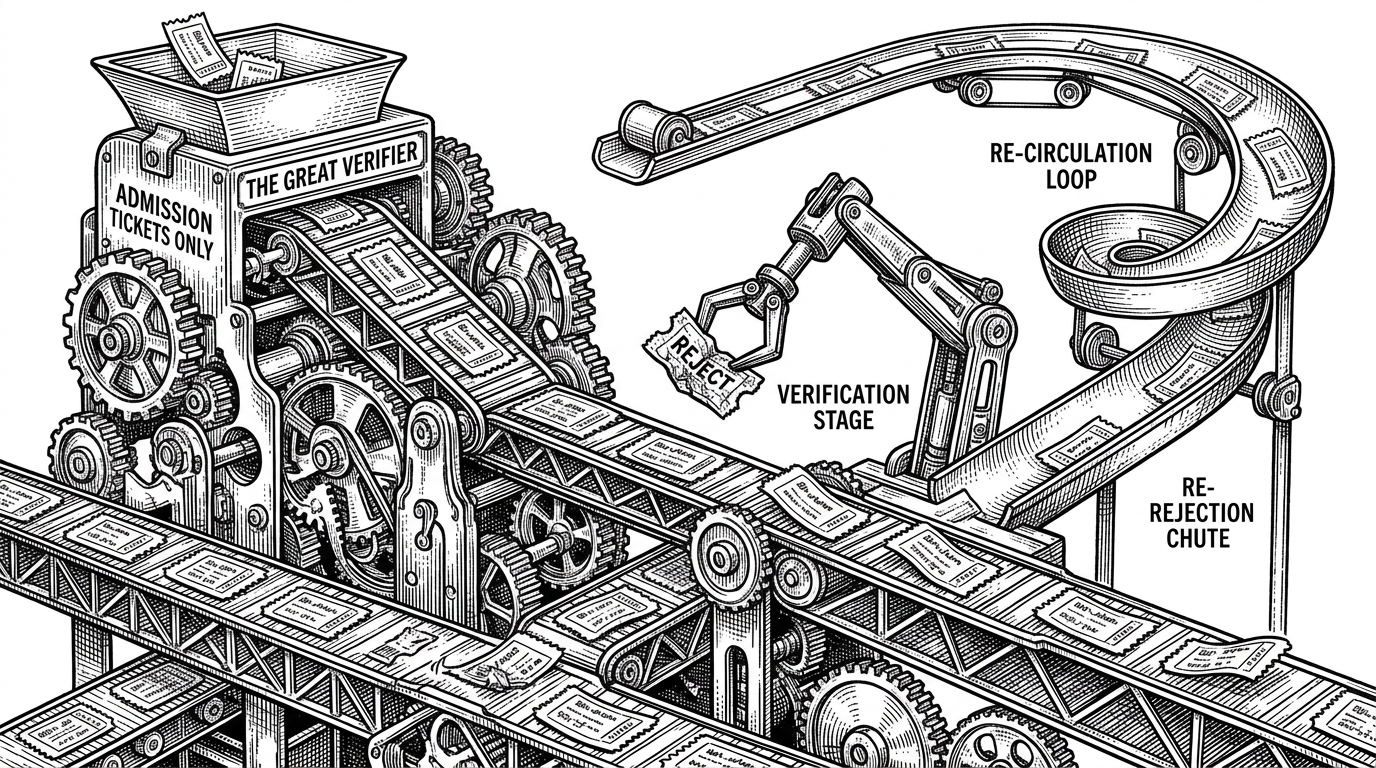
- AgentFlow introduces a Pythonic DSL to orchestrate complex, parallelized LLM workflows.
- It explicitly breaks the Directed Acyclic Graph model by allowing controlled cyclic loops for self-correction.
- The framework treats infrastructure as an agentic capability, automatically provisioning and tearing down AWS EC2 instances for specific nodes.
The End of the Linear Agent
The era of simple agent chains is over. Real-world tasks require massive parallelization, parameter sweeps, and complex routing. AgentFlow introduces a Pythonic Domain Specific Language to define dependencies, bringing the rigor of Apache Airflow to LLM prompts.
By utilizing the bitwise right-shift operator, developers can construct intricate workflows with clean, readable code. This explicitly dictates the flow of state from one specialized agent to the next.
from agentflow.dsl import Node

plan = Node(name="planner", agent="gpt-4o")
impl = Node(name="implementer", agent="claude-3-opus", fanout=3)

# Define the execution DAG
plan >> impl
Breaking the DAG for Self-Correction
Traditional Directed Acyclic Graphs fail for AI workflows because models hallucinate. They need the ability to retry and refine their outputs. AgentFlow implements an explicit back-edge mechanic to solve this.
By defining an on_failure route, the orchestrator turns the DAG into a cyclic graph. Agents can review their own work and loop back until specific success criteria are met.
Infrastructure as Agent
The most powerful feature of AgentFlow is its zero-config remote execution capability. The orchestrator can automatically provision AWS EC2 or ECS instances for specific nodes in the graph.
By simply defining a target in the Python code, the framework manages VPCs and SSH keys. This allows an agent to bootstrap an isolated environment, execute its workload, and tear the infrastructure down upon completion.
The Orchestration Landscape
AgentFlow's programmatic approach sits in contrast to other tools in the ecosystem. It prioritizes pure code-based graph definitions and native infrastructure control over stateful actor models or visual builders.
| Feature | AgentFlow | LangGraph | DeerFlow |
|---|---|---|---|
| Execution Model | Programmatic DAG with loops | Stateful actor model | Super-agent harness |
| Infrastructure Control | Native Boto3/EC2 provisioning | Bring-your-own infrastructure | Docker-isolated containers |
| State Memory | Scratchboard shared memory file | Checkpoint-based state | Terminal/Filesystem state |
| Ideal Use Case | Massive parallel parameter sweeps | Conversational/multi-actor apps | Decomposed sub-task execution |