The Executive Suite for Agentic Game Design: Inside bmad-module-game-dev-studio
How a 'Workflow-as-Code' framework turns unpredictable LLMs into disciplined, multi-agent game studios.
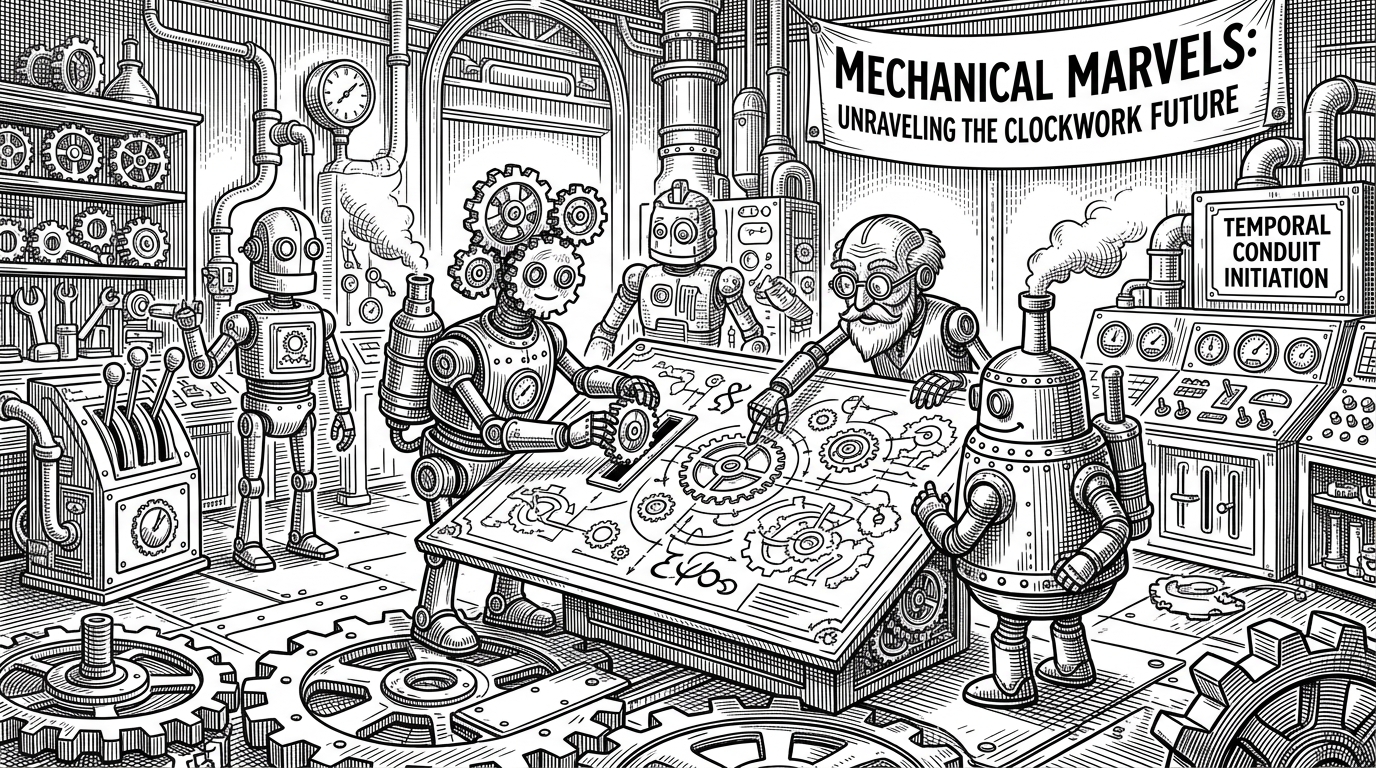
- BMGD replaces chaotic chat interactions with executable Markdown files that function as state machines.
- The framework prevents context drift by forcing agents to scan the local filesystem before generating new content.
- Specialized personas like the Cloud Dragonborn enforce technical constraints and architectural standards.
- A curated knowledge base provides domain-specific best practices to prevent the AI from hallucinating engine APIs.
The End of the Vibe Coding Fog
The AI coding era has a context problem. Large language models are exceptional at writing standalone functions but terrible at maintaining the vision of a complex project. After a few hundred lines of code, the context window fills up. The AI loses the plot.
This phenomenon is often called vibe coding. It works for simple scripts but fails spectacularly in game development. Games require rigorous state management, tight asset pipelines, and cohesive design documents. An unstructured chat interface simply cannot hold it all together.
BMAD Method turns the chaotic vibe coding process into a structured, agentic workflow that is both scalable and secure
Markdown as a State Machine
BMGD solves context drift by treating prompt engineering as process engineering. It introduces workflow files that act as executable state machines for the AI. Instead of a single massive prompt, the system relies on a sequence of Markdown files containing strict execution rules.
Before generating new content, the AI must read its own progress. It scans the filesystem to discover what it has already built. This forces the model to reboot its context and align with grounded reality before writing a single line of game logic.
Orchestrating the Cloud Dragonborn
A standard AI tries to be everything at once. It will write dialogue, design combat mechanics, and optimize shaders in the same breath. BMGD prevents this by splitting responsibilities across specialized personas.
Consider the Game Architect persona, internally codenamed Cloud Dragonborn. Its configuration file explicitly forbids it from rushing into implementation. It is constrained to prioritize 60fps performance and robust technical architecture. Meanwhile, the Creative Designer persona focuses entirely on player psychology and game feel.
Teaching the Machine the Godot Way
While BMGD supports major engines like Unity, Unreal, and Godot, it is fundamentally engine-agnostic. It does not ship with their SDKs. Instead, it provides a curated knowledge base of best practices and testing frameworks.
| Feature | Standard AI Chat | BMGD Orchestration |
|---|---|---|
| Memory | Context window (ephemeral) | Persistent Markdown State |
| Role | Generalist Assistant | Specialized Personas |
| Process | Do what I say | Follow the Workflow Rules |
| Output | Raw Code Snippets | Validated Design Documents |
When an agent needs to write a test, it pulls from these domain-specific knowledge files. This Retrieval-Augmented Generation approach ensures the AI uses validated patterns rather than hallucinating outdated engine APIs.
Building the North Star
The ultimate output of the BMGD pre-production phase is a comprehensive Game Design Document. But unlike a static PDF, this document is a structured roadmap designed to be consumed by implementation agents.
By codifying the creative process into version-controlled rules, BMGD elevates the AI from a junior coder to a disciplined technical director. It is the necessary evolution for solo developers who want to ship complex games without losing their minds to context drift.