The No-Math AI: Deconstructing chenglou/mnist
How a React pioneer built a digit classifier without neural networks, backpropagation, or a single machine learning dependency.
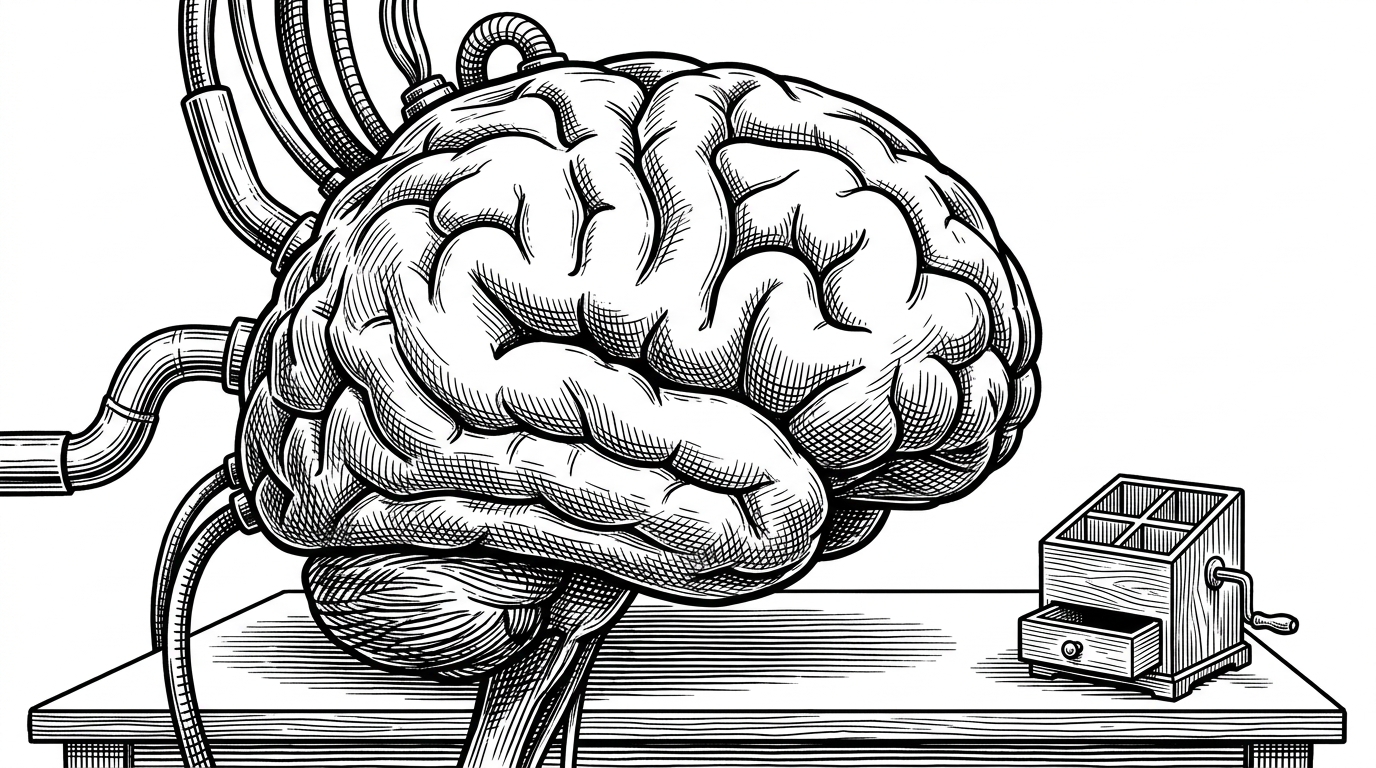
Got MNIST training in ReasonML! It's actually surprisingly fast. It was a fun weekend project to see how ergonomic it would be to write neural networks in Reason.
- The project strips machine learning down to a linear search problem, using a +1/-1 reward system instead of complex tensor operations.
- By utilizing a deterministic shader hash function, the classifier generates identical test noise on every page refresh for perfect visual debugging.
- The minimal architecture relies entirely on vanilla TypeScript and DOM manipulation, eliminating the need for massive ML dependencies.
The Illusion of Intelligence
Modern machine learning is dominated by massive tensor operations, gigabytes of dependencies, and black-box neural networks. The standard approach to the MNIST digit classification problem involves PyTorch, CUDA, and complex backpropagation algorithms. In contrast, Cheng Lou built a digit classifier using nothing but vanilla TypeScript and bitwise comparisons. The repository contains just six files and zero machine learning libraries. It establishes a radical premise. Recognition at its lowest level is just a linear search problem.
Pattern Matching Without the Math
The core classification engine abandons neural networks entirely. Instead of calculating weights and biases through gradient descent, the system uses a simple reward and penalty mechanism. It compares a noisy input grid against hardcoded perfect examples of digits zero through nine. If a pixel matches the reference (both on or both off), it adds a point. If it does not match, it subtracts a point. This pseudo-Hamming distance algorithm turns visual recognition into basic accounting.
function scoresForGuess(guess: number[]): number[] {
  // ...
  if (number[i] === guess[i]) {
    scoreSoFar++
  } else {
    scoreSoFar--
  }
}Deterministic Chaos in the DOM
To test the classifier, the system needs noisy data. Instead of using standard randomized functions, the project employs a custom hash function commonly found in graphics and shader programming. This ensures that the generated visual noise is perfectly deterministic. Every time you refresh the page, the exact same pattern of randomness appears. This approach guarantees that visual debugging remains consistent across test runs.

The Zero-Dependency Canvas
Despite the author's pedigree in React architecture, the user interface is built entirely with vanilla document object model manipulation. There are no frontend frameworks. Elements are created manually, and CSS grid styling is applied directly via TypeScript. Running on Bun for maximum performance, the repository stands as a masterclass in minimalism. It proves that fundamental computer science concepts can be demonstrated powerfully without standing on the shoulders of massive software ecosystems.
| Feature | Mainstream ML | chenglou/mnist |
|---|---|---|
| Core Logic | Backpropagation & Weights | Hamming Distance (+1/-1) |
| Input Data | 28x28 Grayscale Tensors | 10x10 Binary Arrays |
| Randomness | Non-deterministic | Deterministic shader hash |
| Dependencies | PyTorch, CUDA, NumPy | Zero dependencies |