Video2X: The Open-Source Upscaler That Rebuilt Itself as a Native Media Engine
A look at the C++ rewrite, the zero-disk pipeline, and the GPU-agnostic design that turns local video enhancement into infrastructure.
- Video2X matters because it stopped acting like a wrapper and started acting like a native media engine.
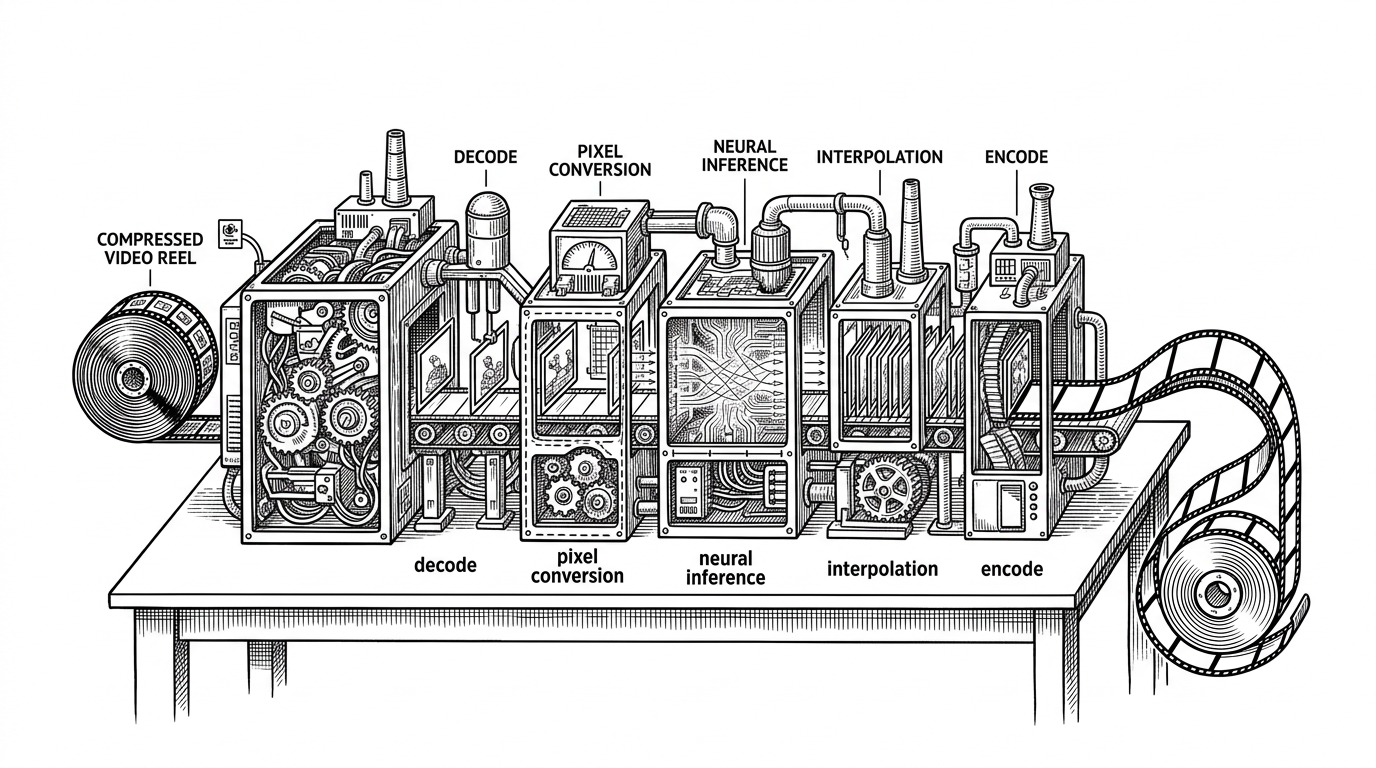
- The rewrite removes the old file-staging workflow and keeps frames moving in memory from decode to encode.
- Its real strategic bet is portability, using Vulkan and ncnn to avoid a CUDA-only future.
- The project’s value is not just speed. It is a cleaner extension point for multiple model families and video tasks.
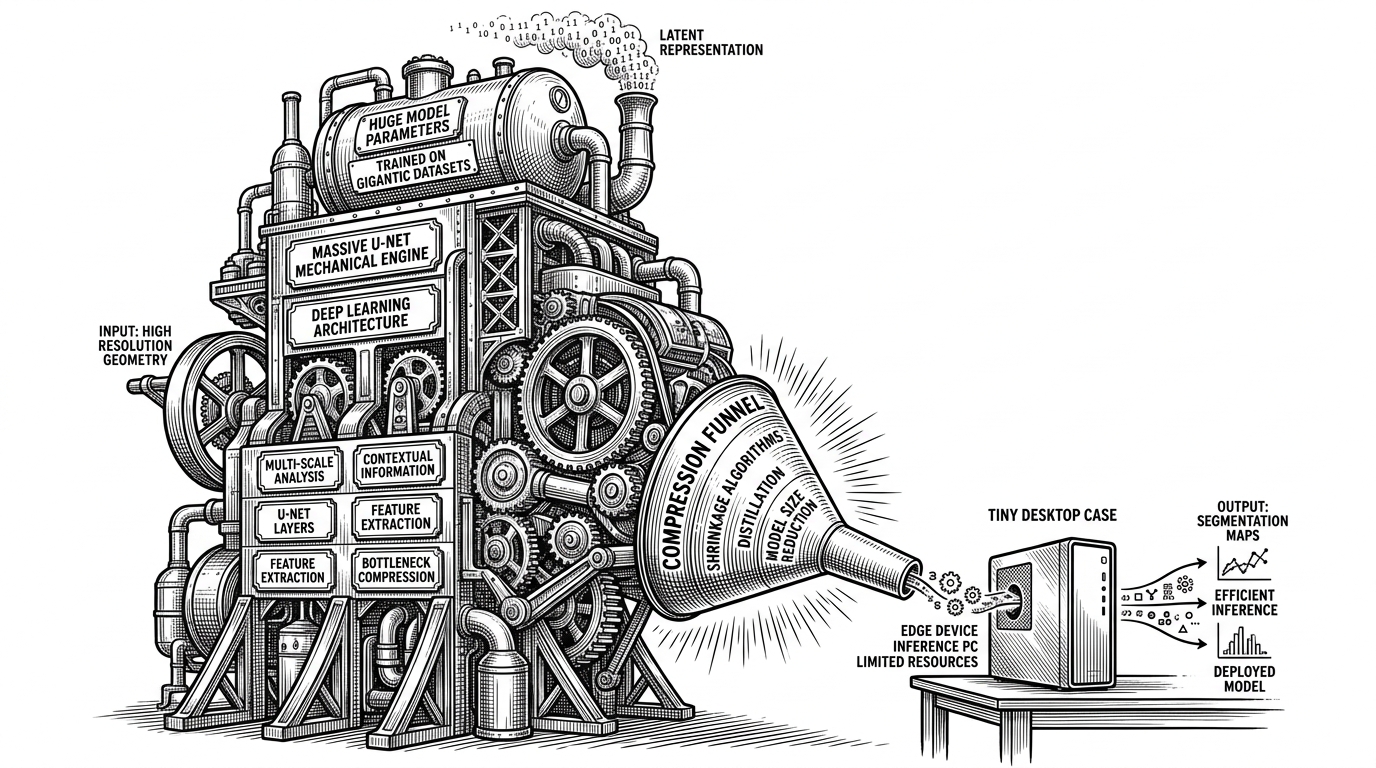
The surprise in Video2X is not that it upscales video. It is that the project rewrote itself into something closer to a media-processing core than a utility. In version 6.0.0, the project moved from a Python wrapper model to a native C++ library-first architecture, and that changes the entire feel of the tool.
That shift is visible in the release notes. The maintainers describe the rewrite as a complete C/C++ rebuild, with faster processing, better output quality, cross-platform support, and zero extra disk space during processing. In other words, the project stopped behaving like a chain of helper scripts and started behaving like infrastructure.
Version 6.0.0 is a complete rewrite of this project in C/C++. It: - genuinely works this time, with much less hassle compared to the 5.0.0 beta; - is blazing fast, thanks to the new optimized pipeline and the efficiency of C/C++; - is cross-platform, available now for both Windows and Linux; - offers significantly better output quality with Anime4K v4 and RealESRGAN; - supports Anime4K v4 and all custom MPV-compatible GLSL shaders; - includes support for RealESRGAN (all three models) via ncnn and Vulkan; - requires zero additional disk space during processing, just space for the final output; and - exports a standard C function for easy integration into other projects!
The rewrite that turned Video2X into a framework
The old mental model for a video enhancer is simple: wrap an engine, feed it frames, and hope the glue code holds. Video2X’s rewrite breaks that model. Its core now lives in libvideo2x, with a public API designed to be embedded, not just clicked through.
That matters because the unit of design changed. The project is no longer centered on a GUI or a script entrypoint. It is centered on a pipeline that owns the entire job lifecycle, from decode to encode, with state management, model selection, and threading handled in native code.
Why the old pipeline was the wrong shape
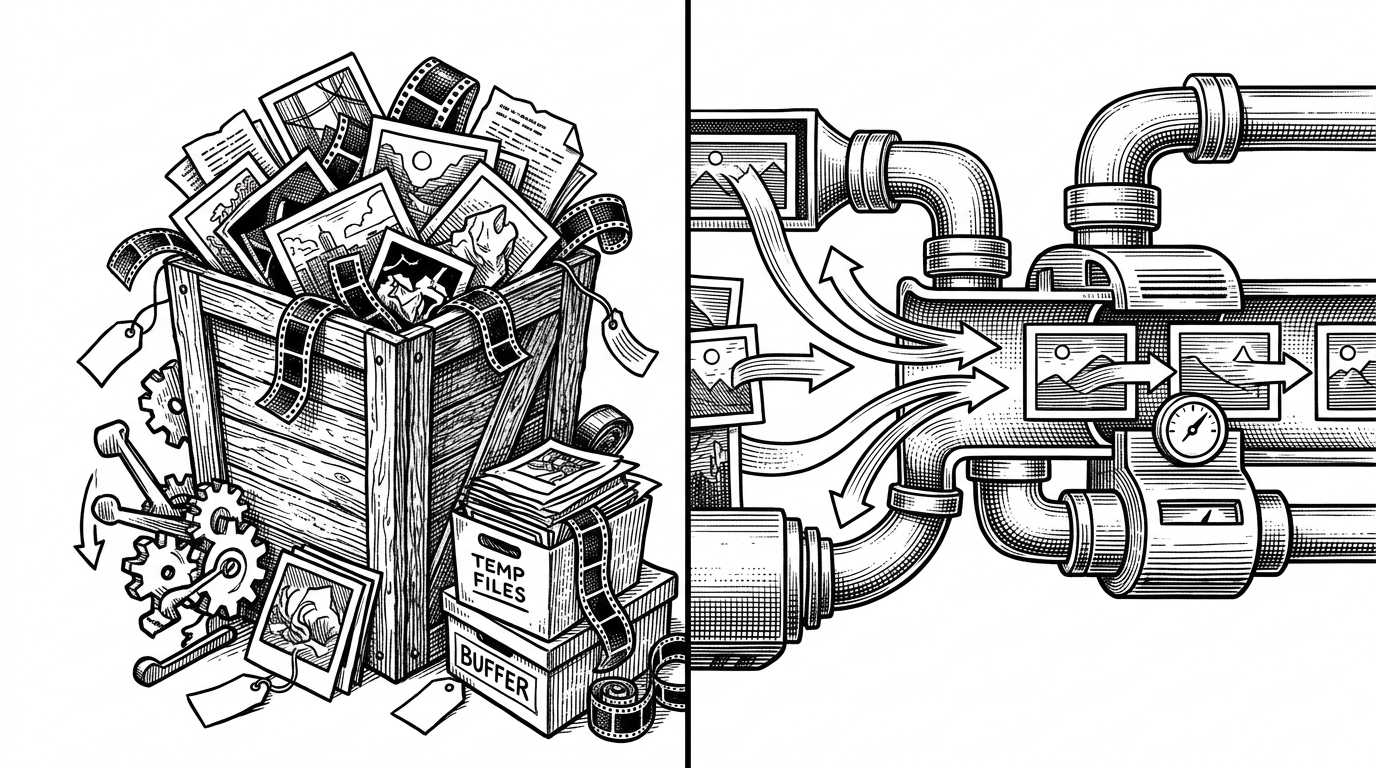
Many video tools still move frames through disk as a staging layer. Extract images, process them, then stitch them back together. It works, but it creates the wrong bottleneck. You trade algorithmic progress for file system overhead, and the user pays in time, space, and complexity.
| Dimension | Old file-based workflow | Video2X after the rewrite |
|---|---|---|
| Frame handling | Frames written out as temporary images | Frames stay in memory between stages |
| Disk use | Large working sets and cache churn | Only final output needs disk space |
| Pipeline shape | Loose wrapper around external steps | Native pipeline owned by libvideo2x |
| Integration | Harder to embed cleanly | Exports a standard C function for reuse |
One frame, one path
The technical terms here are less important than the motion. AVFrame is FFmpeg’s in-memory frame object. ncnn::Mat is the model-ready tensor representation used by the inference backend. Video2X’s job is to bridge those worlds without turning the bridge into a bottleneck.
// Simplified shape of the pipeline
VideoProcessor job;
job.set_input("input.mkv");
job.set_processor("Real-ESRGAN");
job.set_mode(ProcessorMode::Upscale);
job.run();

// Internally, frames move roughly like this:
// compressed packets -> AVFrame -> ncnn::Mat -> enhanced frame -> encoder
The processor factory is the real extension point
Once the pipeline is native, the next question is how it stays flexible. Video2X answers that with a factory pattern around processors. Different model families slot into a shared interface, so the project can support spatial upscaling and temporal interpolation without collapsing into a pile of special cases.
That is where the design gets interesting. Spatial models like Real-ESRGAN and Real-CUGAN solve detail recovery. Temporal models like RIFE solve motion continuity. Video2X keeps both under one roof, but it does not pretend they are the same problem.
| Model class | Job to do | Examples | Design consequence |
|---|---|---|---|
| Spatial upscaling | Add detail and increase resolution | Real-ESRGAN, Real-CUGAN, Anime4K | Treated as filter-like processors |
| Temporal interpolation | Create frames between frames | RIFE | Needs scene-cut awareness and motion logic |
| Shader-based enhancement | Apply classic GPU shader pipelines | libplacebo, MPV-compatible GLSL shaders | Offers a faster, lighter alternative to heavy inference |
Type safety without rigidity
The implementation detail that matters is std::variant. It lets the factory handle different configuration shapes without abandoning type safety. A Real-ESRGAN preset does not need the same knobs as a CUGAN or RIFE preset, but they still need to be dispatched through one clean API.
Vulkan is the strategic bet
Video2X’s backend choice is a distribution decision as much as an engineering one. By leaning on ncnn and Vulkan, it avoids locking itself to a single GPU vendor. That makes the project usable on NVIDIA, AMD, and Intel hardware, which is a very different proposition from the usual CUDA-first story.
This is one reason the rewrite feels bigger than a speedup. It broadens the hardware surface area. For an open-source project, that is not a minor detail. It is the difference between serving a niche of enthusiasts and serving a wider base of local, practical users.
| Backend path | Strength | Tradeoff |
|---|---|---|
| CUDA-only stack | Tight optimization on NVIDIA hardware | Narrows who can run it comfortably |
| Vulkan via ncnn | Cross-vendor portability | Requires careful backend engineering |
| Pure shader path | Fast and lightweight for some modes | Less capable than full neural inference |
Why Video2X matters to a specific kind of user
The audience here is easy to miss if you only think in benchmark terms. Video2X is for people restoring old anime, cleaning up retro game footage, improving home video, or keeping media local for privacy reasons. It is a tool for users who care about control as much as quality.
That is also why the project’s mix of engines matters. It can lean on Anime4K for classic shader-based enhancement, Real-ESRGAN for general restoration, Real-CUGAN for anime, and RIFE for frame interpolation. The project is not betting on one model family. It is building a stable way to switch among them.
What it beats, and what it gives up
Compared with proprietary enhancers, Video2X gives up simplicity. You have to think about models, modes, and backends. In exchange, you get transparency, local processing, and a pipeline you can inspect or embed.
Compared with the older wrapper generation of open-source tools, it also gives up some of the illusion of ease. But that trade is the point. The rewrite makes the tool smaller in the ways that matter and bigger in the ways that scale.
| Option | What it optimizes for | What you give up |
|---|---|---|
| Video2X native rewrite | Portability, transparency, embeddability | More technical setup |
| Proprietary upscaler | One-click convenience | Black-box behavior and vendor lock-in |
| Older wrapper style | Fast prototyping | Disk churn, glue code, and brittle pipelines |