The Anatomy of an Engineering Prank: Unpacking chroma-cumber
How a leading AI infrastructure team "pivoted" away from vector databases by shipping a five-file wrapper around a standard Python pickle.
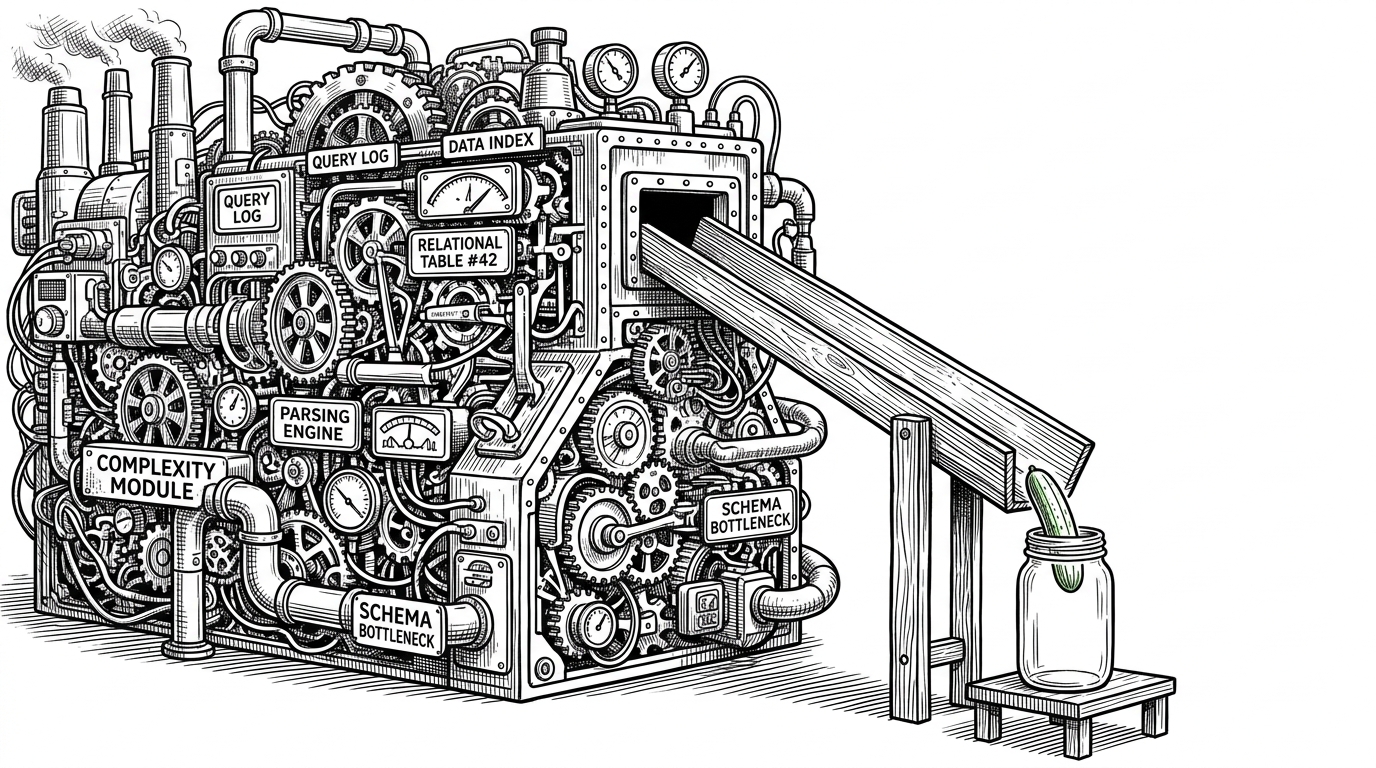

after working on chroma for several months now, the team has come to the realization that everything we were doing was far too complicated for the task at hand
- Chroma-cumber is a fully functional, five-file satirical repository that wraps Python's native pickle library with maximum-level zlib compression.
- Released during the 2023 vector database hype cycle, the project serves as a show-dont-tell critique of over-engineering in AI infrastructure.
- The main file's hyphenated name creates a deliberate syntax trap, turning the library's own import instructions into an inside joke.
The Anti-Complexity Pivot
In early 2023, the AI industry was obsessed with embeddings, approximate nearest neighbor search, and cosine similarity. Vector databases were the hottest infrastructure category in tech. Amidst this hype, the team behind Chroma (one of the most popular vector databases) released a repository that claimed this was all far too complicated.
Their proposed solution was to abandon distributed vector spaces entirely and revert to the absolute basics of Python object serialization. They shipped a wrapper around a pickle.
Zlib Level 9 and the Honest Pickle
The genius of the joke is that it is not simply a fake repository. It is a functional Python script. Under the hood, it wraps pickle.dumps and routes the output directly through zlib.compress(level=9).
Level 9 is the maximum compression ratio available in zlib. It aggressively prioritizes disk space over CPU cycles. While deployed here as a punchline, compressing pickled objects is a legitimate, albeit simplistic, data science pattern for storing heavy objects locally without spinning up a database.
The Syntax Trap
The actual codebase contains a hidden trap for standard Python developers. The main file is named chroma-cumber.py. Because of the hyphen, attempting to run a standard import throws a SyntaxError, as the Python interpreter reads the hyphen as a subtraction operator.
import chroma-cumber
# SyntaxError: invalid syntax
The README instructions require a specific dynamic import workaround, making the library's own usage instructions a subtle, self-aware part of the prank.
The Satirical Benchmark
Contrasting a real vector database against this library reveals the depth of the satire. A production vector deployment requires containerization, embedding models, and distributed state management. Chroma-cumber requires the Python Standard Library and a local hard drive.
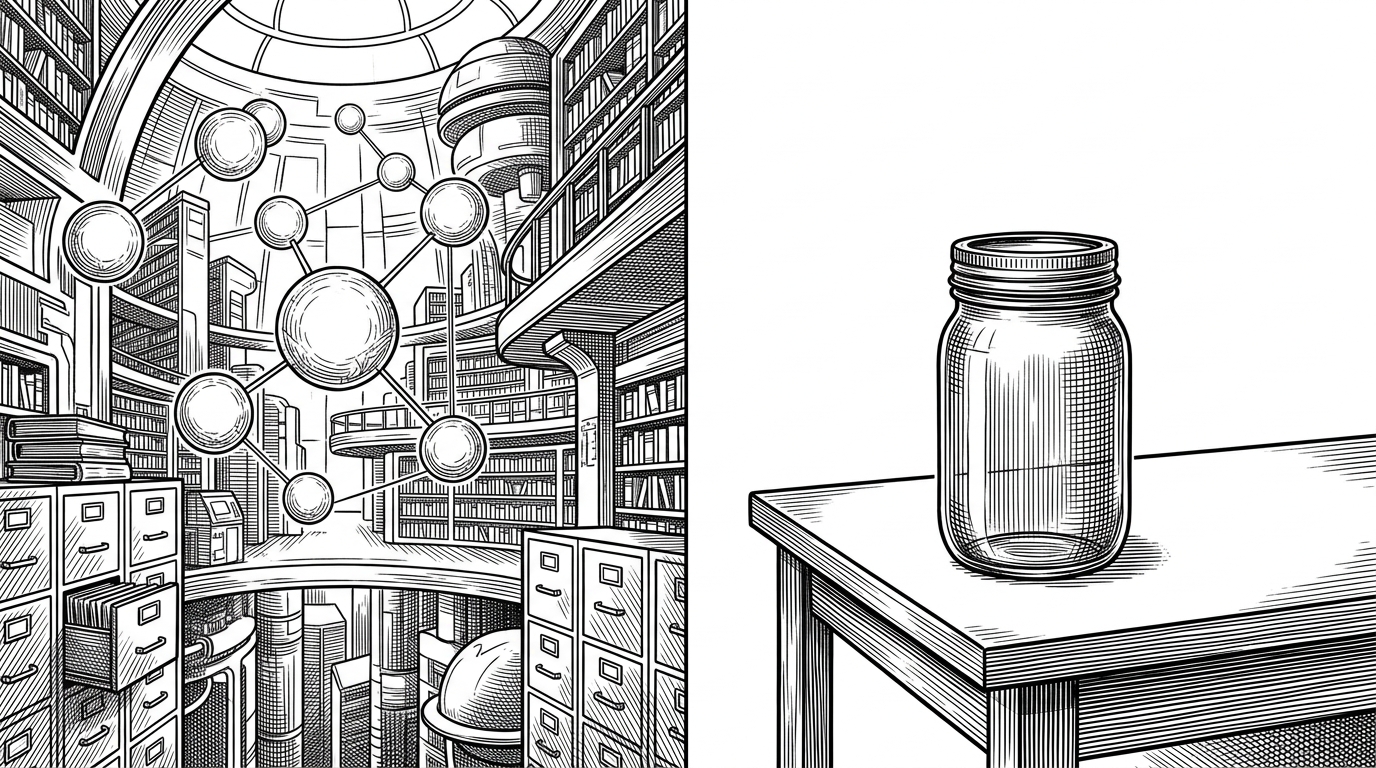
| Feature | Chroma Core | chroma-cumber |
|---|---|---|
| Dependencies | 50+ | 0 |
| Storage | Distributed Vector Space | file.write() |
| Search | Approximate Nearest Neighbor | Load the whole file into RAM |
The project never saw an update after its initial release, cementing its status as a completed conceptual joke. It stands as a reminder that sometimes the best way to critique architectural bloat is to ship something absurdly simple.