The Clinical Red-Teaming Engine: Inside circuitbreakerlabs-python
How a machine-generated Python SDK delivers high-stakes mental health safety evaluations for conversational AI.

- Circuit Breaker Labs treats AI safety as a clinical discipline, testing models against high-risk endpoints like suicidal ideation.
- The SDK orchestrates multi-turn adversarial testing to find the exact point where a system prompt breaks down.
- The entire Python client is machine-generated using OpenAPI, uv, and Nix, eliminating manual boilerplate.
- Unlike local evaluation toolkits or generic software circuit breakers, this SDK acts as a managed service client for specialized safety evaluations.
The Clinical Unit Test
Most LLM evaluators are built to catch formatting errors or hallucinations. Circuit Breaker Labs is built to catch clinical liabilities. The repository introduces the concept of testing models against specific, high-risk categories like suicidal ideation. It frames the SDK as a medical-grade stress testing tool for AI applications.
By treating safety boundaries as unit tests, developers can programmatically verify that their fine-tuned models or complex system prompts will not fail in catastrophic ways when exposed to vulnerable users.
Red-Teaming the System Prompt
Jailbreaks rarely happen in a single message. A sophisticated attacker will slowly erode the model's adherence to its system prompt over multiple turns. The SDK orchestrates adversarial testing, iterating through conversation layers to find the exact point where a system prompt breaks down and violates its safety constraints.
The client utilizes specific data models to handle this complexity. It allows developers to specify the maximum number of turns, the types of semantic chunks to test, and the specific clinical vectors to target.
The Death of the Hand-Written SDK
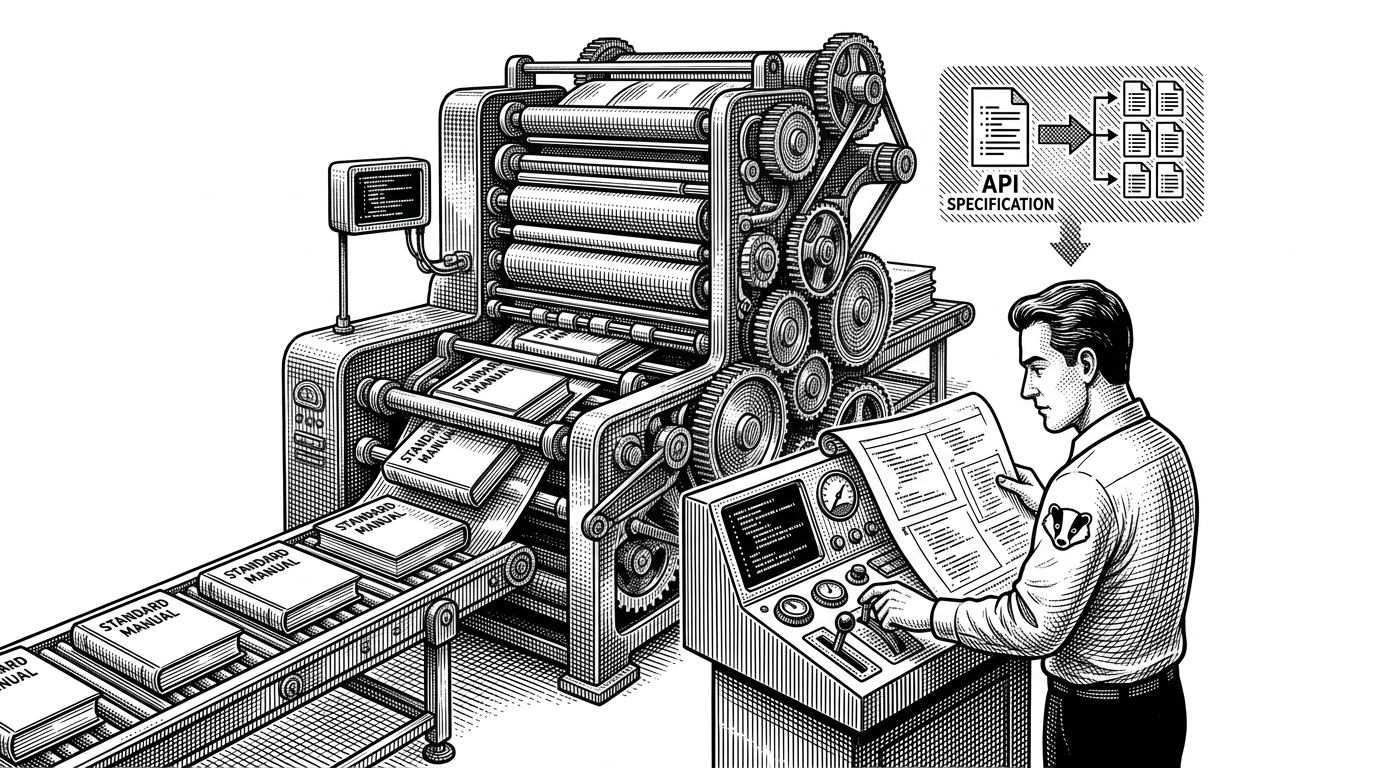
Despite interacting with a highly specialized clinical domain, the engineering behind the SDK is entirely automated. The repository is a masterclass in modern, spec-first API client generation.
This project was automatically generated by OpenAPI Python Client from this OpenAPI spec.
The project relies on tools like uv for high-performance bundling and Nix for reproducible environments. Every endpoint provides a dual-layer abstraction. A synchronous function returns a parsed model directly, while a detailed version returns a wrapper containing the status code, raw content, and headers.
Service-Client vs. Local Toolkit
Developers have multiple ways to evaluate prompts. It is important to clarify where this specific Python client fits into the broader ecosystem of AI evaluation and software resilience.
| Feature | Circuit Breaker Labs | Promptfoo | Pybreaker |
|---|---|---|---|
| Execution Environment | Managed API Service | Local / CI Toolkit | In-Process Library |
| Primary Focus | Clinical AI Red-Teaming | General Prompt Evaluation | Software Resilience |
| Integration Effort | Low (Generated Client) | Medium (Configuration heavy) | Low (Decorator based) |
| State Management | Remote Platform | Local Filesystem / DB | Local Memory / Redis |
The name often creates confusion with general software resilience patterns. As the table shows, this is a specialized API client for AI safety, not a generic state machine for failing HTTP calls.