SpatialEdit: Teaching Image Models to Move in 3D Without Losing the Picture
A deep dive into the open-source framework that pairs synthetic geometry, a VLM-guided diffusion model, and a benchmark built to measure spatial fidelity instead of just visual plausibility.
- SpatialEdit argues that spatial editing is a geometry problem, so it trains on synthetic 3D supervision instead of hoping prompt semantics will be enough.
- Its core model keeps image and text streams separate, then steers them with multimodal conditioning so edits can change viewpoint without collapsing identity.
- The benchmark is as important as the model because it measures geometric fidelity, not just whether the result looks plausible.
- The repo is built like a research system, with a dataset, model, and evaluation suite designed to make spatial control measurable.
The hard part of image editing is not style. It is space.
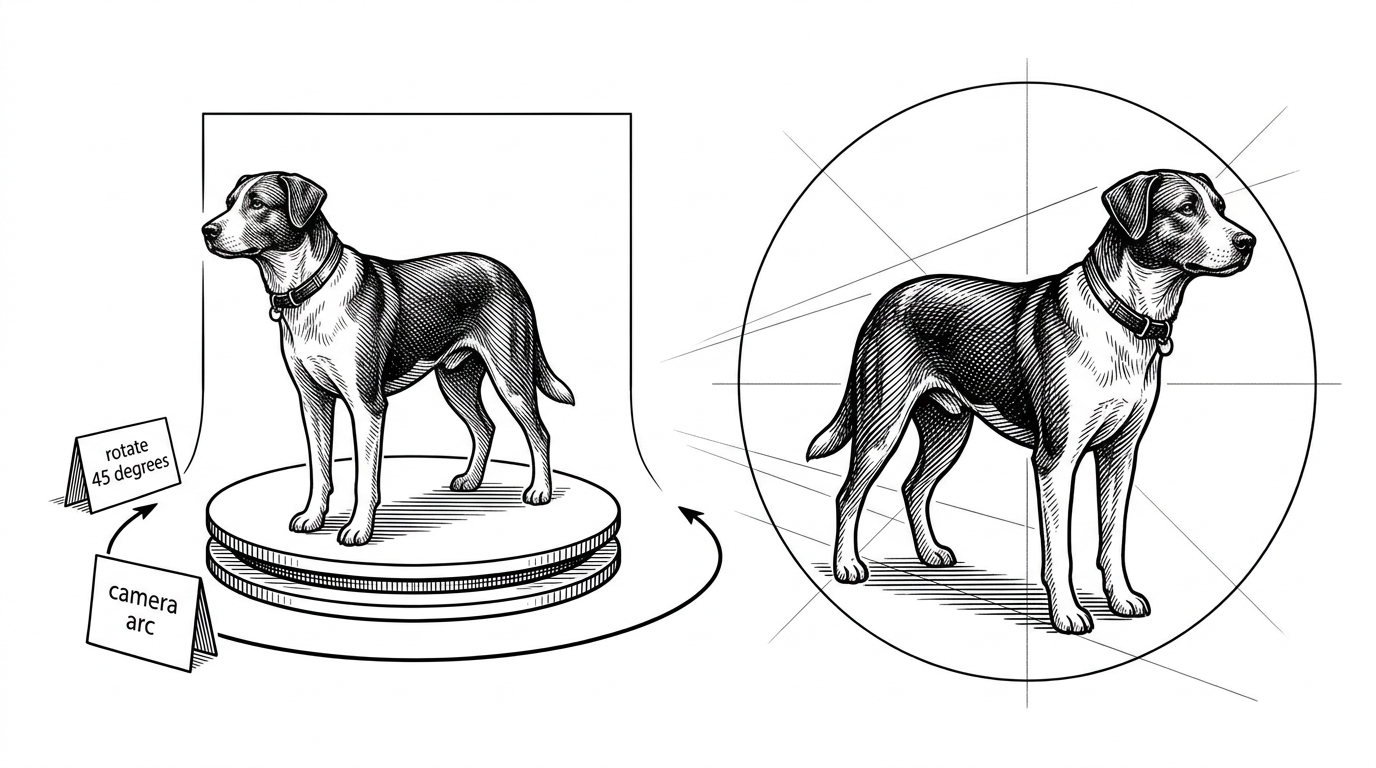
Most image editors are good at making things look different. Fewer are good at making a dog turn left, moving the camera lower, or rotating a chair while keeping the exact same object alive in the frame. That gap is the whole point of SpatialEdit.
The project starts from a blunt observation: models can describe spatial change, but they often cannot execute it faithfully. When viewpoint shifts are involved, a pretty edit is not enough. The output has to obey geometry.
That is why SpatialEdit frames the problem as more than prompt following. It treats spatial editing as a measurable transformation task, with identity preservation, camera control, and object rotation all baked into the design.
SpatialEdit’s bet: geometry beats guesswork
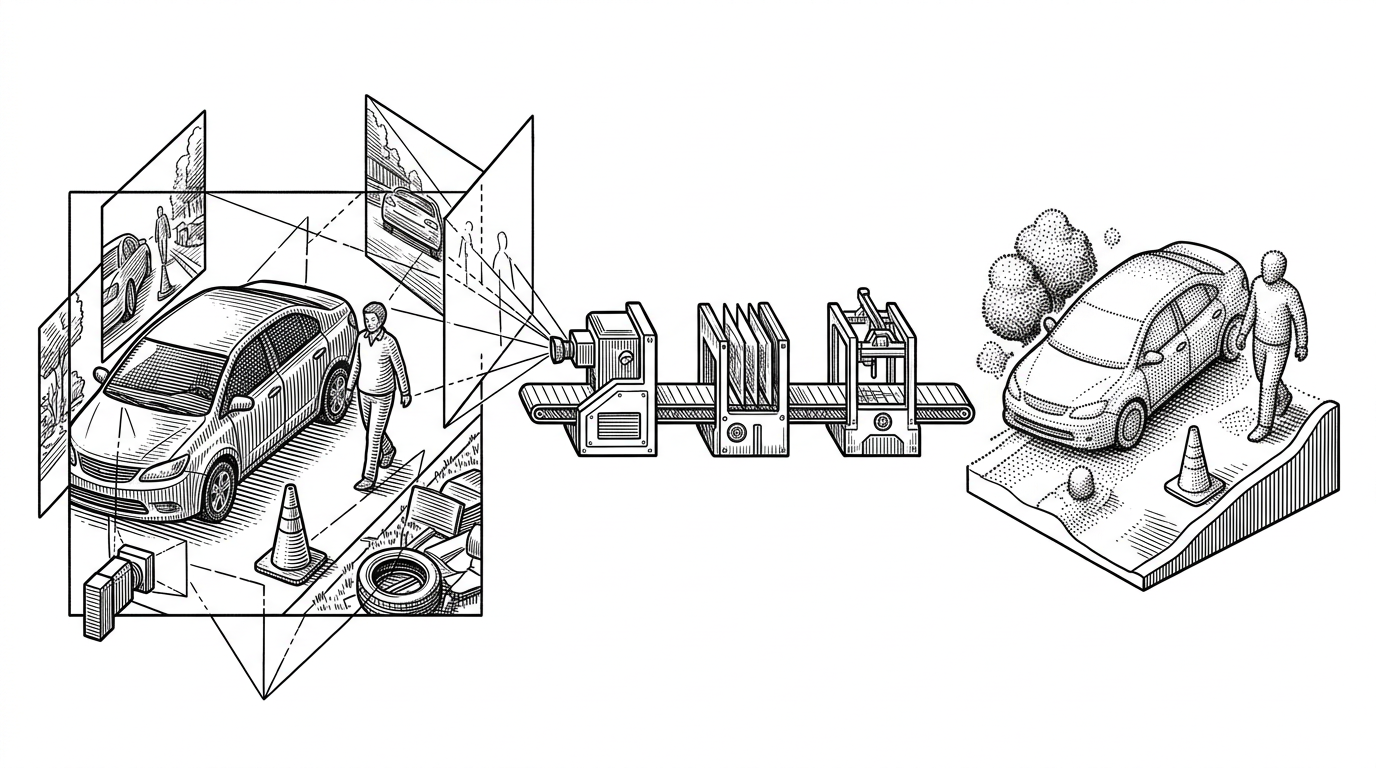
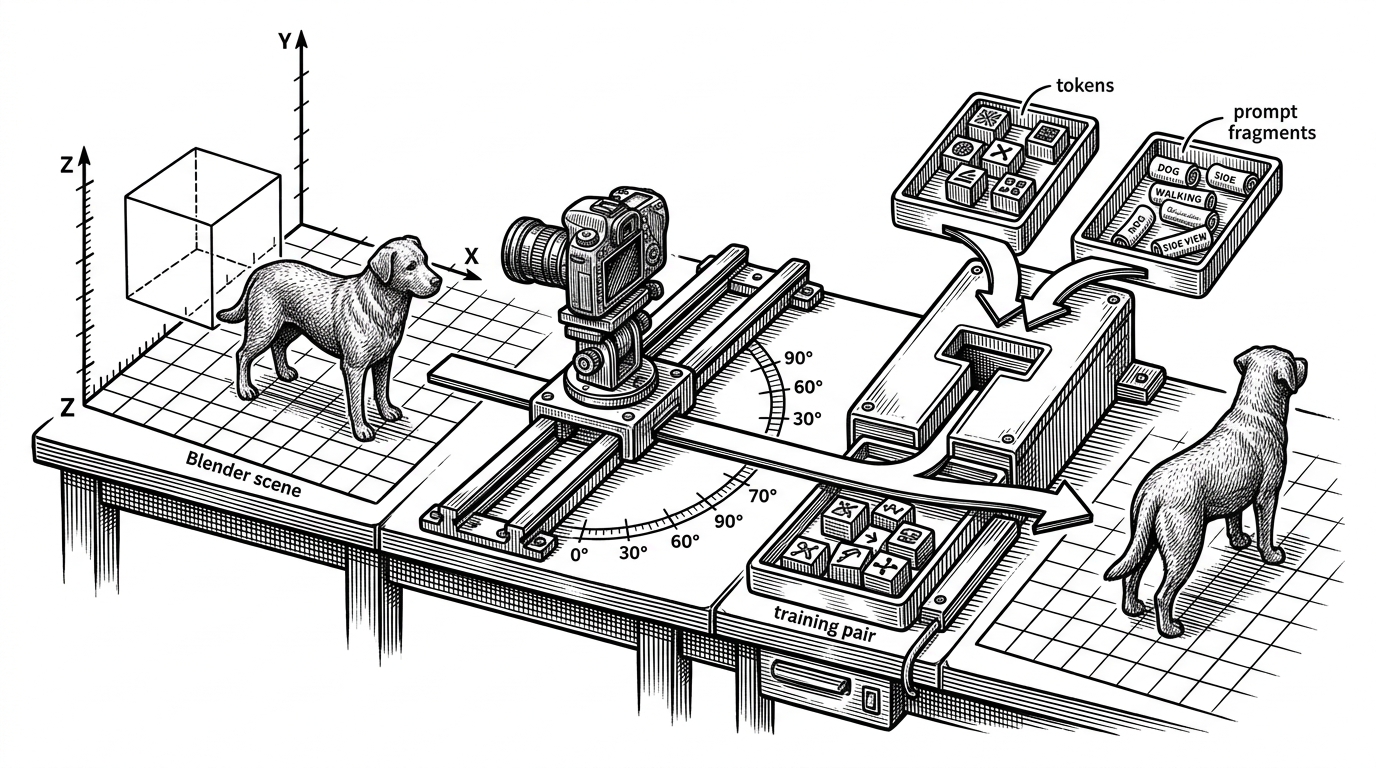
The most important design choice is the training data. SpatialEdit builds on SpatialEdit-500K, a synthetic dataset generated in Blender with known camera positions and object transforms. That matters because the model is not guessing what changed. It gets exact supervision for how the world moved.
Synthetic data is doing the heavy lifting here. By rendering objects across varied backgrounds and controlled trajectories, the repo creates pairs that teach the model the physics of viewpoint change, not just the aesthetic pattern of an edit.
To address the data bottleneck for scalable training, we construct SpatialEdit-500K, a synthetic dataset generated with a controllable Blender pipeline that renders objects across diverse backgrounds and systematic camera trajectories, providing precise ground-truth transformations for both object- and camera-centric operations.
The model has two streams for a reason
SpatialEdit’s core backbone is an MM-DiT style transformer, but the detail that matters is the double-stream design. Image tokens and text tokens do not get smashed together at the start. They stay distinct, which gives the model room to handle visual structure and language instruction differently.
That separation is paired with vector conditioning and modulation layers. In practice, the prompt-image context is distilled into a signal that steers the edit through the network, instead of letting the instruction wash out the scene. For spatial tasks, that matters. You want the model to move the right thing, not repaint the whole world.
The repository also leans on a VLM encoder, specifically Qwen2.5-VL in the implementation notes, which gives the system a stronger sense of what is in the image before it edits it. That is a meaningful choice. A model that can see the scene has a better shot at changing its geometry without losing the object’s identity.
The trick is not just diffusion. It is how diffusion is steered
SpatialEdit uses Flow Matching rather than treating generation like a generic denoising stroll. That is not cosmetic. The point is to get straighter, more stable trajectories in latent space, which helps the model preserve structure while it edits.
The codebase also surfaces a scheduler shift parameter, which reinforces the same idea: the generation path itself is tuned for spatial consistency. If the model is going to rotate an object or move a camera, the path from input to output has to behave predictably.
This is where the repo feels more like an engineering system than a demo. The model, the conditioning path, and the scheduler all point at the same target. Stable spatial change is the product.
Why the benchmark matters as much as the model
SpatialEdit-Bench is not a side quest. It is the project’s answer to a hard evaluation problem: how do you score an edit that is supposed to be both visually plausible and geometrically correct?
The benchmark splits the problem into camera-level and object-level evaluation. That lets it test viewpoint reconstruction, framing, object rotation, and scaling rather than collapsing everything into a single subjective score. It also uses MLLM-based judgment for perceptual plausibility, which is useful when geometry and appearance both matter.
| Axis | Generic image editors | SpatialEdit |
|---|---|---|
| Primary goal | Make the image look plausible | Make the spatial change correct |
| Training signal | Mostly semantic or prompt-driven | Synthetic 3D supervision with known transforms |
| Model focus | Style, content, coarse composition | Object rotation and camera movement |
| Evaluation | Often subjective or coarse | Camera-level and object-level geometry checks |
| Fidelity target | Visual believability | Visual believability plus geometric correctness |
That evaluation design is one of the repo’s strongest signals. It says the authors do not want a model that merely seems right. They want a system that can be measured against the actual spatial instruction.
What SpatialEdit changes in the landscape
Compared with earlier editing tools, SpatialEdit is narrower in scope and stronger in intention. A lot of prior systems optimize for semantic plausibility, or provide a camera-control feature without a benchmark that can really stress it. SpatialEdit tries to close both gaps at once.
That makes the repo interesting beyond the model itself. It pairs a geometry-aware dataset with a geometry-aware architecture and a geometry-aware benchmark. Each piece supports the others. Strip one away, and the story weakens.
The broader lesson is clear. If you want image models to handle spatial edits, you cannot just ask them harder prompts. You need training data with real transforms, a model that can preserve structure, and a benchmark that punishes hand-wavy success.
What this repo is really optimizing for
SpatialEdit reads like a serious research release. The code is modular, the config system is explicit, and the evaluation stack is built to answer a scientific question rather than impress with polish. That is exactly what this kind of project should be.
Its real ambition is not to ship a consumer editor. It is to make spatial change learnable, controllable, and measurable. That is a sturdier claim, and a more useful one.