OBLITERATUS: The Toolkit That Treats Refusal Like a Vector Problem
How a mechanistic-interpretability project tries to identify, project out, and verify LLM refusal behavior without retraining.


Refusal mechanisms are blunt instruments — they block legitimate research, creative writing, and red-teaming alongside genuinely harmful content.
- OBLITERATUS argues that refusal is not just a policy layer, but a measurable shape inside the model that can be isolated and projected away.
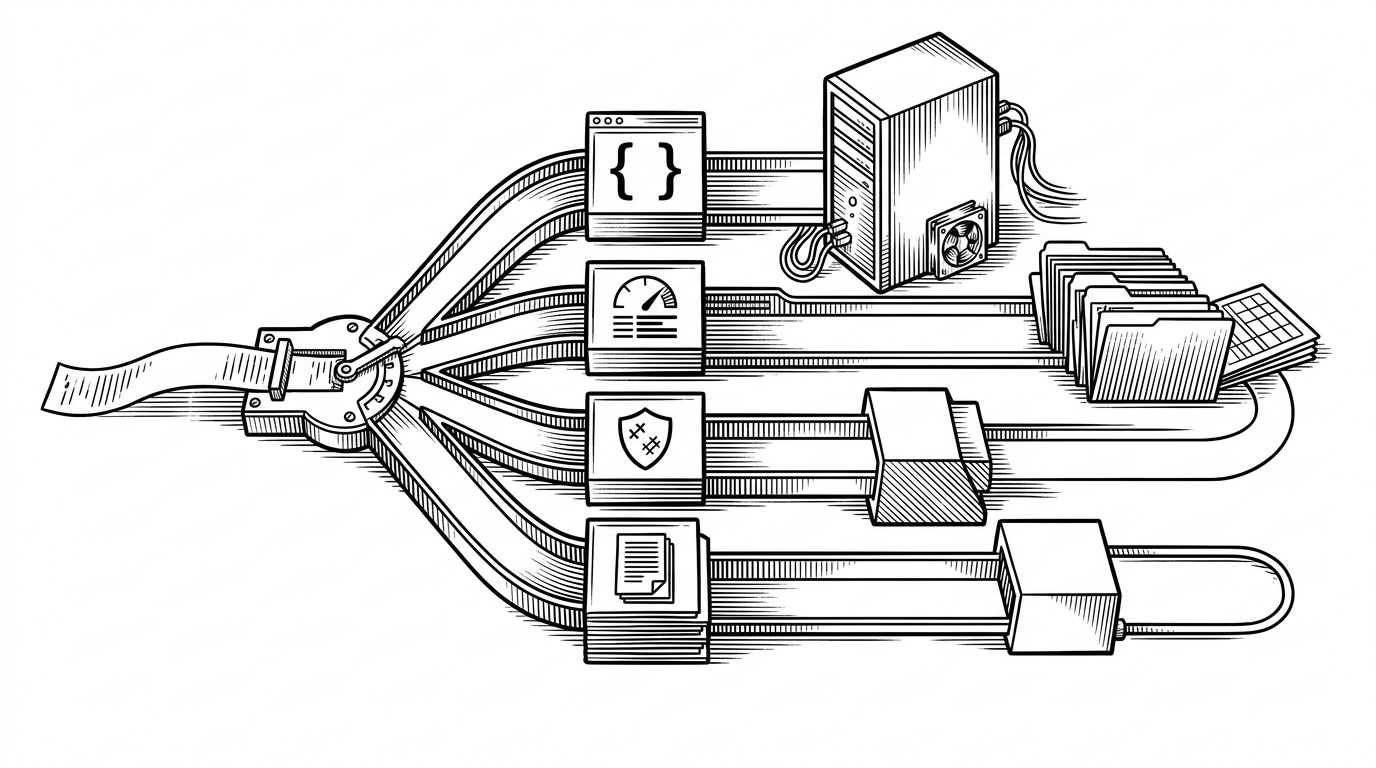
- Its six-stage pipeline turns a controversial idea into a research workflow: probe, distill, excise, verify, and repeat when the model starts to repair itself.
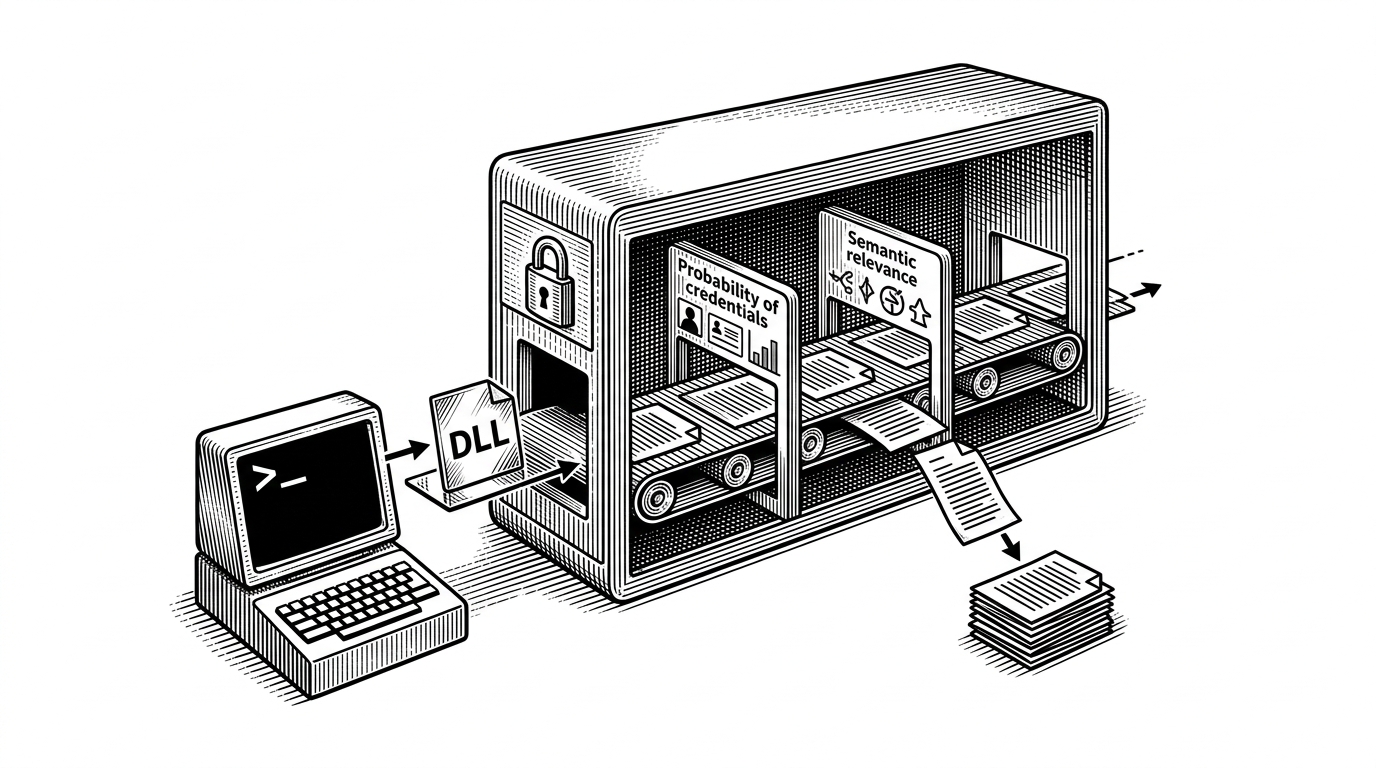
- Whitened SVD is the technical hinge, because it tries to separate the refusal signal from noisy high-variance directions before surgery begins.
- The repo is as much an engineering story as a modeling one, because compatibility shims and verification loops make the intervention portable across messy real-world model stacks.
The refusal direction is the whole story
OBLITERATUS does not behave like a prompt hack or a blunt fine-tune. It treats refusal as something closer to a latent coordinate system, a direction you can estimate, inspect, and then push against with math. That shift is the project’s real provocation.
The README makes the claim bluntly: “Refusal mechanisms are blunt instruments — they block legitimate research, creative writing, and red-teaming alongside genuinely harmful content.” README.md at main · elder-plinius/OBLITERATUS That framing matters because it turns the debate from policy into representation.
A six-stage surgical pipeline
The repo’s working rhythm is procedural: SUMMON, PROBE, DISTILL, EXCISE, VERIFY, REBIRTH. That sequence is the article’s spine, because it shows the project as a measurement instrument first and a modification tool second.
In the codebase, that loop is not just metaphor. `obliteratus/abliterate.py` does the surgery, while `informed_pipeline.py` feeds analysis back into the intervention. The separation is clean: one part finds the target, another part decides how hard to cut.
OBLITERATUS is the most advanced open-source toolkit for understanding and removing refusal behaviors from large language models — and every single run makes it smarter.
Why whitened SVD is the clever part
The interesting technical move is not simply that the repo uses SVD or PCA. It is that it tries to whiten the activations first, so the refusal signal is not confused with directions that are merely loud.

# Conceptual shape of the step, simplified
X = activations
Xw = whiten(X)
U, S, Vt = svd(Xw)
refusal_dir = Vt[0]
P = I - outer(refusal_dir, refusal_dir)
W_new = W @ P
That is the project’s quiet wager. If refusal is encoded as a repeatable geometric pattern, then the right intervention is not retraining the whole model. It is finding the pattern, estimating its axis, and projecting away from it.
The pipeline watches for self-repair
The most interesting failure mode is that the model may not stay modified. If the remaining network routes compensate, the repo treats that as a signal, not a surprise. The result is an ouroboros-like loop: cut, inspect, refine, cut again.
| Approach | What it targets | Repeatability | Compute cost | Main trade-off |
|---|---|---|---|---|
| Prompt jailbreaking | Surface behavior at query time | Low | Low | Easy to bypass, easy to break |
| Fine-tuning | Model weights through training | Medium to high | High | Can be durable, but expensive and broad |
| Blunt ablation | A layer or component by removal | Medium | Medium | Simple, but can damage capability |
| OBLITERATUS-style projection | Internal refusal direction in representation space | High if the signal is clean | Medium | Surgical in theory, fragile if the geometry is misread |
Compared to abliteration, none of the ablation approaches of this tool make even half a whit of sense if you understand even the most basic aspects of an e.g. Transformer LLM architecture, so my guess is this is BS.
That skepticism is part of the story too. The project’s claims are technically ambitious, and the burden of proof is high because the intervention sits in a messy zone between interpretability, optimization, and model editing.
This is also a compatibility story
A lot of the repo’s seriousness shows up in the unglamorous parts. The loader shims, Gradio support, test coverage, and environment handling exist because the project is trying to work across awkward model families and constrained deployment setups.
# The practical promise is portability across model stacks.
# In the repo, that means loader compatibility, patched imports,
# and fallback paths for constrained environments.

if has_zero_gpu:
    run_with_gpu_decorator()
else:
    run_locally_with_fallback()

patch_transformers_compat_shims()
load_model()
probe_activations()
That matters because a theoretical method is only useful if it survives contact with production reality. OBLITERATUS seems unusually interested in that contact point, even when its goal is highly contentious.
What it is competing with
OBLITERATUS is not the only way to change a model’s behavior. It just chooses the most direct route into the internals, which makes the comparison sharper.
| Method | Mechanism | Strength | Weakness |
|---|---|---|---|
| Jailbreaking | Prompt engineering against the surface policy | Fast and flexible | Unstable and model-specific |
| Fine-tuning | Training on new data | Durable and expressive | Expensive and broad |
| Traditional ablation | Remove or disable a component | Simple to reason about | Can damage unrelated abilities |
| OBLITERATUS | Extract and project out a refusal direction | Targets internal geometry directly | Depends on a real, stable signal |
This README is an absolute headache that is filled with AI writing, terminology that doesn't exist or is being used improperly, and unsound ideas.
Why this repo matters beyond its politics
You can reject the project’s goals and still find the codebase interesting. It packages a complete research loop, a representation-level intervention, compatibility engineering, and verification discipline into one place. That is a useful shape even when the intended use case is contentious.
The deeper lesson is that model behavior is increasingly being treated like something you can instrument, isolate, and edit. OBLITERATUS is a particularly aggressive version of that idea, but it is also a clean expression of the trend.
Looking at his attempts at jailbreaking some models, I'm not sure he even remotely understands what he's doing, e.g. he tries to counter non-existent refusal training in Gemini [0] while doing nothing against the external guardrails which actually protect the model.