Evicting the AI from Localhost: Unpacking better-plexer
How a Cloudflare-backed terminal bridge moves autonomous coding agents off your laptop and into isolated, multi-repo sandboxes.
- Better-plexer shifts AI agent execution from local hardware to Cloudflare Sandboxes, eliminating compute drain and local file system risks.
- The architecture relies on a custom Node.js pseudo-terminal bridge that translates WebSocket messages into shell commands inside a Docker container.
- It acts as a multiplexer for AI, using a state machine to orchestrate multi-repository contexts within a single session.
- The project abandons traditional UI paradigms in favor of a SKILLS.md file that teaches the language model how to operate its own environment.
The Localhost Liability
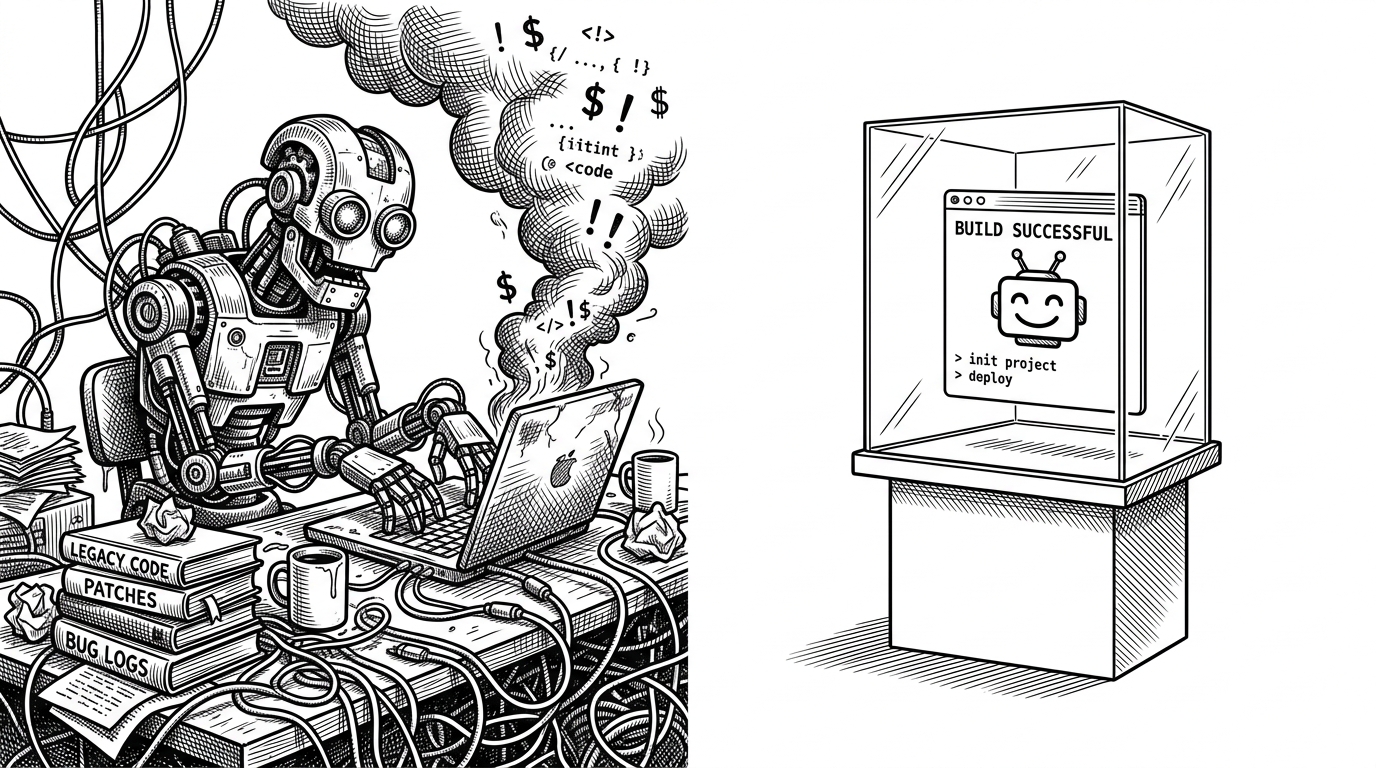
Running autonomous coding tools on local hardware is a losing battle. As agents become more capable, they consume disproportionate amounts of RAM and pose severe security risks to personal file systems. Standard AI IDEs attempt to solve this by building heavy graphical interfaces that still execute code directly on the user's machine. This approach pollutes local environments and limits the agent to the compute power of a single laptop.
The Thin-Client Terminal
Better-plexer introduces a radical paradigm shift. It operates as a thin-client workspace manager. The user interface is merely a visibility layer. The actual compute happens entirely within a Cloudflare Sandbox. By treating the command line interface as the universal API for artificial intelligence, it bypasses the need for custom, heavy GUI integrations.
| Feature | Heavy Local AI IDE | Thin-Client Edge AI |
|---|---|---|
| Compute Location | Localhost | Cloudflare Edge |
| Environment Setup | Manual npm install | Pre-built Docker Sandboxes |
| Interface | Heavy Electron GUI | Browser-based Terminal |
| Multi-Repo Context | Single window per repo | Unified RepoRelation Session |
Bridging the Edge to the Shell
The technical plumbing relies on a brilliant inversion of control. A Node script running inside the Docker container serves as a Pseudo-Terminal (PTY) bridge. A Cloudflare Worker running Hono catches incoming web requests and upgrades them to WebSockets. These WebSockets are piped directly into the container's shell. This creates a persistent, stateful connection to an ephemeral, serverless backend.
Tmux for Artificial Intelligence
Human developers struggle to maintain context across multiple repositories simultaneously. Better-plexer solves this with its RepoRelation state machine. A single AI session can track branch status and pull request URLs across entirely different git remotes at the same time. It is effectively tmux designed for machine logic.
Writing the Machine's Manual
Perhaps the most fascinating architectural choice is the use of a SKILLS.md file. Rather than building UI menus for the user, the creator wrote a technical specification strictly for the language model. This file teaches the agent its own sandbox limitations and how to leverage R2 storage without human intervention.
## Environment Constraints
- You are operating within an isolated Cloudflare Sandbox.
- Local storage is ephemeral. Use the provided R2 bucket mount for persistent artifacts.
- To request validation, execute the `plexer-validate` binary. Do not attempt to run local CI tools.