LifterLMS: The WordPress LMS That Hides a Modular System Inside a Single Plugin
A deep dive into how LifterLMS uses Composer, background jobs, and ecosystem-aware integrations to make a large learning platform feel simple for site owners and manageable for its engineers.
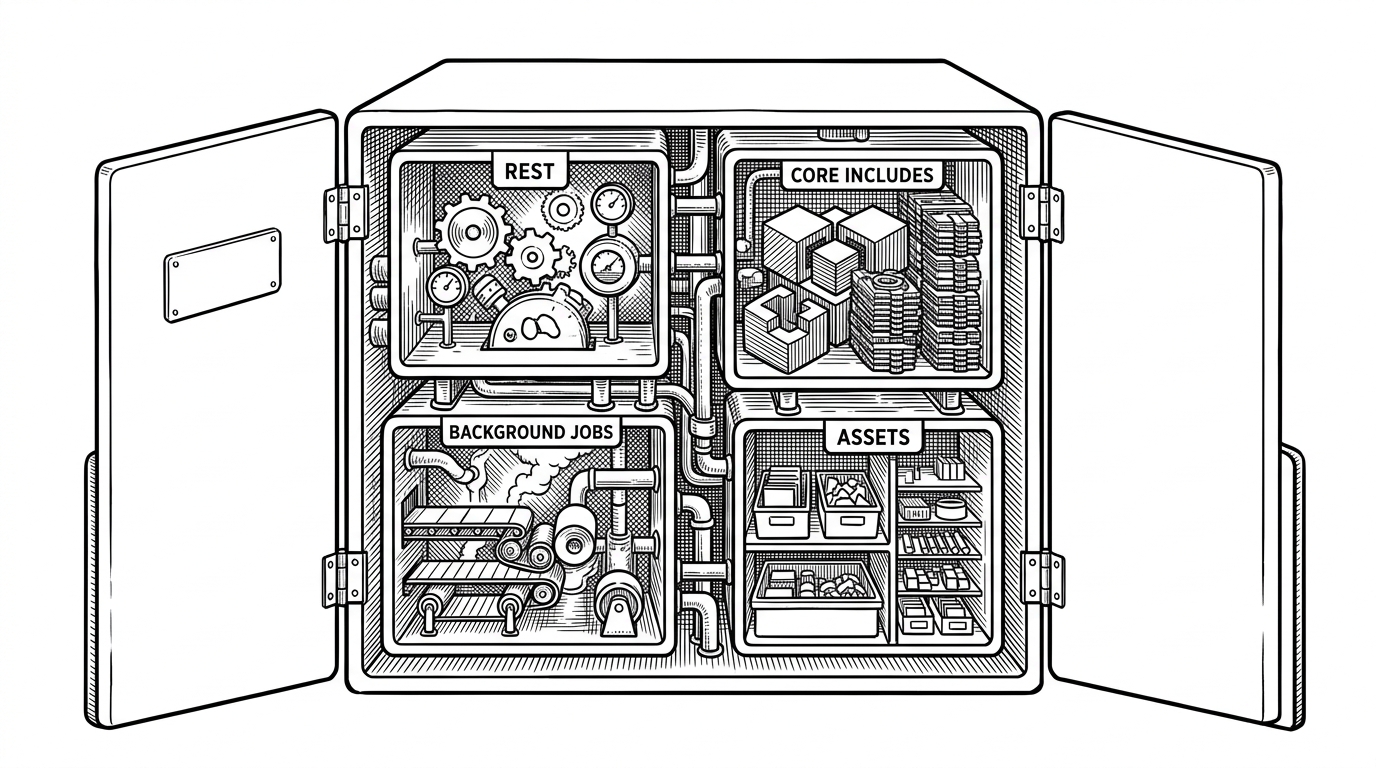
- LifterLMS is engineered like a platform but shipped like a plugin, which is why it can stay coherent for site owners while still letting internal subsystems evolve independently.
- Composer is not a convenience detail here. It is the mechanism that turns REST, blocks, and other internal packages into a federated core without exposing that complexity to the user.
- The project treats learning as software behavior, not just content delivery, through gamification assets, certificates, drip logic, and background automation.
- Its real competitive edge is maintainability plus ecosystem fit, not just feature count, which is why the architecture and business model reinforce each other.
The plugin that behaves like a platform
LifterLMS looks like a standard WordPress LMS plugin until you crack it open. Then the pattern becomes obvious: a user-facing shell on top, internal packages underneath, and background systems keeping the whole thing moving. That is rare in WordPress, where large plugins often drift toward either tangled monoliths or fractured add-on ecosystems.
The project’s own description is straightforward: "LifterLMS, a WordPress LMS Solution: Easily create, sell, and protect engaging online courses." The interesting part is how it gets there. The repo is organized so the product feels singular even when the codebase is clearly modular.
Why Composer matters more than it seems
The architecture hinge is Composer. Instead of treating every subsystem as a loose plugin dependency, LifterLMS uses installer paths to place internal packages into a shared runtime. That makes the project feel monorepo-like without forcing every feature to share the same release rhythm.
| Typical WordPress LMS pattern | LifterLMS pattern |
|---|---|
| A core plugin plus scattered extensions | A single product shell with internal packages |
| Feature growth often means plugin sprawl | Feature growth can happen inside managed package boundaries |
| REST, blocks, and automation may feel bolted on | REST, blocks, and automation can behave like core subsystems |
| Site owners manage more moving parts | Site owners see one product surface |
That is a maintenance strategy disguised as a product strategy. It reduces the cost of change for the team, but it also protects the user experience from the seam lines that usually appear when WordPress products scale.
The learning experience is built, not just managed
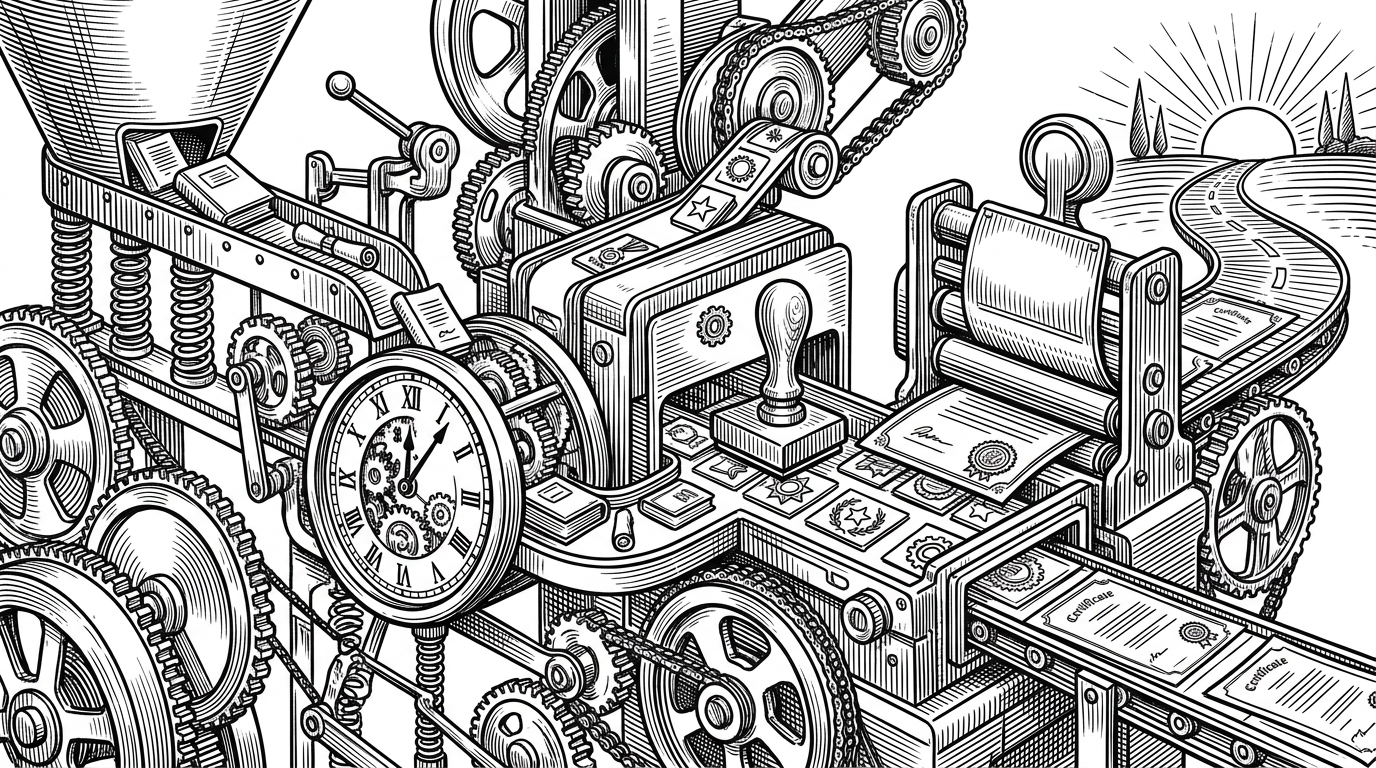
LifterLMS does not treat motivation as decoration. The asset layer is packed with SVG icons, certificate graphics, and builder-specific styling, which tells you the team considers the learning experience itself to be part of the engineering problem.
We build open source technology to democratize education in the digital classroom.
That line matters because the code backs it up. Badges, certificates, drip timing, and course progression all point in the same direction: the product is trying to make learning feel structured and earned, not just hosted.
Automation keeps a WordPress plugin from becoming a pile of state
This is where the maturity shows. The repository leans on Action Scheduler and background processing so heavy work can happen out of band, while PHPUnit, end-to-end tests, and CodeQL suggest a project that expects to be maintained rather than merely installed.
Installer path strategy
1. Composer installs internal packages into /libraries
2. Shared runtime loads those packages through the plugin shell
3. WordPress hooks bind features to actions and filters
4. Action Scheduler handles delayed jobs
5. The user sees one plugin, not five separate systems
Built for the WordPress ecosystem, not above it
LifterLMS does not pretend the rest of WordPress is irrelevant. The repo includes ecosystem-specific styling and assets, including support for builders and surrounding tools, which signals a practical strategy: stay central, stay compatible, and make the stack around you easier to use.
| Ecosystem posture | What it looks like in practice |
|---|---|
| Sealed island | A plugin that ignores the surrounding WordPress stack |
| Loose compatibility | Minimal glue code and fragile integrations |
| Center of the stack | Builder-aware CSS, addon assets, and integration-aware design |
| LifterLMS approach | A product that expects to live inside a wider WordPress business |
That posture matters because WordPress buyers rarely want a hermetic system. They want a course engine that works with the rest of their site, their theme, and their revenue stack. LifterLMS leans into that reality instead of fighting it.
What it means to compete in the LMS market
| Project | Strategic shape | Where it stands out |
|---|---|---|
| LifterLMS | Modular core packaged as one product | Architecture, built-in business logic, ecosystem fit |
| LearnDash | Commercial LMS with broad feature depth | Enterprise-style feature expectations |
| Tutor LMS | Modern UI with strong frontend emphasis | Marketplace and instructor-friendly workflows |
| Sensi LMS | Simpler LMS aligned with WooCommerce | Clean integration path for store-centric sites |
| LearnPress | Free core with premium add-ons | Low-friction entry and addon-driven expansion |
The useful comparison is not who has the longest checklist. It is who carries the least structural debt while still giving site owners a complete learning business. On that score, LifterLMS is making a different bet: fewer seams, more internal discipline, and a stronger core that can support both education and commerce.
The open-source business model behind the code
The code and the business model point in the same direction. A GPL core can anchor a services layer, expert ecosystem, and add-on economy without turning the open-source product into a dead end. The repository’s structure makes that easier because it already thinks in terms of boundaries, ownership, and integration surfaces.
That is why the project feels durable. It is not only selling courses. It is selling a maintainable way to run a learning business inside WordPress, with enough openness to let others build around it.