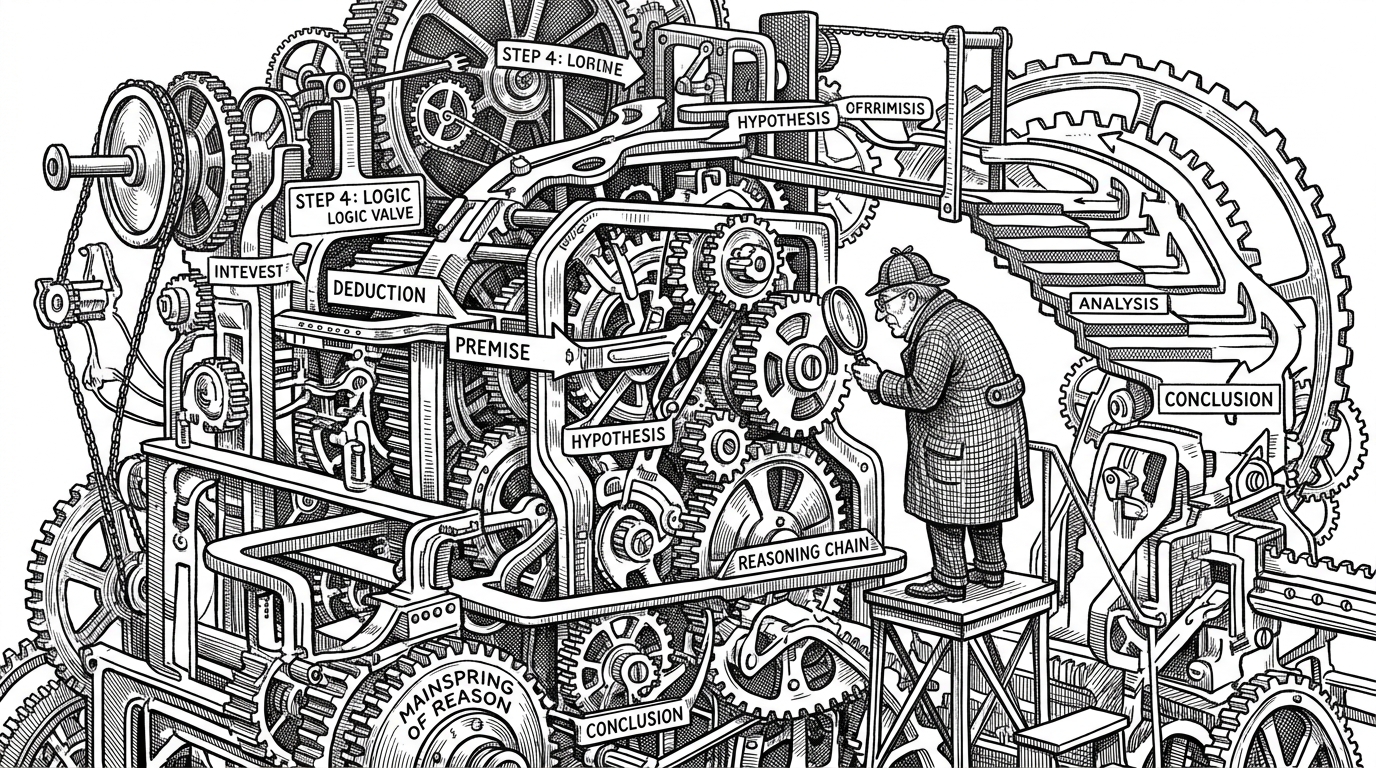
parameter-golf: Parameter Golf: The OpenAI Repo Where Model Size Becomes the Game
A 16MB challenge that turns transformer design into compression engineering, with depth recurrence, Muon, and quantization as the main weapons.
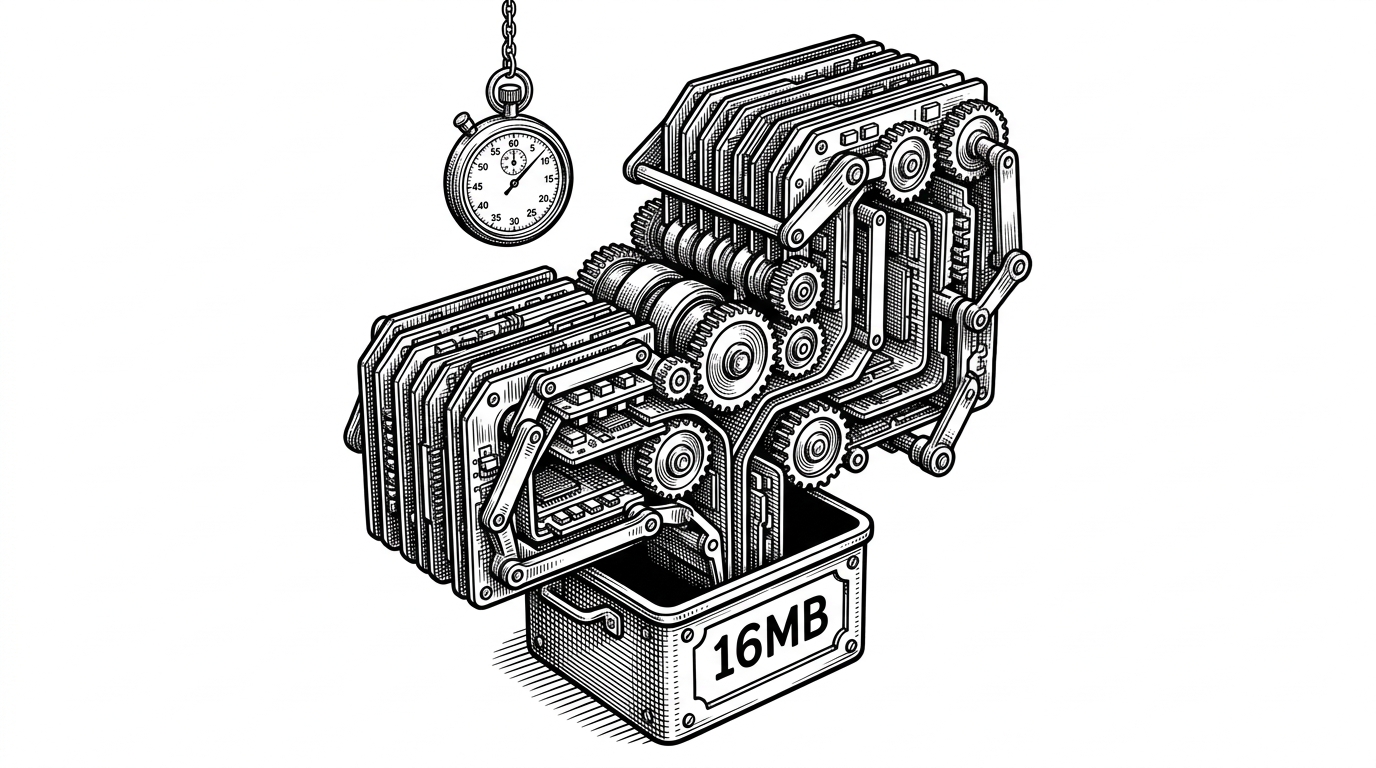
- Parameter Golf turns model design into a compression problem, so the winning move is to make each parameter serve more than one role.
- The repo matters because its constraints reshape architecture, optimizer choice, and evaluation into one tightly coupled system.
- The baseline training code is not just a starter script, it is a map of the trade-offs that make 10-minute convergence possible.
- The records folder preserves the competition as an evolutionary trail, which makes the strategy space easier to study than a simple leaderboard does.
A Language Model in a 16MB Box
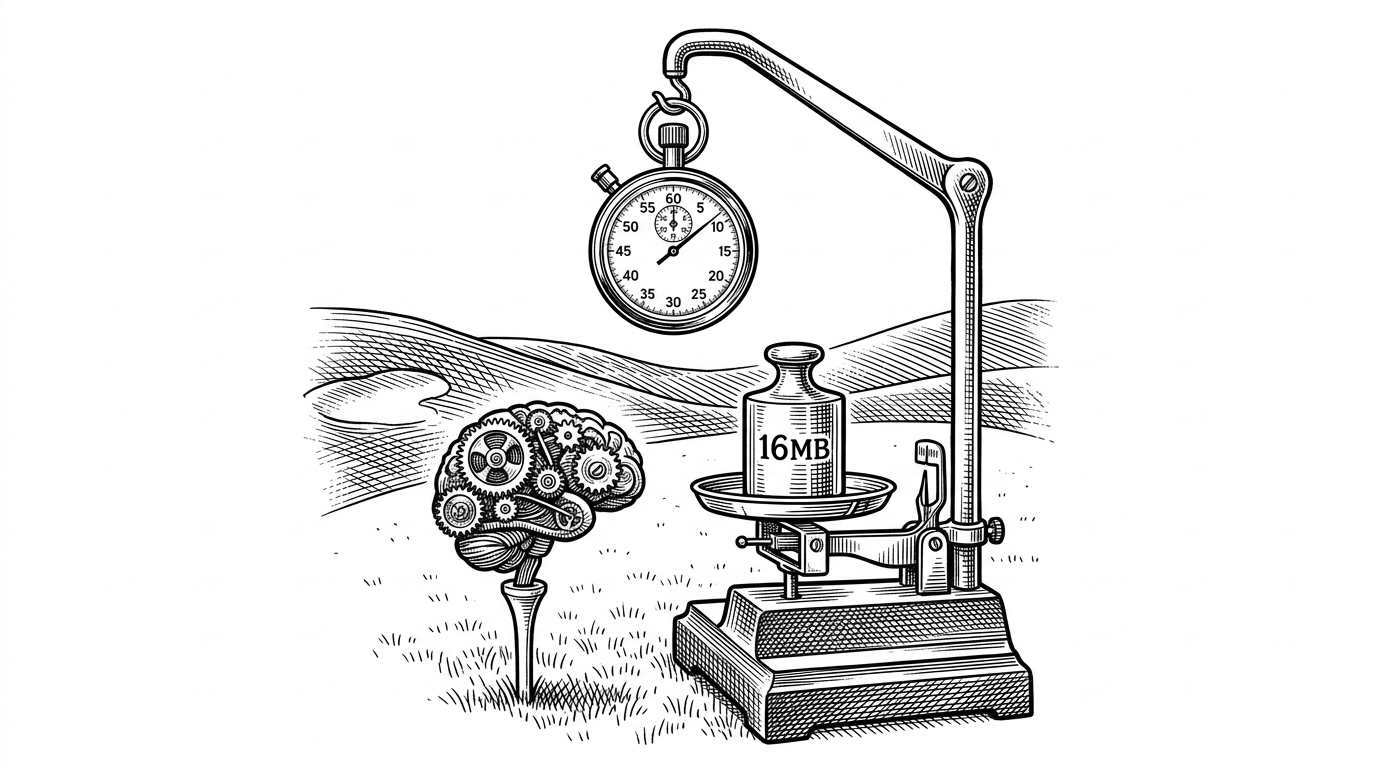
The easiest way to misunderstand openai/parameter-golf is to file it under “tiny model demo.” That misses the point. The repo is built around a hard artifact limit, a short training sprint, and an evaluation metric that rewards raw compression, so the real game is not size for its own sake. It is how much behavior you can squeeze out of the smallest possible package.
That changes the unit of thinking. Instead of asking how to scale a transformer up, participants ask what can be reused, tied, quantized, or folded into itself. The result feels less like model building and more like engineering a machine that keeps finding spare room in its own frame.
Why the Rules Change the Architecture
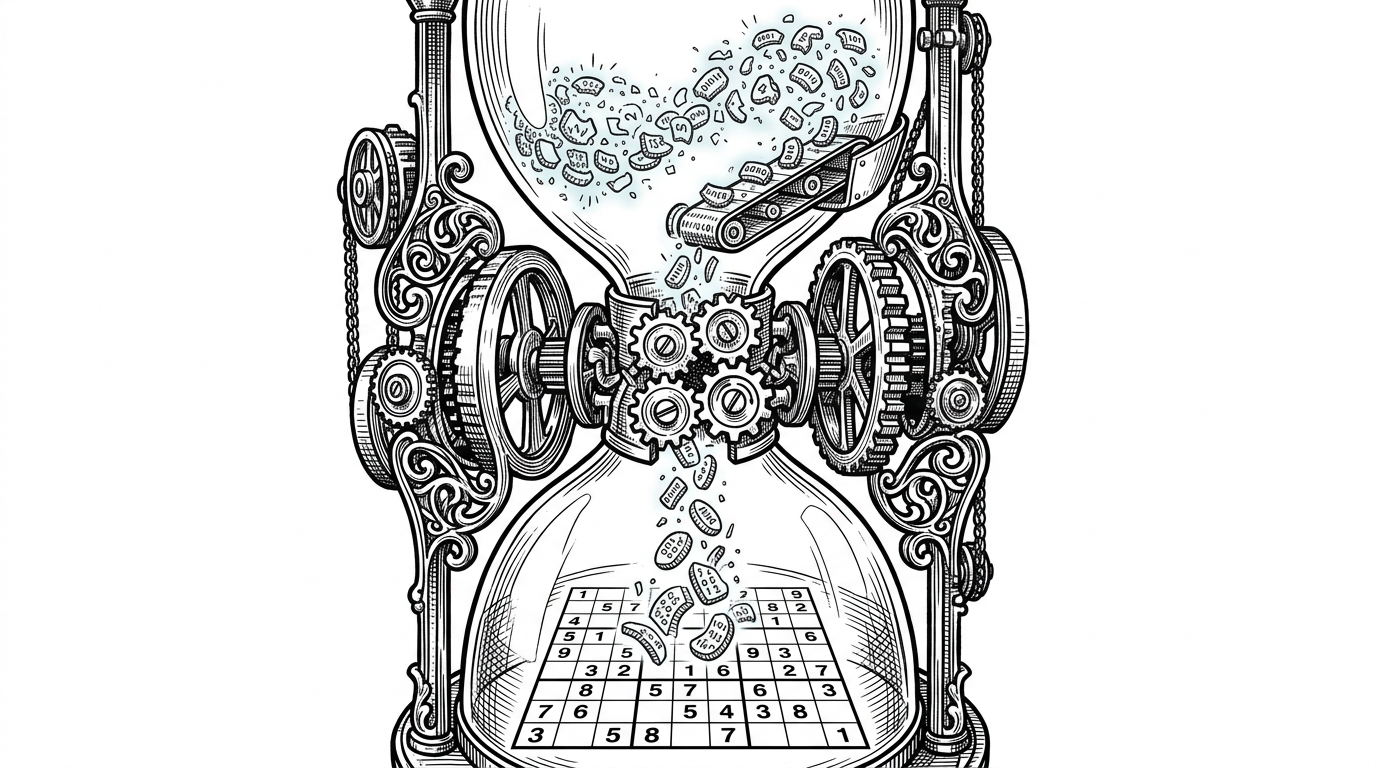
The rule set pushes teams toward architectures that would look unusual in a conventional training run. Depth recurrence lets the same weights act like a deeper network. Aggressive quantization trims the footprint. Optimizer choices like Muon matter because the model has very little time to become useful before the clock runs out.
The Baseline Is a Map, Not the Destination
The baseline lives in train_gpt.py, and that file does more than set a starting point. It shows the dense hyperparameter surface, the custom data path, and the optimizer machinery that make the challenge legible. If you want to understand why this competition rewards unusual ideas, start here.
# Baseline idea, simplified
model = GPT(hparams)
optimizer = Muon(model.parameters(), momentum=hparams.muon_momentum)
for step, batch in enumerate(train_loader):
    logits = model(batch["x"])
    loss = criterion(logits, batch["y"])
    loss.backward()
    optimizer.step()
    optimizer.zero_grad()

# The actual repo adds custom shard loading,
# orthogonalization via Newton-Schulz, and many
# hyperparameters that shape the 10-minute sprint.
The point of the baseline is not simplicity. It is to make the efficiency budget visible. The custom shard-loading path avoids ordinary bottlenecks, while the Muon path uses Newton-Schulz orthogonalization to keep updates stable under an extreme learning schedule.
This challenge is designed to surface exceptional researchers and engineers we’d want to hire. Standout participants may be invited to interview for job opportunities at OpenAI, and winning approaches may be featured publicly.
The Record Ledger Is the Real Product
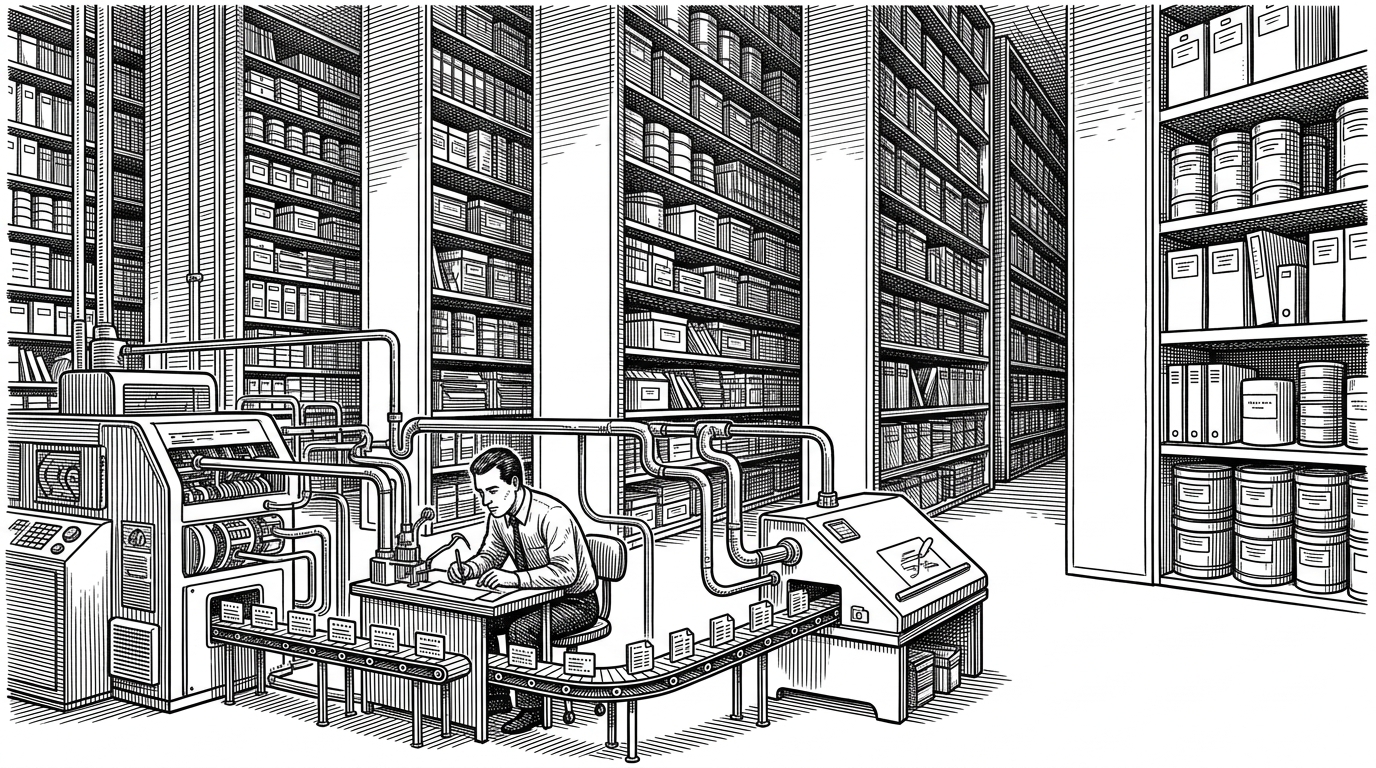
The /records directory turns the repository into a history of ideas. Every submission keeps code, metadata, and outcome together, so you can read the competition as an evolving set of moves rather than a pile of opaque checkpoints.
| Dimension | Standard approach | Parameter Golf approach | Why it matters |
|---|---|---|---|
| Artifact packaging | Weights plus code are separate concerns | The submission is treated as a tightly constrained artifact | Packaging becomes part of the optimization problem |
| Iteration style | Long training runs with broad margins | A short sprint with very little room for waste | Every design choice has immediate cost |
| Historical record | Scattered experiment logs | A preserved ledger of submissions and strategies | The repo becomes a map of the search space |
| Evaluation focus | Accuracy first, efficiency later | Compression and held-out loss are intertwined | The model is judged as a compressor, not just a predictor |
What the Best Teams Are Actually Doing
The strongest approaches do not rely on one magic trick. They stack techniques that all point in the same direction: reuse weights, adapt legally at test time, and quantize hard enough to stay inside the box. That is why the most interesting submissions look like systems, not single models.
The pattern is consistent. A repeated block gives depth without more parameters. A carefully scoped test-time adaptation loop squeezes a little more signal out of evaluation. Quantization keeps the artifact under budget so the architecture can afford to be clever elsewhere.
| Technique | What it buys | What it costs |
|---|---|---|
| Depth recurrence | More expressiveness from the same weights | Harder reasoning about where capacity comes from |
| Legal test-time adaptation | Better fit to local context | Tighter rules and more implementation care |
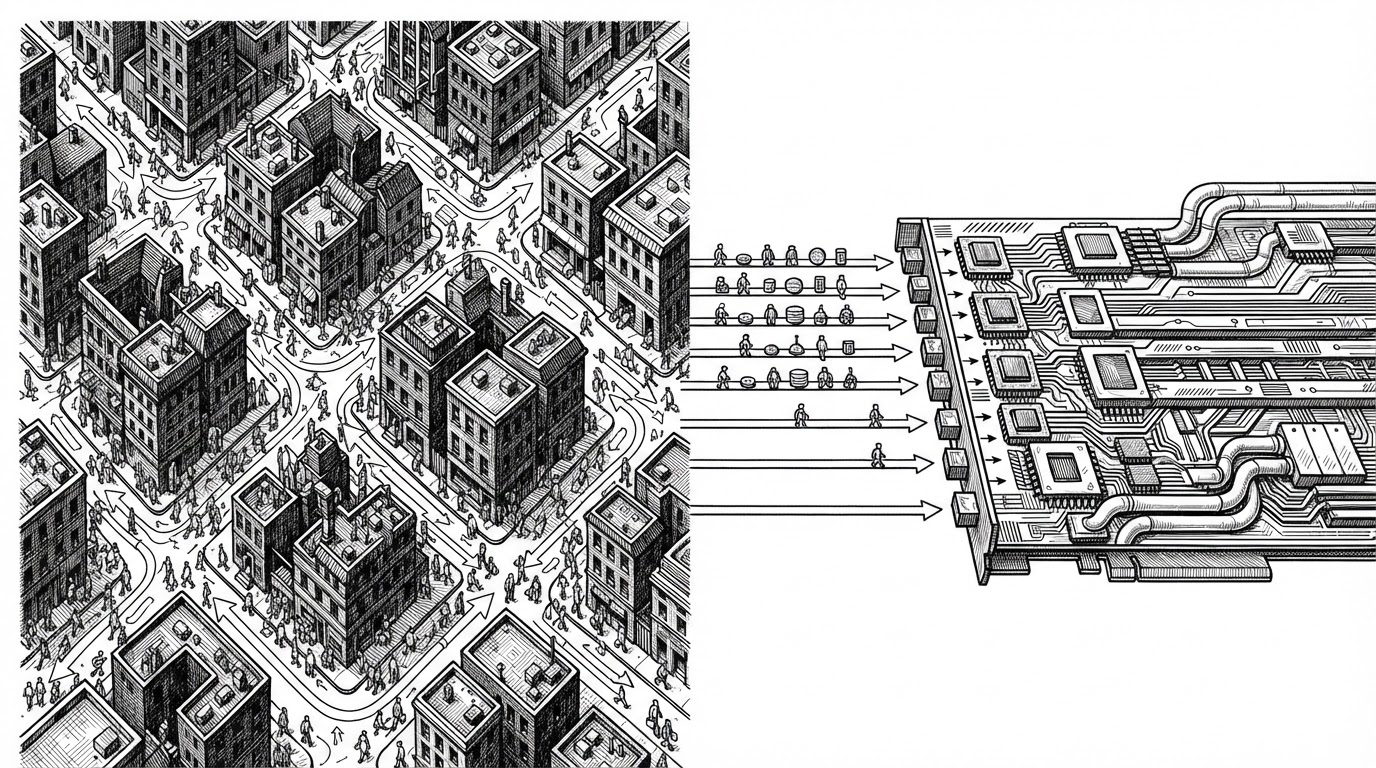
| Aggressive quantization | Smaller artifacts and faster movement through memory | Potential loss of precision and stability |
| Muon-style optimization | Fast, stable learning under a short clock | Extra tuning complexity |
Why This Feels Bigger Than a Contest
Parameter Golf works because it is more than a leaderboard. It is a recruiting mechanism, a research accelerator, and a pressure test for ideas that may matter in edge deployments later. The contest format forces the field to ask better questions about efficiency, not just scale.
That makes the repo useful even if you never enter. It shows what happens when a model is treated as a compressed object with a strict budget, and when the smartest move is to make one parameter do the work of several. That is a useful lens far beyond this one challenge.