Orbserve Paints the Picture by Where the Pixels Land
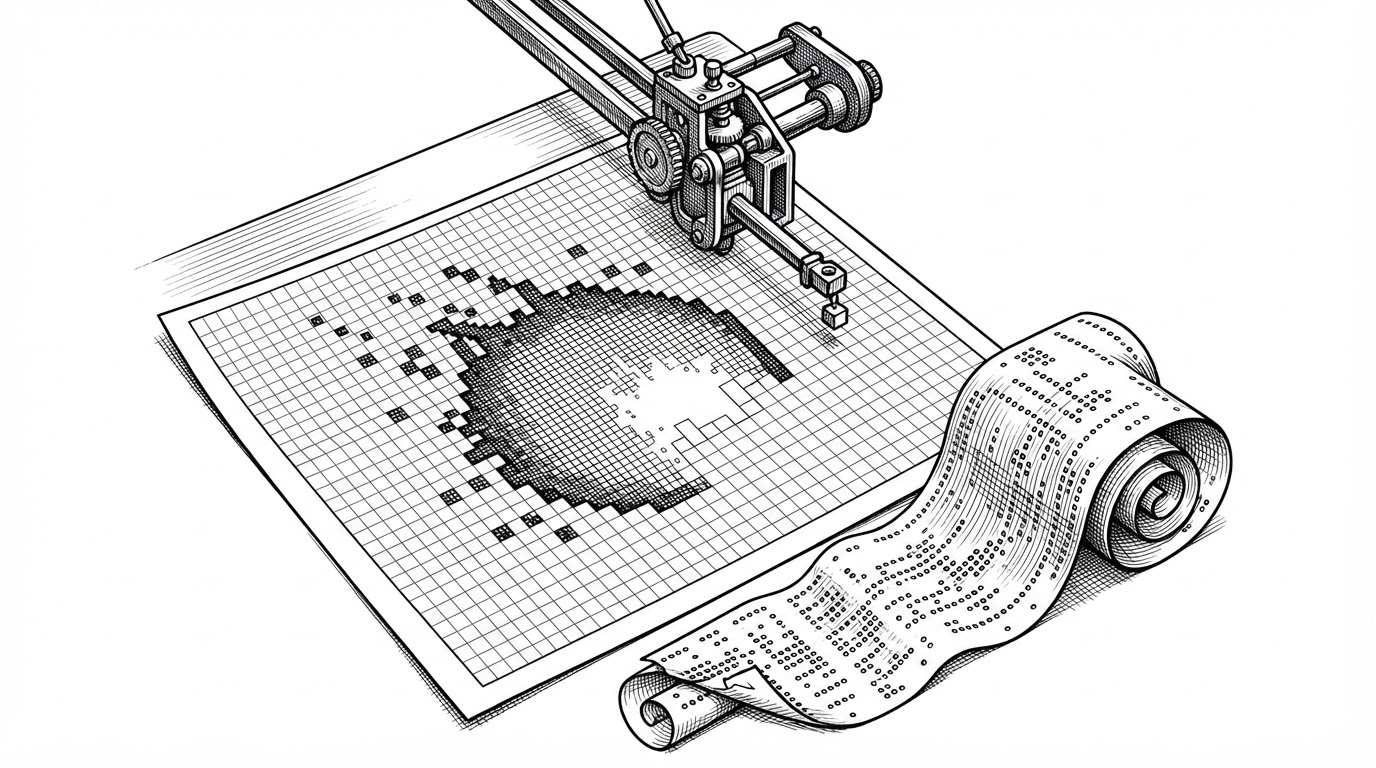
A still image becomes a field of falling particles. Each one learns its color only after it stops moving.
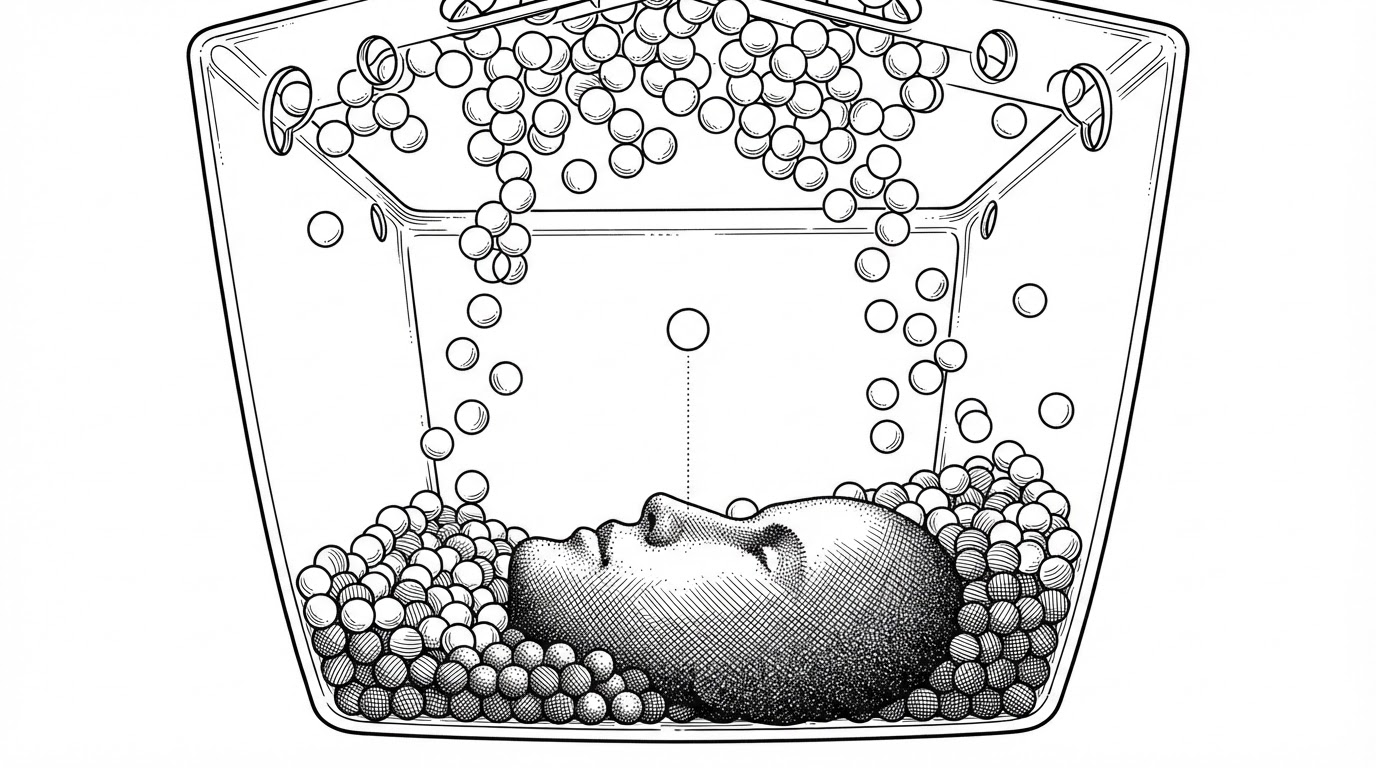
- Orbserve assigns every particle its color at the pixel where it comes to rest, not before it moves.
- The image is not drawn in advance; it is discovered by Rapier physics and rebuilt identically from the same seed.
- A module worker simulates and records the run while the main thread replays it at 60fps.
- The repo exposes export state but no verifiable video-export mechanism.
The Picture Is Not Drawn. It Falls Into Place.
Most particle systems decide what a particle looks like before they set it in motion. They read the target image, hand each particle a color, and then animate it toward a destination it already knows. Orbserve runs that process backwards.
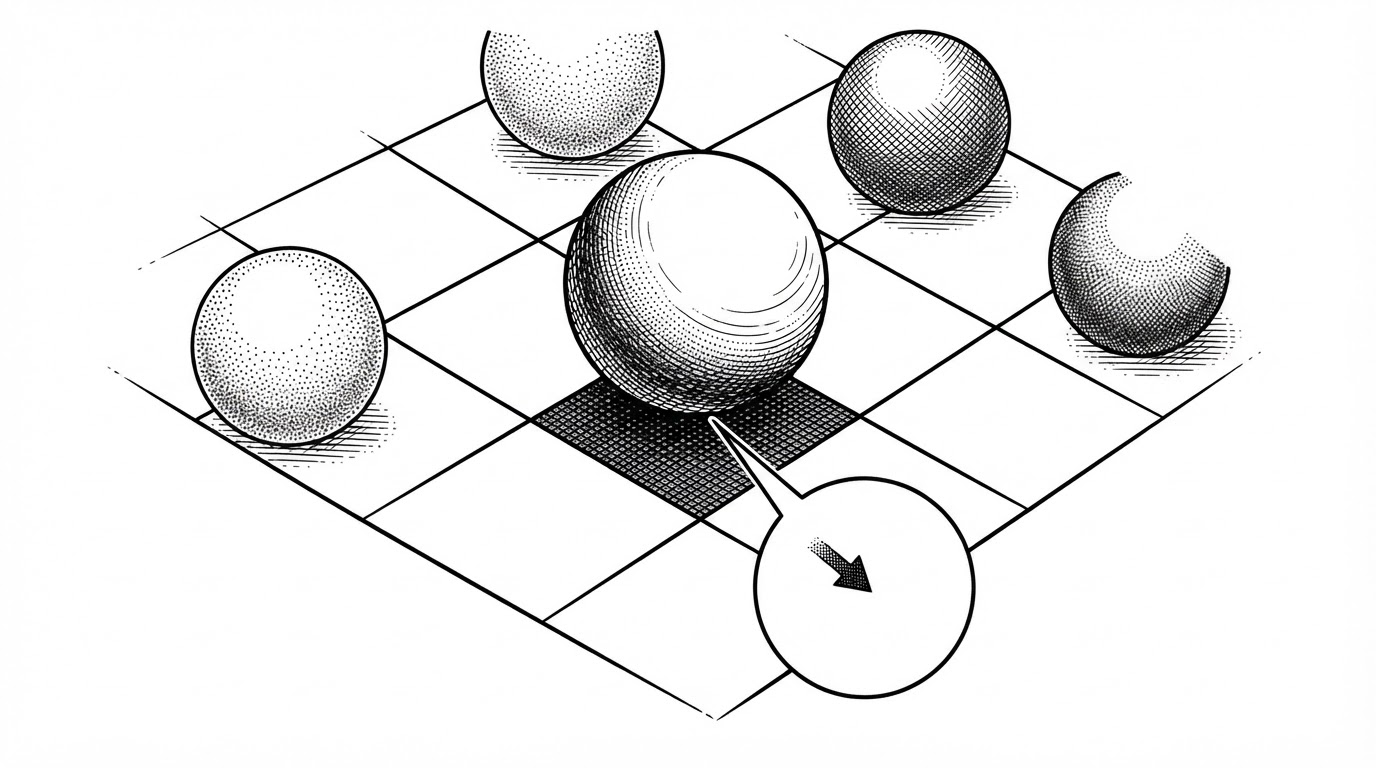
Particles spawn blank. They are identical white balls with no idea what they will become. Rapier, a Rust physics engine compiled to WebAssembly, drops them through a container, bounces them off walls, and lets restitution and friction decide where each one stops. Only then does Orbserve look down at the pixel beneath the settled ball and copy that pixel's color into the ball.
The picture is not drawn. It is discovered, one collision at a time.
That inversion changes what the image feels like. In a conventional system the target picture is a plan the particles are following, and the eye can sense the plan early. In Orbserve the image only resolves at rest. Until the balls stop, there is nothing to see but chaos.
Reproducibility is what makes the trick usable rather than merely pretty. The same seed, the same parameters, and the same holes reconstruct the same image from the same tumble. Run it again and the fountain finds the identical picture.
How a Pixel Becomes a Particle
Orbserve builds a run in six steps, all of them visible in the source tree.
- Container sizing. A helper called containerForAR fits the image's aspect ratio into a box capped at 720 by 480 pixels, tightening the limits on small viewports to leave room for UI chrome.
- Quality derivation. deriveQuality turns the container area and a fill ratio into a ball count with the formula N = round(area x fillRatio / (pi r squared)), then derives a spawn frame count from that number.
- Source rasterization. A hidden canvas is sized to the container and filled by a drawer function, which is either a procedural sample or an uploaded image.
- Precompute request. A newRun call posts a precompute message carrying a seed, the parameters, the holes, and the viewport to the worker.
- Simulation and recording. The worker steps Rapier forward, letting particles fall and settle, and records the resulting frames.
- Replay. The main thread plays the recording back as a smooth animation.
The ball count is not arbitrary. It falls out of the container's area and a target fill ratio, so a denser picture simply means more spheres. The seed threads through the whole run, which is why the same inputs always land the same image.
Two Threads, One Loop
Physics is expensive and bursty. Rendering has to be smooth and continuous. Orbserve splits them across two threads so neither one waits on the other.
Rapier runs inside a module worker, loaded with new URL("./worker.js", import.meta.url). The worker owns the simulation. It steps the world, watches for particles that have come to rest, samples the source canvas at each resting position, and writes the results into a recording.
The main thread owns PixiJS v8. It draws through a ParticleContainer, which is built for pushing thousands of sprites cheaply, and it prefers WebGPU with a fallback when the browser cannot provide it. The two sides never share objects. They talk only through typed messages, which keeps the boundary clean and the coupling minimal.
The payoff is that an expensive, uneven simulation can run to completion off the critical path while the visible animation stays steady. The recording is the handoff, and replay is what the reader actually watches.
What Orbserve Is Not
The difference between Orbserve and a standard particle image is a difference in philosophy, not a checklist of features.
| Dimension | Conventional particle image | Orbserve |
|---|---|---|
| Color assignment | Before simulation, per particle | After simulation, at resting pixel |
| What drives the picture | Pre-computed target positions | Physics decides landing spots |
| Reproducibility | Tied to the target map | Tied to seed, params, and holes |
| Visual character | Particles fly toward a known image | Image emerges from collisions |
| Failure mode | Particles reveal the plan early | The picture only resolves at rest |
Two limits are worth stating plainly. The README promises export to video, but the visible code only carries export state in App.tsx, an exporting flag and an exportProgress value. The mechanism that would produce the file is not verifiable from the source tree, so treat the feature as advertised rather than demonstrated.
The repository is also thin on metadata. It ships with no description, no license, and no topics, and the README is terse. None of that changes what the code does, but it does tell you how the project is being positioned: as an experiment rather than a product.
What the Repo Tells Us About Its Making
The artifact discloses its own character. The source is organized with unusual discipline for a personal project. Simulation lives in worker.js, rendering in usePixiRenderer.ts, state in Zustand stores, and pure domain logic in lib. The boundaries are clean, and the only coupling between physics and graphics is a set of typed messages.
State is split deliberately. Settings a user would want to keep, such as parameters, holes, theme, and speed, persist to localStorage with versioned migrations. Ephemeral simulation state stays in memory. Uploaded images go to IndexedDB through the idb library. Each kind of state gets the storage that fits it.
What the repo does not disclose is who built it or why. There is no verified author statement, interview, or documentation of intent. The honest reading is that Orbserve is a personal experiment that lets its code speak for itself, and the code is worth listening to.