2026-AI-Topics: The Repo That Tries to Map the Future of AI
A Markdown taxonomy that turns a messy, fast-moving field into a searchable knowledge map, with duplicate labels, emerging categories, and a bias toward what the AI stack may look like next.
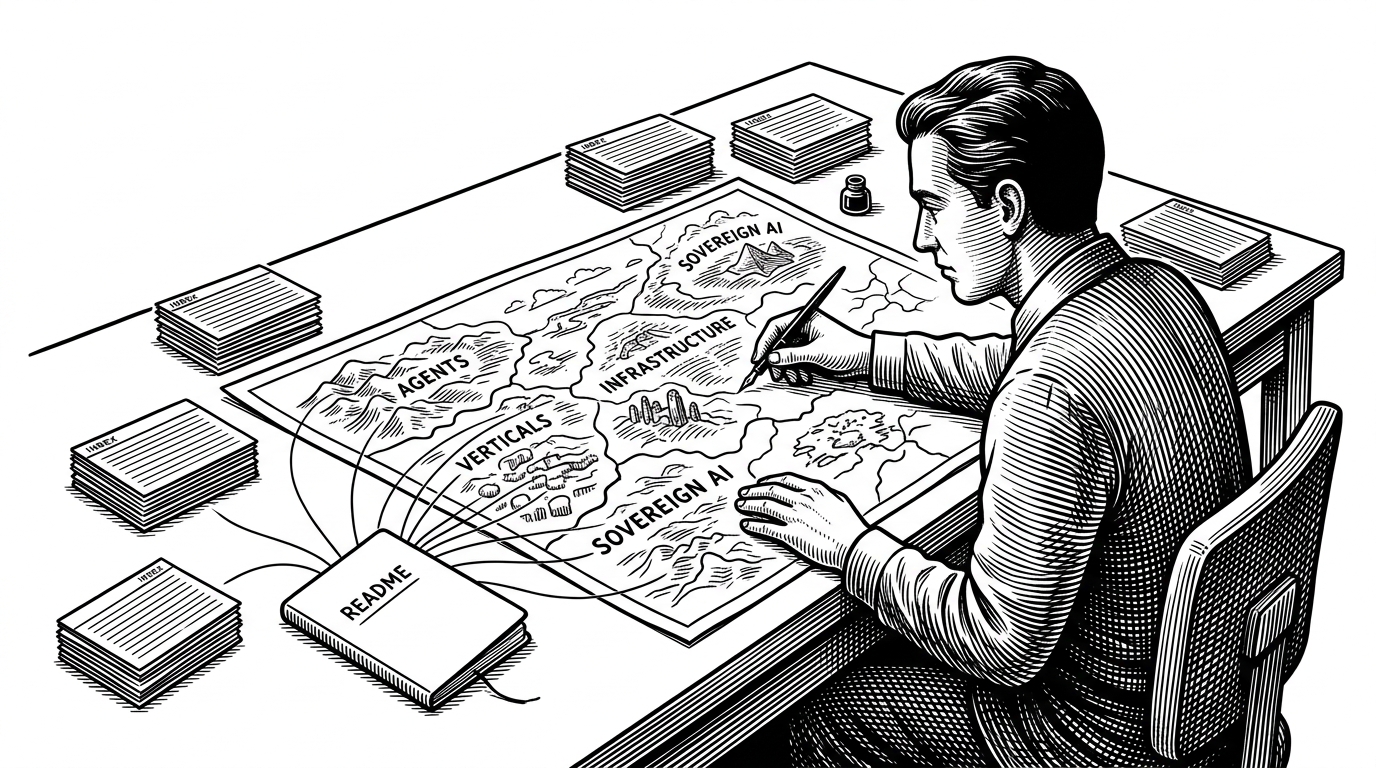
- This repository treats taxonomy as strategy, because naming the categories also shapes how the AI market gets searched, compared, and funded.
- Its Markdown structure works like a lightweight schema, turning a README into a human-readable database for the next layer of AI vocabulary.
- The duplicate labels are not sloppy editing, they are retrieval design, built to catch multiple phrasings of the same emerging category.
- The project matters most upstream of tools and dashboards, where category design quietly defines what counts as a real segment.
Why a README Is Acting Like a Database
At first glance, 2026-AI-Topics looks like a simple Markdown list. That is the misdirection. The repo is really a controlled vocabulary for the AI sector, a lightweight schema for sorting a field that keeps splitting into new labels.
A repository of AI topics.
That line from the README is almost comically plain, which is part of the point. The file is not trying to entertain you. It is trying to make a chaotic market legible.
The Project Is a Forecast, Not a Catalog
The title says 2026, and that future tense is doing real work. This is not just a list of what exists. It is a claim about what the AI stack will likely fragment into next: agentic AI, sovereign AI, spatial AI, AI SDRs, neoclouds, and other categories that are still settling into common use.
That makes the repo closer to a forecast than a directory. The categories are not only descriptive. They imply which terms are worth standardizing before the market hardens around them.
How the Taxonomy Is Built
The structure is plain Markdown, which is the right tradeoff here. JSON would be easier for machines, but Markdown is easier for people to read, fork, and edit. In a field this fluid, editability matters as much as schema.
The point of the hierarchy is not just to organize. It is to normalize. The same topic can appear in several word forms, but the repository still wants one conceptual bucket underneath those variants.
## Infrastructure
- GPUs
- Neoclouds
- P2P AI

## Agentic AI
- AI Orchestration
- AI Agents
- AI SDRs

## Industry-specific
- Legal AI
- Fintech AI
- Military AI
The Strange Power of Redundant Labels
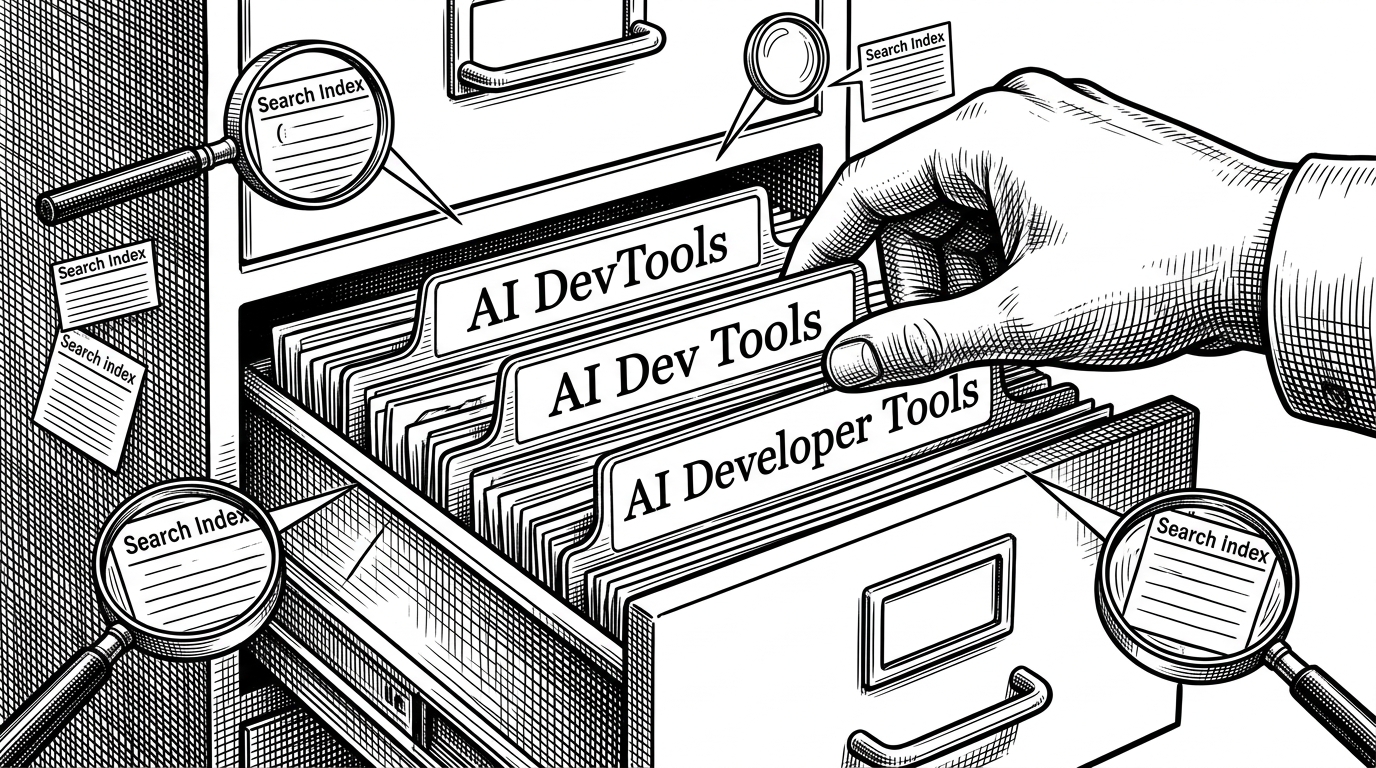
This is the editorial center of the repo. Labels like AI DevTools, AI Dev Tools, and AI Developer Tools look repetitive only if you think the goal is elegance. If the goal is retrieval, they are smart.
Redundancy widens the net. It catches searchers, classifiers, and people who know the concept before they know the preferred spelling. That is not sloppy taxonomy. That is taxonomy optimized for discovery.
| Layer | What it does | Why it matters |
|---|---|---|
| Raw phrases | Preserves the many ways people name the same thing | Improves recall across search and tagging |
| Canonical categories | Collapses synonyms into a stable bucket | Creates a shared language for analysis |
| Downstream uses | Feeds search, datasets, market maps, and trend analysis | Turns a README into infrastructure |
What This Repo Is Really Competing With
Put 2026-AI-Topics next to living tool trackers, trend radar projects, and broader AI landscape maps, and the difference becomes clear. Those projects track movement. This one defines the shelf labels.
That distinction matters. A tracker tells you what is hot. A taxonomy tells you where that thing belongs once the heat cools and the market starts filing it under a category.
| Project type | Primary purpose | Update style | Strength | Limitation |
|---|---|---|---|---|
| Taxonomy repo | Define the category space | Slow and deliberate | Stable language for analysis | Does not show live momentum |
| Tool tracker | Follow specific products and startups | Frequent and reactive | Captures what is changing now | Can get noisy fast |
| Market map dataset | Support research and visualization | Periodic refresh | Useful for analysis and presentation | Depends on upstream category quality |
Joy Larkin describes the motivation plainly in a LinkedIn post: This project emerged from my frustration trying to find recent AI industry market maps — so I built something to benefit everyone interested in tracking the ever-evolving AI landscape. That is the origin story, but it is also the thesis. The repo exists because the map was missing.
Why Category Design Matters
Category design sits upstream of search, discovery, and funding. If you can name a segment early, you can shape how people compare tools, how analysts group them, and how founders describe what they are building.
That is why a repository like this matters even if it never ships software. It is part glossary, part forecast, part market infrastructure. The most important thing here is not the list. It is the argument that the list is a form of power.