NVIDIA Elements: The Design System That Teaches AI How to Build the UI
A deep look at the MCP bridge, agent skills, and industrial-grade monorepo that turn a web component library into a harness for humans and LLMs alike.
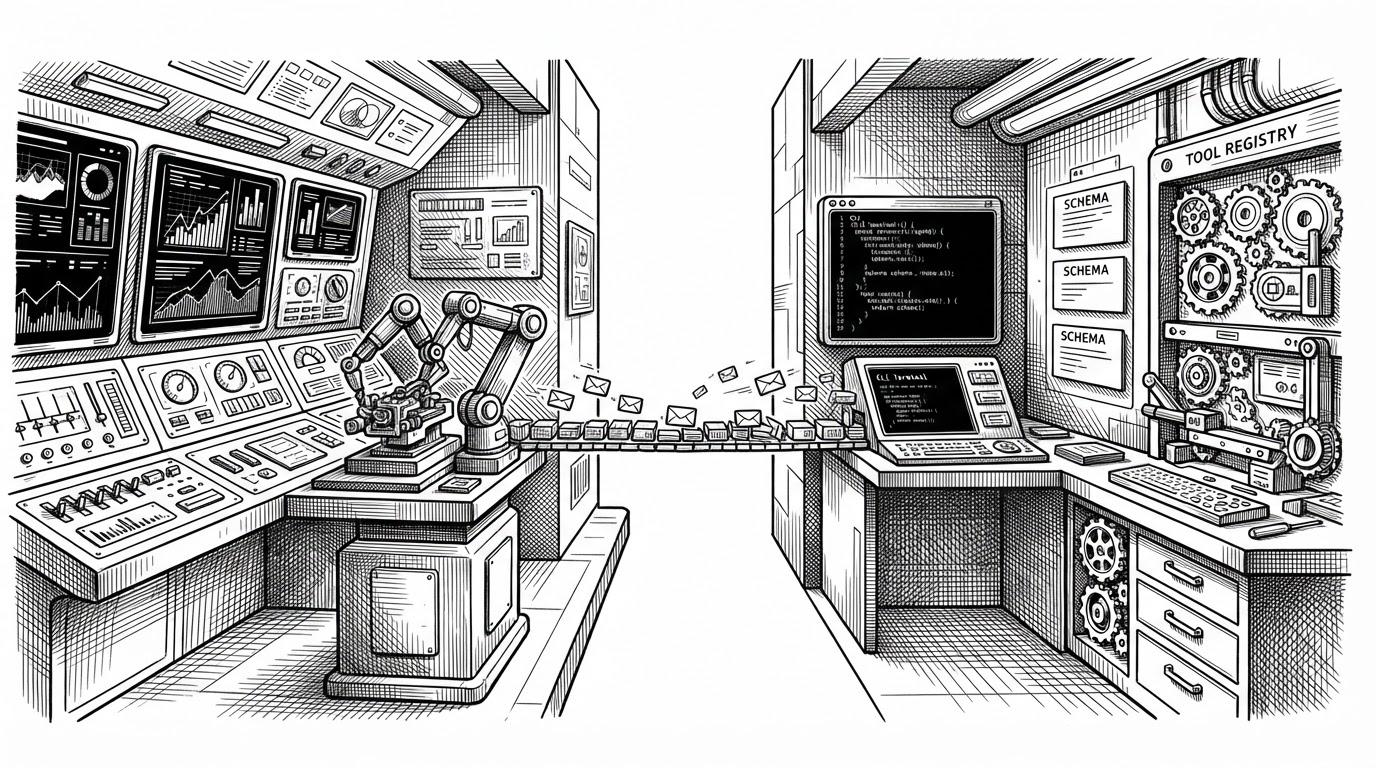
- NVIDIA Elements is built around a simple but unusual idea: AI agents are not guests in the workflow, they are first-class users of the UI system.
- The MCP bridge and `.agents` layer turn documentation, schemas, and tooling into a controlled path from intent to valid code generation.
- The monorepo is optimized for long-lived industrial interfaces, not just one frontend framework, so portability and consistency matter as much as component polish.
- Its build and quality stack makes the whole system reproducible, testable, and safe to hand to both humans and model-driven tools.
The UI Layer Is for Agents Too
NVIDIA Elements is easy to mistake for a design system. It has components, starters, build tooling, and polished docs. But the more interesting reading is that it treats the UI layer as something both humans and AI agents can operate against.
That changes the shape of the repository. Instead of just shipping a component library, Elements ships a way for an LLM to discover what exists, understand the rules, validate inputs, and generate code inside NVIDIA's constraints. In other words, the repo is a harness, not just a catalog.
That matters because the target environments are not toy apps. They sound like robotics consoles, autonomous vehicle dashboards, and AI factory interfaces, where one team needs durable UI patterns and another needs machine-readable pathways into those patterns.
The MCP Bridge Is the Real Front Door
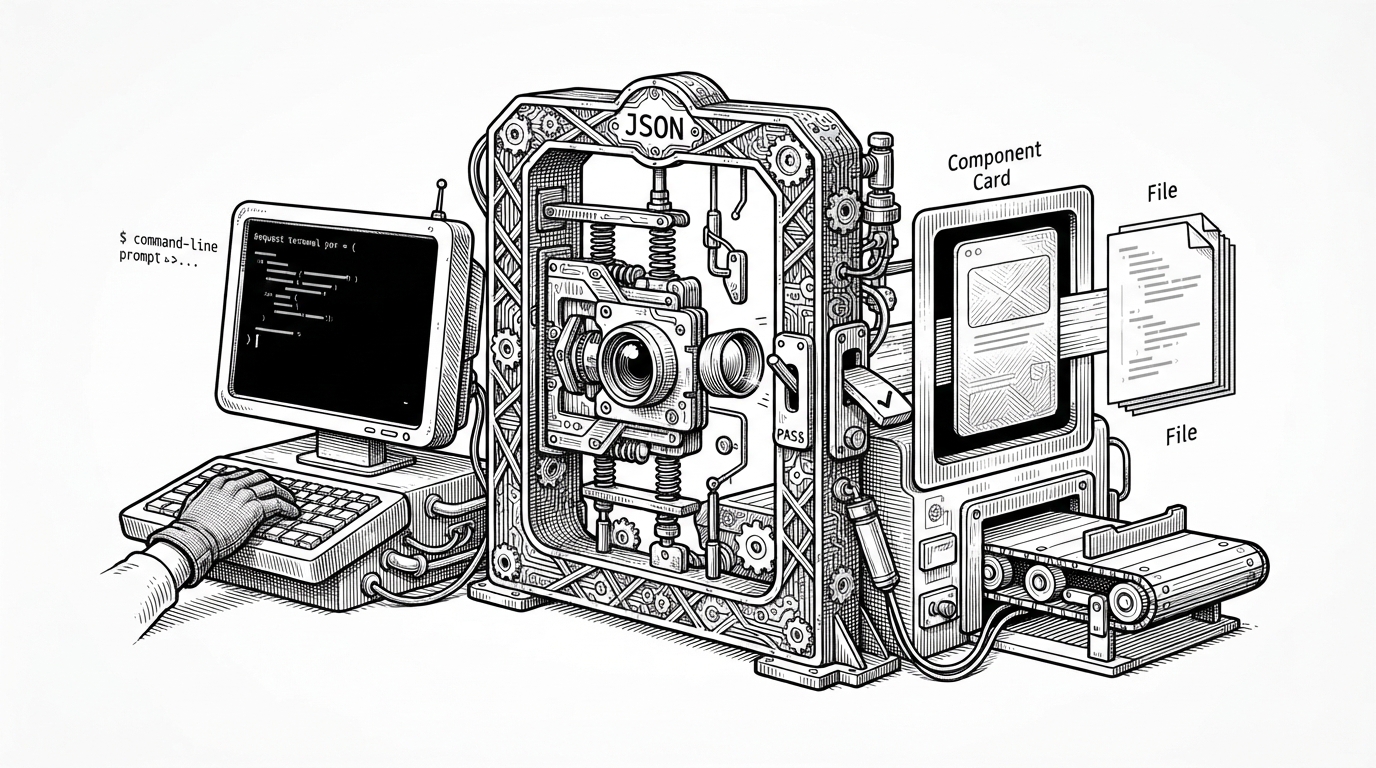
The clearest signal in the repo is the MCP layer in projects/cli/src/mcp/index.ts. That is the bridge between repository knowledge and agent action. It exposes tools through the Model Context Protocol, then constrains those tools with schema validation so calls are structured before they touch the codebase.
That is the core move. MCP does not merely expose a list of commands. It gives an LLM a structured view of what it can do, and it makes the execution path safe enough to trust. The result is less magical than it sounds and more useful.
// Conceptual shape of the MCP bridge
const tools = registerTools({
  generateComponent,
  scaffoldStarter,
  lintDocs,
});

server.setRequestHandler(ListToolsRequestSchema, async () => tools.list());
server.setRequestHandler(CallToolRequestSchema, async (request) => {
  const parsed = jsonSchemaToZod(request.params.argumentsSchema).parse(request.params.arguments);
  return tools.call(request.params.name, parsed);
});
Why the CLI Feels Human and Machine-Friendly at the Same Time
The CLI at projects/cli/src/index.ts sits on the same philosophy. It uses yargs for command parsing, but it does not stop at parsing. If arguments are missing, it can prompt a human. If the caller is an agent, the schema path takes over.
That dual behavior is the point. A person can stumble through a command with guidance. An agent can execute with structured inputs. NVIDIA Elements is trying to make both paths land on the same output without creating two separate tools.
| Dimension | Traditional CLI | NVIDIA Elements CLI |
|---|---|---|
| Primary user | Developer | Developer or agent |
| Input style | Flags first | Flags, prompts, or structured tool calls |
| Validation | Ad hoc | Schema-driven |
| Output | Command result | Command result plus agent-safe pathways |
| Role in system | Utility | Front door to the repo |
The .agents Directory Is a Second Documentation Layer
The `.agents` directory turns documentation into behavior. Skill files are not just readme prose. They act like instructions that tell an assistant how to work inside NVIDIA's conventions, from Shadow DOM expectations to accessibility and component creation rules.
That is easy to underestimate. A normal design system assumes humans will read the docs and follow them. Elements assumes an assistant may need the rules encoded close to the code, so the machine can stay inside the guardrails while it generates.
The effect is subtle but important. It collapses the distance between policy and execution. When the skill layer and the MCP layer agree, the agent is less likely to improvise the wrong thing.
A Design System Built for Long-Lived Industrial Stacks
The starter ecosystem reinforces the same strategy. The repo does not bet everything on one frontend stack. It spans framework options and even includes nonstandard combinations, which makes sense if your target surface is a mix of long-lived products rather than a single marketing site.
Web Components and Lit give NVIDIA a durable component layer with less framework lock-in. That is a good fit for industrial interfaces, where portability and longevity can matter more than ecosystem fashion. The architecture reads like a hedge against churn.
| Question | Component library only | NVIDIA Elements |
|---|---|---|
| Who is served | Humans | Humans and agents |
| Stack commitment | Usually one frontend framework | Framework-agnostic core with many starters |
| Documentation role | Reference | Reference plus behavioral constraints |
| System boundary | UI pieces | UI pieces, CLI, skills, and validation |
| Long-term bias | Shorter product cycles | Industrial longevity |
The Build Stack Is as Opinionated as the Components
The repo's build discipline is part of the product story. `mise`, `pnpm`, `wireit`, and `bun` are not random choices. They make the environment reproducible, the tasks cacheable, and the CLI fast enough to feel practical rather than ceremonial.
The quality stack is equally deliberate. Visual testing, accessibility checks, performance checks, and documentation linting all point in the same direction: the repository is maintained like infrastructure, not an experiment.
That matters because the whole agent story depends on trust. If a toolchain is flaky, an assistant cannot safely use it. If the rules are inconsistent, the generated output will drift. The build stack is doing governance work.
What NVIDIA Elements Is Really Optimizing For
NVIDIA Elements is optimized for a narrow but important world: heterogeneous codebases, safety-sensitive interfaces, and teams that need both human creativity and machine assistance without lowering standards.
That is why the repo feels unusual. It is not trying to be the prettiest component library on the internet. It is trying to be the place where UI intent, validation, and generation all meet under one roof.
Seen that way, the most important thing in the repo is not a component. It is the contract. NVIDIA Elements teaches AI how to build the UI, but it also teaches the UI system how to stay coherent when AI is part of the workflow.
| Traditional design system | NVIDIA Elements |
|---|---|
| Assumes a human reads the docs | Assumes humans and agents both need guidance |
| Validates mostly in the app layer | Validates at the tool and schema layer |
| Treats CLI as a utility | Treats CLI as an agent-ready front door |
| Optimizes for component reuse | Optimizes for durable system behavior |