Adeli Chat Sends an Instagram DM When Someone Comments a Keyword. The Hard Part Is Doing It Exactly Once.
A free, self-hosted alternative to ManyChat that uses Postgres constraints as a state machine, treats webhook redelivery as the enemy, and ships with a spec-driven codebase most demos never bother to write.
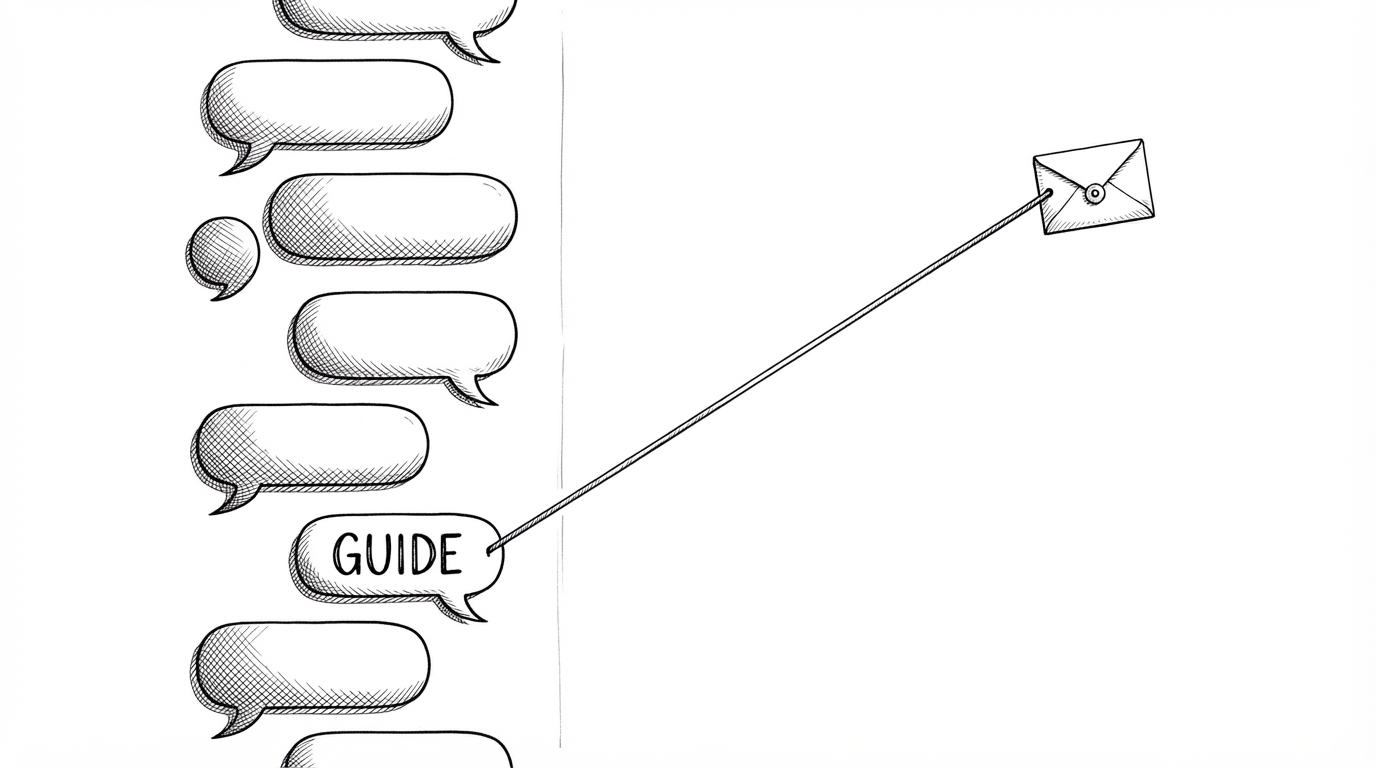
- Adeli Chat treats exactly-once delivery as the actual product, not an implementation detail, so one comment produces one DM no matter how many times the network retries.
- Dedupe lives in a Postgres unique constraint and the button tap is a single-row compare-and-swap, so a redelivered webhook or a double tap both exit silently with no duplicate.
- The webhook route verifies the signature against the raw body, returns 200 immediately, and runs the handler with after(), so Meta never waits on a slow API call.
- The repo calls itself a demo of the Adeli API, but spec-referenced comments, server-only boundaries, key redaction, and a PGlite laptop fallback make it read like a reference implementation.
What a comment-to-DM automation actually is
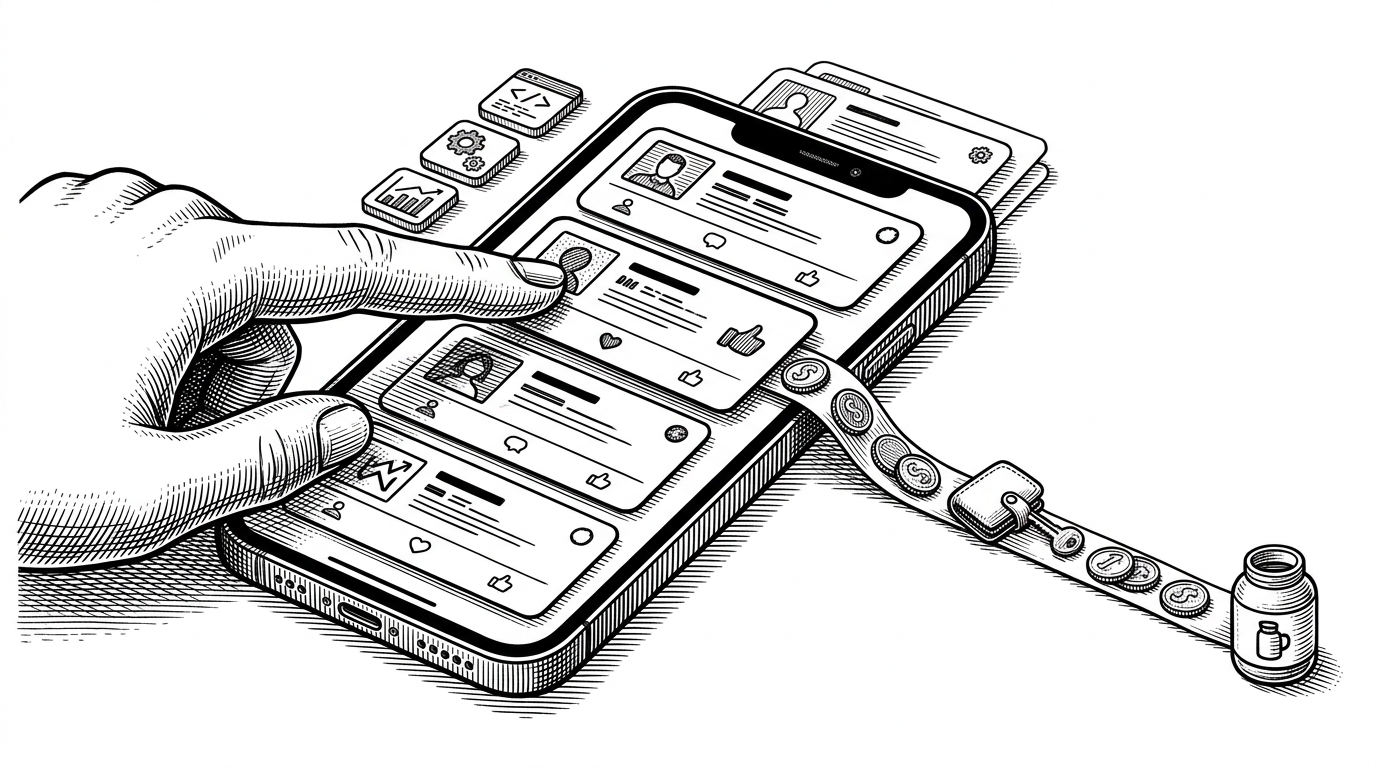
You have seen these in the wild. A creator posts a carousel and writes "comment GUIDE and I'll send you the link" in the caption. A stranger comments. Seconds later a public reply appears under their comment, and a private message shows up in their inbox with a button. They tap it. The link arrives. Most people never think about what happens in between, which is exactly where this project gets interesting.
The full funnel in Adeli Chat runs in five steps:
- A comment arrives on a post, delivered as a webhook event from the Adeli API.
- The app matches the comment text against the live automation for that specific post.
- It posts a public reply under the comment, picked at random from a list of variants.
- It opens a private DM containing a single button, whose payload is the run ID.
- When the user taps the button, a second webhook fires and the final DM with the link goes out.
That is the whole product. It is also a distributed-systems problem wearing a marketing hat, and the code knows it.
The hard part is not the DM. It is the exactly-once guarantee.
Three failure modes make the simple version of this funnel unreliable. Meta redelivers webhooks when it does not get a timely acknowledgement, so the same comment event can arrive twice. Users tap buttons twice, because users tap buttons twice. And responses get dropped between the API call and the client, so the app cannot always tell whether a step succeeded.
Any of those produces the same embarrassing outcome: the same person gets the same DM more than once, or the same comment gets two public replies. The interesting code in Adeli Chat is not the Instagram integration. Adeli handles that. The interesting code is the part that makes sure one comment produces one DM, no matter how many times the network tries to deliver it.

Two Postgres primitives do the work of a workflow engine
The first trick is dedupe by insert. When a comment event arrives, the handler tries to create a run row for it and asks Postgres to do nothing on a conflict:
const [run] = await db().insert(schema.runs)
  .values({ ... })
  .onConflictDoNothing()
  .returning({ ... });

if (!run) return; // already handled
If nothing comes back, the event was already handled and the function returns. The dedupe is not application logic checking a flag. It is a unique constraint in the database, which means it holds even when two webhook deliveries land at the same instant. The inline comment says it plainly:
The second trick is the button tap. The postback button in the opening DM carries the run ID as its payload, which turns a user interface interaction into a database compare-and-swap:
const [run] = await db().update(schema.runs)
  .set({ state: "final_sending", tappedAt: now, updatedAt: now })
  .where(and(
    eq(schema.runs.id, event.data.payload),
    eq(schema.runs.state, "opening_sent"),
  ))
  .returning({ ... });

if (!run) return; // someone already claimed this tap
The WHERE state = 'opening_sent' clause is the whole guarantee. Only one delivery of a tap can move the run out of that state. Every other delivery gets zero rows and exits silently. A duplicate postback can never send a second final DM, because there is no second transition to claim.
That is the trick. The run ID becomes the button payload, and a button tap becomes a single-row update with a guard. One line of code, one guarantee.
Acknowledge fast, process later
The webhook route is the system's only entry point, and it is written like the authors expect it to fail. It reads the raw request body first, before any parsing, then verifies the signature against those exact bytes. Parsing JSON before verifying would change the bytes and break the signature, so the order matters.
After verification it parses the event, hands it to after() from next/server, and returns a 200 immediately. The handler runs after the response is sent. This keeps Adeli from waiting on Meta API calls that can take seconds, which is the same reason a slow acknowledgement triggers the redeliveries the dedupe exists to absorb. Errors inside the handler are caught and logged, since they cannot reach the caller anyway.
One small detail is worth noticing. If the install has no webhook secret stored, the route returns 503 rather than 401. That tells Adeli "not ready" instead of "bad request," which is the difference between retrying and giving up.
A demo that ships like production
The exactly-once machinery would be enough for a weekend demo. The rest of the repo is where it stops being one. The code comments cite the spec directly, referencing PRD sections and decision IDs like D2 and D3, so every non-obvious choice traces back to a written reason.
- Server-only boundaries. The key module imports
"server-only", so the build fails if a client component ever tries to import it. The API key is kept off the browser by construction, not by discipline. - Key redaction. A
redact()helper strips anyrk_live_string from error messages before they can reach a log or the UI. Keys never belong in an error message. - Laptop fallback. If
DATABASE_URLis unset, the app runs on PGlite, embedded Postgres in a local folder. Clone it, run it, no database server required. - Errors as data. A failed step records an error string on the run row and stops. Nothing is thrown past the handler, so the run record is a complete audit trail of what happened.
- Idempotent boot. Webhook registration reconciles on every start, reusing a working webhook and deleting a stale one so nothing keeps delivering to a dead URL.
None of this is required to make the funnel work once. All of it is required to make the funnel work the ten thousandth time, which is the actual job.
Free, self-hosted, and honest about what it is
Adeli Chat is not trying to out-feature ManyChat. It calls itself a demo of the Adeli API, and that framing is accurate. What it offers is a different trade: no subscription, your own database, and a codebase you can read. What it costs is setup, because you still need an Adeli API key and a running Postgres or PGlite instance.
| Dimension | ManyChat | Adeli Chat | Rolling your own |
|---|---|---|---|
| Cost | Paid tiers | Free, MIT licensed | Free plus your time |
| Hosting | Vendor-hosted | Self-hosted (a laptop works) | You |
| Instagram integration | Bundled | Via the Adeli API | You handle Meta review, OAuth, and tokens |
| Data location | Vendor | Your Postgres or PGlite | Your choice |
| Exactly-once guarantees | Not documented here | Explicit in the code | You build it |
| Audience | Marketers, no code | Developers and small creators | Developers |
The honest read: if you want a marketing tool with a dashboard and support, pay for ManyChat. If you want to understand how a comment-to-DM funnel survives the network, read this repo. The two Postgres tricks are worth the read on their own, and they port to any system where a user action has to happen exactly once.