exitZER0: The P2P Bridge That Turns a Phone Into an AI Agent’s Remote Sense-Act Loop
A Rust-and-Swift system that pairs iPhone, Mac, and LLM backends directly over Iroh, keeps the connection alive through flaky networks, and treats the phone as more than a chat window.
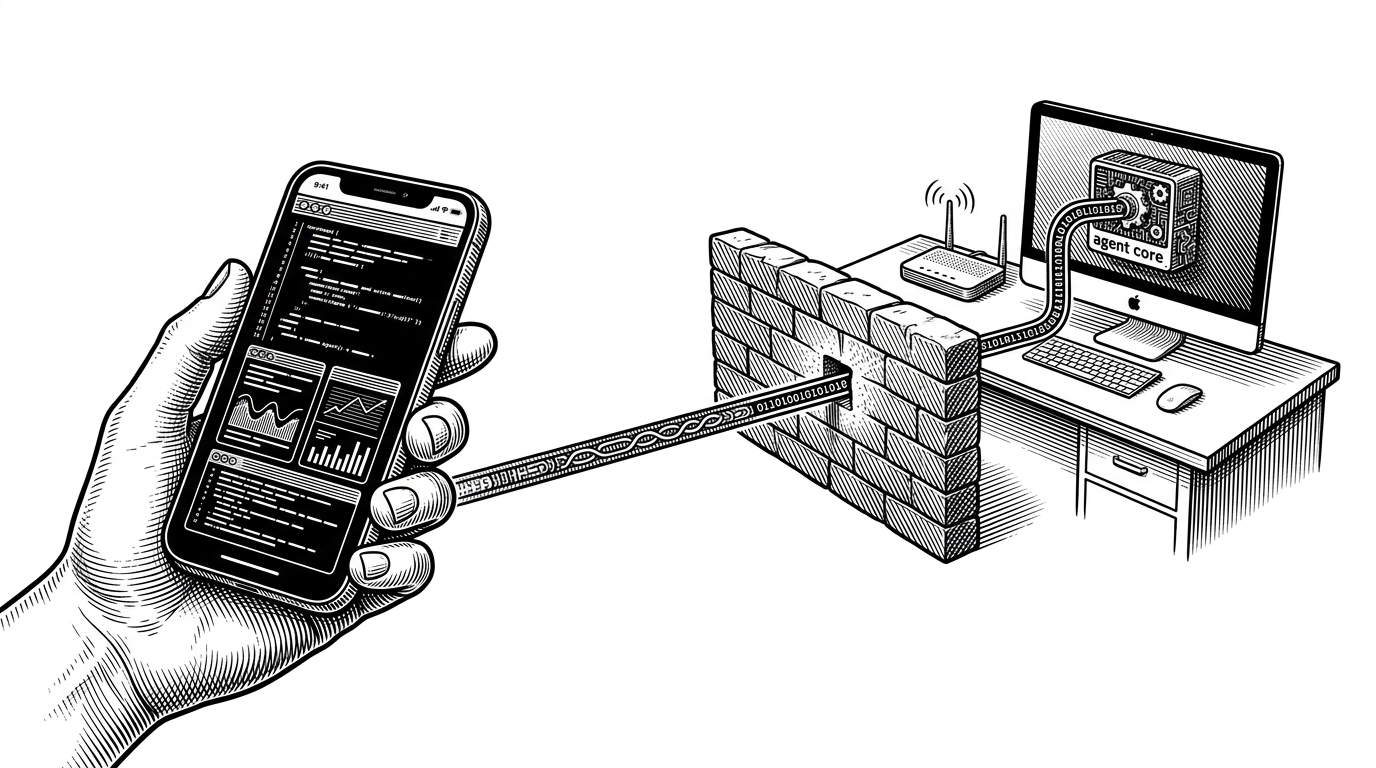
- exitZER0’s real idea is not Rust on iPhone, but a private agent loop split across devices with no cloud relay in the middle.
- Iroh turns pairing into a durable relationship, so the phone can reconnect after bad connectivity instead of behaving like a disposable client.
- The host bridge is less a server than a translator, adapting the same mobile stream to stdout, WebSocket, or OpenAI-compatible backends.
- Structured outputs matter here because the phone can render agent data as native charts, which pushes the app beyond plain chat.
Most AI mobile apps treat the phone as a thin client and the cloud as the real product. exitZER0 flips that assumption. The iPhone becomes a persistent control surface for an agent, while the network layer quietly handles pairing, reconnection, and encrypted transport in the background.
That sounds like a networking story. It is really a product story. Once the cloud middleman disappears, the phone stops being a message box and starts acting like a durable input-output terminal for camera, voice, text, and structured results.
A Phone That Doesn’t Just Chat, It Stays Paired
The memorable move in exitZER0 is conceptual, not cosmetic. It treats the handset as a companion device for an AI agent, one that can survive network drops and preserve identity across sessions. The pairing is meant to feel like a relationship, not a login.
That matters because mobile connectivity is messy. If a system assumes a clean WebSocket and a permanent server session, it breaks the moment the user leaves Wi-Fi, switches networks, or locks the phone. exitZER0 designs for the opposite reality.
The Cloud Is Removed From the Middle
Iroh is the decisive bet here. Instead of tunneling everything through a relay server, the project uses direct encrypted links, NAT traversal, and pairing tickets so the devices can find each other and stay linked even when the network is unreliable.
That gives exitZER0 a useful dual promise: privacy and resilience. The phone can talk directly to the host, which removes a trust boundary, but the connection also remains usable when the underlying network gets ugly.
| Approach | Connection model | Privacy posture | Pairing persistence | Rich output support |
|---|---|---|---|---|
| exitZER0 | Direct P2P via Iroh | High, no middle relay required | Strong, with Keychain-backed reconnection | Native charts and structured responses |
| Cloud-relay mobile AI app | Phone to server to model | Weaker, data crosses a service boundary | Depends on account session | Usually plain chat first |
| Plain WebSocket bridge | Direct socket, often manually managed | Medium, usually self-hosted but exposed | Fragile unless extra logic is added | Possible, but often custom work |
| Chat-only agent UI | App-centric conversation | Varies by vendor | Tied to app session | Text heavy, structured UI is secondary |
How Pairing Actually Works
The iOS side is doing more than opening a socket. It manages a lifecycle: pairing ticket, persisted secret, connected session, drop detection, aggressive retries, then patient retries. That two-phase recovery is what makes the app feel like a device with memory instead of a toy demo.
The persistence layer is the quiet hero. Storing the Iroh secret key and pairing payload in Keychain means the app can return to a previously established identity rather than forcing the user through pairing every time the network blips.
enum ConnectionPhase {
    case unpaired
    case pairingTicket
    case connected
    case aggressiveRetry
    case patientRetry
    case reconnected
}
That state logic is the difference between a convincing demo and a product you can actually carry around. The agent may live elsewhere, but the relationship between devices survives the mobile environment.
The Host Side Is a Translator, Not Just a Server
On the host, agent-bridge is not a single-purpose daemon. It can fan out into multiple sink modes, including stdout, WebSocket, and a Hermes path that speaks in OpenAI-compatible terms. In other words, the bridge is an adapter layer between the phone and whatever the agent backend expects.
That flexibility matters because it keeps exitZER0 from being pinned to one model provider or one runtime. The bridge can feed local tooling, developer terminals, or LLM gateways without changing the phone-side mental model.
| Host mode | What it optimizes for | What it buys you | Trade-off |
|---|---|---|---|
| Stdout | Debugging and inspection | Immediate visibility into messages | Not a product UX |
| WebSocket | Live transport | Simple integration with custom apps | You still own the protocol glue |
| Hermes / OpenAI-compatible | Model transport | Plug-in access to LLM backends | Another layer to maintain |
Why the Streaming Feels Good Instead of Noisy
Small implementation details are doing real UX work. The bridge buffers tiny deltas before forwarding them, which reduces chatter on the wire and avoids UI jitter. That is the kind of polish users feel before they can name it.
Large payloads are handled differently. Instead of pushing heavy blobs like images or audio through the stream as if everything were text, the system extracts them to files and passes references along. That keeps the protocol lean and prevents the UI from being drowned in raw bytes.
const COALESCE_BYTES: usize = 80;

// Small deltas are buffered briefly.
// Large media is extracted to a file and referenced instead of streamed verbatim.
The Phone Is Also a Dashboard
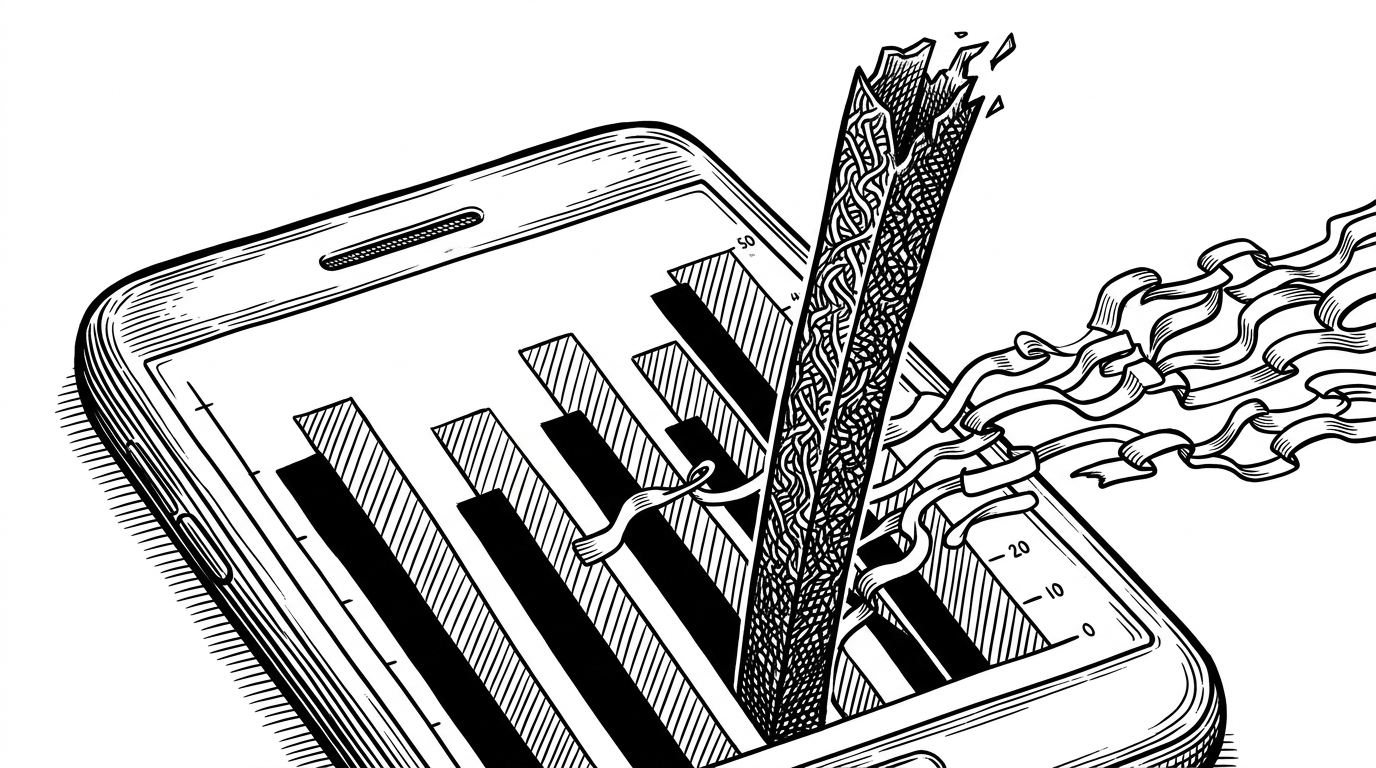
This is where exitZER0 stops feeling like a transport project. The shared SwiftUI charting layer means the phone can show actual-versus-goal bars and other structured views, so the agent becomes something closer to an analytical instrument than a text generator.
That changes the UX category. A chat app answers. A dashboard reveals state. exitZER0 sits in the middle, which is why the project feels more like a distributed AI appliance than a messenger.
Rust, Swift, and FFI Without a Glue-Code Mess
The cross-language boundary is practical, not ornamental. Rust handles the networking and protocol mechanics, Swift owns the interface, and swift-bridge keeps the seam narrower than a pile of hand-written C wrappers would.
That is important because the value of the system depends on the layers staying honest. The mobile app needs native UI behavior, while the host and transport layers need the ergonomics and performance of Rust. The boundary lets each side do the job it is good at.
What exitZER0 Is Better Than, and What It Isn’t
Compared with cloud-relay AI apps, exitZER0 has a stronger privacy story and a more interesting connection model. Compared with a plain WebSocket bridge, it has pairing persistence and a better answer to flaky mobile connectivity. Compared with chat-only interfaces, it is simply richer.
But the trade-offs are real. A P2P bridge is harder to reason about than a hosted app. It takes more moving parts, more platform-specific code, and more care around lifecycle and recovery. The payoff is that the system feels local, durable, and structurally aware in a way generic AI apps rarely do.