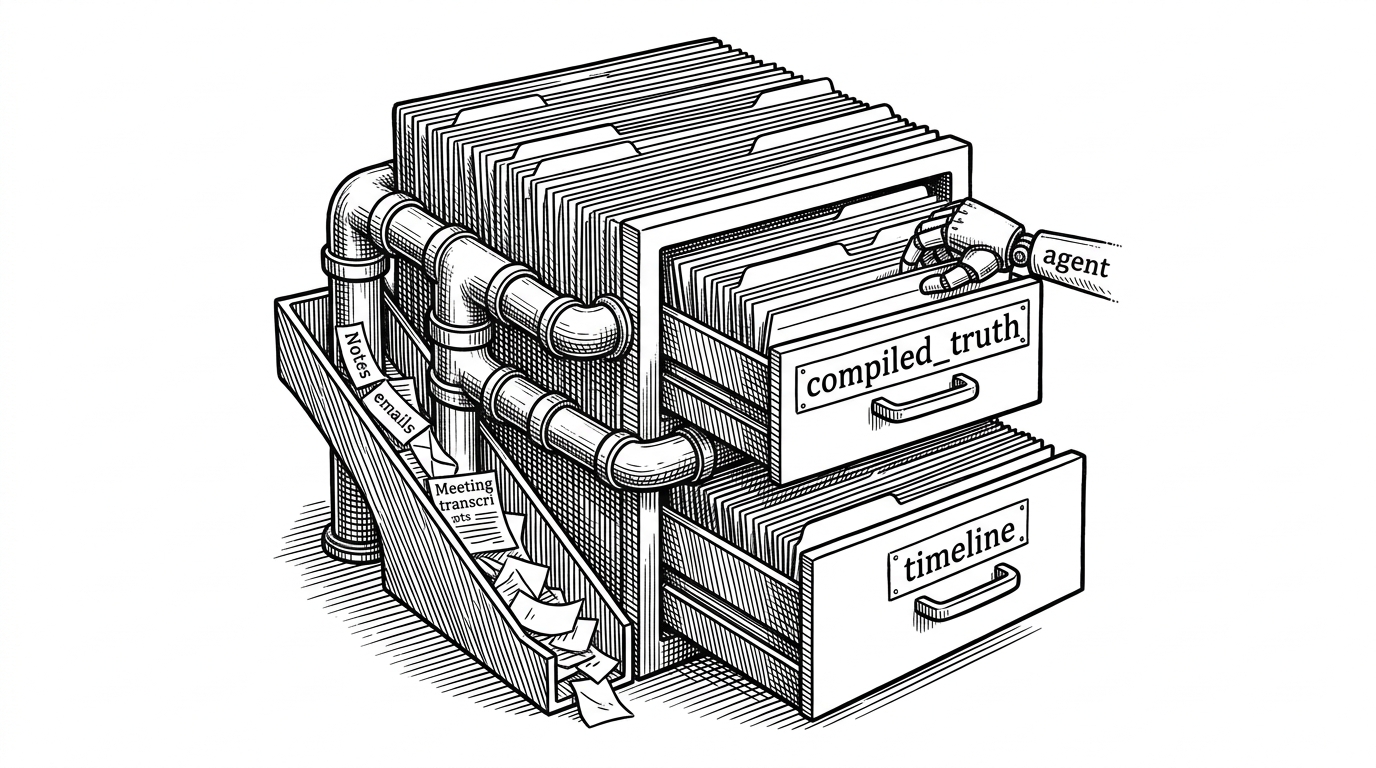
nakadaimon/ai: The Filesystem That Tries to Give an LLM a Memory
A Markdown-only architecture for turning prompts, identity, tools, and long-term notes into an external brain the model can reread every session.
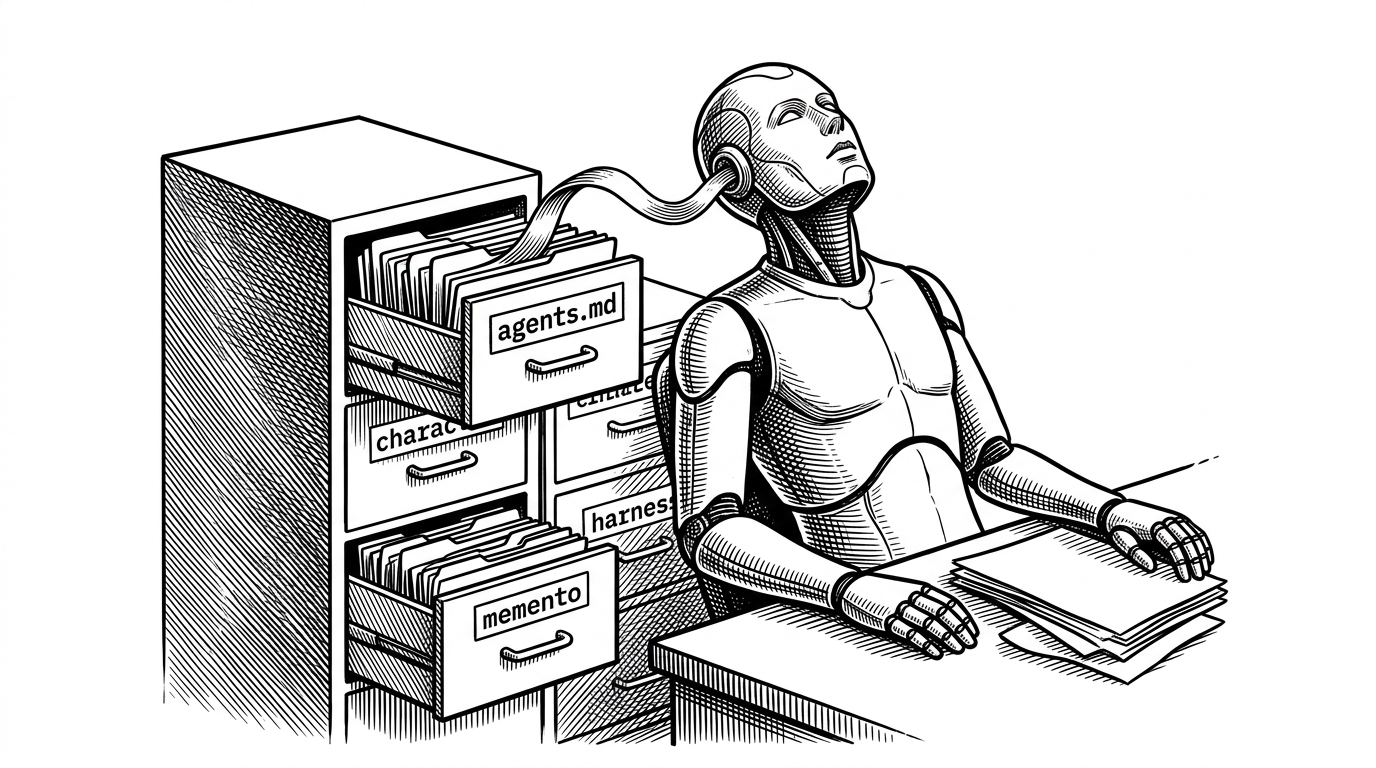
- nakadaimon/ai treats the filesystem as an external memory layer, not as a place to stash better prompts.
- Its main innovation is architectural: a router, identity layer, harness, and memory taxonomy give the model a read order it can follow on every wake-up.
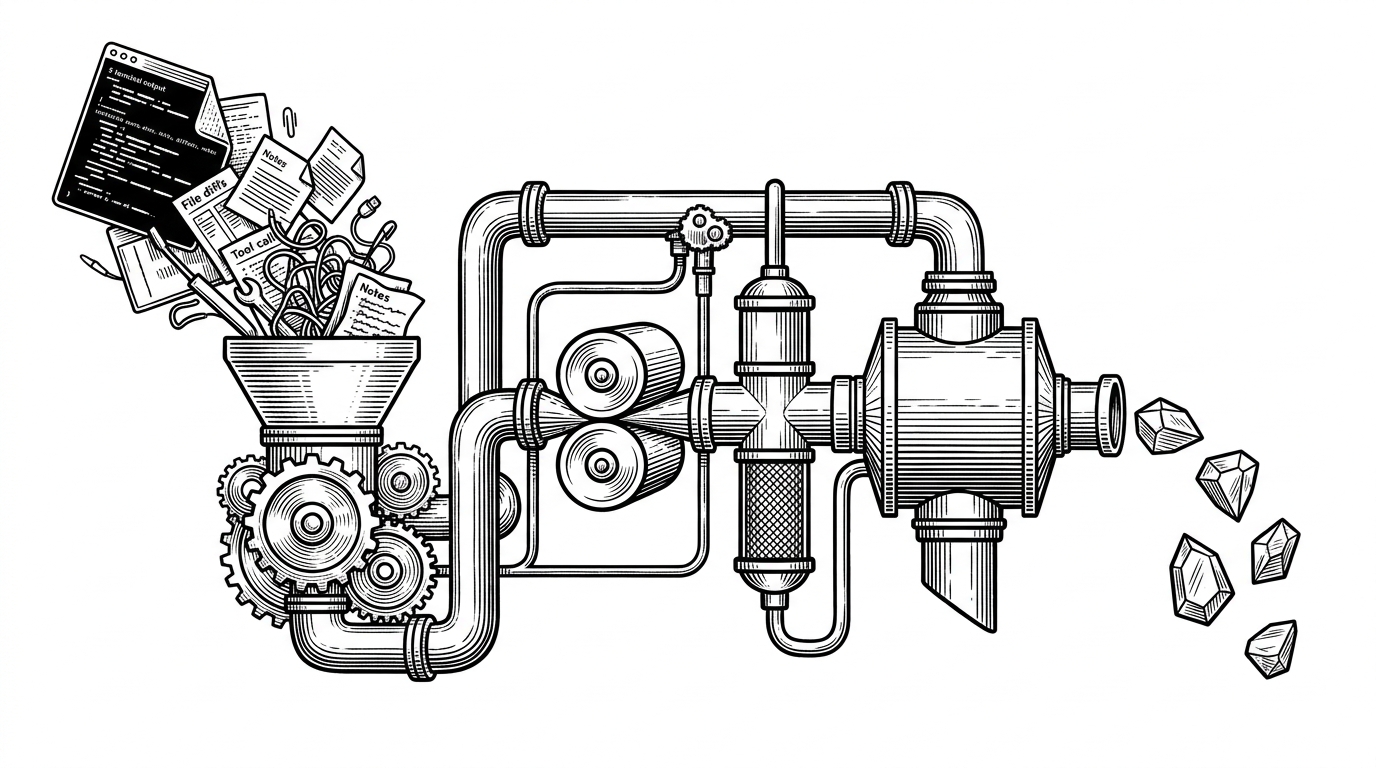
- The memento structure turns raw session traces into reusable knowledge, which makes continuity inspectable instead of implicit.
- The trade-off is real. The human becomes the memory manager, which is the price of making a stateless model behave consistently.
Most AI tools try to fix forgetting by making the prompt longer. nakadaimon/ai takes the opposite bet: keep the model stateless, but give it a filesystem it can reread like working memory. The result is less like a prompt library and more like an external brain built from Markdown.
The problem: capable models that forget everything
The pain is familiar. A model can be sharp inside a session, then lose the thread as soon as the window closes or the context gets crowded. For long projects, repeat workflows, and personal operating style, that amnesia is often the real bottleneck.
This repo starts from that failure mode, not from an abstract theory of prompts. It asks a blunt question: if the model cannot keep state, what if the state lives next to the model instead of inside it?
The core move: make the filesystem the memory layer
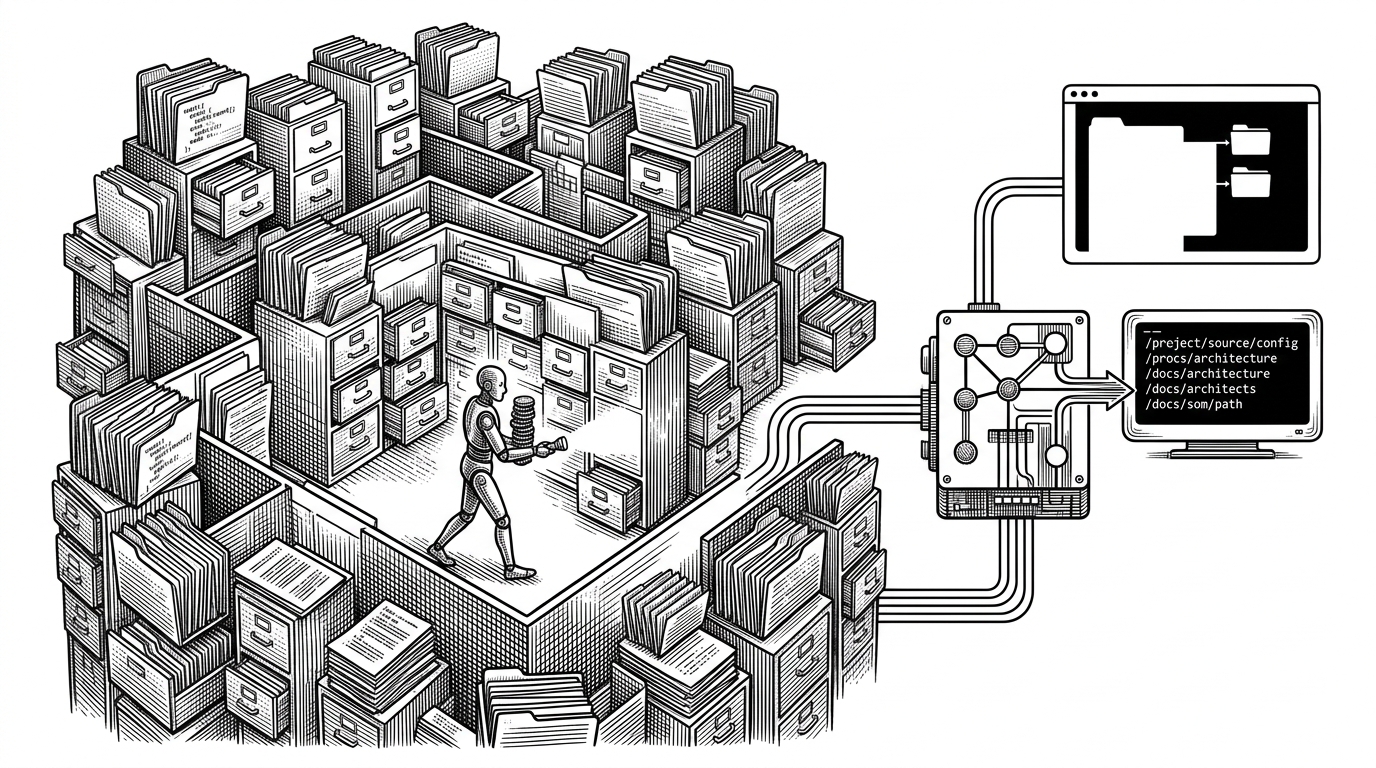
The repository's central claim is simple. A carefully structured directory tree can act as the model's external memory, and agents.md is the bootloader that tells it how to read that tree. The system favors retrieval-led reasoning over pre-training-led reasoning, which means the model checks local files first instead of improvising from general knowledge.
How the architecture splits cognition into three layers
The structure is intentional. character defines who the assistant is, harness defines how it behaves, and memento defines what it remembers. That division makes the system readable at a glance, which matters when the goal is not cleverness but repeatable operation.
# agents.md

Read in this order:
1. character/
2. harness/
3. memento/

Prefer retrieval-led reasoning over pre-training-led reasoning.| Layer | Question it answers | What it controls |
|---|---|---|
| character | Who am I? | Values, identity, operating constraints |
| harness | How do I work? | Tools, workflows, commands |
| memento | What should persist? | Episodic, semantic, procedural, prospective memory |
That split is the reason the repo feels less like a pile of instructions and more like an operating system for behavior. Each layer has a job, and the model gets a path to follow instead of a blob of prose to interpret.
Why the memory taxonomy is the smartest part
The memento layer is where the project gets distinctive. It divides memory into episodic, semantic, procedural, and prospective categories, borrowing a cognitive shape that makes the system easy to reason about. Raw session traces can become lessons, lessons can become durable knowledge, and durable knowledge can become reusable action.
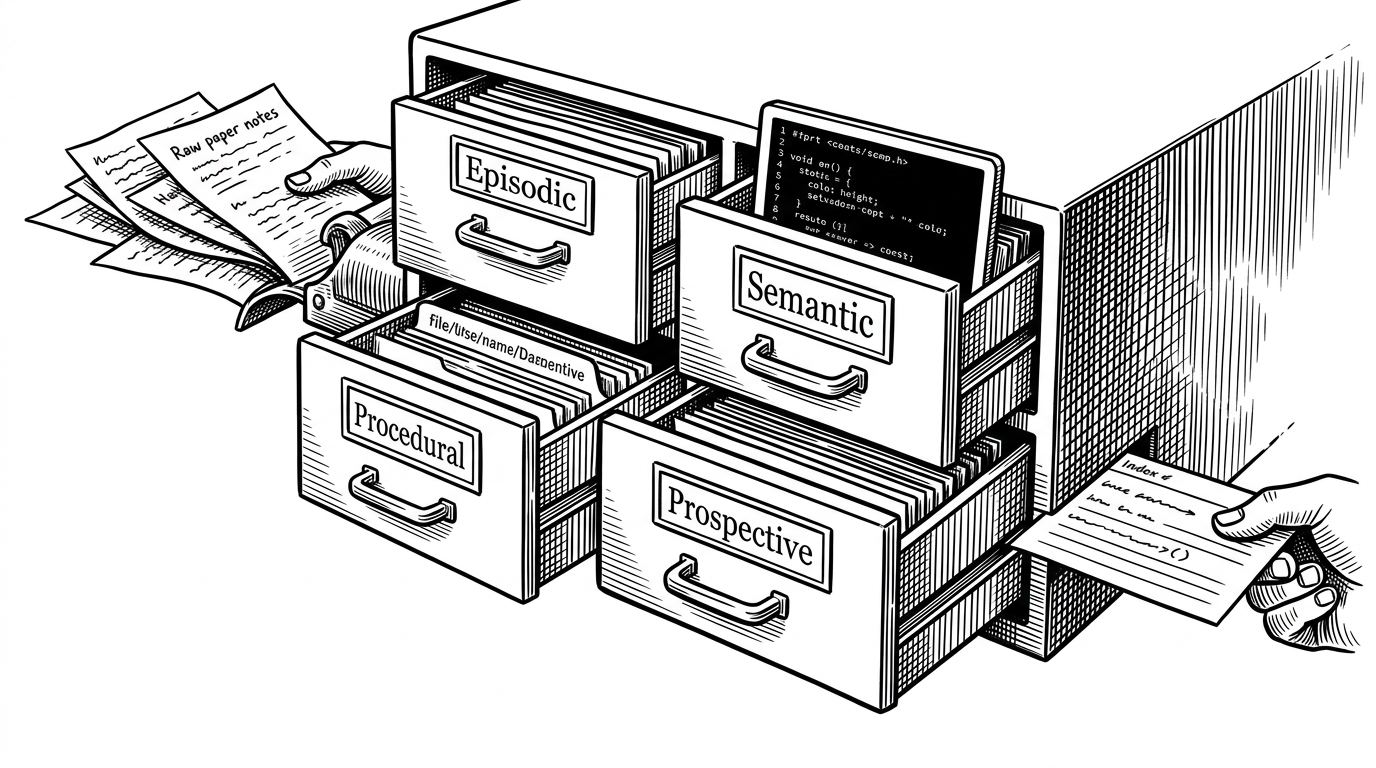
That taxonomy does more than organize files. It creates a lifecycle for context. The system is trying to make memory editable, not mystical, which is a much more practical goal for real work.
What makes this different from prompt libraries and vector stores
The closest alternatives are prompt libraries and RAG systems built around vector databases. Prompt libraries preserve instructions, but they often flatten everything into reusable text. Vector stores preserve retrieval, but they can hide the logic behind embeddings and ranking.
| Approach | Storage medium | Update model | Transparency | Portability | Best fit |
|---|---|---|---|---|---|
| nakadaimon/ai | Markdown files and folders | Human-curated read and write loop | High | High | Single operators and small teams |
| Prompt library | Snippets or templates | Manual copy and paste | Medium | High | Prompt reuse |
| Vector DB or RAG memory | Embeddings plus indexes | Automated ingestion and retrieval | Lower | Medium | Large corpora and search-heavy apps |
The point is not that files always beat databases. The point is that for one operator, or a tight team, a local Markdown system is easier to inspect, edit, and carry around than a hidden retrieval stack.
The hidden requirement: the human becomes the memory manager
This is where the design gets honest. The model does not maintain the memory layer by itself. A human has to curate it, update it, and prune it when it drifts. That is the trade-off for making continuity visible and local instead of latent and opaque.
The architecture is useful precisely because it refuses to pretend otherwise. It does not claim to create a self-sustaining AI mind. It creates a disciplined contract between a stateless model and a person willing to maintain the context it needs.
What nakadaimon/ai really argues
The broader thesis is bigger than one repo. Useful AI systems may depend less on larger models and more on better scaffolding, better memory hygiene, and better instruction hierarchy. In that sense, nakadaimon/ai is a quiet argument for local-first AI reliability: keep the brain small, but make the shelf it reads from precise.