Colloquium Turns Markdown into an Agent-Writable Slide Compiler
A deep look at the Python deck builder that gives academics, researchers, and coding agents a Git-friendly way to produce polished talks, complete with citations, layouts, and a stable live preview.

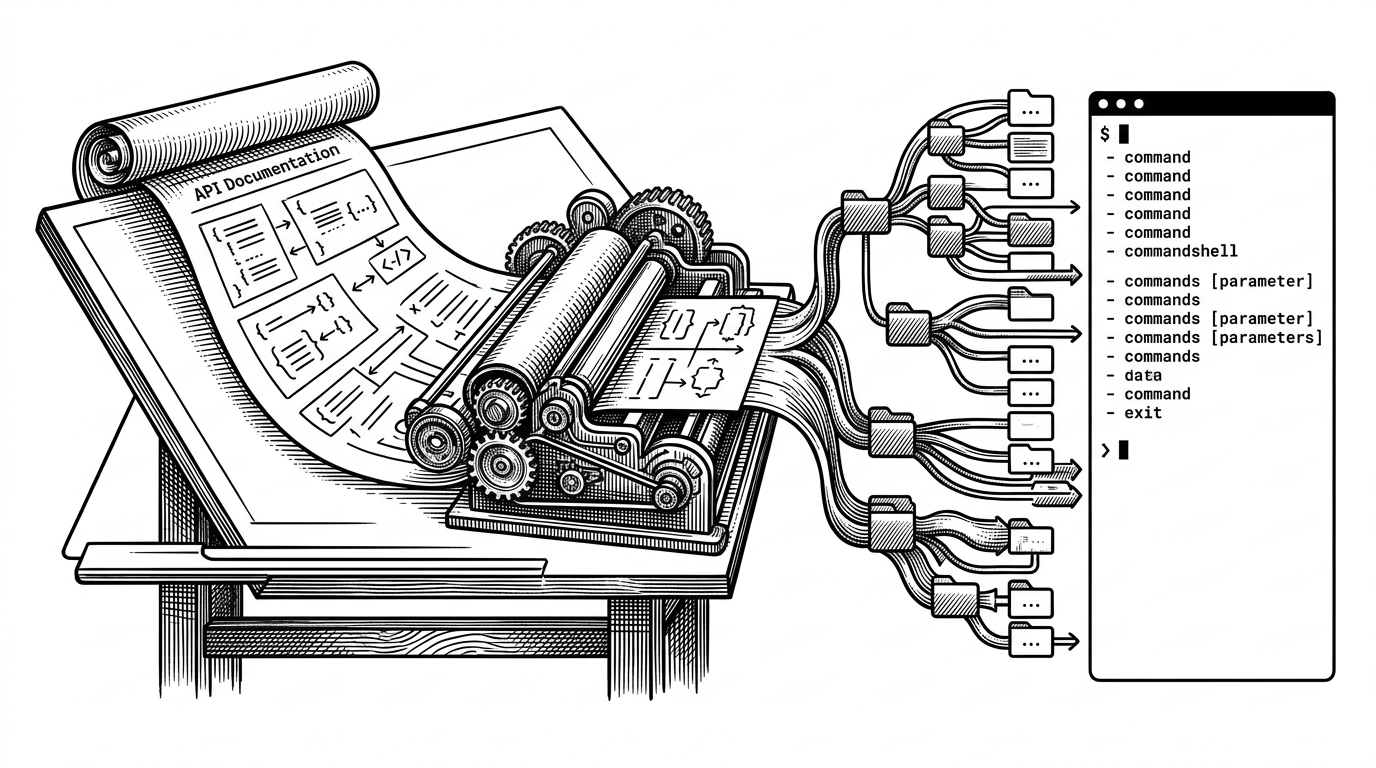
- Colloquium is built like a compiler because it treats slides as structured source that can round-trip between markdown, Python objects, and single-file HTML.
- Its real novelty is agent-native workflow design, which makes the deck safer for LLMs to edit without turning live preview into a broken mess.
- The repo is opinionated toward academic communication, with citations, math, figures, and layout controls that general-purpose slide tools usually make harder.
- The project occupies a narrow but real niche between general markdown decks and full presentation frameworks.
Why Colloquium Feels Like a Compiler, Not a Slide Theme
Colloquium starts from a sharper premise than most slide tools. It is not trying to be a nicer skin over markdown. It is trying to make a presentation behave like source code, with enough structure that a human or an LLM can edit it, rebuild it, and trust the result.
That matters because research talks have awkward requirements. They need citations, math, figures, multiple layout modes, and enough reproducibility that a deck can live comfortably in Git. Colloquium aims at that exact pressure point: the place where PowerPoint feels brittle and Beamer feels fussy.
A markdown native slides tool for academics building with agents.
The Deck Is the API
The core abstraction is simple: Deck and Slide. That sounds ordinary until you notice the direction of travel. In Colloquium, markdown is not the endpoint. It is one representation of a deck that can also be manipulated as Python objects and then serialized back out.
from colloquium import Deck, Slide

deck = Deck(title="RLHF Book Course")
deck.add_title_slide(
    title="Preference Optimization",
    subtitle="An agent-readable research talk"
)

deck.add_slide(
    Slide(
        content="## Why this matters\n\nCitations, charts, and math belong in source.",
        layout="title-sidebar"
    )
)

html = deck.build()
That round-trip model is the point. If an agent inserts a slide, edits a citation, or rearranges a section, the deck still has a structured internal shape. The tool is not asking the model to freestyle HTML. It is giving the model a constrained API with a predictable output.

How Markdown Becomes Layout
The parser is where Colloquium stops being a markdown reader and becomes a layout engine. It recognizes directives and structure hints embedded in comments, then normalizes them into classes and containers the renderer can understand.
| Directive type | What authors write | What Colloquium turns it into |
|---|---|---|
| Column split | <code>|||</code> or a column directive | A grid layout with column containers |
| Row split | <code>===</code> or a row directive | Stacked regions with vertical distribution |
| Alignment hint | <code><!-- align: center --></code> | A centered slide or block class |
| Section break | <code><!-- layout: section-break --></code> | A dedicated transition slide layout |
| Metadata | YAML frontmatter | Deck-level configuration and theme data |
That design lets authors stay in text while still shaping the page like a designer. You do not need a GUI for every alignment choice, but you also do not have to hand-code brittle HTML. The middle path is a markdown syntax that compiles into layout.
The Best Trick in the Repo: Stable Live Preview
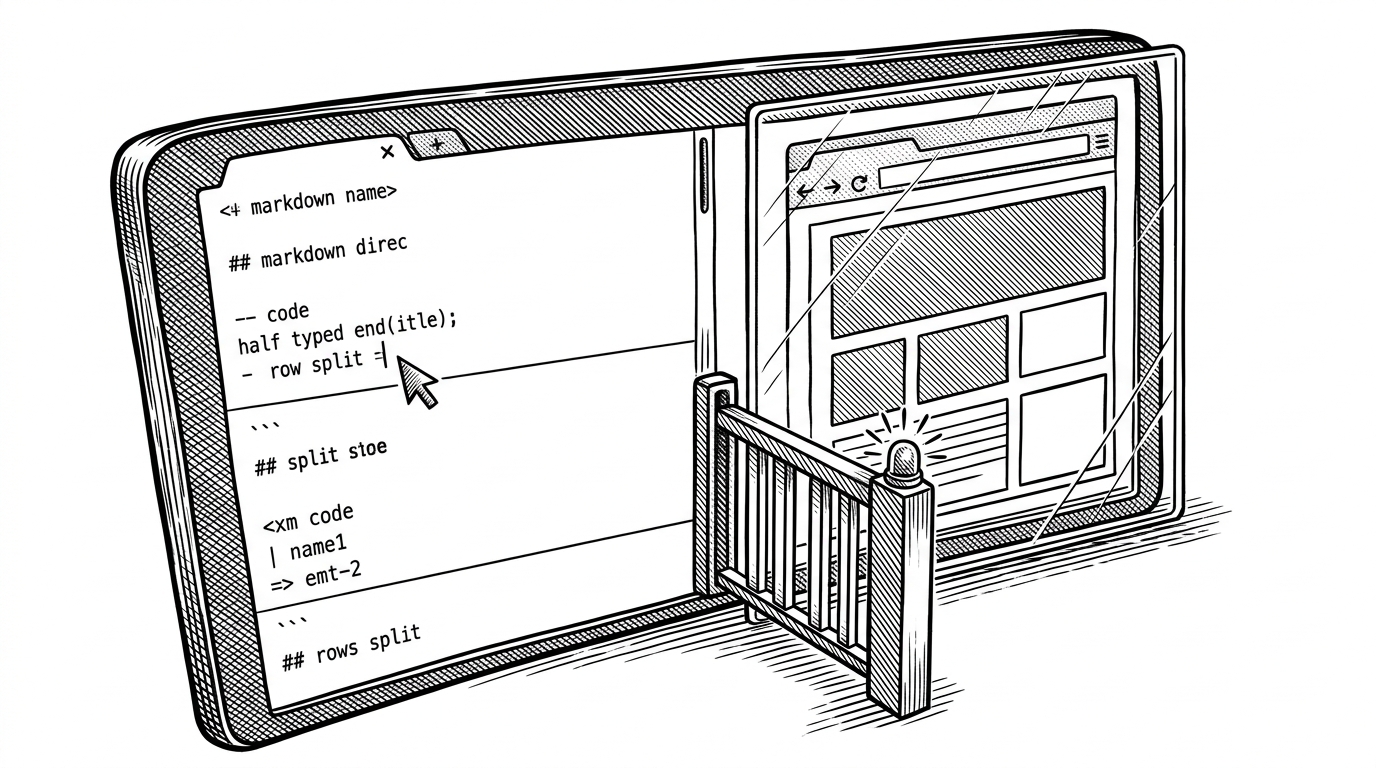
The smartest engineering choice in Colloquium may be the least visible one. The live-reload loop does not just watch files and react immediately. It waits for the source to become structurally stable before rebuilding, which avoids the frustrating moment when a half-finished edit produces a broken deck.
For a human, that means less flicker. For an agent, it means a safer feedback loop. The model can draft, revise, and inspect without the preview punishing it for being mid-sentence. That is a small detail with outsized product value.
def _source_text_is_stable_for_rebuild(path: str) -> bool:
    text = read_file(path)
    if text.count('```') % 2 != 0:
        return False
    if text.count('<!--') != text.count('-->'):
        return False
    return file_size_has_settled(path) and mtime_has_settled(path)
Why Academics and AI Builders Would Use This
Colloquium is tuned for the parts of a talk that usually become glue code elsewhere. Citations are native. Math is native. Figures and captions have a first-class path. Charts and conversations are not bolted on after the fact. Single-file HTML keeps the result portable and versionable.
That package matters because researchers care about provenance as much as polish. If a deck needs to survive review, collaboration, and revisions by another person or another model, the output format matters almost as much as the content. Colloquium makes the deck itself easy to move through that workflow.
Markdown-based slide creation tool for research talks. Git-friendly, AI-drivable, single-file HTML output.
| Tool | Primary audience | Output model | Layout power | Academic features | Agent-friendliness | Setup burden |
|---|---|---|---|---|---|---|
| Marp | General markdown presenters | Markdown to slides | Moderate | Basic | Medium | Low |
| Reveal.js | Web presentation builders | HTML framework | High | DIY | Medium | Medium |
| Slidev | Developer presenters | Vue and markdown app | High | Some | High | Medium |
| Colloquium | Researchers and agents | Single-file HTML from Python and markdown | High | Strong | Very high | Low |
How Colloquium Compares
The cleanest way to place Colloquium is as a niche tool with a crisp thesis. Marp is broader. Reveal.js is more of a framework. Slidev is built for developers. Colloquium is the one that seems most comfortable being written by an agent and reviewed like a research artifact.
That niche is narrow, but it is real. If your deck is mostly narrative and design polish, other tools may be enough. If your deck needs citations, reproducibility, structured layouts, and a workflow that tolerates machine-authored edits, Colloquium starts to look less like an alternative and more like the right layer.