Project Lyra: When a Video Model Learns to Build 3D Worlds
A look at NVIDIA’s self-distillation pipeline, where imagined camera moves become Gaussian splats, and splats become real-time explorable scenes.
- Lyra’s core move is to treat a video diffusion model as a geometry teacher, not an endpoint.
- The pipeline turns synthetic camera motion into training signal for explicit 3D Gaussian Splatting.
- That choice makes the output fast to render, easier to edit, and more useful for simulation.
- Lyra 2.0 pushes the idea beyond reconstruction toward persistent, explorable worlds.
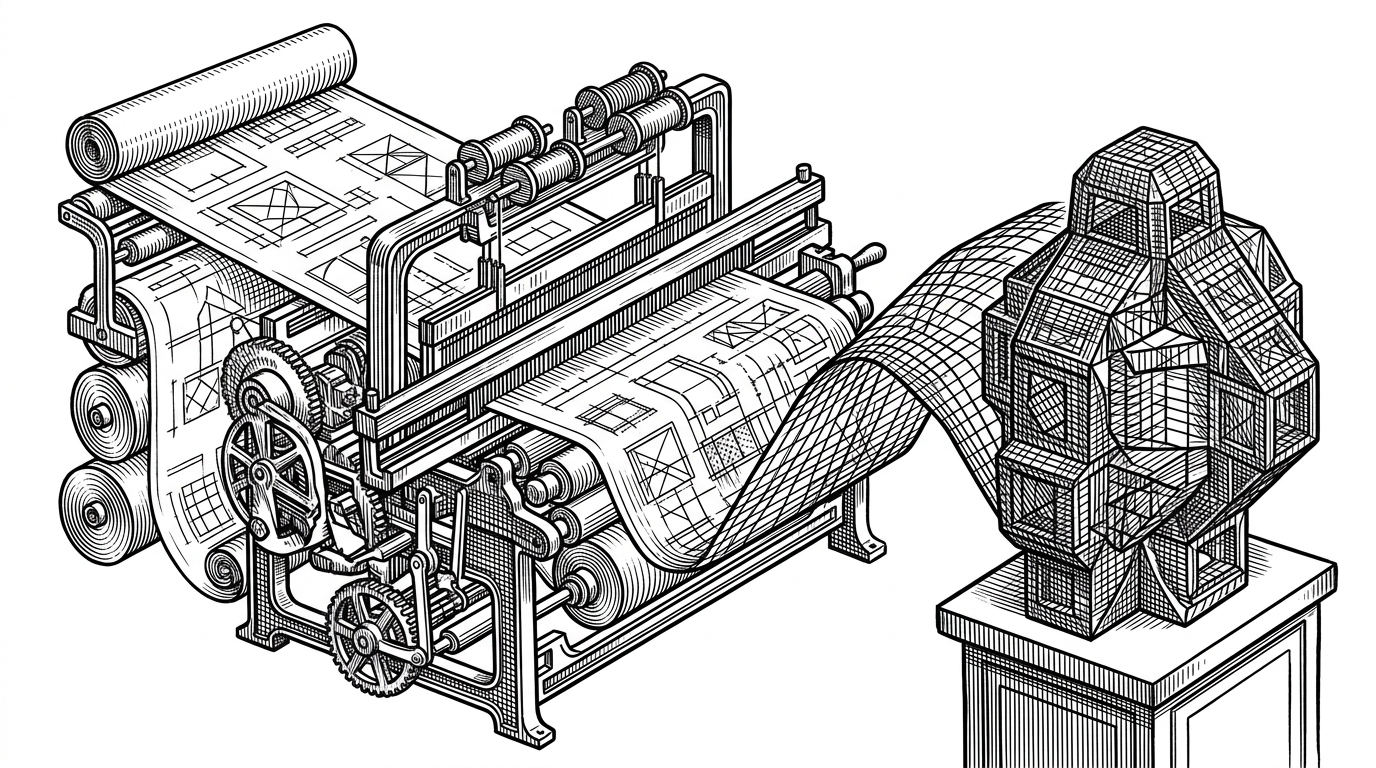
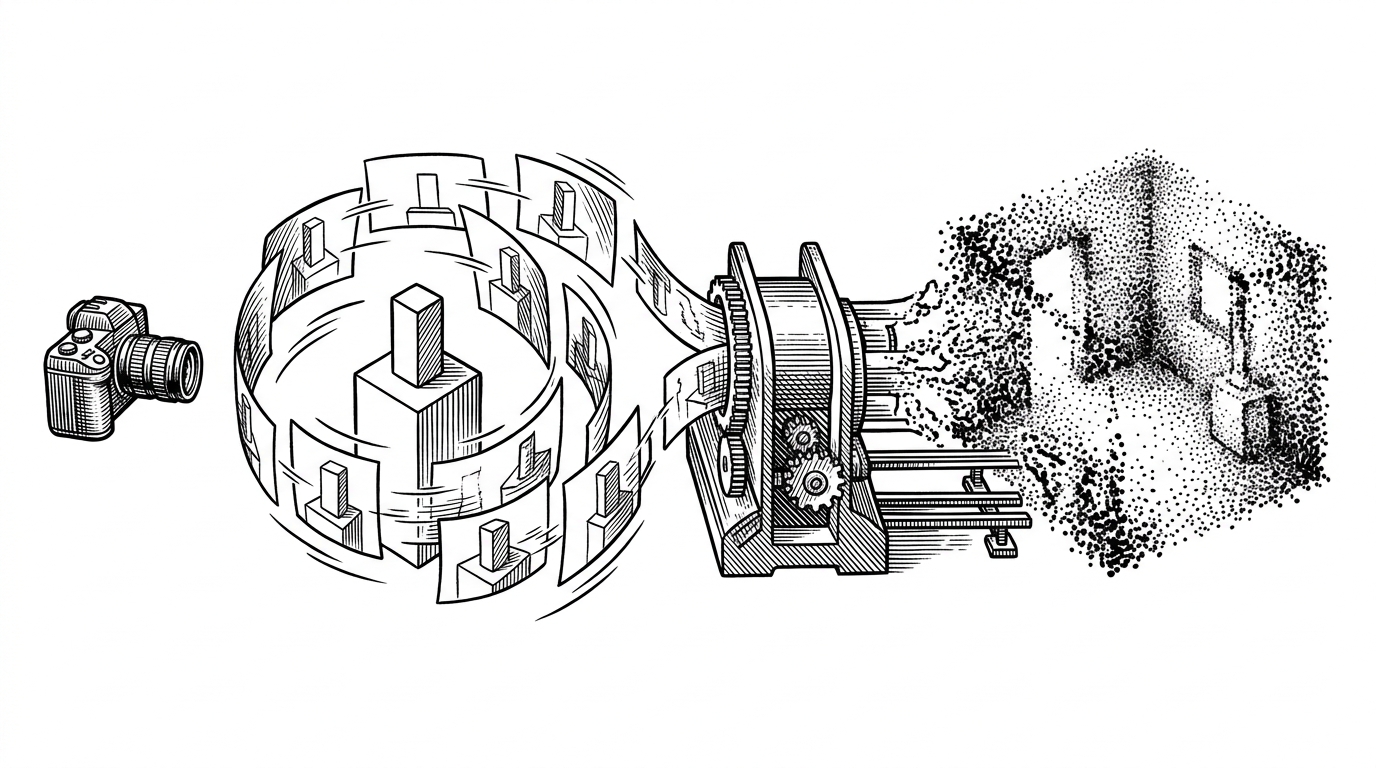
The interesting part of Lyra is not that it generates 3D. It is that it refuses to treat 2D video as the final product. Instead, it uses a camera-controlled video diffusion model to invent the missing viewpoints, then distills those imagined views into an explicit 3D scene.
That is a sharp inversion of the usual pipeline. Most reconstruction systems start with expensive multi-view captures and fight their way toward geometry. Lyra starts with a model that already knows how scenes behave under motion, then asks it to teach a splat-based world model what the unseen sides should look like.
Current learning-based 3D reconstruction methods rely on the availability of captured real-world multi-view data, which is not always readily available. Recent advancements in video diffusion models have shown remarkable imagination capabilities, yet their 2D nature limits the applications to simulation where a robot needs to navigate and interact with the environment. In this paper, we propose a self-distillation framework that aims to distill the implicit 3D knowledge in the video diffusion models into an explicit 3D Gaussian Splatting (3DGS) representation, eliminating the need for multi-view training data.
Why NVIDIA Built It
Lyra sits inside NVIDIA’s broader Spatial Intelligence push, where the goal is not just prettier generation but usable environments for simulation, robotics, and embodied AI. That matters because 3D content has always been bottlenecked by data acquisition and manual production.
Lyra shifts the cost curve. If a generator can supply plausible multi-view supervision, then a 3D model no longer needs to wait for scans, turntables, or hand-authored assets. That is a practical step toward infrastructure, not a research demo that only works in a slide deck.
We generate 3D Gaussians from text and import them into NVIDIA Isaac Sim, where Omniverse RTX Neural Rendering (NuRec) enables real-time visualization of 3D Gaussian Splatting alongside physical interaction.
How the Self-Distillation Pipeline Works
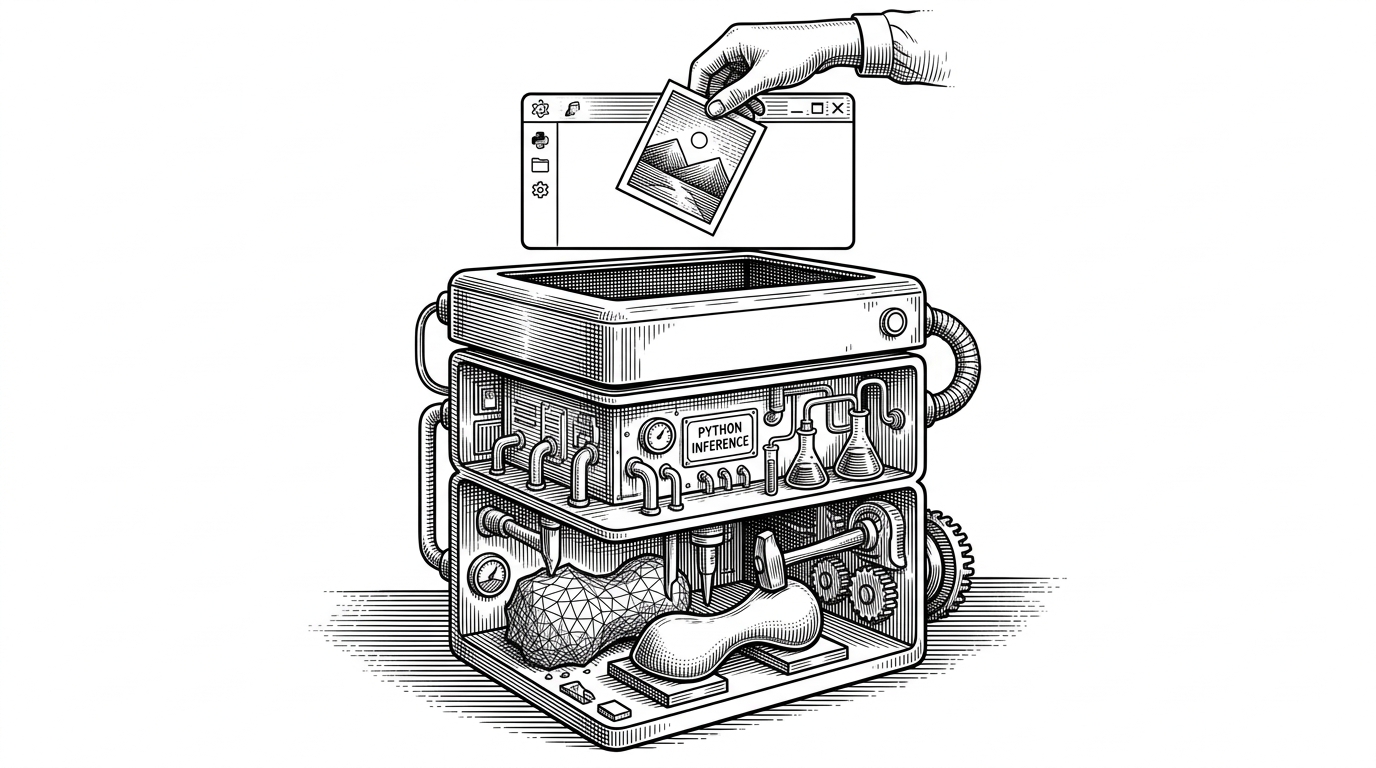
The flow is simple to say and hard to do. A single image or a short video enters the system, along with a camera path. The diffusion model hallucinates what the scene should look like from nearby viewpoints, and those generated frames become pseudo-ground truth for the 3D representation.
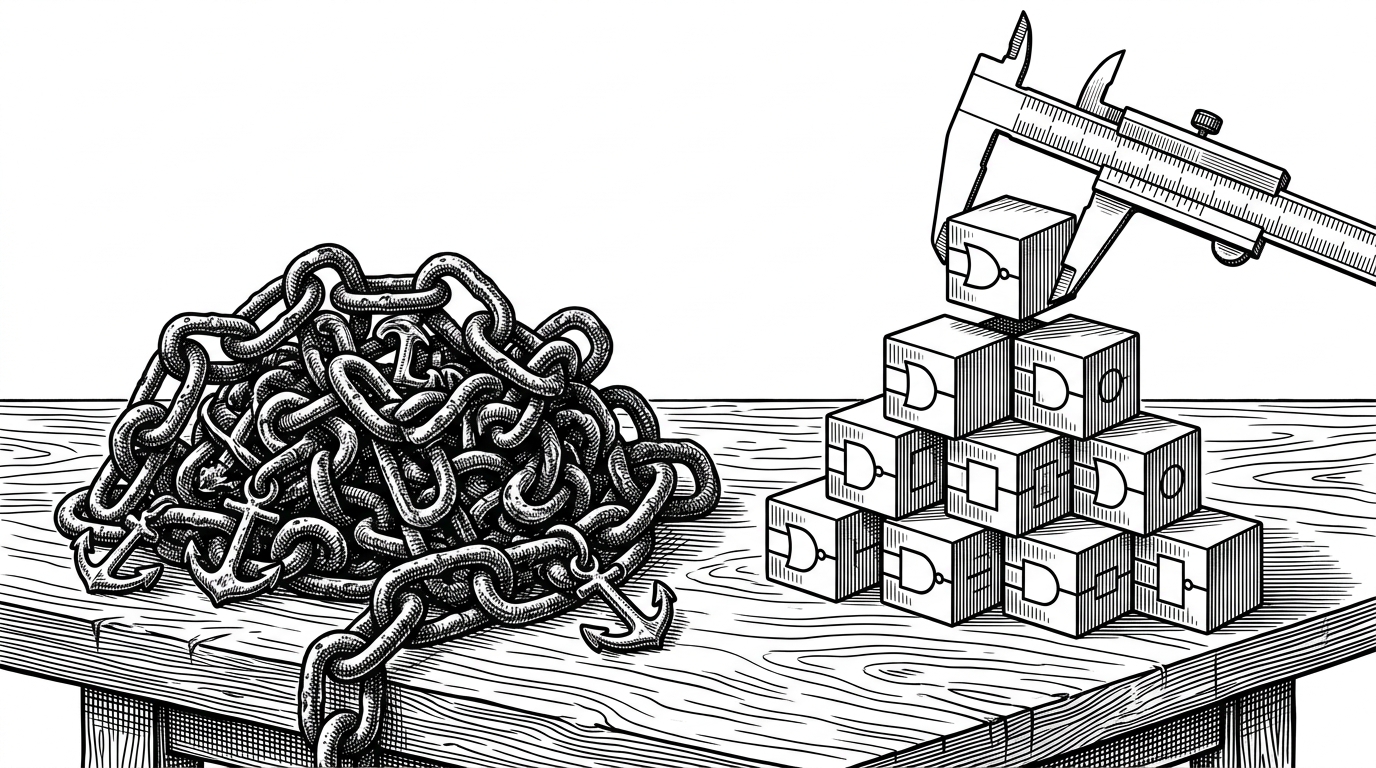
The output is not another latent video. It is a scene encoded as Gaussian splats. That matters because splats are explicit, renderable, and editable. They are a storage format for geometry, not just a stream of plausible pixels.
Inside the Backbone: AR, Diffusion, and 3D RoPE
Lyra’s backbone blends two instincts that are usually separated. Autoregressive modeling handles sequence progression and world-state continuity. Diffusion handles appearance, texture, and the local realism of each generated view.
The glue is spatial consistency. The repo’s use of 3D rotary positional embeddings helps the model keep track of where things are in space as the camera moves. Without that, the system would drift toward pretty but unstable frames, which is exactly what a world model cannot afford.
Why 3D Gaussian Splatting Changes the Game
Lyra does not stop at a clever training trick. It chooses a representation that can be rendered quickly and inspected directly. That is why 3D Gaussian Splatting is central to the project, not incidental.
| Approach | Input required | Output type | Rendering speed | Explicit geometry? | Real-time usable? | Strength | Main limitation |
|---|---|---|---|---|---|---|---|
| NeRF-style reconstruction | Usually multi-view captures or optimization | Implicit radiance field | Slower | No | Often limited | Detailed view synthesis | Heavy rendering cost and weaker editability |
| Pure video diffusion | Image, text, or video prompts | Pixel sequence | Fast for generation, not geometry | No | Not as a scene asset | High visual richness | No explicit 3D world to reuse |
| Lyra | Single image or video plus camera control | 3D Gaussian scene | Fast | Yes | Yes | Turns synthetic views into usable geometry | Depends on the quality of the teacher model |
The product implication is straightforward. If you want a scene you can orbit, edit, or hand off to a simulator, explicit geometry beats a beautiful latent. Lyra is valuable because it aims at the latter.
Lyra vs. NeRF vs. Video Generation
This is where Lyra’s position becomes clear. It is not trying to beat video models at cinematic output, and it is not trying to cling to slow, optimization-heavy reconstruction pipelines. It sits between them.
| System | Best at | Weak spot | What Lyra borrows |
|---|---|---|---|
| NeRF reconstruction | High-fidelity 3D from captured views | Slow rendering and data dependence | The idea of recovering geometry from images |
| Video diffusion | Plausible motion and appearance | No explicit world to reuse | A strong prior for unseen viewpoints |
| 3D Gaussian Splatting | Fast real-time rendering | Usually needs reconstruction data | A renderable, editable scene representation |
| Lyra | Turning generative priors into geometry | Still depends on the teacher model’s quality | All three ideas in one pipeline |
The key distinction is simple. Lyra is not optimizing for pixel theater. It is optimizing for reusable 3D assets that survive beyond the generation step.
The Repo Signals a Production-Grade Research Stack
The codebase reinforces that reading. The repository is built like a serious platform: versioned directories, large config surfaces, distributed training support, checkpointers, and safety guardrails. There is Python everywhere, but not the lightweight kind that means “prototype.”
You see the shape of a system meant to scale. Megatron-Core support suggests large-model training. The guardrail modules suggest the team expects the model to generate real content, not just benchmark samples. That combination makes the repo feel like infrastructure for a larger ecosystem.
Lyra-1/
  cosmos_predict1/
    autoregressive/
    diffusion/
    tokenizer/
    auxiliary/
  configs/
    training/
    inference/
  checkpointer/
What Lyra 2.0 Suggests Next
Lyra 1 is about reconstruction. Lyra 2.0 is about persistence. NVIDIA’s own framing points to spatial forgetting and temporal drift as the next problems to solve, which is the right escalation if the goal is explorable worlds instead of one-off reconstructions.
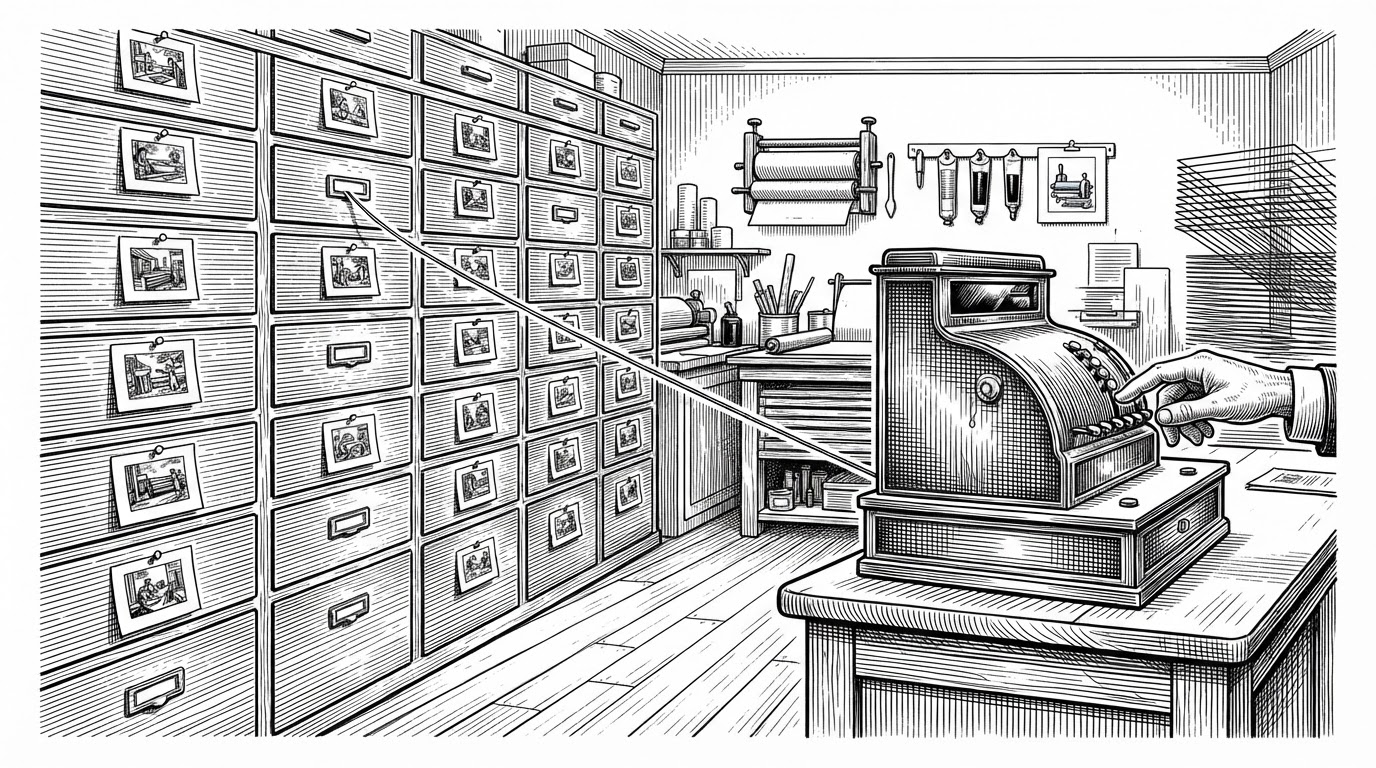
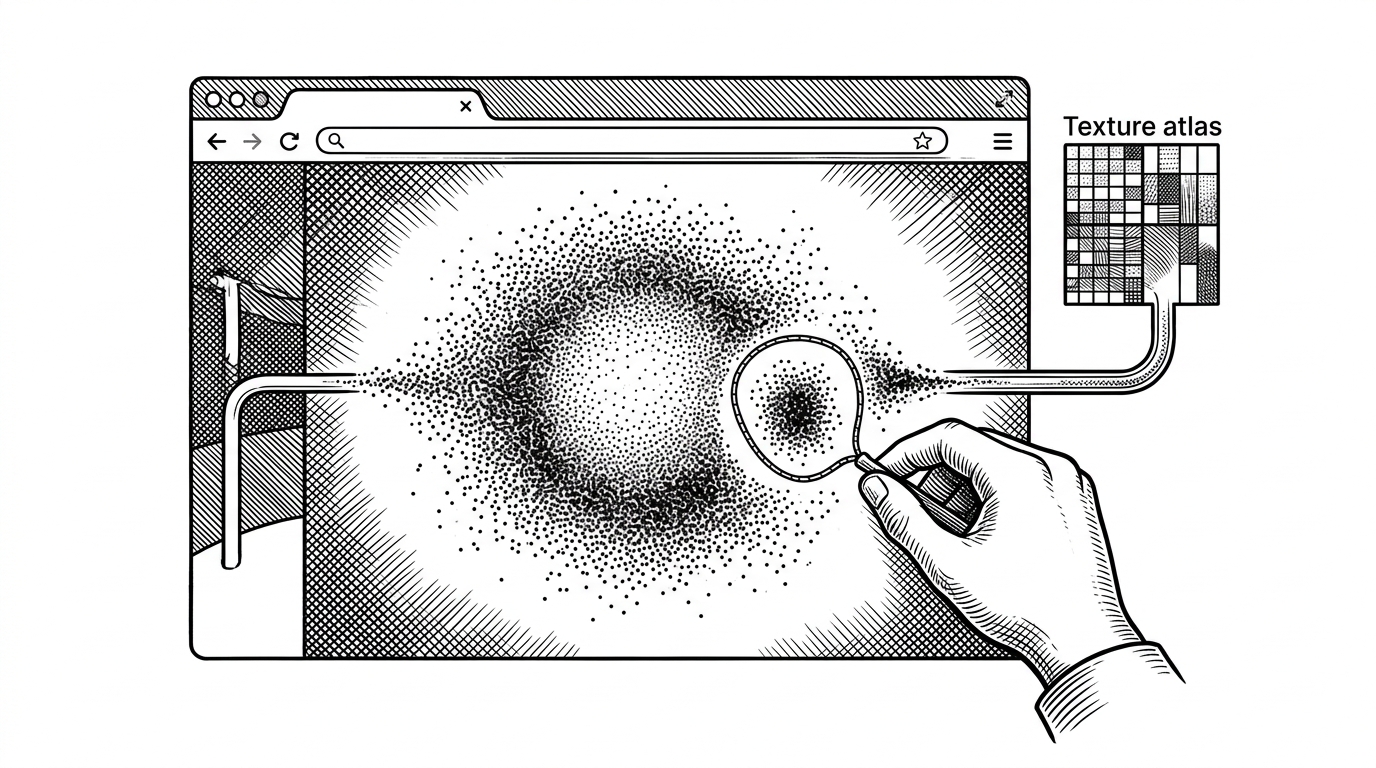
We build an interactive GUI to visualize the accumulated point clouds, and enable users to plan camera trajectories to revisit previously explored regions or venture into unobserved areas. Lyra 2.0 progressively generates the scene as the user moves in the scene.
That trajectory points toward a larger category of software. Not image generation. Not even video generation. World generation that can be edited, rendered, and handed to a physics engine without collapsing into a pile of frames.