Modly: The Desktop App That Turns Local AI 3D Into a Plug-In Pipeline
A look at the sidecar architecture, extension protocol, and GPU-native post-processing that make image-to-mesh generation feel like a real product instead of a research demo.
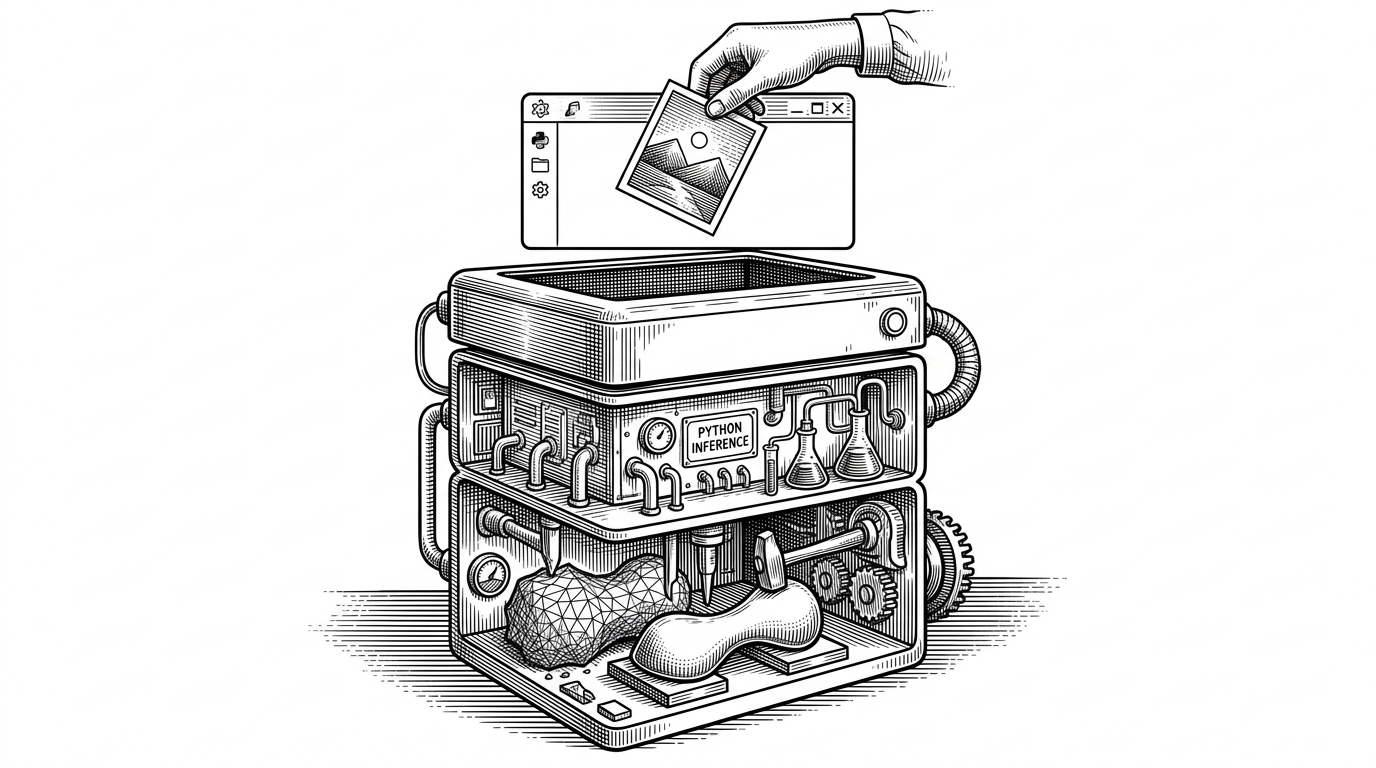
- Modly’s real product is not image to 3D, but the machinery that makes local AI repeatable, swappable, and usable on a normal desktop.
- Its sidecar design keeps the UI, inference engine, extension workers, and native geometry code separated without making the system feel fragmented.
- The extension protocol turns model churn into a feature, because new runners can plug into the same boundary instead of forcing core rewrites.
- Modly’s hardest work happens after generation, where native baking and UV cleanup turn a rough mesh into something exportable.
Modly matters because local AI 3D generation is only useful when it survives contact with real users. Plenty of projects can turn an image into a mesh. Fewer can handle GPU detection, backend restarts, environment cleanup, streaming progress, and export polish without turning the app into a science project.
That is the interesting bet here. Modly treats model execution as one piece of a larger desktop system, not the whole product. It is closer to a distribution layer for local 3D pipelines than a single-purpose generator.
Turn any photo into a 3D model using open source AI models running entirely on your GPU.
The real product is the plumbing
The repo makes the stack legible. Electron owns the desktop shell and process lifecycle. FastAPI hosts the inference API. React and TypeScript run the workflow UI. Native C++, CUDA, and Metal code handle geometry cleanup where Python libraries would be too slow or too brittle.
That separation matters because the app has to absorb instability. AI models change. Drivers change. Users bring messy environments. Modly’s architecture is built to contain those shocks rather than spread them through the whole application.
The architecture is not just neat. It gives Modly a way to restart pieces without collapsing the whole app. The frontend can stay alive while the backend warms up. The inference layer can be swapped or repaired. Native modules can do one job well and stay out of the UI’s way.
Modly supports external AI model extensions. Each extension is a GitHub repository containing a manifest.json and a generator.py.
Why the extension system is the clever part
This is the core idea. The app does not hardcode every model into the main program. It loads extensions as separate units, which means a new model can behave like a first-class citizen without becoming a first-class dependency of the app itself.
That boundary is the difference between a platform and a wrapper. A wrapper says, “here is one model, packaged nicely.” A platform says, “here is the contract, bring your own model.” Modly is clearly trying to be the second thing.
The JSON-over-stdin/stdout protocol is the quiet genius here. It keeps unstable model code at arm’s length. The main app can stream logs and progress, receive structured events, and keep the desktop shell insulated from whatever a third-party extension is doing.
{
  "command": "generate",
  "input": {
    "image": "input.png",
    "model": "hunyuan3d-mini"
  },
  "options": {
    "texture": true,
    "export": "gltf"
  }
}
That boundary also explains why Modly can dogfood its own system. Built-in extensions can use the same runner interface as community ones. That keeps the core honest, because the app has to support the exact contract it expects from everyone else.
How Modly avoids local AI dependency hell
Local AI desktop software fails in boring ways. The wrong Python path leaks in. A stale process keeps the port busy. A GPU looks available until the driver says otherwise. Modly has explicit logic for all of that, which is why it feels more like infrastructure than a demo.
The Python bridge resolves the backend executable, clears stale processes, and waits for a health check before the UI proceeds. The setup code strips poisoned environment variables like PYTHONPATH and PYTHONHOME, then hashes requirements so dependency installs happen only when needed.
| Problem | Naive local AI app | Modly |
|---|---|---|
| Backend startup | Assumes the process will come up cleanly | Polls health and manages intentional restarts |
| Python environment | Relies on whatever is already installed | Cleans system variables and isolates the venv |
| Model swaps | Bakes model logic into the app | Loads extensions through a stable runner contract |
| User feedback | Shows a spinner and hopes | Streams logs and progress back as structured events |
| GPU support | Fails late | Runs preflight checks before the job begins |
That is the hidden product work. The user experience feels simple because the app is doing a lot of defensive engineering behind the curtain. In local AI, reliability is a feature, not an implementation detail.
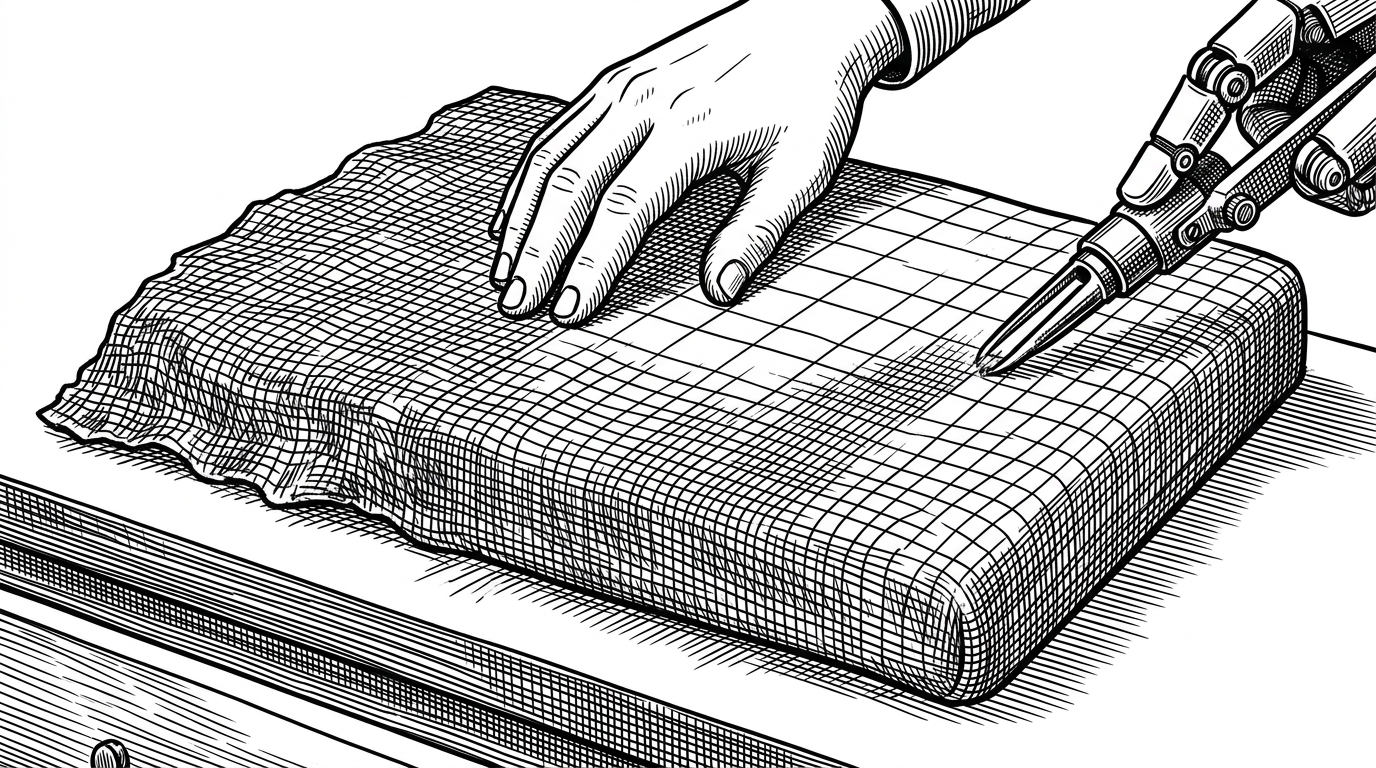
Why the geometry stage needs native code
This is where Modly stops looking like a neat desktop wrapper and starts looking serious. Texture baking and UV unwrapping are not glamorous, but they decide whether the output belongs in Blender, Unreal, or nowhere useful.
Python can orchestrate that work. Native code can make it fast and stable. The presence of CUDA and Metal branches suggests the repo is optimized for actual hardware, not just for a demo window that makes a mesh appear.
Turn any photo into a 3D model using open source AI models running entirely on your GPU.
That difference matters to artists and technical users alike. A generated shape is interesting. A cleaned, textured, exportable asset is what people can build with.
Modly vs. the usual alternatives
Modly sits in a narrow but useful middle ground. Cloud tools can be simpler, but they trade away ownership and local control. Generic node editors can be flexible, but they usually stop short of real 3D specialization. One-off wrappers are fast to build and fast to outgrow.
| Category | Cloud image to 3D | Generic local wrapper | Modly |
|---|---|---|---|
| Data path | Leaves the machine | Usually local, but brittle | Local by default |
| Model swapping | Fixed by service | Often hardcoded | Extension-based |
| Pipeline control | Limited | Minimal | Workflow oriented |
| Post-processing | Hidden or service-side | Often shallow | Native baking and UV cleanup |
| Target user | Consumer convenience | Experimenter | Power user with a desktop workflow |
That puts Modly in a practical niche. It is not trying to win by being the easiest service. It is trying to win by being the local system that serious users can keep extending as models churn.
What Modly is really betting on
The strongest open-source tools rarely survive on model quality alone. They survive because someone turned unstable research output into dependable software. Modly is making that same move for local AI 3D.
Its bet is that the next wave of creative AI tools will need product architecture as much as model architecture. The winners will not just generate meshes. They will package the entire path from input to export, and make that path modular enough to outlive the current model family.
Modly is a good sign for the category because it understands the user’s real problem. The problem is not “can a model produce a shape.” The problem is “can I run this on my machine, repeat it, swap the model later, and still ship the result.”