The Ghost in the War Machine: Unpacking iw5-scripts
How the Plutonium project decompiled 15,000 files of proprietary Call of Duty logic to build an open-source multiplayer ecosystem.
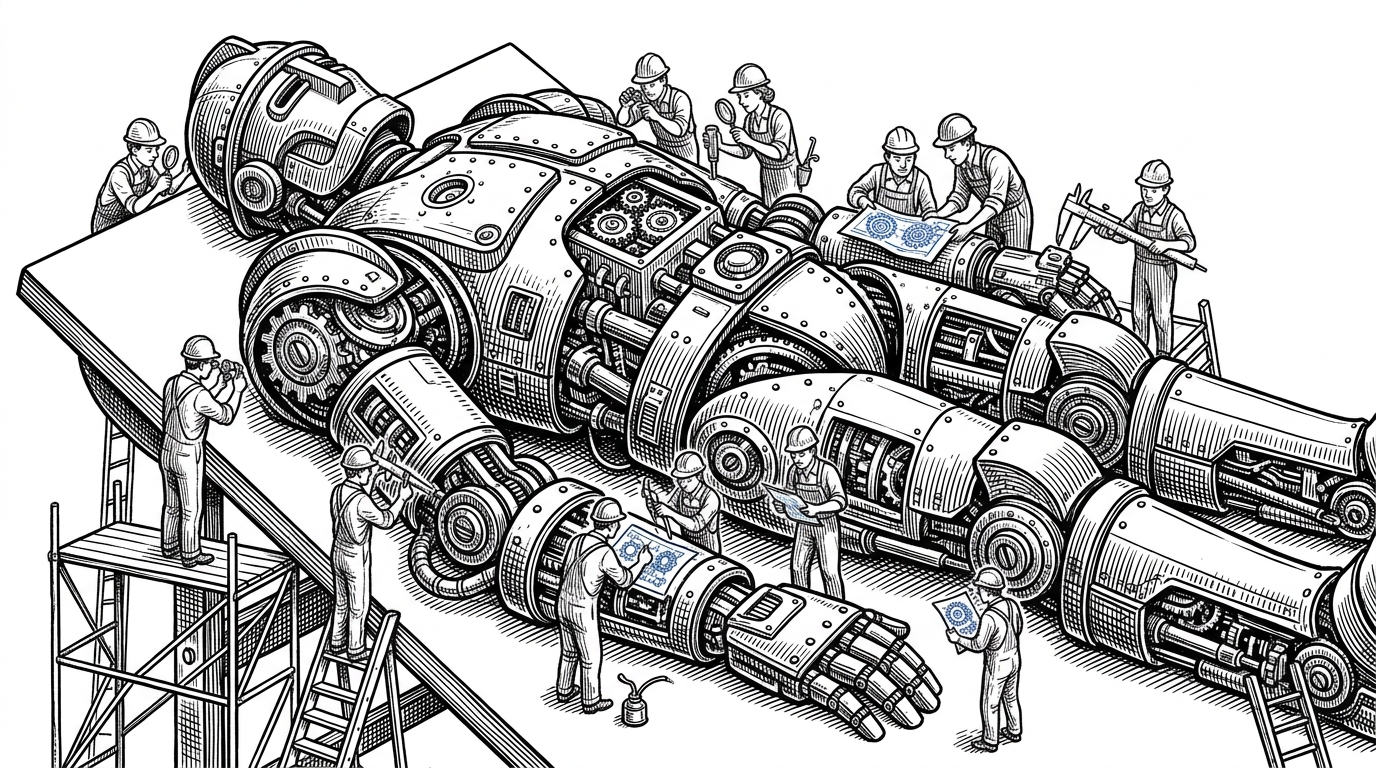
- The iw5-scripts repository is a massive decompilation effort containing over 15,000 files of proprietary Call of Duty logic.
- Plutonium uses a custom virtual machine to execute GSC (Game Script Code), relying on a unique threaded event model to handle game state transitions.
- By exposing native server-side logic, developers can bypass traditional memory injection to fix legacy bugs and build entirely new game modes.
The Code With No Names
Opening the plutoniummod/iw5-scripts repository is like stepping into an archaeological dig of a modern software marvel. At its core is the _unnamed/ directory. This folder contains over 15,000 files of decompiled scripts representing the raw logic of Call of Duty: Modern Warfare 3.
Because the original Game Script Code (GSC) was compiled into bytecode before shipping, the original variable and function names were lost. Maintainers are left to decipher an amnesiac codebase full of _id_3A9D and var_0 references, mapping these abstract identifiers back to human-readable player behaviors and game rules.
// A raw decompiled function
_id_3A9D()
{
    var_0 = spawnstruct();
    var_0._id_1234 = "tag_driver";
    var_0._id_5678 = %london_police_drive_idle;
    return var_0;
}
The Language of the Loop
The engine runs entirely on GSC. This C-like proprietary scripting language features a unique threaded execution model. It relies heavily on thread and waittill keywords to allow highly efficient, event-driven state transitions without constant polling.
Functions wait for signals from the global event bus. This architecture is how a single server can manage dozens of players, active killstreaks, and destructible environments without dropping frames.
The Anatomy of a Killstreak
The architectural structure of the maps/mp/ directory reveals how the game separates overarching gametypes from granular scripts. A Search and Destroy match is managed independently from the logic that dictates how an AC-130 gunship targets players or how a specific prop shatters when shot.

Modding the Unmodifiable
Access to these scripts fundamentally changes the modding paradigm. Instead of relying on fragile memory injection or surface-level hacks, developers can write native server-side logic. The community uses this access to fix decade-old native bugs and build entirely new game modes.
| Feature | Retail MW3 | Plutonium IW5 |
|---|---|---|
| Execution Environment | Locked executable, peer-to-peer hosting | Custom VM, dedicated server binaries |
| Logic Access | Black box, compiled fastfiles | 15,000+ plaintext GSC files |
| Extensibility | Memory editing/hooking required | Native override via script injection |
| Bug Resolution | Dependent on defunct official patches | Community-driven hotfixes at the script level |
Simply drop a .gsc file inside %localappdata%\Plutonium\storage\iw5\scripts.
This simple drag-and-drop capability is the culmination of years of decompilation and mapping. The Plutonium team took a locked, abandoned platform and transformed it into a thriving, extensible ecosystem.