PicoClaw: The AI Agent Framework Built for $10 Hardware and 10MB RAM
A Go-based, cross-platform agent stack that treats embedded boards, fast boot times, and self-bootstrapped development as the real design center.
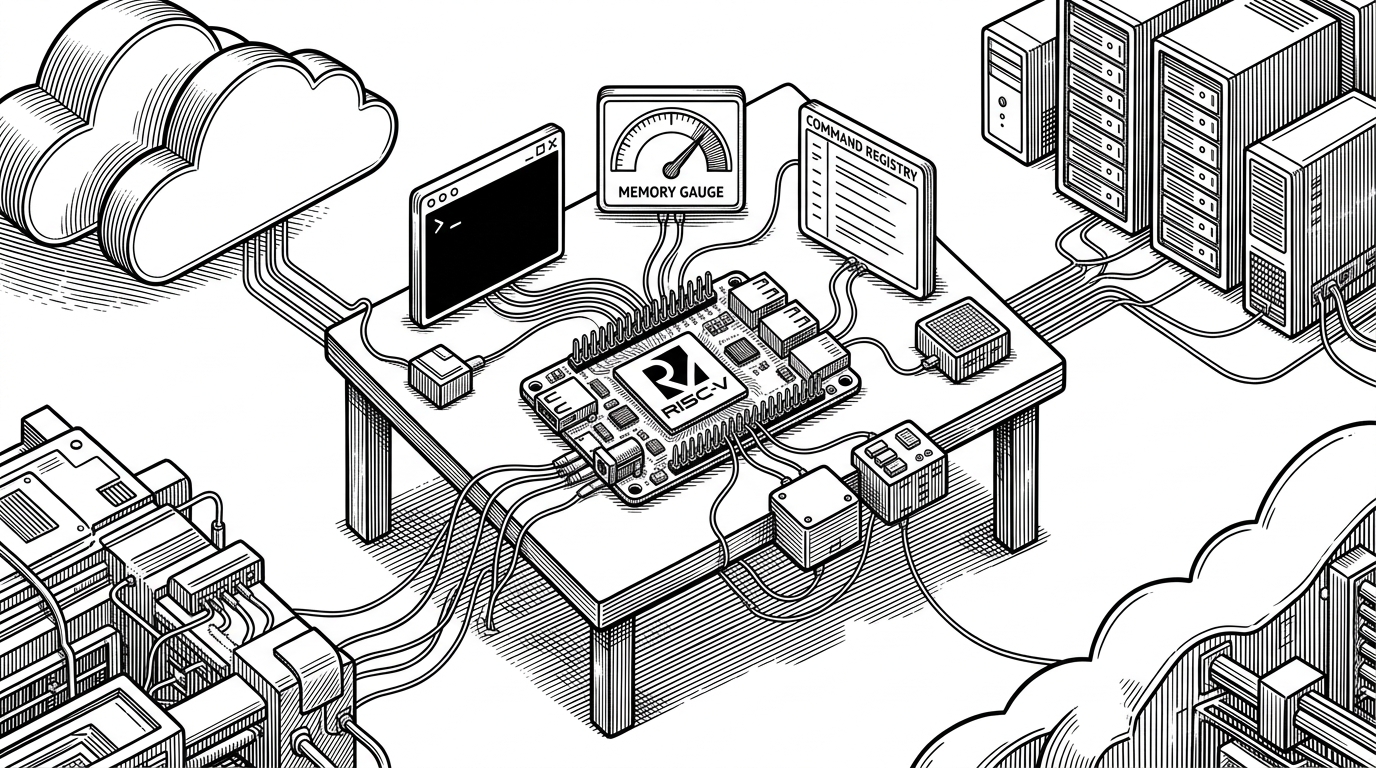
- PicoClaw is interesting because it treats memory, boot time, and board size as first-class product constraints rather than afterthoughts.
- Its Go-based architecture is built for single-binary deployment across unusual hardware targets, which turns portability into a competitive edge.
- The project's self-bootstrapped origin story matters because it matches the software's thesis: automation can build leaner automation.
- Its real position in the market is edge-first and hardware-native, not a direct fight with cloud-heavy agent frameworks.
Why this agent framework cares about 10MB
Most agent frameworks start with the cloud and work outward. PicoClaw starts with the opposite question: what if the machine itself is tiny, cheap, and physically constrained? That shift changes everything, from the runtime to the UI to the kinds of devices the project can plausibly live on.
The repo is explicit about the target: low-cost boards, fast boots, and a memory ceiling so tight that ordinary AI stacks simply do not fit. That makes PicoClaw less like a typical chatbot project and more like an exercise in systems design under pressure.
The project is a product of its own logic
PicoClaw is an independent open-source project initiated by Sipeed, written entirely in Go from scratch — not a fork of OpenClaw, NanoBot, or any other project. PicoClaw is an ultra-lightweight personal AI assistant inspired by NanoBot. It was rebuilt from the ground up in Go through a "self-bootstrapping" process — the AI Agent itself drove the architecture migration and code optimization. Runs on $10 hardware with <10MB RAM — that's 99% less memory than OpenClaw and 98% cheaper than a Mac mini!
That claim is the project's sharpest hook, but it works best when read as a process description, not magic. The repo is saying that automation helped build the automation, and that the resulting system inherited the same taste for compression and speed.
The origin story and the architecture point in the same direction. This is not a framework that was later trimmed down for edge devices. The edge constraint seems to be the framework's native environment.
How PicoClaw stays small without feeling stripped down
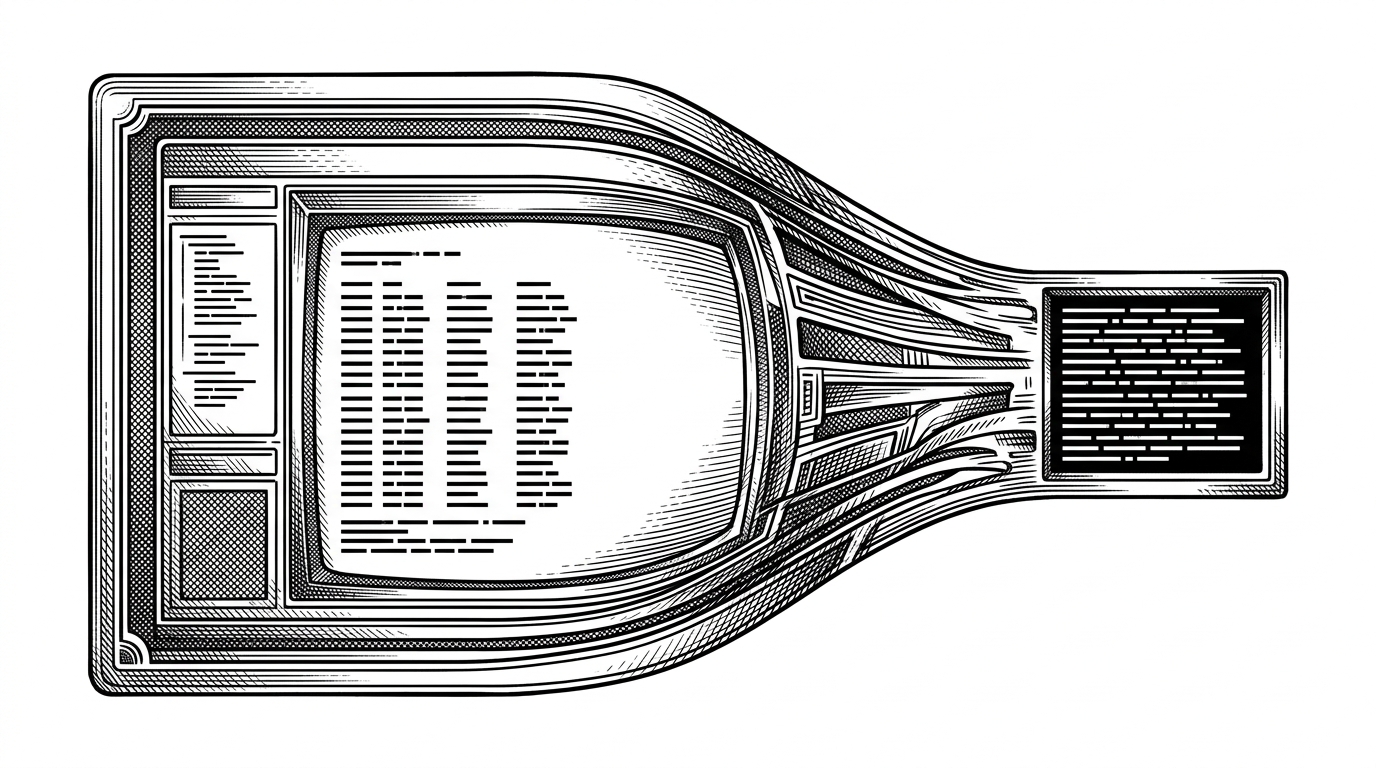
The implementation leans on a familiar Go CLI skeleton, but the interesting part is how aggressively it degrades gracefully. Cobra handles the command registry, while the terminal layer adapts itself when the screen gets narrow or the environment cannot support the full UI treatment.
if width < minWidthFancy {
    // Drop borders and boxes so the output stays readable.
    return plainView
}

return fancyView
That kind of logic matters more than it looks. On a desktop terminal, PicoClaw can afford a polished interface. On an embedded screen, ornament becomes liability, so the UI sheds it and keeps the text legible.
The hidden benchmark: proving the agent can work under budget
The `membench` tool is the part of the repo that turns a promise into a test. It measures retrieval and QA behavior under tight token budgets, using LOCOMO and LLM-as-judge logic to see how far the agent can stretch before quality falls off.
That is a better signal than a performance slogan. It says PicoClaw does not just want to be small. It wants to remain useful while small.
| Project | Language | Est. RAM | What it optimizes for |
|---|---|---|---|
| OpenClaw | TypeScript | >1GB | Breadth, features, and a large ecosystem |
| NanoBot | Python | >100MB | Simplicity and readability |
| ZeroClaw | Rust | ~3.4MB | Extreme efficiency and security |
| MaxClaw | Cloud | N/A | Managed scale and convenience |
| PicoClaw | Go | <10MB | Edge hardware, fast boot, single-binary deployment |
This is where PicoClaw's map becomes clear. It is not trying to win on ecosystem size or cloud convenience. It is carving out a hardware-native middle ground where the agent lives close to the board, the runtime is tiny, and the deployment story stays portable.
Why Go matters here
Go is not just a neutral implementation choice. It fits the deployment reality. Static binaries, straightforward cross-compilation, and broad architecture support make it easier to target ARM, MIPS, RISC-V, and LoongArch without dragging in a heavy runtime.
That matters because the product is inseparable from the hardware matrix. If the software needs to run everywhere from a cheap board to a desktop terminal, the language has to make that portable by default.
PicoClaw's real competition is not another chatbot
The comparison that matters is architectural, not cosmetic. OpenClaw is the heavy baseline. NanoBot is smaller but tied to Python. ZeroClaw is ruthlessly compact in Rust. MaxClaw lives at the cloud extreme. PicoClaw sits where maker hardware, single-binary deployment, and low-power autonomy intersect.
| Project | Runtime footprint | Hardware target | Deployment model | Sipeed hardware integration |
|---|---|---|---|---|
| OpenClaw | Heavy | General-purpose servers | Cloud-first, feature-rich | Weak |
| NanoBot | Moderate | Desktops and hobby machines | Python runtime required | Limited |
| ZeroClaw | Very small | Minimal local systems | Local binary | Limited |
| MaxClaw | Managed cloud | Cloud only | Hosted service | None |
| PicoClaw | Small enough for edge | $10 boards, ARM, RISC-V, LoongArch | Single binary, self-hosted edge | Strong |
That is the real thesis of the project. PicoClaw is not the biggest agent framework or the prettiest one. It is the one most willing to accept the machine as it is.
What this says about the next wave of AI software
PicoClaw hints at a shift in where AI software wants to live. Some of it will stay in the cloud, but more of it will be shaped by local trust boundaries, boot time, and the physical limits of embedded devices.
That future is also why Sipeed keeps warning that the project is early and not production-ready. The ambition is real, but so are the security and reliability trade-offs. The important part is that the repo makes those trade-offs visible instead of hiding them.