@roots/vite-plugin: The Translator That Makes WordPress Speak Vite
A deep look at the plugin that rewrites imports, syncs design tokens from CSS into theme.json, and patches Gutenberg’s iframe problem without dragging WordPress back to Webpack.
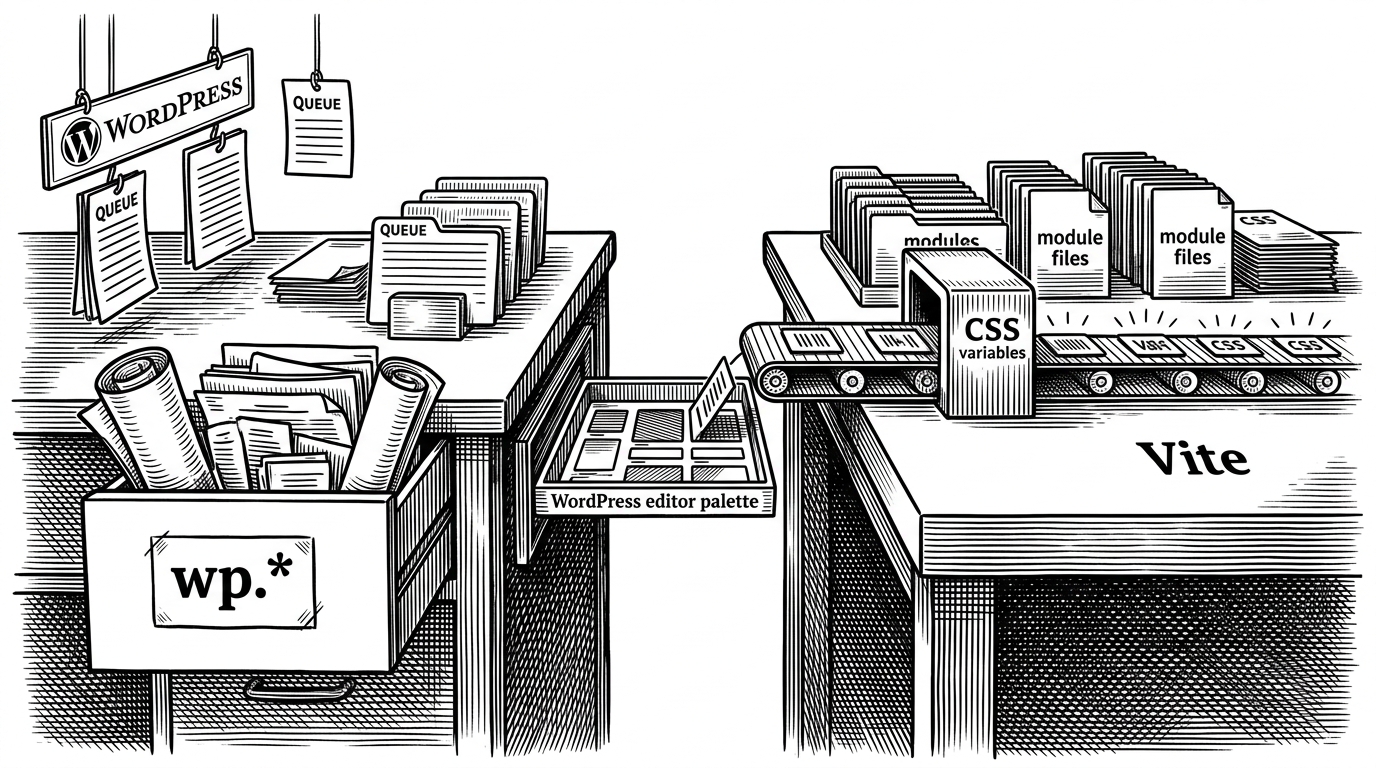
- @roots/vite-plugin treats WordPress as a runtime to translate into, not a platform to rebuild from scratch.
- Its most unusual move is reading CSS and Tailwind output to generate WordPress editor settings from the same source of truth.
- The plugin rewrites WordPress imports into globals, generates dependency manifests, and keeps Vite compatible with WordPress enqueuing.
- The hard part is not bundling faster. It is making Gutenberg, CSS HMR, and theme configuration behave as one system.
WordPress Has a Split-Brain Problem
Vite speaks in modules, ESM, and hot updates. WordPress speaks in globals, enqueued assets, and theme.json. Most projects in this space ask developers to keep both mental models alive at once, which is why the workflow always feels a little patched together.
@roots/vite-plugin exists to reduce that mismatch. It does not try to make WordPress look like a SPA framework. It acts like a translator that lets modern frontend code survive inside WordPress without surrendering the parts that WordPress still owns.
@roots/vite-plugin v2 updates our Vite plugin for WordPress for Vite v8, which replaces both Rollup and esbuild with Rolldown— a Rust-based bundler built specifically for Vite.
The Real Trick: CSS Becomes the Source of Truth
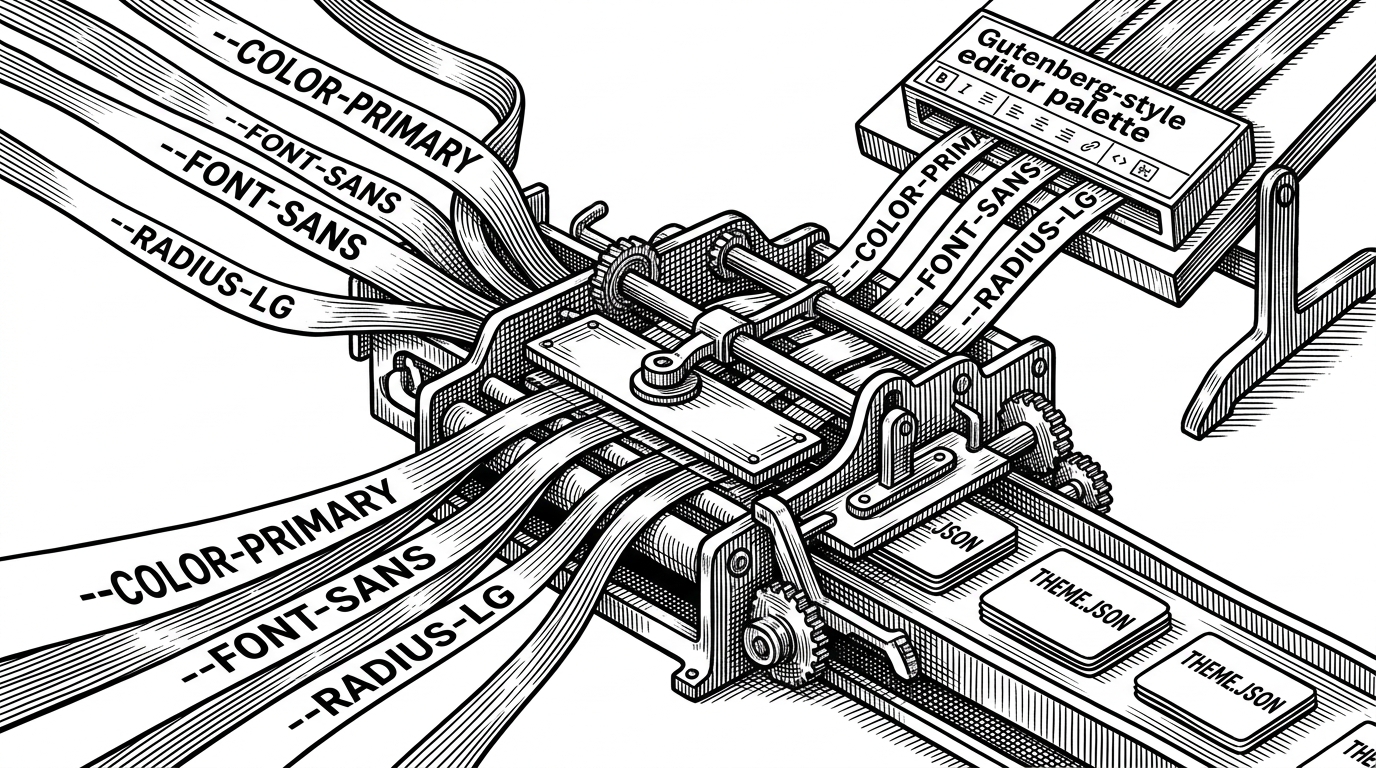
The most interesting part of the repo is not the import rewriting. It is the token pipeline. The plugin can inspect CSS variables, load Tailwind config, merge partial theme files, and emit a WordPress-ready theme.json that matches the design system already living in the stylesheet.
Why that matters
This is a practical break from the usual WordPress pattern, where design tokens get duplicated across CSS, PHP, and editor settings until they drift apart. Here, the build process reads the live CSS output, then merges it with Tailwind data and any *.theme.js partials in a predictable order.
That makes the theme system feel less like a static configuration file and more like compiled product logic. When the design system changes, the editor follows.
Imports Are Rewritten, Not Rebuilt
The second half of the plugin is a compatibility layer for JavaScript. Imports like @wordpress/element are transformed into wp.element, and the plugin records the dependency list so WordPress can enqueue the right scripts instead of bundling its own copies.
import { useState } from '@wordpress/element';

// becomes something like:
const useState = wp.element.useState;

// and the dependency is recorded for WordPress enqueuing.
That approach matters because it keeps the codebase written in modern ESM while respecting the runtime that WordPress actually provides. The plugin also handles third-party globals in the same spirit, which is why it fits awkward real-world stacks instead of only pristine demos.
Requires vite ^8.0.0, laravel-vite-plugin ^3.0.0.
Why Gutenberg Needs Surgical HMR
The hardest engineering problem in the repo is the Gutenberg iframe. Standard Vite HMR does not naturally reach into the editor canvas because the editor runs in a separate document context. A generic hot reload story breaks down there.
The plugin answers with CSS-specific HMR that targets the iframe directly, swaps styles in place, and avoids the larger blast radius of a full reload. It is narrow on purpose. The editor needs style updates fast, not a theatrical rebuild of the whole page.
This Is Not Just a Plugin. It Is a Compatibility Layer
The repo reads like infrastructure, not convenience. It uses strict TypeScript, Vitest, esbuild, and dependency extraction patterns borrowed from the WordPress ecosystem itself. The shape of the code makes one thing clear: this is an adapter between two toolchains that were never designed for each other.
| Approach | Build speed | WordPress globals | theme.json support | Editor HMR | Maintenance | Best fit |
|---|---|---|---|---|---|---|
| @wordpress/scripts | Solid but heavier | Native | Limited | Basic | Standardized, familiar | Official WordPress workflows |
| Custom Webpack stack | Usually slower | Manual | Usually custom | Custom work needed | High maintenance | Legacy setups with special needs |
| @roots/vite-plugin | Fast and Vite-native | Automated translation | Built in | CSS-focused iframe HMR | Focused, opinionated | Modern WordPress teams that want Vite without losing WordPress |
That is why the project feels bigger than its name. A build plugin usually optimizes assets. This one rewrites boundaries. It takes the facts of WordPress runtime behavior and makes them legible to modern frontend tooling.
Why Roots Wins Here
Roots has spent years building for WordPress teams that want contemporary developer experience without abandoning the CMS. That matters because this plugin is not a generic integration experiment. It comes from an ecosystem that already understands the cost of WordPress-specific compromises.
The result is not just a faster path to Vite. It is a more credible path, because the plugin is opinionated about the parts that need translation and careful about the parts that must remain WordPress-native.
Sources and Notes
Repository: roots/vite-plugin. Main announcement: Roots Vite Plugin Adds Vite v8 Support. Community discussion: Roots Discourse thread. NPM package record: npm registry.