The 14-Day Fossil: Deconstructing the HRPrep Learning Curve
A forensic look at a mid-2010s bootcamp architecture, tracing a developer's transition from basic HTML loops to a functional social prototype.
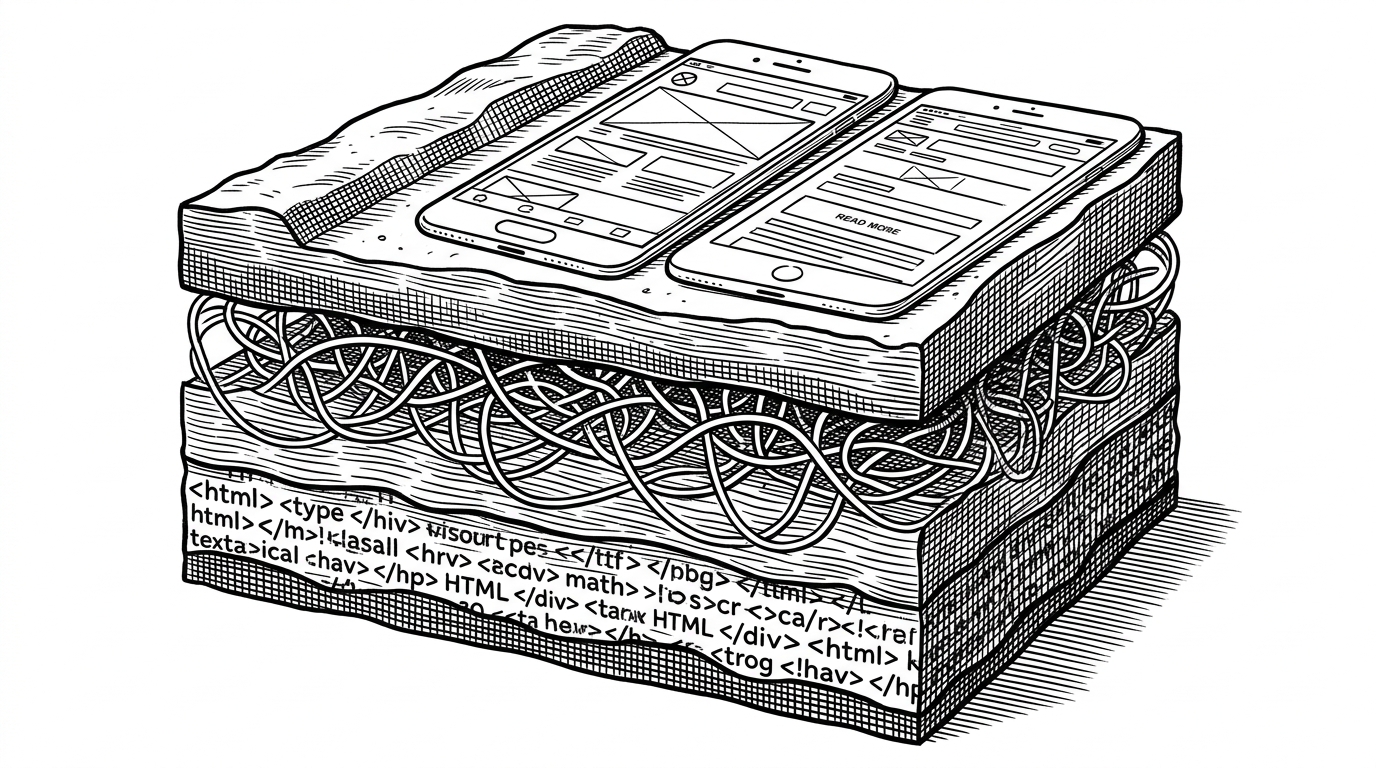
- HRPrep functions as a digital fossil capturing a developer's rapid transition from basic markup to functional social prototypes.
- The project implements a decentralized state machine by using the filesystem and anchor tags as a routing engine.
- The introduction of the Bootstrap grid system represents a fundamental architectural shift from manual pixel-pushing to component-based assembly.
- The prototype achieves backend functionality without a database by routing form data through third-party email APIs.
The Ephemeral Prototype
Most open-source deep dives focus on massive distributed systems or hyper-optimized libraries. HRPrep represents something entirely different: a perfectly preserved digital fossil. It captures a two-week window where a developer transitioned from learning basic loops to architecting a functional, mobile-first social prototype.
The capstone of this repository is 'Changing Room', envisioned as an ephemeral fashion feedback app. Long before modern state management libraries became the standard, this project attempted to build a swipe-based social interface using only the constraints of early-stage CSS and vanilla JavaScript.
Routing via Filesystem
Before reaching the capstone, the repository reveals a fascinating experiment in state management: a 'Horror Edition' Choose Your Own Adventure game. Instead of managing state in memory, the game uses the filesystem itself as a routing engine.
By linking over ten distinct HTML files together using standard anchor tags, the developer created a decentralized state machine. The current state of the game is simply the URL in the browser, relying on the purest form of hypermedia as the engine of application state.
The Era of Vertical Spacing
The early commits of the repository are a masterclass in the struggles of pre-framework web design. Layouts are heavily dependent on manual floats, inline styles, and an excessive use of line-break tags to establish vertical rhythm.
| Concept | The Manual Way (Week 1) | The Framework Way (Week 2) |
|---|---|---|
| Layout | Manual floats and clearfixes | Bootstrap 12-column grid |
| Spacing | Consecutive `<br>` tags | Utility classes (`.p-4`, `.m-2`) |
| Styling | Inline `style='color:red;'` | External `style.css` |
The Bootstrap Great Awakening
The architectural turning point arrives in the week_1/day_4 directory. The introduction of the Bootstrap grid system instantly deletes hundreds of lines of fragile, manual CSS.
This shift from manual pixel-pushing to utilizing a component library is the defining architectural boundary of the project. It marks the transition from writing raw markup to assembling software.

Serverless Before it was Cool
To handle user signups for the prototype without a backend database, the project employs a clever abstraction. By routing HTML form POST requests to an external email service via Formspree, the static application achieves functional data collection.
It is a testament to the enduring value of simple abstractions. By leveraging third-party APIs, the developer bypassed the need for server-side architecture entirely, keeping the prototype lightweight and focused on the frontend user experience.