animated-login: The login form that learned stagecraft
Leonxlnx/animated-login turns a routine sign-in screen into a tiny puppet theater built from vanilla HTML, CSS, and JavaScript.
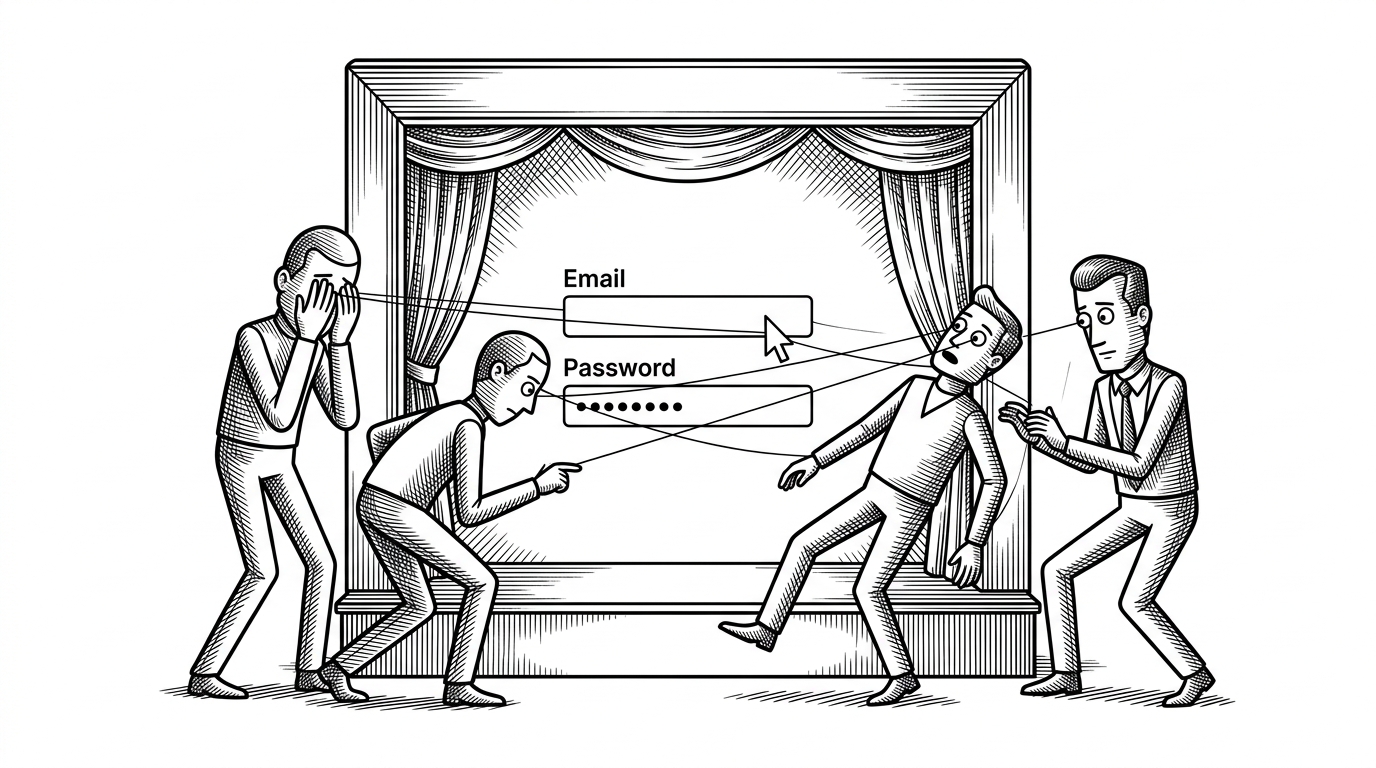

Animated login page with interactive character reactions
- Animated-login proves that a login screen can carry personality without a framework or animation library.
- Its real innovation is architectural, because user input becomes state and CSS variables before it becomes motion.
- The characters feel alive because the project mixes lagged eye tracking, CSS-driven leaning, and staged resets instead of one big animation.
- The finale matters as much as the idle state, because success is designed as a clean exit, not a dead end.
Most login screens try to disappear. This one does the opposite. It uses reactive SVG characters, CSS state classes, and a tiny physics loop to make a simple form feel social, not clinical.
A finished concept, not a framework demo
The repo is small, but it is not sloppy. Leonxlnx describes it as “Animated login page with interactive character reactions”, and that is exactly the right frame. It is a compact proof that a mundane authentication step can become an expressive scene when the motion system is designed with restraint.
The codebase reads like a product team split into disciplines. HTML carries the SVG rigs, CSS is divided into variables, base, layout, form, characters, animations, and responsive layers, and JavaScript is separated into state, physics, and interaction handling. That separation is the main reason the piece stays legible. The JavaScript does not animate everything directly. It changes state, and the stylesheet turns that state into expression.
How the motion system stays simple
The smartest part of the project is its refusal to let event handlers do all the work. Form input updates a centralized state object, then a body class flips the visual mode. That sounds modest, but it is what lets the expressions, the hidden and visible password states, and the character poses stay synchronized without a tangle of imperative DOM writes.
The eye tracking is even cleaner. Each animation frame nudges the current position toward the target with a simple interpolation rule, so the pupils trail the cursor instead of snapping to it. That tiny delay matters. It creates weight, and weight reads as life.
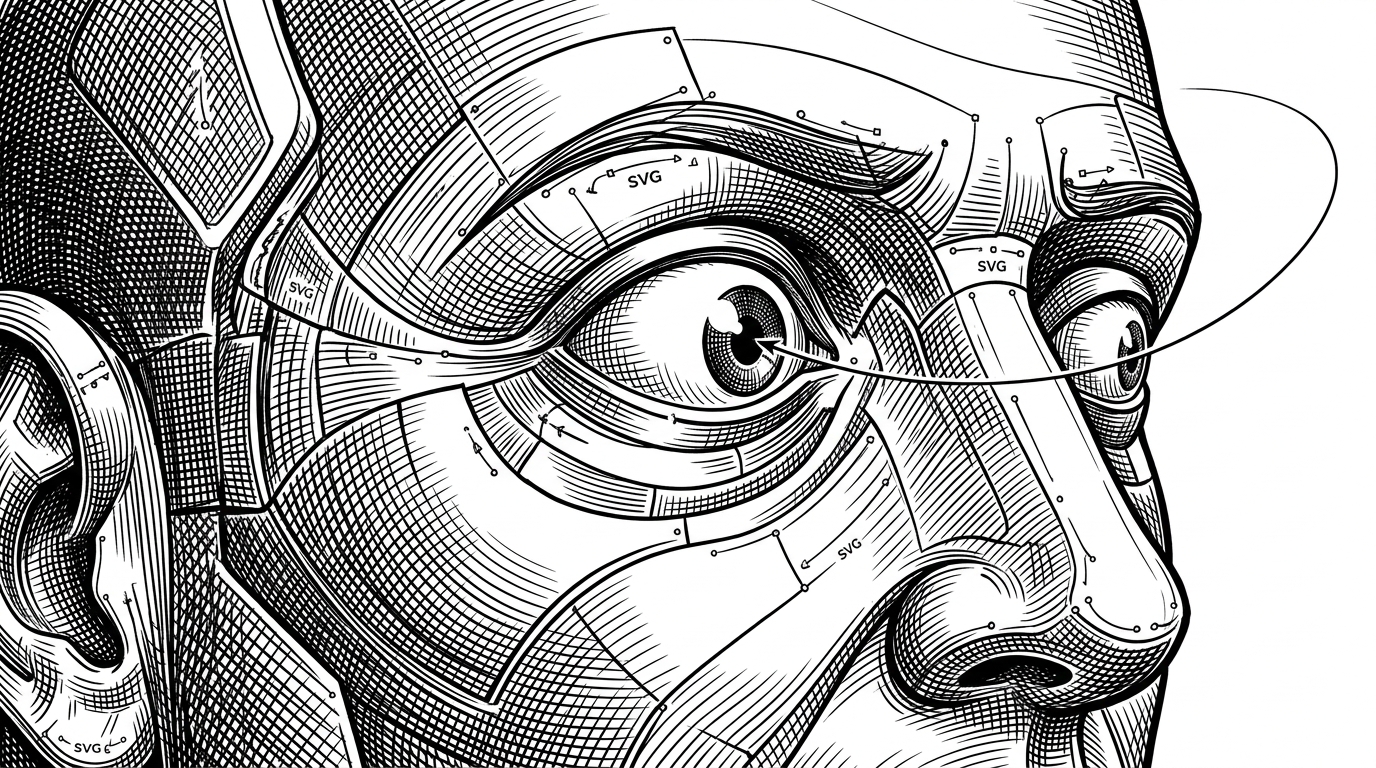
Why the characters feel like rigs, not stickers
The SVG characters are not treated as flat art assets. They are rigged groups with a shared origin, so mouse movement can lean, squash, and stretch them from the same anchor point. That is a small choice with a big payoff. The body stops feeling pasted onto the page and starts behaving like a soft mechanical system.
CSS does the expressive work. Variables driven by pointer position feed into transforms, and the stylesheet decides how far each character should tip, compress, or recoil. It is a good example of a broader pattern: when the interaction is visual, pushing logic into CSS can be cleaner than scattering it through JavaScript.
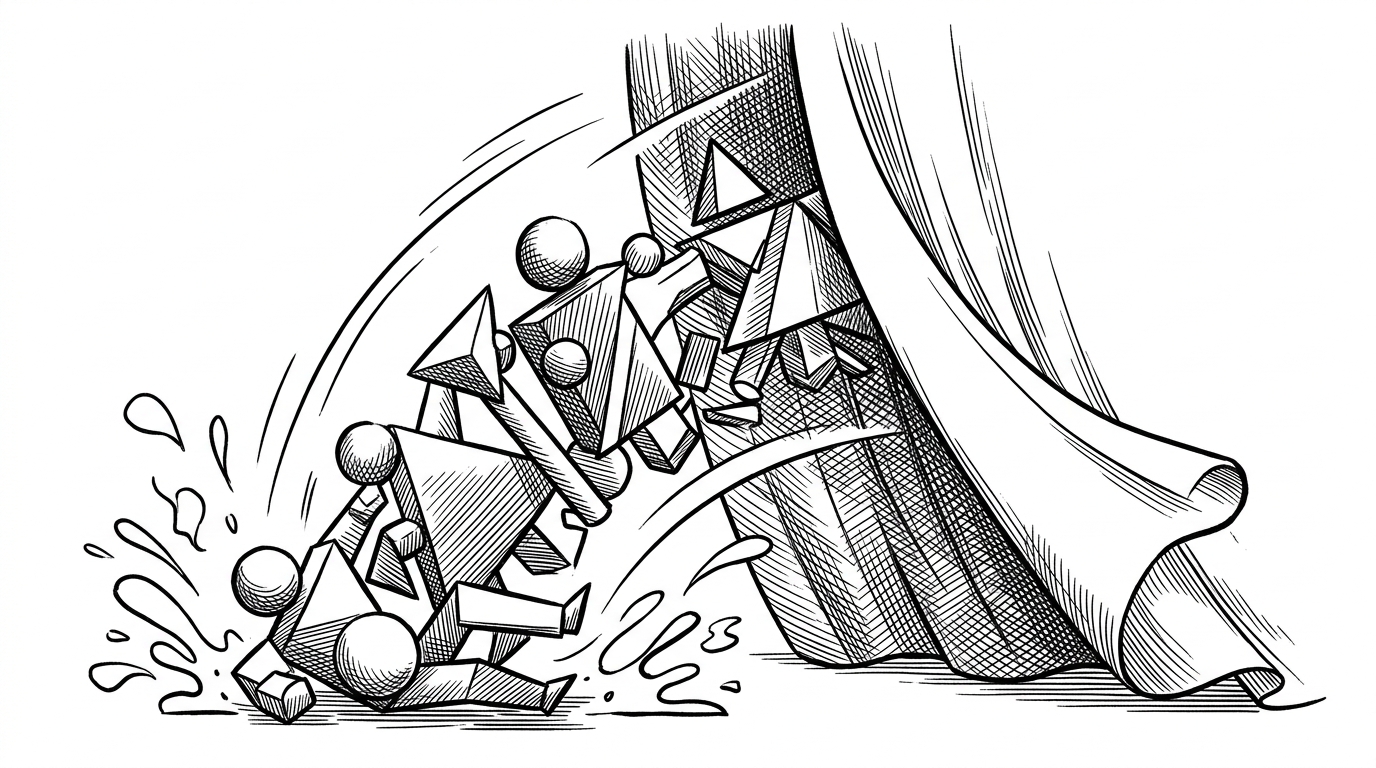
The success state is part of the product
The final sequence is not an afterthought. Characters bounce out of frame, color splashes are spawned, and a white wipe clears the scene so the form can reset. That matters because a delightful interaction can still feel unfinished if it does not resolve cleanly. Here, success is not just feedback. It is closure.
What this stack buys you
The project is not trying to prove that frameworks are bad. It is showing that a narrow, highly visual interaction can be easier to reason about when the stack stays native. No build tool, no animation runtime, no extra abstraction layer. Just HTML, CSS, and ES modules doing one job each.
| Dimension | Leonxlnx/animated-login | AniLogin | Interactive-Lottie-Login-Form |
|---|---|---|---|
| Core stack | HTML, CSS, JS with native ES modules | React, TypeScript, Vite, Tailwind | React plus Lottie |
| Motion model | State classes and CSS custom properties | Component state plus higher-level animation logic | Asset-driven animation playback |
| Best fit | A portable concept piece that stays easy to read | A richer framework demo with more systems around it | A tutorial or showcase where imported animation is the star |
That comparison is the real story. Leonxlnx/animated-login is lighter and less ambitious than the framework-heavy alternatives, but it also has less surface area to break. For a product team, that is not a small advantage. When the interaction is the point, clarity beats infrastructure.
What lingers is not the novelty of the characters. It is the discipline behind them. The repo treats state as a contract, motion as a consequence, and the success path as a resettable loop. That is a useful blueprint for any interface that wants to feel human without becoming noisy.