How ai-pose-gallery-zh Localized 1,439 Poses by Translating 323 Strings
A Japanese pose library offered no bulk download and no Chinese search. Anhao's zero-dependency mirror solved both with a translation memory, a denormalized catalog, and one precomputed search field.
1439 个AI美女 姿势 参考图 已开源中文版本,可直接下载 做视频,做AI图必备呀 在线地址: ai-pose-gallery.anhao.app 开源地址: github.com/anhao/ai-pose-gal…
- Localizing a 1,439-image pose library collapsed to translating 323 unique strings because the catalog repeats each pose name across five angle records.
- The precomputed 检索 field turns pose search into a plain substring match, moving the work from the browser to the build.
- The repository's MIT license covers its code only, while the images and pose data carry separate, more restrictive terms.
- The README's zero-omissions claim is off by one frame: the angle matrix is one image short of 288 poses times 5 angles.
The String Problem
Localizing 1,439 image records sounds like a job for a translation service and a very long spreadsheet. It was neither. The entire Chinese localization of ai-pose-gallery-zh reduces to 323 short phrases.
The catalog is denormalized. Every one of the 1,439 image records carries its own copy of the fields that need translating, but those fields draw from a tiny shared vocabulary. The repository's translation memory, data/translations.csv, makes this plain: it has one row per unique string, not one row per image.
- 系統 (system): 4 unique strings
- 分類 (category): 26 unique strings
- 角度 (angle): 5 unique strings
- ポーズ名 (pose name): 288 unique strings
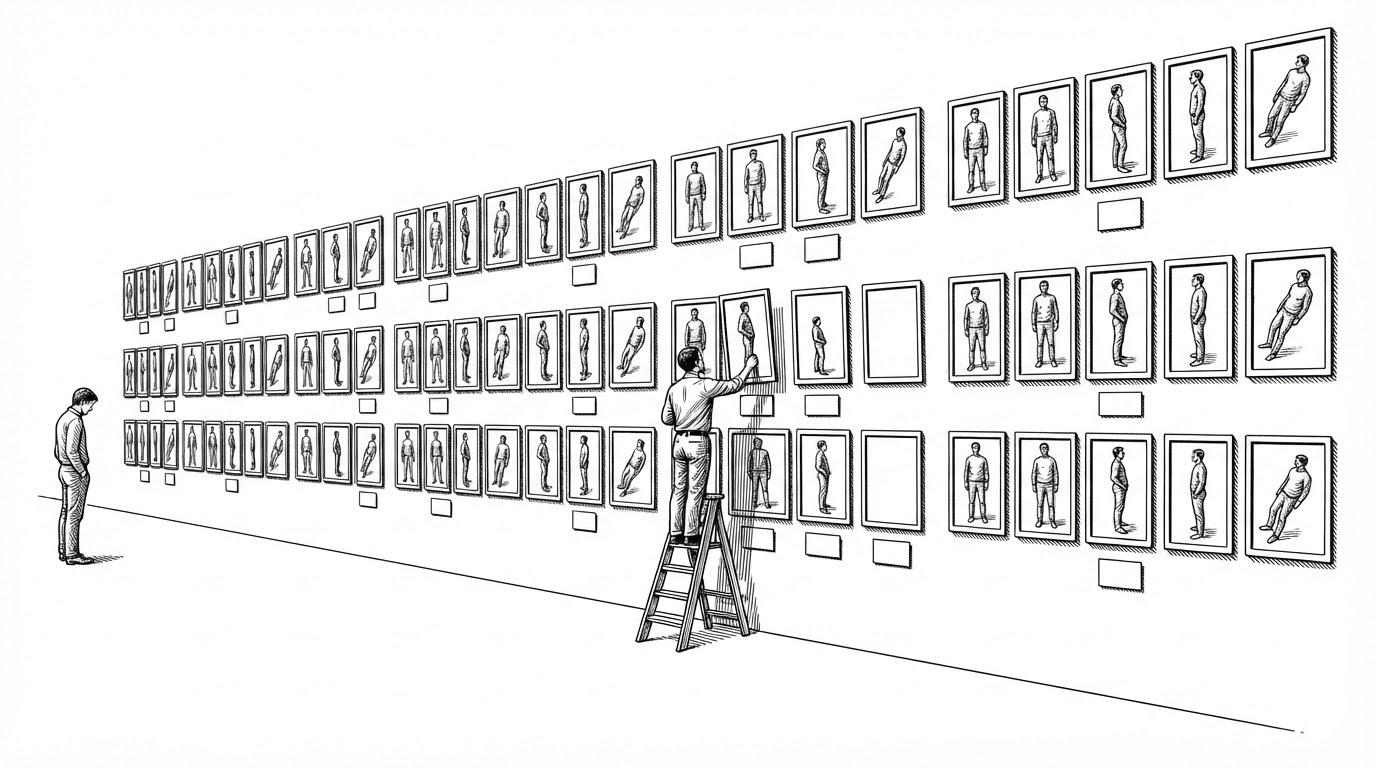
That is 4 + 26 + 5 + 288 = 323. The leverage comes from the angle structure. Each pose is photographed from five angles, so each pose name appears in five separate records. Translate it once and five images are localized at the same time. The translation memory is not a convenience here. It is the entire reason the project was finishable in an afternoon.
A Gallery With No Exit Door
The source collection belongs to ギア, a Japanese creator who published POSE Atlas at ai-pose-gallery.pages.dev. It is a well organized pose reference library, and it had three problems for a Chinese-speaking audience: no bulk download, no Chinese search, and slow loading.
Anhao, a Chinese developer, mirrored it. The result is a static gallery with all metadata translated into Chinese, hosted at ai-pose-gallery.anhao.app. The repository describes the work in its own terms: 1,439 pose groups, 2,878 images when you count thumbnails and full-size files separately, and a complete Chinese localization. The gallery counts 1,439 multi-angle reference images, one per pose-and-angle pair. Both numbers are correct; they count different things.
The project drew attention quickly after its launch, with thousands of stars and forks accumulating within days. The interesting part is not the reception. It is how little translation the reception actually required.
Download, Dedupe, Translate, Apply
The pipeline has four stages, each one small enough to read in a sitting.
Download. download.py is a 48-thread concurrent downloader with resumable .part files and automatic retry. Anything that fails lands in download_failed.txt, and a WORKERS environment variable overrides the thread count. Mirroring 1,439 images from a site with no bulk export is unglamorous work, and the script treats it that way.
Translate. data/translations.csv is the translation memory: header 字段,日文原文,中文译文,出现次数, then 323 rows mapping one Japanese string to one Chinese string with an occurrence count. The count column is what makes the leverage auditable. You can see at a glance that 288 pose names each appear five times.
Apply. apply_translation.py walks the untouched Japanese data/pose.json and applies the memory, producing data/pose-zh.json. Build. build.sh assembles the static output.
One design choice is worth pausing on. The Japanese-to-Chinese dictionary lives in i18n.py, and that dictionary is the editable source of truth. The CSV is generated from it. Edit the dictionary, regenerate the CSV, reapply. The translation memory is a build artifact, not the master record, which means the real translation work happens in one place.
The Catalog Is the Product
Each record in pose-zh.json is one image. Here is a single entry, unedited.
{
  "id": "full_sexy_P001_front",
  "体系": "全身单人・性感系",
  "姿势编号": "P001",
  "分类": "站姿",
  "姿势名称": "S形站姿・胯部侧顶",
  "角度": "正面",
  "缩略图": "thumbs/full_sexy_P001_front.jpg",
  "原图": "img/full_sexy_P001_front.png",
  "检索": "full_sexy_P001_front 全身单人・性感系站姿S形站姿・胯部侧顶正面"
}
Three decisions are doing the real work here.
Denormalization. The pose name and category repeat across the five angle records for each pose. In a database that would be a normalization sin. In a flat JSON file of 1,439 objects it costs almost nothing, and it buys a front end that filters without ever joining tables. The redundancy is the price of a simpler reader.
Non-ASCII keys. Keys like 体系 and 姿势名称 are Chinese. That makes the data legible to the people it serves, but it forces bracket access in code, since dot notation cannot reach a Chinese identifier. It is a deliberate localization choice with a small, predictable cost.
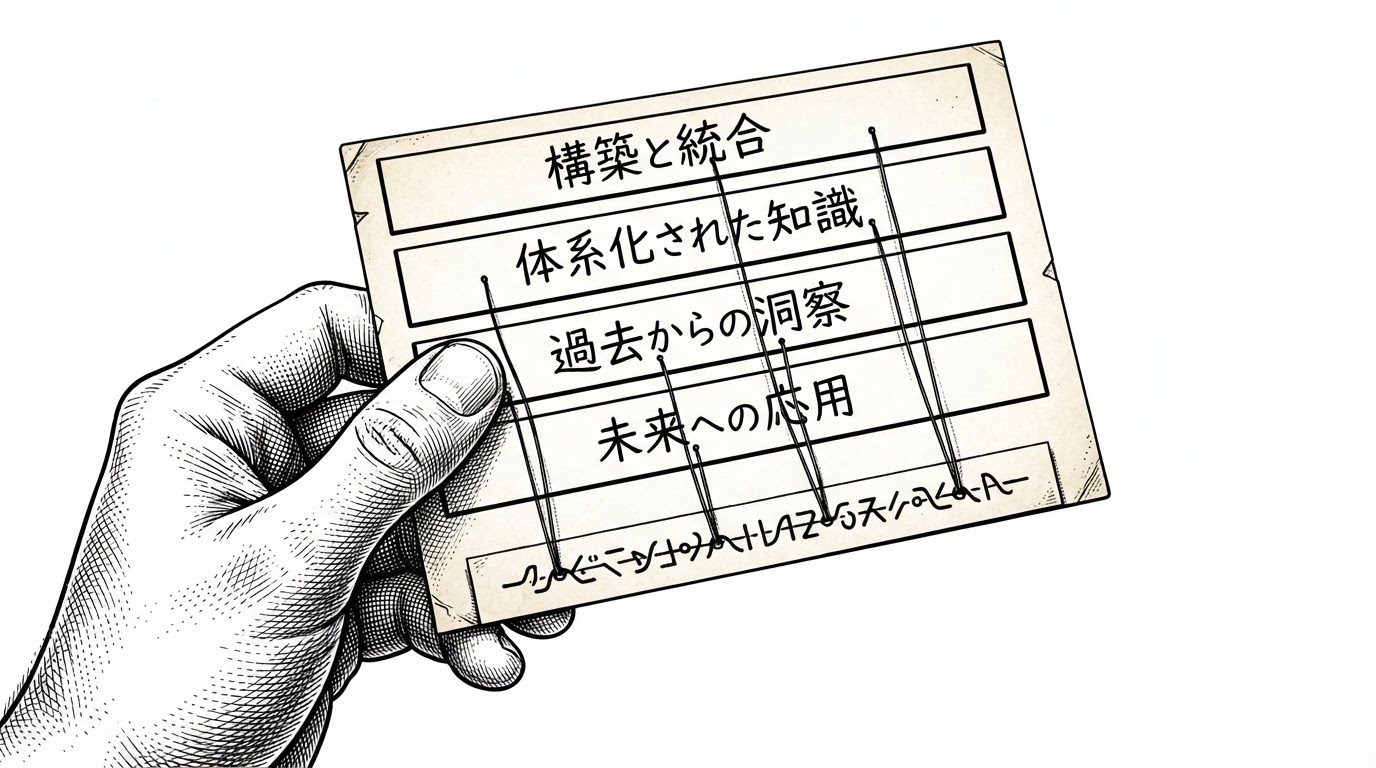
The precomputed search field. The 检索 key concatenates the ID, system, category, pose name, and angle into one string at build time. Search then becomes a substring match with no fuzzy-matching library and no indexing step in the browser. The field exists only in the Chinese file, which tells you it is a derived artifact of the translation step rather than something inherited from the source.
A Zero-Dependency Front End
index.html is a single file. No framework, no npm, no build step. It fetches pose-zh.json and renders filters, grouped views, and a lightbox. Because 检索 is precomputed, search is a substring match and there is no fuzzy-matching library to ship. Hosting is Cloudflare Pages, configured through a _headers file, with wrangler as an alternative deploy path.
One detail confuses people reading the language stats: the repository shows HTML and Python but no JavaScript. The JavaScript is inline in index.html. There is nothing to bundle.
What It Is Not
It is easy to file this next to the original Japanese gallery and a similarly named static atlas. They are not the same thing, and the gaps matter.
| ai-pose-gallery-zh | Original POSE Atlas | RuiC-PoseAtlas | |
|---|---|---|---|
| Language | Chinese (localized) | Japanese | Described as multilingual |
| Bulk download | Yes, mirrored into the repo | No | Yes, per project description |
| Search | Pose name and category filters | Japanese interface, no Chinese search | Search and filters |
| Angle views | 5 per pose | 5 per pose | 5 per pose |
| Dependencies | None at runtime | Not applicable | Described as dependency-free |
| Hosting | Cloudflare Pages / static | Static site | Static |
| License position | MIT code; images and data not for commercial use | Set by the original creator, who states commercial use is allowed | Not established in available sources |
The sources do not establish any relationship, shared lineage, or shared assets between Anhao's repository and RuiC-PoseAtlas. They are similar projects, not connected ones.
MIT on the Code, Nothing on the Images
The repository is MIT-licensed. That covers the code: the downloader, the translation scripts, the front end, the build. It does not cover the images or the pose data. The repository states plainly that those remain attributed to ギア and are not for commercial use.
The original creator's own announcement is more permissive. ギア described the source collection as free, editable, and available for commercial reuse. So the mirror is stricter about the assets than the person who made them.
AI美女「ポージング」データベース無料公開! 「このポーズに変えて」だけで使えるように 1,439枚のポーズ集をデータベース化しました ・無料 ・商用利用OK ・編集、二次利用OK 引用元の記事からお受け取り下さい
This article will not resolve that tension, because it should not be resolved here. The honest position is the boring one: if you plan to reuse the images, check the rights holder and the source terms first. The code license tells you nothing about the pictures.
One Frame Short
The README claims 零遗漏, zero omissions. The angle matrix disagrees. 288 poses times 5 angles is 1,440. The repository has 1,439.
The gap is visible in the translation memory. One pose name, M字開脚(座位・後ろ手), carries an occurrence count of 4 instead of 5. It is the only row in the file that breaks the pattern. In the file tree, full_sexy_P018_low is absent, and P018 has just four angles.
A catalog this obsessive, built by a concurrent downloader with retry logic and a resumable download scheme, is missing exactly one frame. It is a small, forgivable, very human gap in an otherwise complete mirror. Zero omissions was the intent. One frame short is the result.