The Digital Archaeology of rushindrasinha/HappyHour-Final
A rare, unedited look at the architectural transition from local prototype to cloud-ready Rails monolith.
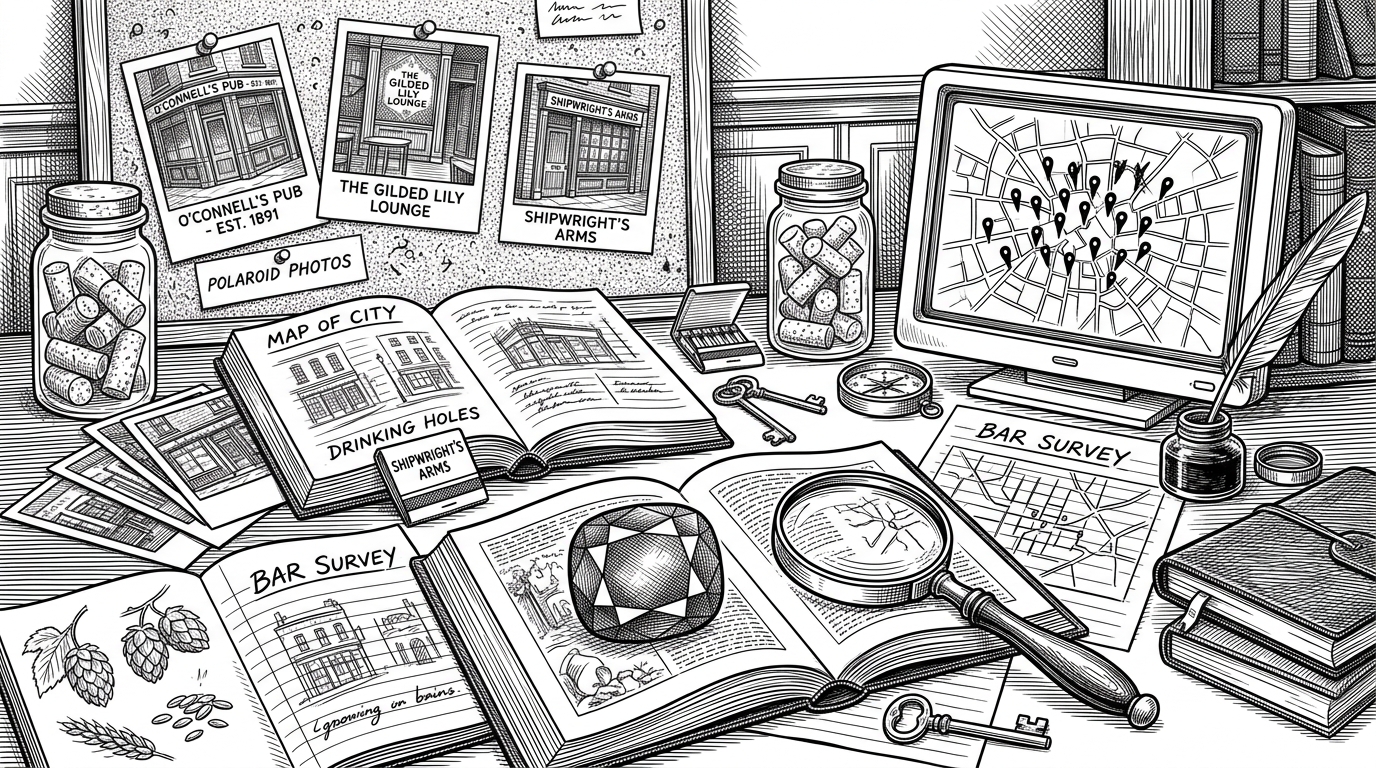
- The repository preserves a rare look at 2015-era development by including local database assets and bar images directly in the public directory.
- The application utilizes a hybrid rendering approach that injects Ruby logic directly into client-side JavaScript to generate Google Maps markers.
- The developer eschewed standard authentication gems like Devise in favor of a hand-rolled security system built with BCrypt and custom session controllers.
- The codebase documents a complete architectural shift from a local SQLite prototype to a production-ready PostgreSQL monolith hosted on Heroku.
The Fossil Record in /public
Modern open-source repositories are usually sanitized. Development artifacts, local database dumps, and test images are meticulously ignored by .gitignore before a project ever sees the public light. But rushindrasinha/HappyHour-Final is different. It is a living fossil record of 2015-era Ruby on Rails development.
Within the public/system directory lies the evidence of its creation: actual uploaded images of Santa Monica bars and happy hour drinks. These committed assets provide a rare, unvarnished look at the state of the application as it was being built, offering a tangible connection to the developer's local environment before the transition to cloud storage.
Hard-Coded Geolocation
Before the ubiquitous adoption of cleanly separated frontend frameworks consuming JSON APIs, Rails developers often employed hybrid approaches. The geolocation feature in this repository is a perfect example of this transitional era.
In app/views/pages/map.html.erb, Ruby logic is injected directly into a JavaScript block to render Google Maps markers. The code iterates over the database records (@bars.each) and dynamically constructs a JavaScript array within the client-side script. It's a pragmatic, pre-API bridge that gets the job done without the overhead of a dedicated serialization layer.
The "Hand-Rolled" Security Gate
A surprising architectural choice in the repository is the approach to authentication. By 2015, the Devise gem was the de facto standard for Rails authentication, and Rails itself offered the robust has_secure_password macro.
Instead, the User model features a custom implementation using BCrypt with manual password setters and a bespoke SessionsController. This "from-scratch" methodology extends to authorization, with custom before_action filters ensuring users can only manage their own bars. It's a lean, educational approach that trades off the convenience of a library for complete control over the session lifecycle.
This is the final version of the HappyHour app, a simple app to find happy hours. Developed by Rushindra Sinha.

The Great Migration of 2015
The codebase captures the exact moment the application transitioned from a local prototype to a production-ready monolith. The commit history and configuration files document a clear migration path.
The database shifts from SQLite to PostgreSQL, preparing for deployment on Heroku. Simultaneously, the file attachment strategy evolves. The presence of both CarrierWave remnants and active Paperclip configurations—alongside AWS S3 credentials—illustrates the leap from local file storage to cloud-based asset management.
| Component | Local Prototype State | Production 'Final' State |
|---|---|---|
| Database | SQLite | PostgreSQL |
| Image Storage | Local file system (/public/system) | AWS S3 via Paperclip |
| Authentication | Basic unencrypted variables (implied) | BCrypt hashed passwords |
| Hosting | Localhost | Heroku |