ares-setup: Provisioning a Soul into Apple Silicon
How a monolithic shell script and three Markdown files transform a consumer Mac Mini into a 24/7 autonomous labor node.
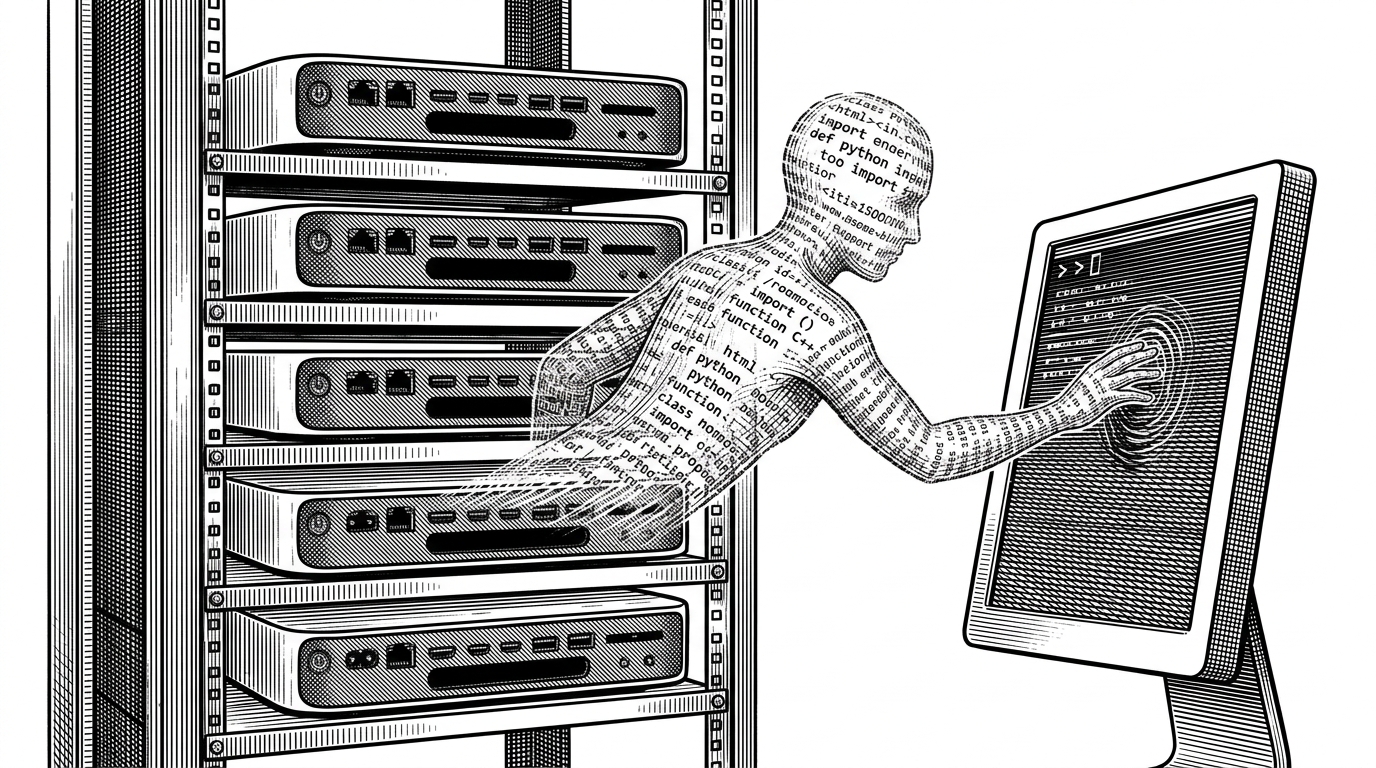
- Local Mac Mini hardware provides a persistent physical body for autonomous agents to bypass cloud subscription costs.
- The Triad of Identity uses Markdown files to decouple an agent's personality from its physical hardware capabilities.
- A monolithic shell script ensures environment stability by automating the installation of sandboxed runtimes and dependencies.
- A human-in-the-loop firewall uses SMS pings to require manual approval for high-stakes agent actions.
The $599 Employee
The industry obsession with cloud agents often overlooks a fundamental truth about autonomous systems. When an agent lives in a browser tab, its existence is ephemeral. The ares-setup repository takes a radically different approach. It treats a standard consumer Mac Mini as a physical body for an autonomous entity.
Rather than renting compute by the minute, developers are moving toward dedicated hardware clusters running 24/7. This agent farm concept turns a one-time hardware purchase into a persistent labor node, completely bypassing the subscription fatigue of modern AI tools.
The Triad of Identity
The intellectual core of the repository is its identity framework. Instead of burying agent behavior in brittle JSON configurations, the project uses a Triad of Identity consisting of three Markdown files: SOUL.md, AGENTS.md, and TOOLS.md.
This separation is deliberate. The ego (personality) is decoupled from the physical capabilities (hardware tools). It is prompt engineering as infrastructure, allowing operators to clone an agent's mind onto different physical bodies without rewriting the core logic.
Hardening the Body
To ensure the agent does not succumb to environment drift, the provisioner relies on a monolithic shell script. The script handles architecture detection, installs Homebrew, manages a specific Node.js runtime, and creates a sandboxed Python environment.
# Idempotent environment setup snippet
if [ ! -d "$HOME/.ares-venv" ]; then
  python3 -m venv "$HOME/.ares-venv"
  source "$HOME/.ares-venv/bin/activate"
  pip install -r requirements.txt
fi
The Human-in-the-Loop Firewall
Controlling a persistent agent requires strict guardrails. The system implements a robust Role-Based Access Control (RBAC) mechanism through a simple users.json file. High-stakes actions trigger an Admin Ping, programmatically messaging a human via SMS or WhatsApp for approval before execution.
| Feature | Local Mac Mini Node | Cloud Agent VM |
|---|---|---|
| Cost Structure | One-time hardware purchase | Recurring subscription |
| Data Privacy | 100% local execution and storage | Data sent to third-party servers |
| Hardware Access | Direct access to webcam, mic, local network | Restricted virtualized environment |