openclaw-guide: OpenClaw: The Persistent Local Daemon
Moving beyond the chat box to build autonomous, file-based identities that live on your hardware.
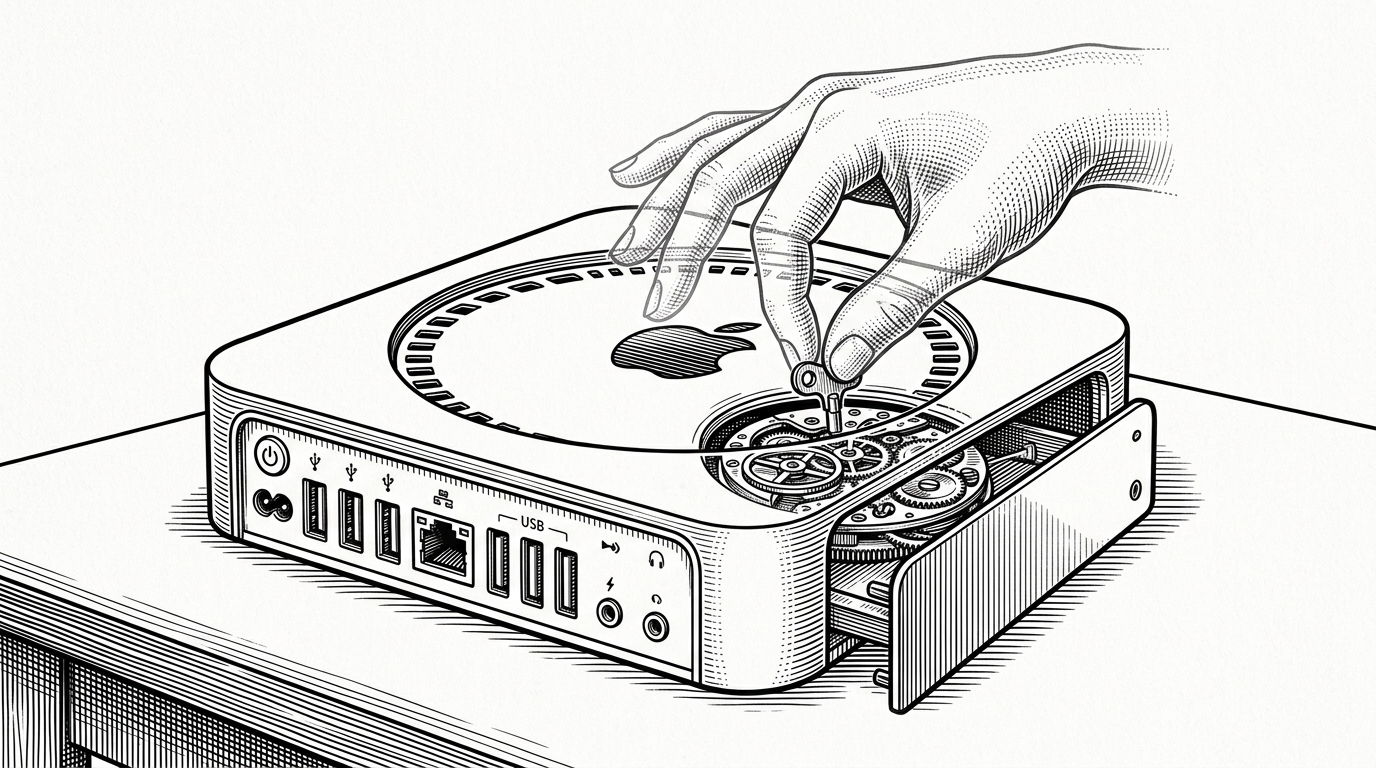
- OpenClaw replaces ephemeral chat interfaces with persistent local daemons managed by macOS LaunchD.
- An agent's cognitive identity is defined by a central markdown file rather than its specific tool integrations.
- The dual-cron workflow prevents system failure by separating the auditing of logs from the execution of repairs.
- Event-driven autonomy allows agents to perform tasks and update memory files without human intervention.
Identity as Infrastructure
Most AI agents are defined by their tools. OpenClaw flips this model entirely. In the OpenClaw ecosystem, an agent's identity is defined by a simple markdown file called SOUL.md. This file acts as the cognitive filter through which every capability is routed.
The philosophy is straightforward but profound. A well-written soul with no skills is considered more useful than fifty skills attached to a bad soul. This shifts the engineering focus from API integrations to cognitive architecture.
I built the first version in about an hour. I connected WhatsApp to Claude. It felt like magic. I just wanted to share it.
The Resident in the Mac Mini
Cloud-based assistants are ephemeral. You open a tab, type a prompt, and close the window. The OpenClaw guide advocates for a completely different deployment strategy: the local daemon. By utilizing macOS LaunchD, the agent becomes a persistent resident of the hardware.
This architecture enables event-driven autonomy. The agent does not wait for a chat message. It wakes up based on system events or cron schedules, reads its MEMORY.md to hydrate context, performs its tasks, and commits new memories before going back to sleep.
The Audit and the Healer
The most sophisticated pattern in the OpenClaw guide is the dual-cron workflow. Giving a single agent root access to fix system issues often leads to catastrophic failure loops. The solution is separation of concerns.
One agent acts as the auditor. It scans logs, identifies problems, and writes a strict manifest of necessary fixes. A second agent, the healer, wakes up, reads the manifest, and executes the specific terminal commands to resolve the issues. This creates a self-correcting system with built-in checks and balances.
High-Privilege Hazards
Giving an AI a persistent soul and terminal access is inherently dangerous. The competitive landscape reflects an ongoing tension between autonomy and security.
| Feature | OpenClaw | Traditional LLM Wrapper |
|---|---|---|
| Trigger | Event-driven (Cron/Webhooks) | Manual (Chat Box) |
| Memory | Persistent Markdown Files | Ephemeral Context Window |
| Privilege | Root/Terminal Access | Browser Sandbox |
As the ecosystem matures, developers are building complex zero-trust architectures to contain these high-privilege daemons. The shift is clear. We are no longer building tools for people to use. We are building digital colleagues that live on our networks.