WeChat-AI Turns WeChat Into an Operating System for AI Personas
A self-hosted, multi-node framework that bridges Tencent’s iLink protocol, Redis-backed memory, Chatflow orchestration, and human-like reply behavior to make bots feel persistent, social, and surprisingly alive.
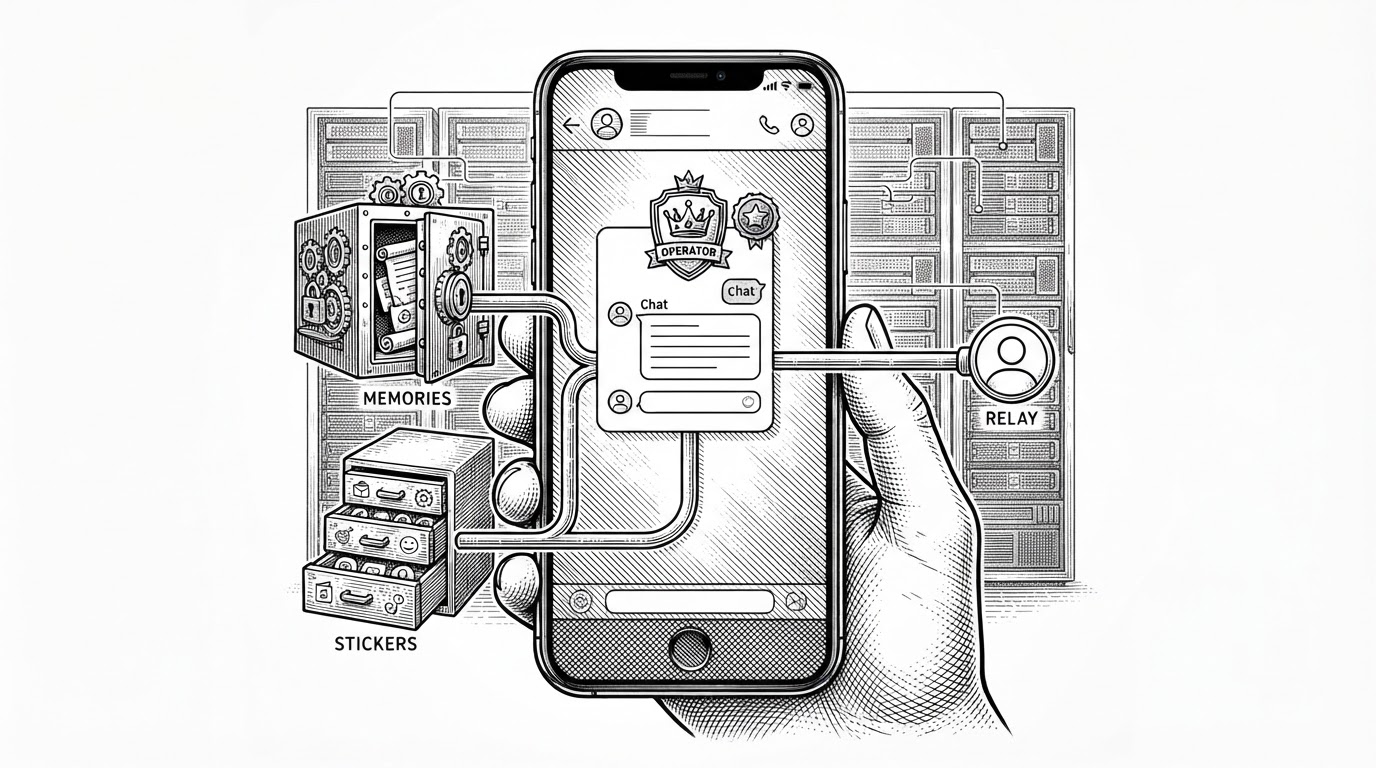

Personal bots face rate-limit and takedown risks; by default only approved users can chat.
- WeChat-AI is not just a chatbot wrapper. It is a distributed runtime for personas, memory, and routing inside a closed messaging app.
- Its real innovation is operational, not cosmetic. Redis leases, a protocol bridge, and a tools sidecar make one persona survive across nodes.
- Human-like output is engineered as a pipeline. Memory, image handling, and bubble splitting shape the conversation before the model ever sends a reply.
- Chatflow turns prompt writing into graph design, which moves the project closer to programmable messaging infrastructure than a simple bot.
Why This Feels Less Like a Bot and More Like a Platform
Most WeChat bots try to answer messages. WeChat-AI tries to become the layer underneath the conversation. It supports personas, memory, stickers, image handling, and peer-to-peer relay, so the chat surface starts to behave more like a programmable environment than a single-purpose assistant.
That is the useful mental shift here. The repo is not chasing novelty through better prompts. It is building a social operating layer around a closed app that was never meant to host one.
The Trick Nobody Expects: One Bot, Many Nodes
The deepest technical surprise is in the worker model. The repo does not assume one machine owns one bot forever. In apps/api/src/worker.ts, lease claiming and rebalancing let multiple nodes compete for work, then shed or pick up bot ownership as load changes.
That matters because scale changes the failure mode. A hobby bot dies when one process dies. A leased bot fleet can rebalance, recover, and keep one persona alive even when the underlying node shifts.
| Capability | Single-node bot | WeChat-AI |
|---|---|---|
| Bot ownership | Fixed to one process | Claimed with Redis leases and rebalanced |
| Failure handling | Process death ends service | Another node can pick up the lease |
| Scaling model | Vertical and fragile | Horizontal and shared |
| Operational fit | Personal script | Hosted system |
How WeChat-AI Makes Replies Feel Social Instead of Mechanical
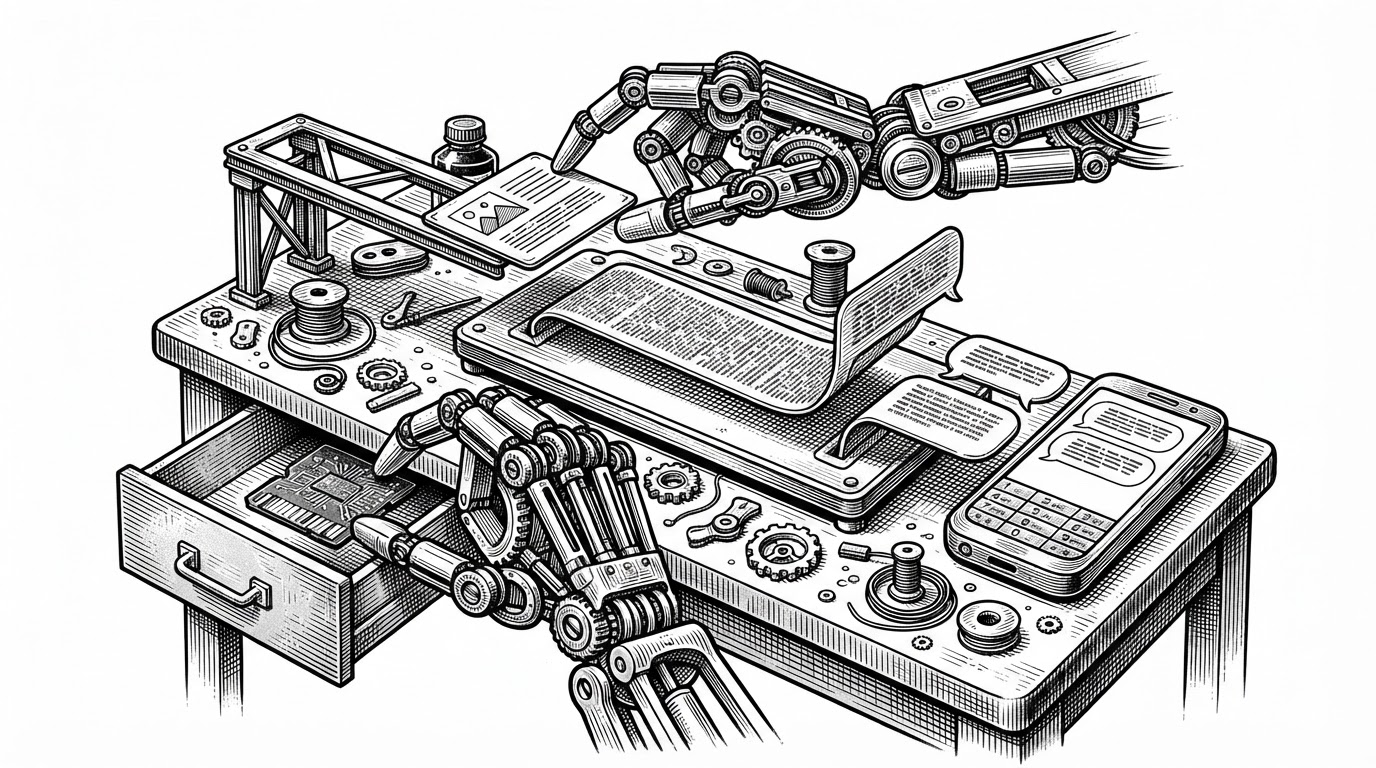
The personality effect comes from choreography, not just model choice. ChatService pulls relevant memories into the prompt, handles images in either caption or direct multimodal mode, and then splits long responses into multiple bubbles so the output arrives in a shape that feels conversational.
// Conceptually, the response pipeline does three things:
// 1. retrieve context
// 2. compose the prompt
// 3. format the reply into bubbles

const memories = await selectMemoriesForPrompt(userId, message)
const prompt = buildPrompt({ memories, persona, input: message })
const reply = await llm.generate(prompt)
const bubbles = parseMultiBubbleReply(reply)

for (const bubble of bubbles) {
  await sendWeChatBubble(bubble)
}
This is the difference between a bot that answers and a bot that performs. The output is paced, segmented, and stateful. That is why it feels social even when it is obviously synthetic.
The Bridge Layer: Why iLink Matters
The repo treats WeChat like a message bus with a narrow adapter, not like an open API surface. The packages/ilink layer handles the protocol details, including encryption and media handling, so the rest of the system can stay focused on intent, memory, and routing.
That separation is important. It keeps the protocol risk at the edge and the application logic in the middle. It also makes the repo look less like a scraper and more like a systems project with a hard boundary between transport and behavior.
Chatflow Changes the Bot From Prompting to Programming
Chatflow is where the repo starts to feel like a builder platform. Instead of hiding all logic inside a single prompt, it lets users shape response rules as a graph. That changes the editing model from writing instructions to composing behavior.
| Editing style | What you change | What it buys you |
|---|---|---|
| Prompt-only | Words and examples | Fast setup but opaque behavior |
| Graph-based Chatflow | Branches and tools | Visible logic and easier control |
| WeChat-AI | Prompt plus graph | A programmable agent runtime |
The trade-off is obvious. Graphs are more work than prompts. But they also make edge cases legible. If a user asks for search, or a branch needs to call a tool, the path is inspectable instead of buried in prompt soup.
P2P Relay and the Sticker Economy
The repo is broader than AI reply generation. The P2P relay feature lets users route messages through the bot with bind codes, while the sticker system adds moderation and reusable blobs to the social layer. That means identity, media, and community assets all become part of the runtime.
This is where WeChat-AI stops being just a private assistant. It becomes a shared environment where users can pass messages through a bot, trade stickers, and attach identity to a constrained messaging surface without giving up ownership of the stack.
Where It Sits in the Market
Compared with chatgpt-on-wechat, WeChat-AI is less about broad plugin convenience and more about coordinated persona behavior. Compared with official assistants like Tencent Yuanbao, it gives up legitimacy and some stability in exchange for self-hosting, customization, and control. Compared with generic gateway wrappers, it goes deeper into memory, relay, and orchestration.
| Project | Protocol posture | Self-hosted | Multi-node | Persona control | Memory | Ban risk |
|---|---|---|---|---|---|---|
| WeChat-AI | iLink bridge | Yes | Yes | High | High | Higher |
| chatgpt-on-wechat | WeChat library wrappers | Yes | Usually no | Medium | Medium | Higher |
| Tencent Yuanbao | Official | No | Managed | Low | Managed | Low |
| Generic gateway wrapper | Varies | Yes | Usually no | Low | Low | Varies |
The real choice is not feature count. It is operating philosophy. Do you want a stable assistant with narrow permissions, or do you want a self-hosted messaging runtime that can behave like a person, a relay, and a tool launcher at once?
What This Repo Signals About Messaging Apps
WeChat-AI is a strong example of a bigger pattern. Closed messaging apps are becoming surfaces for identity, memory, and execution. When the official layer stays narrow, open-source projects build a shadow layer that is messy, powerful, and much more adaptable.
That is why this repo matters. It does not just add AI to WeChat. It shows how a community can turn a closed chat app into a programmable social system, then distribute that system across nodes so it behaves more like infrastructure than a bot script.