ASFT: The LLM Framework That Tries to Talk You Out of Training
A production-minded system that profiles hardware, estimates ROI, and routes work toward RAG, prompt engineering, or fine-tuning only when the numbers justify it.

- ASFT reframes fine-tuning as a decision problem, with training as one option among cheaper interventions like prompting and retrieval.
- Its most useful idea is not a faster optimizer, but a gatekeeper that asks whether the GPU spend is justified at all.
- The project couples that judgment layer to production plumbing, so the same logic can survive outside a notebook.
- Its technical identity sits between SFT and DFT, using anchoring to keep optimization stable while preserving efficiency.
The sharpest thing about ASFT is not that it fine-tunes language models. It is that it refuses to assume fine-tuning is the answer. The project frames training as one path in a larger decision system, where retrieval, prompting, and parameter-efficient methods compete for the same task.
That makes the repo feel less like a training script and more like a control plane. It wants to know what the hardware can afford, what the data can support, and whether the gain is worth the burn.
The best fine-tuning run is the one ASFT does not launch
That anti-default stance is what makes the project memorable. In a space full of frameworks that promise to make training easier, ASFT asks a more uncomfortable question: should you train at all?
We propose Anchored Supervised Fine-Tuning (ASFT) — a lightweight extension of DFT that adds KL anchoring. This ensures tightness + stability, combining the best of SFT and RL while keeping efficiency.
That line from the README is the project’s technical spine. ASFT is not trying to replace supervised fine-tuning. It is trying to make it safer, tighter, and less prone to drift.
The router treats training like a betting problem
The repository’s most interesting logic is the decision layer around optimization. The MultiArmedBanditRouter does not treat every task as a training job. It treats each intervention as an arm in a policy that learns from outcomes over time.
That matters because the system is solving a routing problem before it solves a model problem. If retrieval or prompt engineering gets the job done with less cost, ASFT wants that path to win.
- Cold-start protection keeps the router from overfitting too early to thin evidence.
- Exploration and exploitation are balanced so the system can learn without becoming reckless.
- Utility is defined in practical terms, not abstract elegance, which pushes the framework toward ROI-aware choices.
ROI, not hype, decides what gets GPU time
The cost estimator makes the thesis concrete. It combines hardware awareness, scaling-law expectations, and cost estimates into a single view of whether the training run is worth it.
# Conceptual shape of the decision logic
roi_score = expected_accuracy_gain / estimated_cost_usd

if roi_score < threshold:
    choose("rag_or_prompting")
else:
    choose("parameter_efficient_fine_tuning")
That is a blunt formula, and that is the point. The framework is not trying to predict the future perfectly. It is trying to make the trade-off legible enough that a team can reject bad spends before they happen.
| Dimension | Train-first stack | ASFT |
|---|---|---|
| Default assumption | Fine-tune first | Decide first |
| Optimization goal | Make training faster | Make training optional |
| Cost awareness | Secondary | First-class |
| System role | Training tool | Control plane |
ASFT consistently outperforms both SFT and DFT across mathematical reasoning, medical knowledge grounding, and code generation, achieving substantial improvements with minimal computational overhead.
Data compression is where the compute savings begin

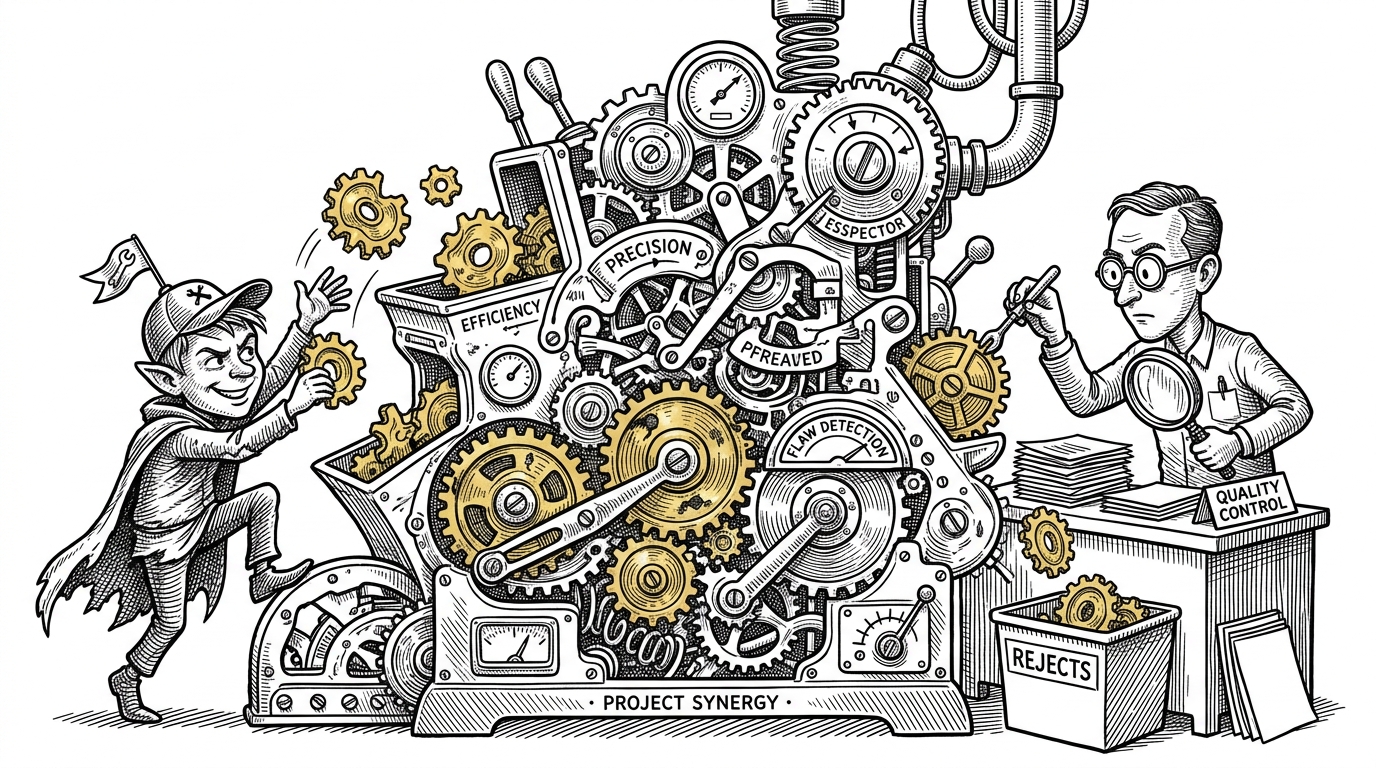
This is one of ASFT’s most practical moves. Instead of only optimizing the objective, it optimizes the dataset itself through deduplication, clustering, and representative selection.
The editorial point is simple. It is cheaper to train on better data than to brute-force bad data with a bigger GPU.
The API turns a research method into a service
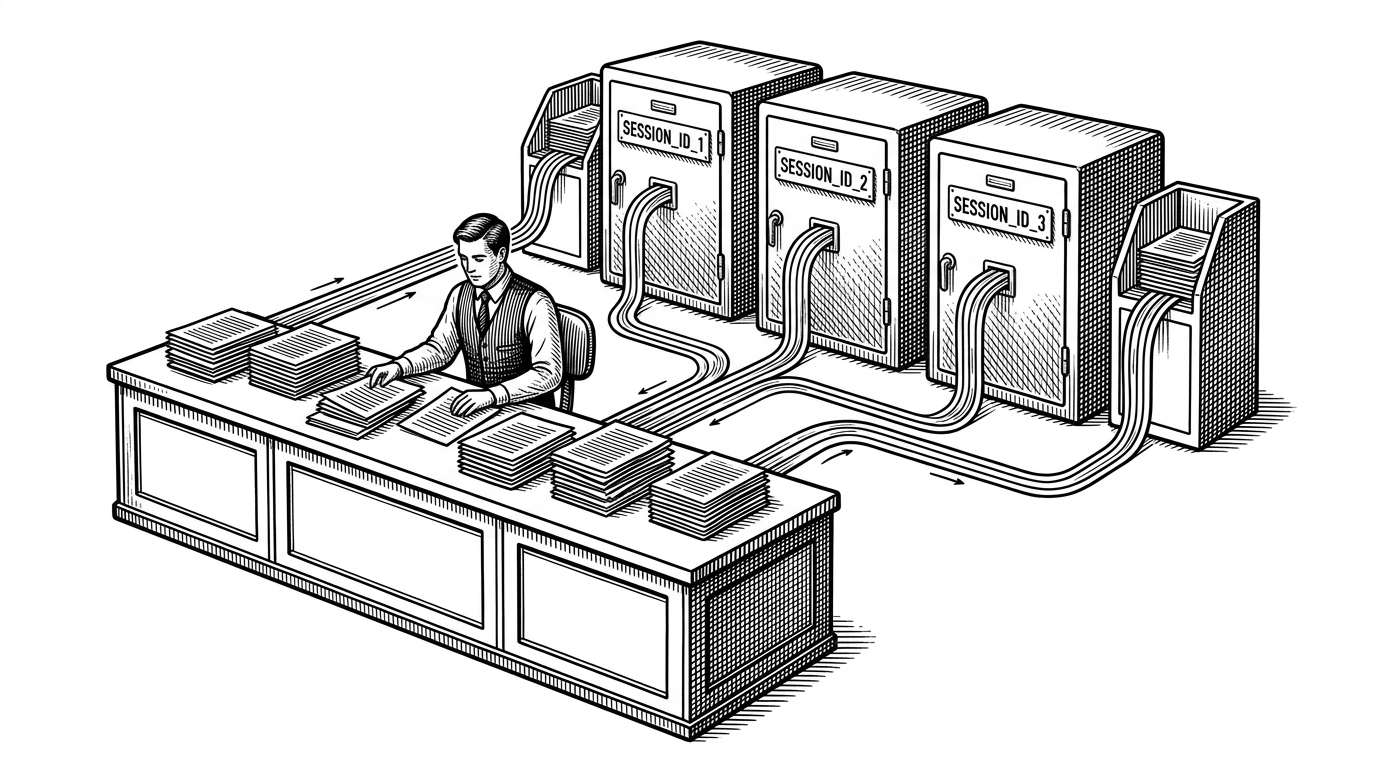
ASFT is built like something that expects to live behind an API, not just in a notebook. The repository includes FastAPI, Celery, and process-based execution patterns so long-running work does not freeze the main server thread.
That matters in production, where a training job is not a function call. It is a resource event, and it needs boundaries: queueing, isolation, security, and cancellation.
The stack also hints at operational maturity. RBAC, rate limiting, and worker separation say the same thing in different ways. This is not a toy demo wrapped in a UI. It is trying to behave like infrastructure.
ASFT versus the train-first stack
| Framework | What it optimizes for | What it assumes | What stands out |
|---|---|---|---|
| ASFT | Avoiding unnecessary training | You should compare methods before spending compute | Anchoring, routing, and ROI-aware decisions |
| Axolotl | Efficient fine-tuning | Training is already justified | Configuration breadth and training ergonomics |
| Unsloth | Fast low-VRAM tuning | Training is the right move | Speed and memory efficiency |
| LLaMA-Factory | Unified training workflows | Users want a broad training interface | Breadth of model and method support |
That contrast is the key takeaway. ASFT is not trying to win the same race as every other fine-tuning framework. It is trying to move the starting line backward, to the point where the team decides whether training belongs in the plan at all.
Try this ASFT is a production-grade, enterprise-ready AI Training Acceleration Framework designed to reduce the resources required to train and deploy LLMs.