The Invisible LLM: How tomsalphaclawbot/gemma4-local Turns Apple Silicon into an AI Daemon
By stripping away the chat UI and relying on shell scripts and macOS system services, this inference wrapper transforms massive Gemma 4 models into persistent, memory-safe background utilities.
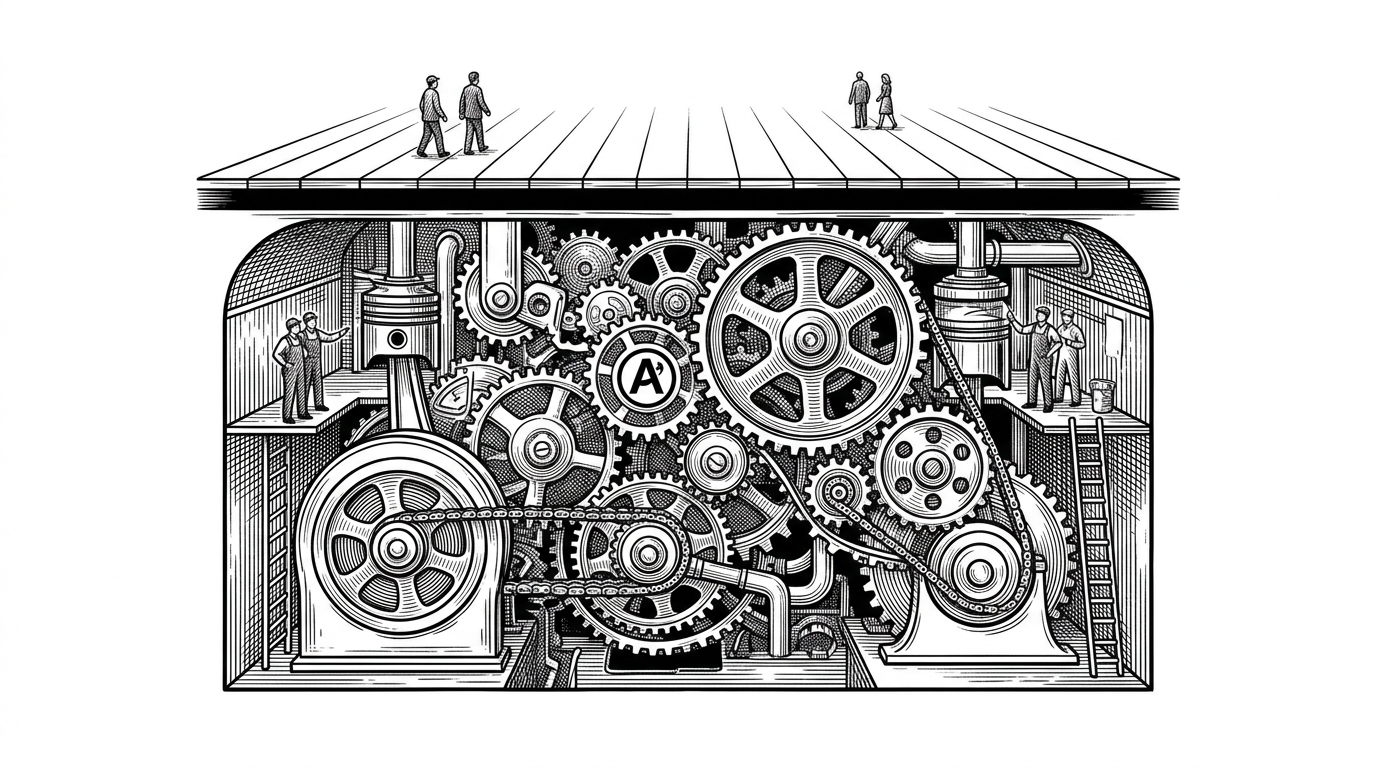
- The era of the flashy local AI chat app is ending as developers shift toward headless background daemons.
- Running a 26B parameter model on a 32GB Mac requires strict memory budgeting to avoid system-freezing kernel panics.
- A rigid stop-wait-start shell script pattern allows macOS to fully reclaim unified memory between model swaps.
- Aggressive 3-bit KV cache compression enables massive 128K context windows without exhausting limited hardware resources.
The Death of the Chat UI
Most local AI tools are bloated graphical applications. They demand attention, screen real estate, and manual intervention. The gemma4-local project takes the opposite approach. It completely ignores the graphical user interface, treating a massive 26-billion parameter Mixture-of-Experts model not as a destination, but as a background system utility for macOS.
By utilizing Apple's launchd system, the model initializes the moment the user logs in. It sits quietly on port 8080, serving as a permanent local fallback for larger multi-agent systems. It is a masterclass in treating AI like a standard Unix daemon.
The 32GB Unified Memory Budget
To understand why this architecture is necessary, look at the physics of Apple Silicon. Unified memory is incredibly fast, but it is shared across the entire system. On a standard 32GB machine, the operating system and a web browser easily consume 10GB. Loading a 26B parameter model consumes approximately 18GB.
That leaves zero margin for error. If a user attempts to load a second model, the kernel panics or heavily swaps to disk, freezing the machine entirely. The system requires strict boundaries to survive.
Orchestrating the Stop-Wait-Start Pattern
The solution lies in aggressive Unix primitives. The project uses a collection of shell scripts to manage the memory constraint. Instead of relying on complex Python garbage collection, the swap-model script identifies the running process and kills it outright.
Squeezing the KV Cache
Memory constraints extend beyond the model weights. Processing long documents requires storing previous tokens in a Key-Value cache. For a 128K context window, an uncompressed KV cache would easily exhaust the remaining RAM.

The project leverages MLX's TurboQuant feature, applying a 3-bit quantization scheme to the cache. This yields a massive reduction in size while incurring only a negligible penalty to the model's perplexity.
The Reality of Local Benchmarks
The repository includes a sophisticated benchmarking suite that highlights the critical difference between prefill speed and generation speed. Thanks to MLX optimizations, prompt processing screams at hundreds of tokens per second. Token generation, however, remains constrained by memory bandwidth.
| Feature | Standard GUI Apps | gemma4-local Daemon |
|---|---|---|
| Lifecycle Management | Manual launch via app icon | Persistent launchd background daemon |
| Memory Strategy | Relies on OS paging (often freezes) | Strict Stop-Wait-Start process killing |
| Context Storage | Uncompressed KV cache (OOM risk) | 3-bit TurboQuant KV cache |
| Primary Interface | Chat Window | Headless API (Port 8080) |