Google_AI_Pro_2Year_ZeroCost_Auto: The Repo That Promised Free Google AI Pro and Asked for Your Passwords
A batch automation tool for stacking Google One promotions became one of GitHub's fastest-rising repos. Its real price was never the subscription.
- A narrow Python tool for stacking Google One promotions became one of GitHub's fastest-rising repos by promising a two-year subscription at zero cost.
- Running it required handing over exactly what an attacker wants most: Google passwords, 2FA secrets, and payment cards.
- Links to a card shop and a Telegram group show the repo is a node in a commercial fraud market, not a hobby project.
- The people who ran the tool were the ones exposed, and credentials handed to a black box cannot be recalled, only rotated.
Thousands of Stars in Two Days
A repository appears on GitHub with a name that reads like a promise: Google AI Pro for two years at zero cost. It is a Windows-oriented Python tool that does one narrow thing. Within roughly 43 hours of its creation, third-party snapshots put it near 2.7k stars and 1.1k forks, making it one of the fastest-rising repos on the platform.
That speed is the tell. Repositories rarely climb that fast because they are well built. They climb because they promise something people want for free.
The tool automates Google One checkout using Playwright and the Chrome DevTools Protocol. A technical analysis describes injected JavaScript that rewrites checkout request data and offer-related URL parameters, then attempts several promotional redemptions and a cancellation. Those are descriptions of the code, not confirmation that every redemption succeeds.
What is missing says as much as what is present. There is no creator interview, no launch post, no maintainer to profile. The account behind the repo is worldonlyu, and the README reportedly disclaims authorship. The identity is unverified.
so nobody should run it.
What You Actually Hand Over
Here is the inversion at the center of the story. The tool is advertised as a way to pay nothing. To run it, you hand over the assets an attacker would want most.
The account list. The tool takes a batch of Google accounts. A batch means a set, and the public materials describe a queue of accounts with passwords and 2FA secrets formatted for import.
The 2FA secret. The TOTP seed is the string that generates valid login codes. Hand it over and someone else can generate those codes indefinitely, long after you change a password.
The payment card. The tool binds a card and enters it into the checkout flow. The tool then sits between you and Google as a fully trusted black box. You cannot see what it does with what you gave it.
- Google password: grants account access if it leaks.
- 2FA secret: can generate valid login codes indefinitely.
- Payment card: exposes a payment instrument.
- Account list: a bulk credential set, a high-value target.
- Account lockout: automated logins from odd locations can trip security checks.
- Entitlement reversal: a promotion granted through abuse can be clawed back later.
How Promotion Abuse Actually Works
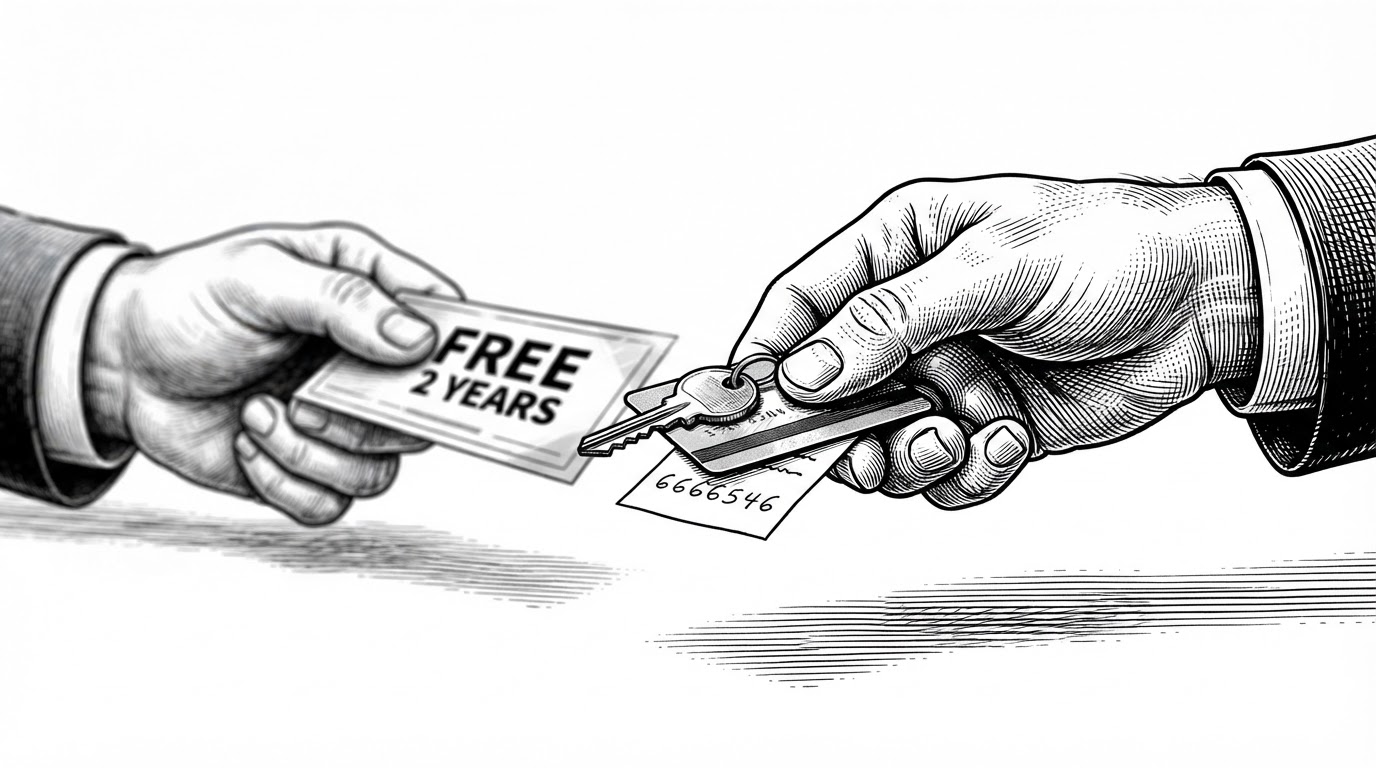
Promotions exist for a reason. A device maker or a carrier bundles a subscription credit to move hardware. Google One offers a free trial to convert a customer. Each offer is designed to bind one entitlement to one verified identity. One person, one offer.
Abuse decouples the entitlement from the identity. If one verified person can trigger many redemptions, or if many accounts can be created and fed offers, the promotion pays out far more than it was ever meant to.
Defenders look for the seams this creates. Device and session fingerprinting groups accounts that behave as if they share a machine. Payment-instrument reuse flags many accounts touching one card, or one account cycling through many cards. Velocity checks catch account creation and checkout moving faster than any human could.
I am reporting an abuse path in the Google AI Pro subscription flow that is public, automated, and already being sold — and it is directly damaging legitimate users' entitlements.
One promo tenure per account; reject stacking of multiple device-promo credits.
A Node in a Commercial Market
The README reportedly links a card shop and a Telegram group. That is not the shape of a hobby project. It is the shape of a funnel: the tool is the bait, and the shop and the group are the business.
Issue #10 makes the market visible. A user asks which virtual cards or BINs work with the tool.
Any virtual cards or Any Bin which works perfectly?
The question is about supply, not about whether to run the tool at all. The people using it are shopping for the missing piece.
Not a Browser Automation Tool
It is tempting to file this repo under browser automation. That would be a mistake. Playwright, Selenium, and browser-use provide general primitives with legitimate uses. This repo adds service-specific checkout manipulation and a batch console on top.
| Project | What it is | What it asks of you | Legitimate use |
|---|---|---|---|
| Google_AI_Pro_2Year_ZeroCost_Auto | Service-specific checkout and offer automation | Google password, 2FA secret, card details, batch account list | None. Described as a fraud path. |
| Playwright | General browser automation and testing library | Test accounts, sandbox data | QA, testing, scraping your own sites |
| Selenium | Cross-browser WebDriver automation | Test accounts | Testing, browser workflows |
| browser-use | Agent-oriented browser automation | Task descriptions, sandbox accounts | Agent-driven automation |
| Google One official flow | Supported subscription and promotion interface | Your verified account, eligible payment method | The intended way to redeem offers |
The official Google One flow is the supported route. It asks for your verified account and an eligible payment method, and it grants the offer only when you qualify.
What to Do If You Ran It
If you fed real credentials to a tool like this, treat them as compromised.
- Rotate the passwords on every account you supplied, starting with the email that can reset the others.
- Re-enroll 2FA with a fresh secret, since an old TOTP seed can keep generating codes.
- Review account activity and sign out of third-party sessions you do not recognize.
- Remove any stored payment methods the tool may have entered.
- Watch for entitlement reversals. A promotion granted through abuse can be clawed back later.
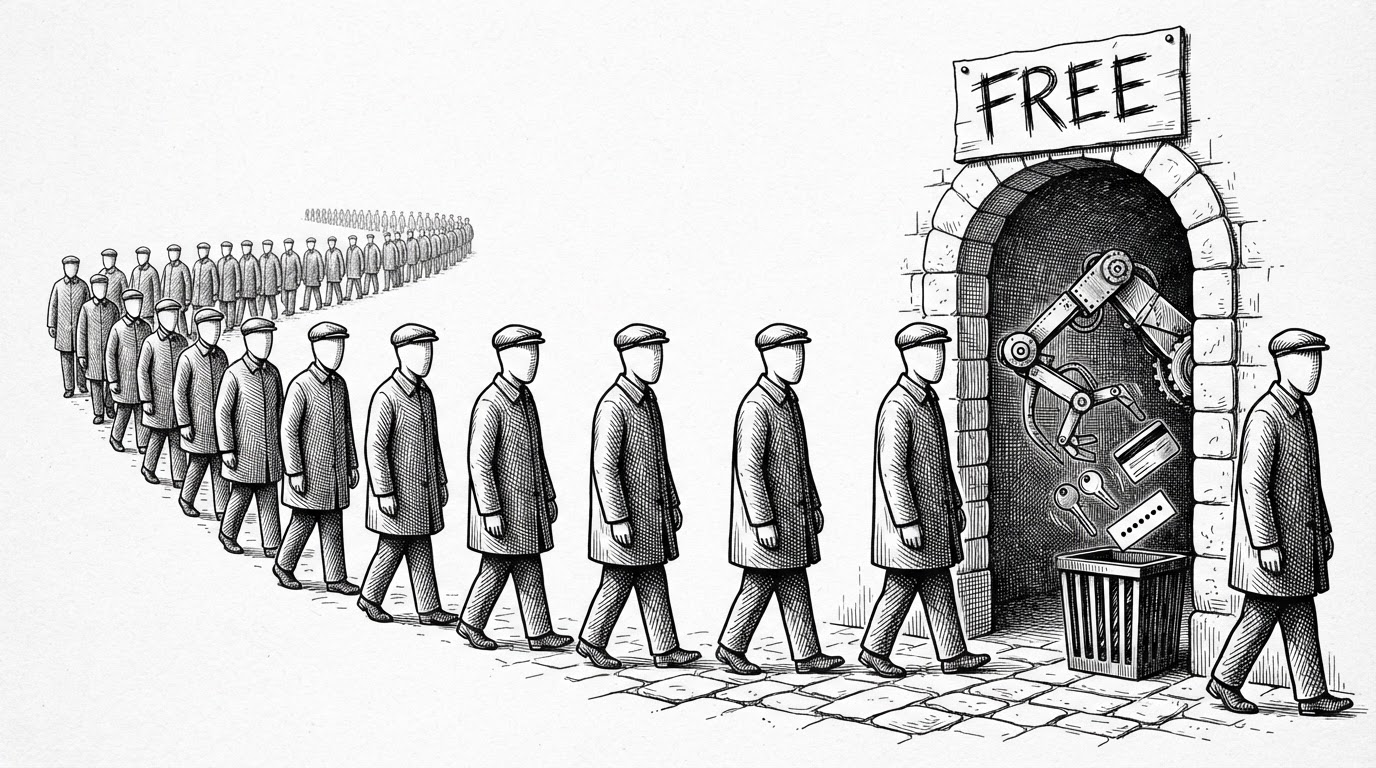
The promise was zero cost. The price was your password, your 2FA seed, and your card. The people in the queue never saw the arm behind the door. They were the product and the customer at the same time.