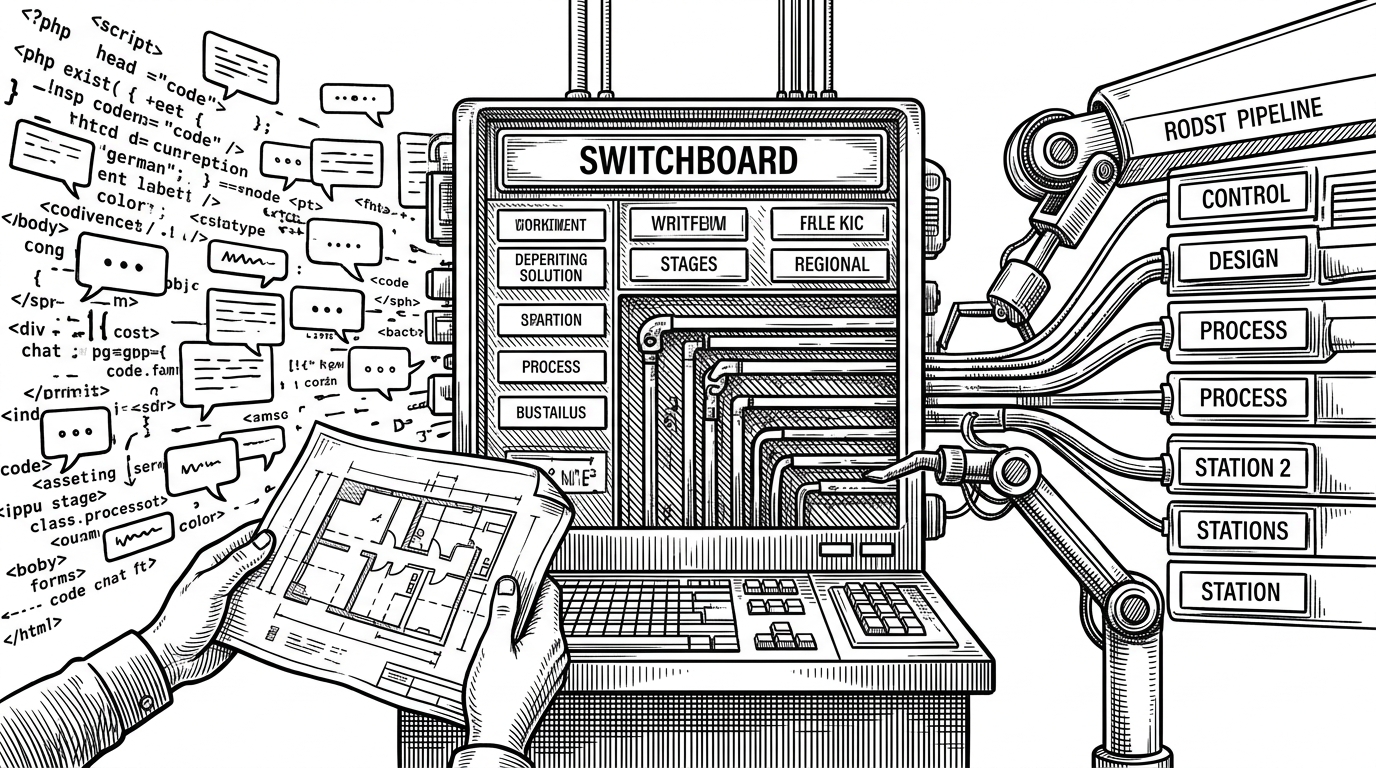
CryptoSignal: The Bot That Turns Market Noise Into Hot or Cold
A modular Python framework for crypto technical analysis that hides exchange chaos, indicator math, and retry logic behind one blunt question: should this signal fire or not?
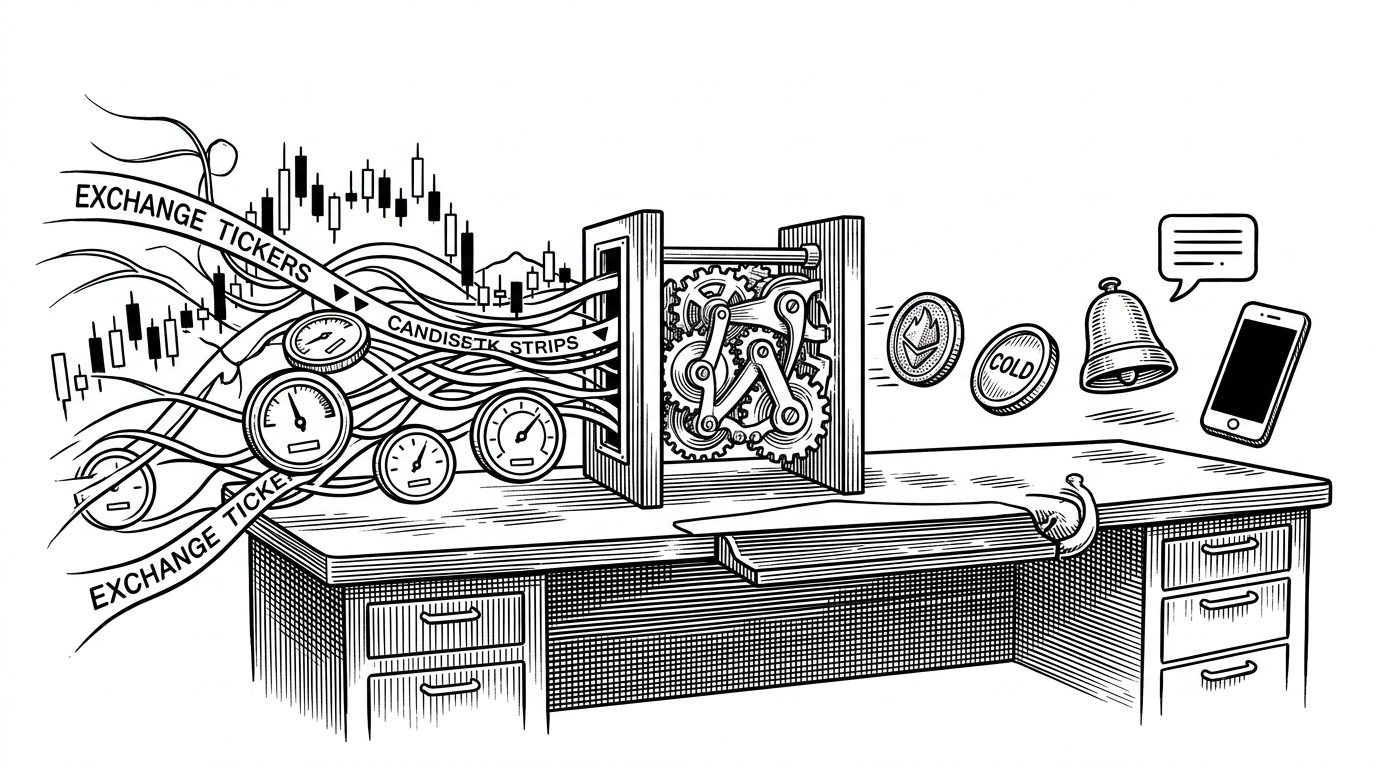
- CryptoSignal is less a trading bot than a signal-reduction engine that turns many indicators into one operational decision.
- Its real advantage is translation, because it normalizes exchange data, indicator math, and retries behind a stable hot-or-cold interface.
- The dispatcher and crossover layers make the system pluggable without making the user think like a library author.
- Docker is part of the product here, because TA-Lib installation friction would otherwise undermine the whole project.
CryptoSignal’s most useful trick is also its bluntest. It takes a market full of incompatible feeds, indicator outputs, and flaky exchange APIs, then collapses all of that into a single question: hot or cold? That design choice is why the repo feels less like a dashboard and more like a translation engine.
That matters because most crypto TA tools add complexity. CryptoSignal removes it. The user configures indicators, timeframes, and notifiers, but the architecture keeps the surface area small: collect data, analyze it, reduce it to a state, and route the state somewhere useful.
Hot or Cold Is the Whole Interface
The project’s identity lives in the reduction. RSI, MACD, SMA, EMA, OHLCV, and crossover logic all feed into a shared output model that says whether a condition is hot or cold. That is a very different promise from a general-purpose charting tool, which tends to leave the interpretation burden on the user.
That binary output is what makes the rest of the repo legible. Once the analysis layer speaks in one vocabulary, the notifier layer can stay agnostic. Telegram, Slack, Discord, email, SMS. They all become delivery channels for the same state change.
Why a Crypto Bot Needs a Translation Layer
CryptoSignal exists because market data is messy in ways that are easy to underestimate. Exchange APIs differ. Candle histories have gaps. Indicator libraries have their own assumptions. Without a translation layer, every new strategy becomes a new integration problem.
| Approach | What you get | What you still have to manage |
|---|---|---|
| CryptoSignal | A modular TA pipeline with standardized hot or cold outputs and built-in notifiers | Strategy choice, thresholds, and operational risk |
| Hand-built CCXT + TA-Lib script | Maximum control over every data and indicator step | Retries, config plumbing, alert routing, and packaging |
| Generic dashboard tool | A clean visualization of market data | Little to no automation, and no opinionated signal flow |
The comparison shows where CryptoSignal sits. It is not the most customizable path, and it is not trying to be. It is the path that removes enough friction to let a technically curious trader get from data to alert without building the whole stack from scratch.
The Dispatcher Makes the System Pluggable
The most developer-friendly part of the codebase is the dispatcher pattern in analysis.py. Configuration names map to concrete analyzer classes, so the repo can stay low-code without becoming rigid. That matters in a project built around extension points.
# Conceptual shape of the dispatcher pattern
analyzer = indicator_dispatcher[config['indicator_name']]
signal = analyzer.run(df, **config['params'])
if signal.is_hot:
    notifier.send(signal)
That small indirection buys a lot. You can add a new analyzer without rewriting the orchestration layer. The config file stays declarative, the runtime stays simple, and the user does not need to thread implementation details through the whole system.
Crossovers Are the Interesting Part

If CryptoSignal has one concept that deserves a whiteboard, it is the crossover analyzer. Unlike a single-stream indicator, crossover logic asks about relationship, not absolute value. One line above another is not just a number. It is a state.
That makes the mechanism both teachable and useful. The analyzer joins two time series, checks their relative order, and emits a signal when that order changes. It is the kind of rule that feels obvious after you see it, which is usually a sign the abstraction is doing something right.
The repo’s crossover logic is also the clearest example of why this project is more than a bundle of indicators. It turns comparison into a first-class event. That is the bridge between mathematical analysis and operational notification.
Reliability Lives in the Exchange Wrapper
The analysis layer only works if the data layer behaves. CryptoSignal leans on CCXT for broad exchange coverage and wraps it with retry logic through tenacity. That is a practical answer to volatile APIs, intermittent failures, and rate limits.
# Conceptual shape of resilient exchange access
@retry
def fetch_ohlcv(exchange, symbol, timeframe, since, limit):
    return exchange.fetch_ohlcv(symbol, timeframe, since=since, limit=limit)
The wrapper also handles timestamp math, which sounds minor until you need historical periods to line up correctly across different market sources. In a bot like this, reliability is not a feature add-on. It is the prerequisite for trusting any signal at all.
Docker Solves a Build Problem, Not Just Deployment
The repo’s Docker-first posture is not cosmetic. TA-Lib is notoriously awkward to install cleanly, especially when a project also needs predictable Python dependencies and exchange tooling. Containerization turns a painful setup problem into part of the product design.
| Setup path | What it optimizes for | Main drawback |
|---|---|---|
| Native install | Local control | TA-Lib and system dependencies can be painful |
| Docker image | Repeatable setup | You trade some transparency for convenience |
| Prebuilt service | Fast onboarding | Less flexibility and less inspectability |
That disclaimer matters because the packaging story and the product story are linked. If the setup is fragile, only the most patient users ever reach the part where the signals matter. Docker lowers the first barrier, which is exactly where open-source trading tools often lose people.
How It Stacks Up Against Other Crypto Bots
CryptoSignal sits in an awkward but interesting middle ground. Compared with a legacy project like Gekko, it feels more container-friendly and more modular around notifications. Compared with a hand-rolled CCXT script, it offers a more complete workflow without forcing you to invent your own orchestration layer.
| Project | Strength | Trade-off |
|---|---|---|
| CryptoSignal | Modular TA pipeline with notification routing | Less like a full trading platform, more like an opinionated signal engine |
| Gekko | Recognizable open-source bot lineage and backtesting heritage | Older ecosystem and weaker modern packaging story |
| Custom CCXT + TA-Lib script | Total control over strategy and data flow | You own every retry, edge case, and integration detail |
That niche is the article’s punchline. CryptoSignal is not trying to win on breadth. It is trying to make signal production boring enough that users can focus on the strategy instead of the plumbing.
The Bigger Idea: Democratizing Quant, With Warnings Attached
The README frames the project as a way to democratize access to market analysis, and that ambition is real enough to shape the architecture. The code reduces entry cost, the config file keeps strategy definition approachable, and the notifier layer makes the output immediately actionable.
An x402-gated API that detects crypto tokens with unusual trading volume patterns. Returns tokens where current volume significantly exceeds the 30-day moving average — useful for AI trading agents, alert systems, and market monitoring tools.
There is a real tension here. Lowering the barrier to automated market analysis is empowering, but it also makes it easier to overtrust a signal. CryptoSignal acknowledges that with educational framing and liability warnings. That is the right posture for software that can look more definitive than it is.
Seen that way, the repo’s best feature is not a specific indicator or exchange adapter. It is the discipline of turning a complicated domain into a small set of reliable decisions. Hot or cold is a narrow interface, but in this case, narrow is the point.