kids-storybook-generator: Kids Storybook Generator: The AI Story App That Keeps Working When the Models Fail
A surprisingly mature full-stack project that combines fallback templates, multi-provider image generation, and model orchestration into one resilient storybook pipeline.
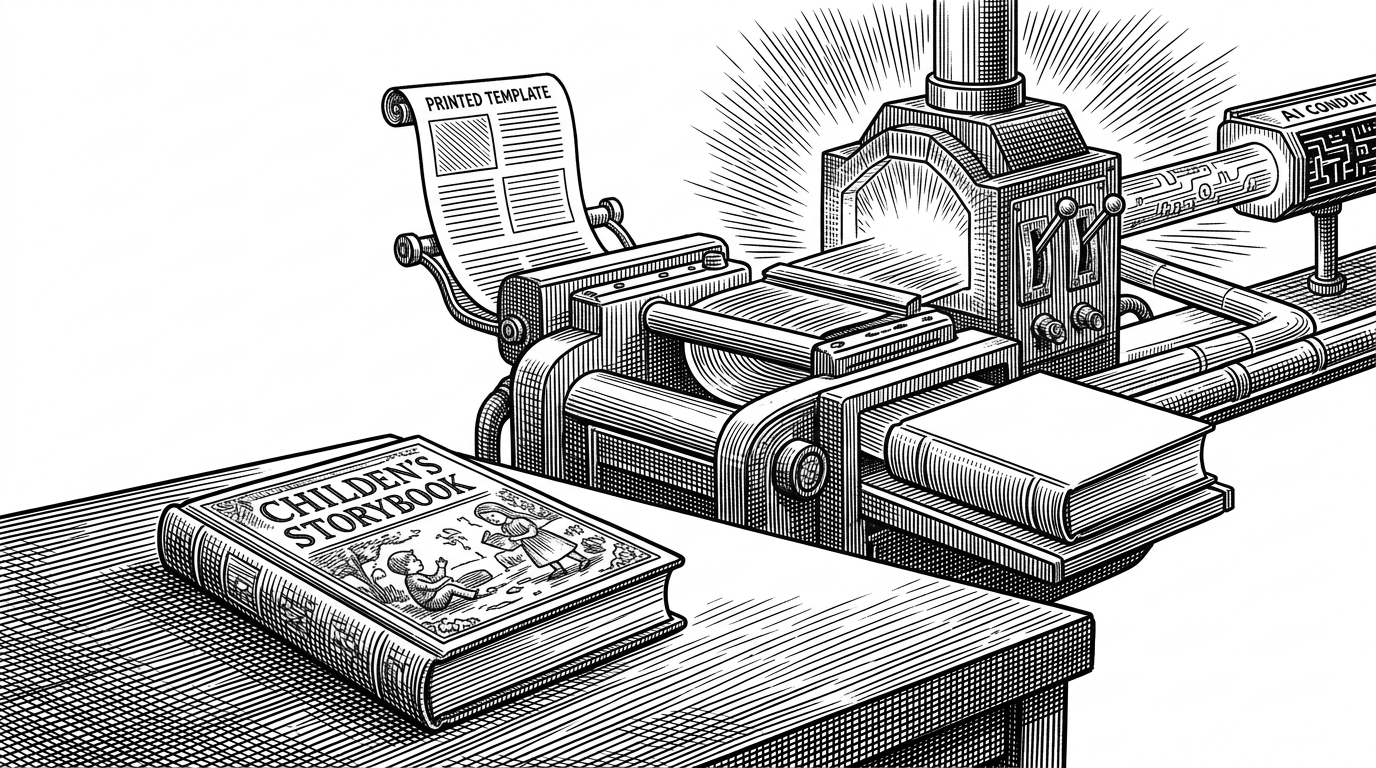
- The project’s real subject is resilience, because every major path has a fallback when an API, quota, or model choice fails.
- The narrative engine avoids generic LLM drift by anchoring stories in templates, pronoun maps, and scenario-guided arcs.
- The image pipeline is the most elegant orchestration layer, because it compresses story text into prompts and routes them across interchangeable providers.
- The repo reads like a production-minded system, not a notebook, because it pairs AI features with databases, auth, storage, and environment-driven behavior.
Why this project matters
Most AI demos are impressive when the happy path holds. This one is interesting because it assumes the happy path will break. The app is a children’s storybook generator, but its real achievement is the machinery around the story: templates when costs matter, model routing when quality matters, and provider fallback when infrastructure becomes unreliable.
That is a more serious design question than “can a model write a story.” It asks what an AI product looks like when you treat instability as a normal operating condition instead of an edge case.
The app is built around failure, not just generation
At a high level, the app behaves like a decision system. It can run in free mode, AI mode, or image fallback mode, depending on environment variables and service availability. That matters because the product does not collapse when one dependency disappears. It degrades into something narrower, but still useful.
| Fragile demo architecture | Resilient storybook architecture |
|---|---|
| One model path and one image provider | Multiple text and image paths with fallback logic |
| Works only when APIs are healthy | Keeps producing output when services fail |
| Notebook-style proof of concept | Full-stack app with storage, auth, and persistence |
| User sees an error when the stack breaks | User still gets a finished book with reduced fidelity |
Inside the narrative engine
The heart of the app is `story_service.py`. It does not just ask an LLM for a story and hope for the best. It narrows the problem first. In free mode, the generator uses predefined templates and swaps pronouns with a map so the same structure can adapt to the child’s profile. In AI mode, it gives the model a scenario plus a narrative arc so the output stays shaped like a story instead of dissolving into generic text.
# Conceptual shape of the narrative engine
if mode == "free":
    story = build_from_template(theme, child_name, pronouns)
else:
    scenario = SCENARIOS[theme]
    story = llm.generate(
        prompt=scenario,
        arc=["setup", "wrong_choice", "consequence", "realization", "resolution"],
    )
That structure matters because it limits the model’s freedom in the right places. The app is not trying to make the model invent everything. It is using the model where variation helps, and using templates where consistency matters.
Why the image pipeline is the smartest part
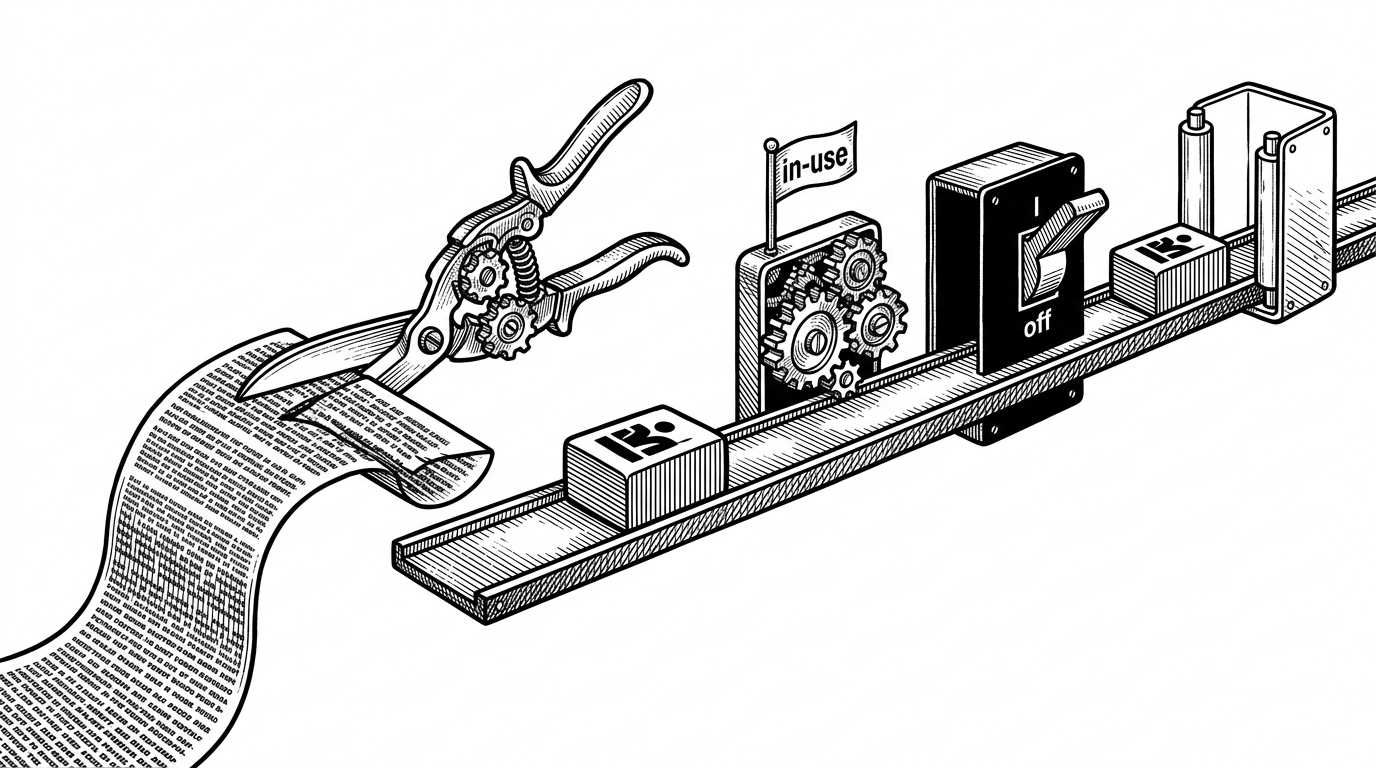
`image_service.py` is where the repo gets especially sharp. It does two things well at once. First, it compresses a long story into a concise scene prompt. Second, it fans that prompt out across multiple backends so one provider failure does not stop the book.
That is a better abstraction than it first looks. A storybook needs visual continuity, but individual pages still depend on a volatile stack of external services. The code treats that volatility as a routing problem, not a crisis.
| Single-provider image workflow | Multi-backend image workflow |
|---|---|
| Send each page to one API and hope it works | Route the same prompt through interchangeable providers |
| Long, noisy prompts sent directly to generation | A secondary step compresses the story into a scene prompt |
| Provider downtime becomes product downtime | Provider downtime becomes a fallback decision |
| Each failure is a user-visible break | Each failure is absorbed by the pipeline |
Research model on one side, production model on the other
The repo is also honest about the difference between research and product. The TinyStories fine-tuned GPT-2 work belongs to the research side. Llama 3.3 belongs to the production side. That is not model purity. It is pragmatic division of labor.
The small model proves that the team understood task-specific training and narrative control. The larger model serves the app because it is the better user-facing engine. That split says the project understands what belongs in a lab and what belongs in a shipping product.
What makes this feel more mature than a typical student project
The maturity cues are everywhere. FastAPI lifespan management keeps startup behavior explicit. Dual database support makes local development and production deployment feel like the same system. Cloudinary handles persistence for generated assets. Authentication and migration checks show the repo was built as software, not as a one-off demo.
| Typical FYP | This repository |
|---|---|
| One environment and one path to success | Environment-driven behavior with local and production modes |
| Model code isolated from app logic | Orchestration, storage, and UI in one coherent stack |
| Generated assets vanish after the demo | Images are stored and served through persistent infrastructure |
| Schema changes are an afterthought | Migration checks are part of the design |
The bigger lesson
The cleanest reading of this repo is simple: treat AI like an unreliable dependency, not a magical core. Build layers around it. Keep templates, routing, persistence, and storage ready when the model path fails. Then make the user experience survive the failure without making the failure visible.
That is a useful blueprint beyond storybooks. Any AI product that depends on external services can learn from this structure: isolate the risky parts, expect variation, and design the fallback before you need it.