speech-to-speech: The Open-Source Voice Agent Built Around Interruption
A modular Python pipeline that swaps in local STT, LLM, and TTS backends, mimics the OpenAI Realtime API, and solves the hardest part of voice UX: stopping cleanly when the user starts talking.
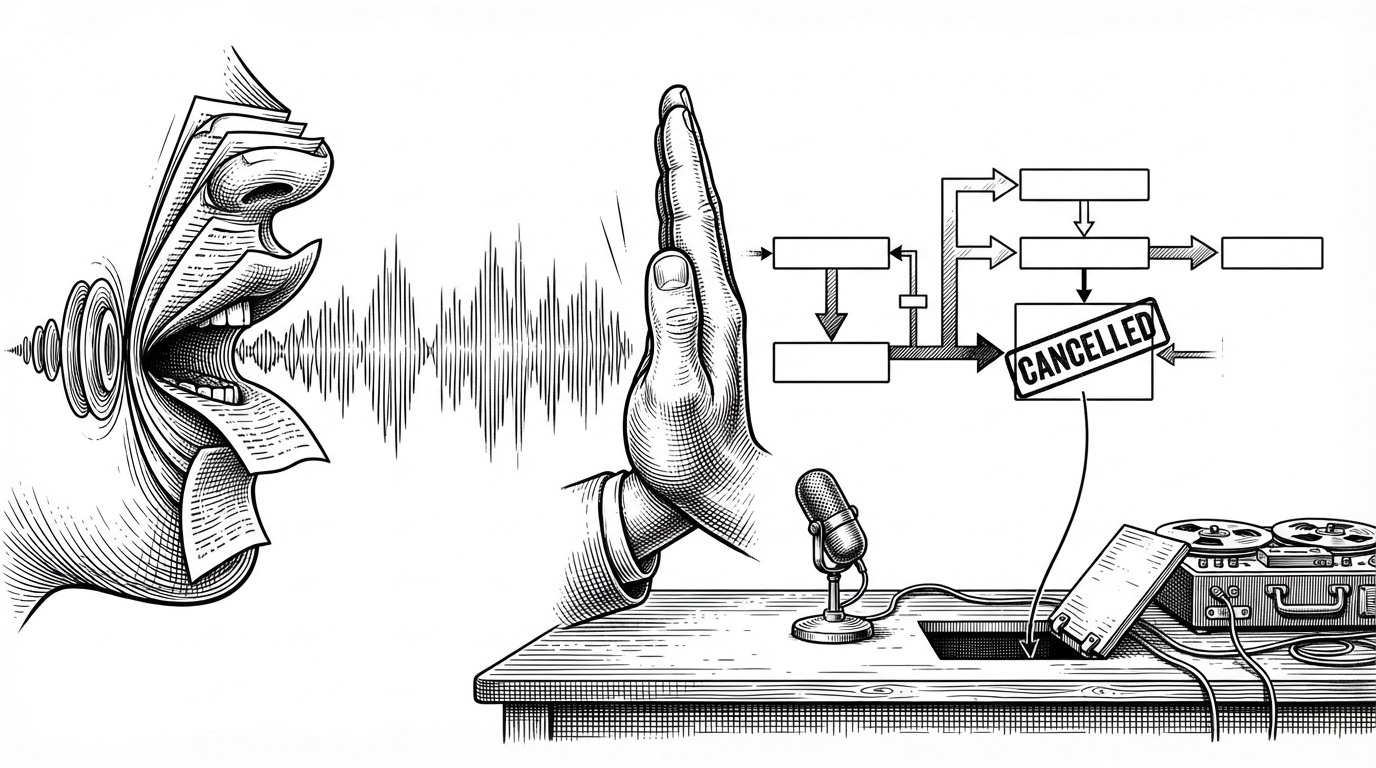
- speech-to-speech treats interruption as the primary design constraint, not a corner case.
- Its CancelScope logic lets the system discard stale work before it becomes annoying hangover audio.
- The pipeline stays responsive because VAD, STT, LLM, and TTS are decoupled by queues and threads.
- OpenAI Realtime compatibility turns a clever local stack into something developers can actually drop into products.
Why Voice Agents Feel Bad When They Don’t Know How to Stop
Most voice demos fail in the same way. They answer too late, talk over the user, or keep producing audio after the conversation has already changed direction. That lag is not a cosmetic bug. It is the product.
speech-to-speech starts from that failure mode instead of hiding it. The repo is built around barge-in, the moment a user cuts the agent off and takes the floor back. If a system cannot react to that cleanly, all the model quality in the world still feels clumsy.
That is why this project is interesting. It does not treat voice as one giant model call. It treats it as a live system that has to notice new speech, abandon stale work, and recover without audible leftovers.
The Hidden Superpower: Cancel the Future
The repo’s most useful idea is simple: once the user speaks again, downstream work is no longer worth finishing. The code uses cancellation and stale-item checks to flush queued output before it becomes audible, which keeps the agent from dragging old intent into the next turn.
if cancel_scope.is_cancelled():
    queue.flush_stale_items()
    return

if not should_process_input(event):
    return

# keep listening, but stop spending compute on dead work
That pattern matters because it changes the economics of latency. A slow LLM no longer blocks listening. A late TTS chunk no longer leaks into the room after the human has already interrupted. The system is designed to prefer freshness over completeness.
Inside the Pipeline: VAD, STT, LLM, TTS
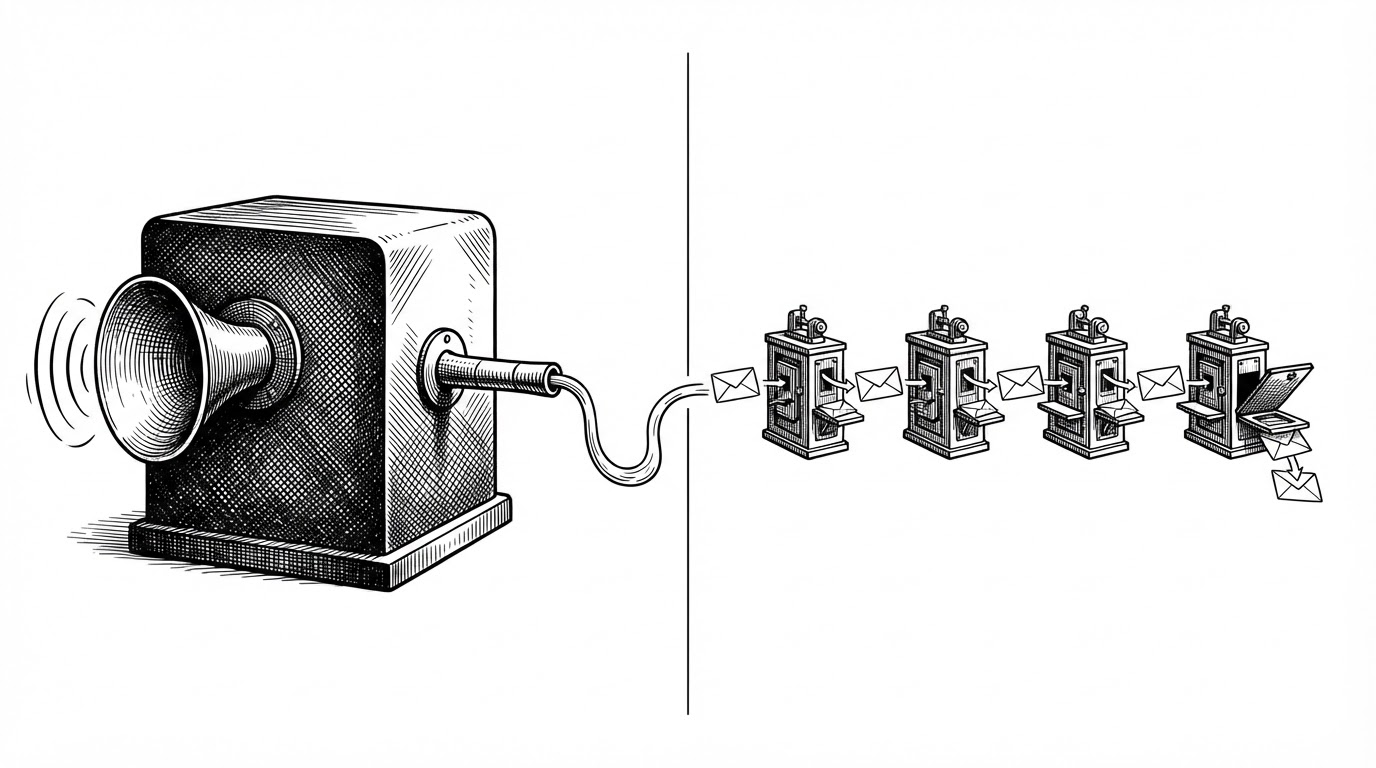
Under the hood, the repo is a four-stage cascade. VAD decides when audio is speech. STT turns speech into text. LLM handles the response. TTS renders the reply back into voice. Each stage sits behind queues, so a slow stage can fall behind without freezing the whole system.
That decoupling is the real architectural trick. It lets the system keep listening while it thinks, and it lets newer user audio invalidate older output. The pipeline is not just a sequence. It is a set of pressure valves.
This also explains why the repo feels more like infrastructure than a demo. The pieces are explicit. The failure modes are explicit. And when something goes stale, the system has somewhere to put that decision instead of pretending it never happened.
Why the Backend Registry Matters More Than It Looks
The backend registry is what turns the project into a platform. It lets the same pipeline point at different STT, LLM, and TTS implementations without rewriting the orchestration layer. That matters for real deployments, where hardware and model choice are never one-size-fits-all.
| Dimension | Modular speech-to-speech | Monolithic speech model |
|---|---|---|
| Latency behavior | Can stream early and cancel stale work | Often elegant, but harder to interrupt mid-flight |
| Interruptibility | Built for barge-in and queue flushing | Usually depends on the model’s native behavior |
| Backend flexibility | Swap STT, LLM, and TTS independently | Tightly coupled to one architecture |
| Hardware support | Works across Apple Silicon and CUDA paths | Often optimized for a narrower stack |
| Debuggability | Each stage is visible and testable | Failures are harder to isolate |
| Best fit | Products that need control, compatibility, and local deployment | Teams that want a single integrated speech model |
That flexibility is why Apple Silicon support matters here. A lot of open-source AI tooling quietly assumes NVIDIA hardware and calls that portability. This project is more practical than that. It can adapt to local machines, edge devices, and GPU servers without changing the shape of the app.
OpenAI Realtime Compatibility as a Distribution Strategy
The protocol shim is not a footnote. It is the adoption strategy. If an app already speaks OpenAI Realtime, this repo can sit underneath it and look familiar to the frontend while swapping in open models behind the scenes.
That lowers the cost of experimentation. It also lowers the cost of migration. The more the system looks like a drop-in replacement, the less product code has to change when a team wants to move away from a proprietary voice stack.
Speech-to-Speech (S2S) is an exciting new project from Hugging Face that combines several advanced models to create a seamless, almost magical experience: you speak, and the system responds with a synthesized voice.
Where This Beats Monolithic Speech Models
Monolithic speech systems are compelling because they collapse the stack. They can be elegant and fast. But when a product needs custom reasoning, local deployment, or hardware-specific optimization, the compactness starts to look like a constraint.
This repo makes the opposite bet. It accepts some orchestration overhead in exchange for control. You can route around failures, swap models, inspect each stage, and keep the product usable even when one backend changes.
| Question | Modular pipeline answer | Native speech model answer |
|---|---|---|
| Can I swap the brain? | Yes, the LLM can change independently | Usually no, it is part of the model |
| Can I debug latency by stage? | Yes, each hop is visible | Usually harder, because the model is fused |
| Can I support different hardware? | Yes, through backend registry entries | Only if the model ships for that target |
| Can I preserve frontend compatibility? | Yes, via OpenAI Realtime protocol | Not usually a direct fit |
That is the strategic difference. The repo is not trying to win on model novelty alone. It is trying to become the practical layer between product logic and speech models, especially when interruption handling and portability matter more than a single end-to-end benchmark.
The Edge Case That Becomes the Product
The interesting thing about this repository is that it turns an annoying edge case into the headline feature. Barge-in is usually where voice UX falls apart. Here, it is where the design becomes legible.
That makes the project useful beyond chatbots. It fits robots, accessibility tools, and local assistants that need to react in real time. Once interruption is treated as a first-class event, the stack starts to look like general-purpose realtime infrastructure instead of a one-off demo.
And that is the real takeaway. This is not just an open-source voice agent framework. It is an architecture for making voice systems behave like they are paying attention.