GPUI: The Rust UI Framework That Turned Zed’s Engine Into a Reusable Stack
A look at the hybrid rendering model, entity-based state system, and GPU-first design that make GPUI feel closer to a performance engine than a toolkit.
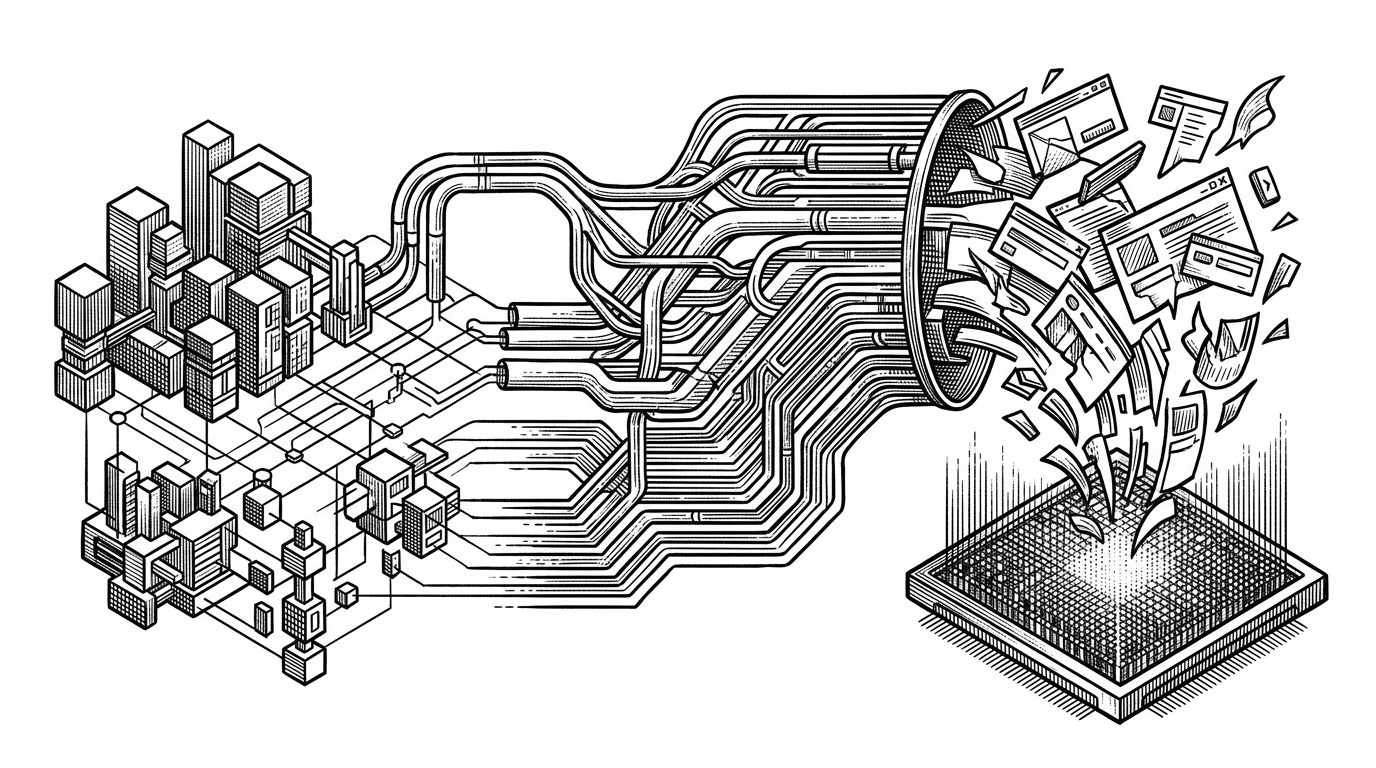
- GPUI’s real innovation is the split between persistent entities, coordinating views, and disposable elements.
- The framework answers Rust’s borrow-checker pain with entity handles, temporary leases, and a context-driven update loop.
- It feels native because the GPU, layout, text, and async systems are all part of the same runtime, not bolted on later.
- Compared with Electron, Tauri, Qt, and older Rust GUI stacks, GPUI is optimized for demanding desktop software where latency and typography matter more than CRUD speed.
GPUI is not interesting because it is another Rust GUI library. It is interesting because it takes the engine behind Zed’s UI stack and turns it into a framework with a sharp point of view: state stays durable, views coordinate behavior, and elements are cheap enough to throw away.
GPUI is a hybrid immediate and retained mode, GPU accelerated, UI framework for Rust, designed to support a wide variety of applications.
The secret is the split: state, views, and elements
Most UI toolkits want one model to do everything. GPUI breaks that assumption. Entities own durable state, views decide what should happen, and elements do the fast, disposable rendering work.

Why Rust needed a different kind of UI runtime
Rust gives you speed and safety, but UI code often turns that into a trade. Long-lived trees, shared mutable state, and event callbacks can become a lifetime puzzle. GPUI’s entity map and handle system are a direct answer to that mess.
The framework leans on generational IDs like EntityId and weak handles like WeakEntity so multiple parts of the app can point at the same state without dragging references through every function signature. The pay-off is simple: you can coordinate complex UI graphs without stuffing everything into Arc<Mutex<T>>.
div()
    .flex()
    .bg(rgb(0xffffff))
    .child(text("Hello"))
    .into_any();
The most telling detail is the lease pattern. GPUI temporarily moves an entity into an exclusive workspace, updates it, then hands it back. That gives the framework a controlled mutation window without making the rest of the app wait.
Inside the render loop
GPUI’s render path is hybrid by design. Views are retained enough to remember state and subscriptions. Elements are immediate enough to be cheap when the framework needs to emit pixels fast.
That is where Context<'a, T> matters. It is the update hub. Call cx.notify(), and the framework marks the entity dirty so the next frame knows what to revisit. If nothing changed, cached views can skip work and move straight past layout and paint.
impl Render for MyView {
    fn render(&mut self, cx: &mut Context<Self>) -> impl IntoElement {
        if self.needs_refresh {
            cx.notify();
        }

        div().child("content")
    }
}
That matters because it keeps static UI cheap. GPUI does not treat every widget as a fresh computation, but it also does not freeze the app into a rigid retained tree. It picks the middle path and makes the middle path fast.
Why the framework feels native instead of web-like
GPUI’s native feel comes from the whole stack, not one clever trick. The platform abstraction reaches into Metal, WGPU, and the event loop. Layout uses a Rust Flexbox implementation. Text rendering is treated as a first-class problem, not a browser side effect.
That is why GPUI reads less like a DOM wrapper and more like a desktop runtime. The styling API borrows the ergonomics of utility CSS, but the execution model stays rooted in native rendering and async work scheduling.
If you want the shape of the API, the README captures it plainly: "GPUI is a hybrid immediate and retained mode, GPU accelerated, UI framework for Rust, designed to support a wide variety of applications."
The Zed lineage matters
GPUI is still in active development as we work on the Zed code editor, and is still pre-1.0. There will often be breaking changes between versions.
That sentence explains the project’s posture. GPUI was forged under the pressure of building a serious editor, not assembled as a general-purpose toolkit looking for a problem. Its priorities, especially latency and text rendering, come from that lineage.
This also explains the design confidence. The team had already felt where standard UI stacks break down, so GPUI was shaped around the problems that mattered in real desktop software: responsiveness, composition, and control over every layer of the rendering path.
Compared with Electron, Qt, Tauri, and older Rust UI stacks
| Framework | Rendering model | State model | Trade-off | Best fit |
|---|---|---|---|---|
| GPUI | Direct GPU-driven native rendering | Entity-based retained state with immediate elements | More control, more framework depth | Editors, terminals, trading tools, data-dense apps |
| Electron | Chromium web runtime | Web app state in JavaScript | Easy product development, heavy runtime | Cross-platform app teams that want web skills |
| Qt | Native C++ toolkit | Retained widget hierarchy | Mature and broad, but heavier legacy and licensing concerns | Traditional desktop software with deep native needs |
| Tauri | Native shell plus webview | Web frontend with Rust backend | Lightweight delivery, still webview bound | Apps that want small bundles and web UI |
| Iced or Druid | Rust GUI libraries with simpler models | Declarative or message-driven state | Cleaner Rust story, less custom engine depth | General-purpose desktop apps |
The comparison is not just about speed. It is about execution model. GPUI assumes you want the ergonomics of a modern declarative API, but you are willing to pay for a deeper runtime to get low-latency, high-fidelity desktop interaction.
What GPUI is really for
This is the right stack for software where typography, interaction latency, and GPU-backed rendering are product features, not implementation details. It is a strong fit for editors, terminals, dashboards, and professional tools with complex state.
It is not the shortest path to a CRUD app. That is the point. GPUI is trying to make the hard class of desktop software feel tractable in Rust, and it does that by refusing to compromise on the runtime model.